Haplogroup R1b2b1

– 5 min read


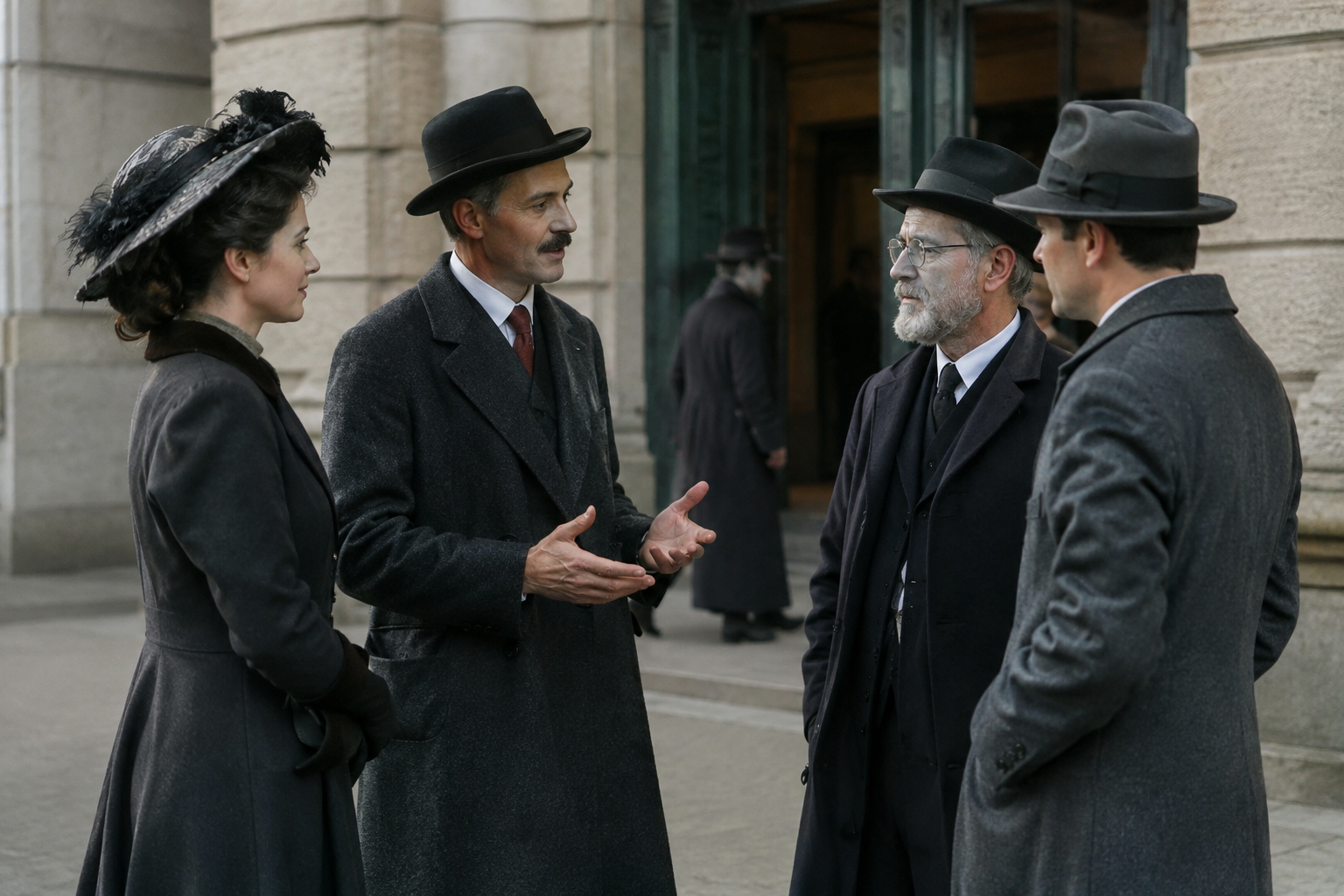
R1b2b1 is an awkward little label to inherit, because it sounds precise while telling a complicated story. In older Y-DNA naming systems, labels like this often sit inside the huge and historically important umbrella of R1b, a paternal lineage that became widespread across western Europe in later prehistory. But the smaller branch name matters too: it reminds us that a man's direct paternal line is only one thread in his ancestry, and that the history of a branch is not always identical to the history of its much larger parent.
In this case, there is another difficulty. No ancient sample list accompanies this article, and no site-specific scientific URLs are attached to anchor R1b2b1 to one excavated skeleton, one cemetery, or one royal tomb. So the responsible way to approach this haplogroup is not to invent a glamorous founder or a dramatic migration, but to place it in the better-documented archaeological world in which western R1b lineages became historically visible: the Bell Beaker horizon, the Rhine-Meuse region, Atlantic Europe, and the later societies that grew from those Bronze Age foundations.
Anyone working with older haplogroup notation soon discovers that names change. What was once written as R1b2b1 in one classification may now sit under a different string of downstream labels in another. That is not a scandal; it is simply what happens when genetic trees are refined as more SNP markers and more ancient genomes become available. The danger comes when people attach a modern story to an older name without checking whether they are really discussing the same branch.
What can be said with confidence is that R1b2b1 belongs within the broader R1b paternal family, one of the most significant Y-chromosome expansions in later European prehistory. The best ancient-DNA evidence for the rise of western R1b lineages comes not from a single heroic burial, but from patterns spread across many sites. Those patterns show major changes in paternal ancestry during the 3rd and 2nd millennia BC, especially in parts of western and central Europe.
One of the most useful places to think about a lineage like R1b2b1 is the Lower Rhine-Meuse region, where archaeology and ancient DNA together show striking continuity in some respects and sharp turnover in others. Burials, settlement change, and shifting ancestry profiles all suggest that the later 3rd millennium BC was not business as usual. This was a period when Bell Beaker-associated communities spread across a landscape already occupied by earlier populations, and the paternal record changed dramatically.
That does not mean every man in a Bell Beaker grave carried the same exact branch, nor that every later western European R1b lineage descends from one local source. But it does mean that the wider family to which R1b2b1 belongs became historically important in just these kinds of settings: frontier river zones, networks of exchange, and communities balancing local continuity with incoming ancestry. A reader with R1b2b1 on the direct paternal line is therefore likely looking at a branch shaped by the same broad prehistoric transformations, even if the exact route of descent remains unknown.
The archaeology matters here. The Rhine-Meuse world was not merely a corridor through which people drifted. It was a region of contact and reformulation, where burial customs, material culture, and family histories were being renegotiated. That is why so many Y-lineage stories in western Europe eventually converge on this wider zone, even when their later documentary history unfolds in Britain, Iberia, France, or the Low Countries.
It is worth saying plainly, because the old joke still circulates: Bell Beaker was never simply a matter of fashionable pottery. Ancient DNA has shown that in several regions, Bell Beaker horizons coincided with substantial demographic change, including the spread of paternal lines within the wider R1b family. For some readers, that is the moment when a dry haplogroup code starts to feel historical rather than abstract.
Still, one must resist the temptation to over-neaten the picture. Archaeological cultures are not the same thing as haplogroups. A pot shape is not a chromosome, and a cemetery is not a tribe. The sensible conclusion is narrower and stronger: the archaeological period most relevant to the deep rise of many western R1b lineages is the later Neolithic to Early Bronze Age transition, especially in regions influenced by Bell Beaker mobility and exchange.
This is also where an important nuance appears. Some ancient communities in the Lower Rhine-Meuse area retained notable local ancestry even while participating in Bell Beaker networks. So the rise of lineages ancestral to branches like R1b2b1 was not a simple story of replacement everywhere and in the same way. It was often a matter of incoming paternal dominance interacting with older local populations, producing the mixed genetic landscapes familiar in later Europe.
Once the broader western R1b world was established, its descendant branches spread into many different historical settings. By the Iron Age and Roman period, paternal lines descended from earlier Bronze Age expansions were embedded in very different societies: Atlantic farming communities, hillfort polities, urbanizing regions, Roman provinces, and the post-Roman kingdoms of early medieval Europe. The Y chromosome can preserve continuity through all that upheaval, even while language, culture, and political loyalty change several times over.
That is why a haplogroup article should not leap straight from R1b2b1 to any one people - "Celts," "Gauls," "Britons," "Franks," or "Normans" - as if one label solved the matter. Different branches of western R1b were present across many of those worlds. A direct paternal line may have passed through Bronze Age speakers of one language, Iron Age communities with another identity, and medieval families living under still another political name.
For family historians, this is less disappointing than it sounds. It means your paternal line may be genuinely old in western Europe without belonging exclusively to any single later ethnic story. In other words, the chromosome is conservative; history is not.
Celtic Origins and Ancient DNA
If the Bronze Age explains the deep background of western R1b branches, the early Middle Ages explain why those branches later appear in such a bewildering variety of regional histories. Frontier zones along the Rhine and in adjacent regions were full of communities that Roman authors, later chroniclers, and modern historians have all classified differently. Yet the people themselves married, moved, traded, served in armies, and buried their dead in places that complicate tidy ethnic boxes.
Recent archaeogenetic work on the Rhineland and nearby frontier worlds has been especially useful in showing this mixture. The lesson is not that lineage becomes meaningless, but that lineage is only one dimension of identity. A paternal branch like R1b2b1 could persist across Roman provincial life, post-Roman political change, and the making of early medieval populations without announcing itself in the written record.
That is also why members of the same broad haplogroup today may find paper trails pointing to very different medieval or early modern communities. One family line may surface in England, another in the Low Countries, another in Iberia, and another in the German-speaking lands, while all still belong to a deeper paternal structure formed much earlier.
The most defensible historical reading of R1b2b1 is that it belongs to the great western European R1b paternal expansion that became prominent in later prehistory, especially in the worlds transformed by Bell Beaker and Early Bronze Age change. Without securely linked ancient samples for this exact article branch, it would be rash to assign it to one famous king, one tribe, or one migration route. But it is entirely reasonable to place its deeper history in the making of Bronze Age western Europe and its later survival in the mixed societies of Iron Age, Roman, and medieval Europe.
For someone researching a direct paternal line, that is already quite a lot. R1b2b1 points not to a single romantic ancestor, but to a long male-line continuity carried through some of the biggest population shifts in European history.
Comments