Haplogroup R1b1a1b1a1a2h

– 4 min read


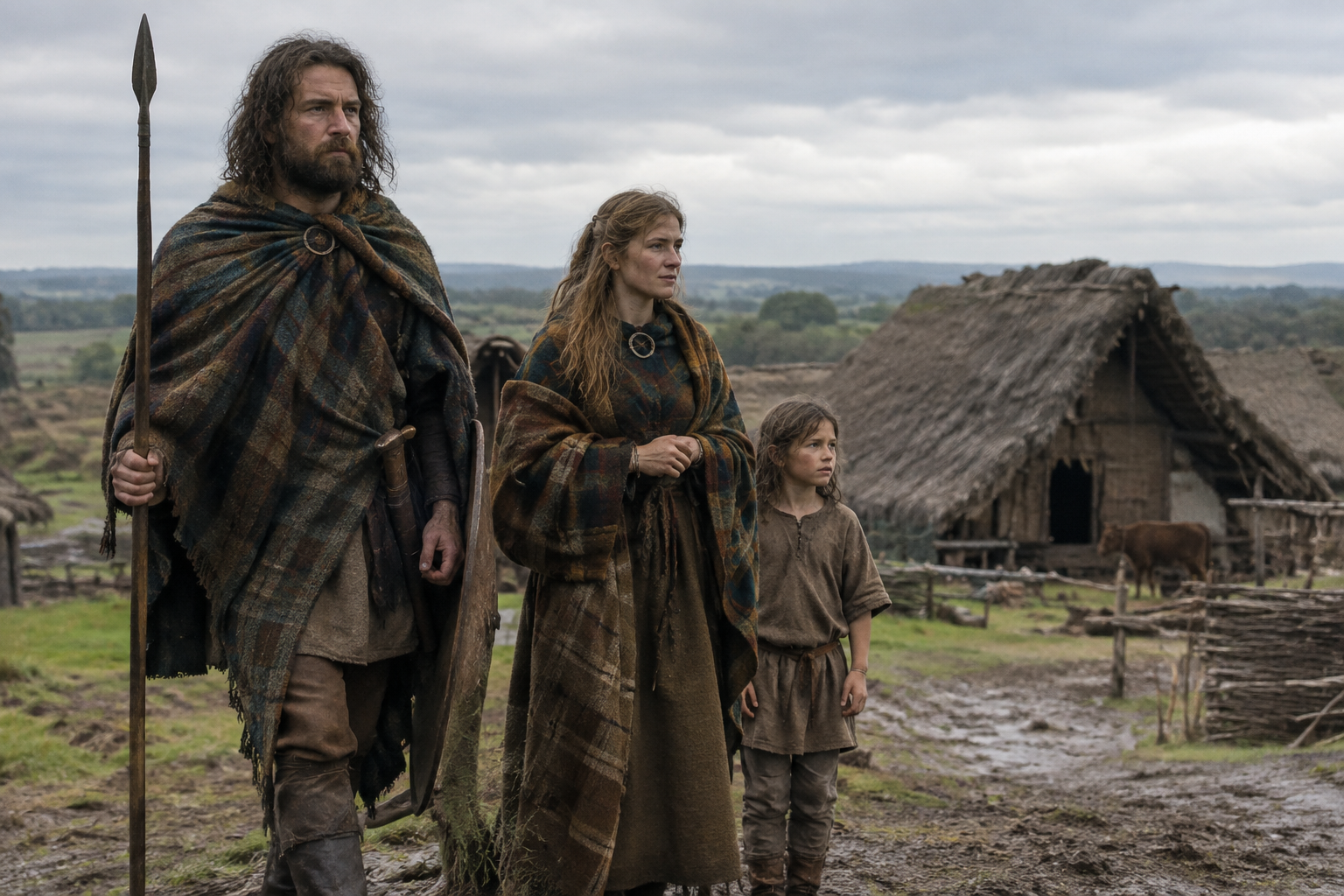
One of the clearest ancient signposts for the Y-DNA haplogroup R1b1a1b1a1a2h comes from Iron Age East Yorkshire: sample I28741, dated to around 270 BC and associated with the Celtic Parisi of the Melton area. That is already enough to make this lineage historically interesting. We are not dealing here with an abstract branch on a phylogenetic tree, but with a paternal line carried by a man living in the intensely local, very distinctive world of pre-Roman eastern Britain.
The fascination of a find like I28741 lies in its precision. Y-DNA follows one direct paternal line only, not a person's whole ancestry, but it can still pin a branch of male descent to a particular landscape and period. In this case, R1b1a1b1a1a2h appears in a region famous for its Iron Age communities, its links across the North Sea, and its long-standing place in debates about who the Parisi were and how eastern Yorkshire fitted into wider Celtic Europe.
East Yorkshire is one of the most archaeologically distinctive parts of Iron Age Britain. The area associated with the Parisi has long drawn attention because of its burial traditions and its position between inland Britain and the continental world. A man such as I28741, from Melton and dated to around 270 BC, belonged to that regional story before the Roman conquest and before later medieval identities reshaped the map.
That matters because the Parisi have often been discussed through classical references and material culture, sometimes with suggestions of continental links, especially to the Parisii of Gaul. Ancient DNA does not simply settle those old arguments in one stroke, but it gives us something firmer than literary guesswork: an actual paternal lineage anchored in an actual Iron Age individual from the region.
An ancient DNA study examining these British Iron Age populations is available at https://www.biorxiv.org/content/10.64898/2026.08.03.742615v2. Without overstating what a single sample can prove, it helps place men like I28741 within the increasingly detailed genetic map of later prehistoric Britain.
Iron Age Britain kinship study
The long label R1b1a1b1a1a2h is a narrow paternal subclade within the much broader R1b family, one of the major Y-chromosome groupings found across western Europe. It is important not to flatten those levels together. The wider R1b story reaches across large stretches of European prehistory, but this article's branch is much more specific, and the evidence here ties it, at minimum, to Iron Age eastern England through I28741.
That distinction is not pedantry; it is the whole point. A broad parent haplogroup may tell you about deep prehistoric expansions, while a finer branch can connect more closely to regional populations and later historical settings. In this case, the ancient evidence is not a claim that every man in Iron Age Yorkshire carried this line, nor that everyone with this haplogroup today descends from the Parisi. It does show that this paternal branch was present in that community by the 3rd century BC.
The most useful historical setting for I28741 is not an invented tale of tribal chiefs or heroic riders, but the real complexity of Iron Age eastern Britain. East Yorkshire sat within networks of exchange and contact that linked it to other British regions and to the European mainland. Archaeology has long shown that these communities were not isolated villages at the edge of nowhere. They were part of a busy world of movement, imitation, and local tradition.
That is where a lineage like R1b1a1b1a1a2h becomes especially suggestive. Its appearance in a Parisi-associated context reminds us that the male lines of Iron Age Britain were already the product of centuries of earlier population change. By 270 BC, this was not some freshly arrived identity stamped neatly onto the landscape. It was a lineage embedded in an established community whose culture was both local and connected.
Celtic language origins and DNA
That wider backdrop also helps explain why readers should be cautious with easy labels. "Celtic," "Parisi," "British," and a Y-DNA subclade are not interchangeable categories. One describes language and culture, another a historically named regional group, another a geographic identity, and the last a single paternal line. The power of ancient DNA is that it lets us hold those categories apart instead of muddling them together.
It is tempting to think one sample is too little to say much. In one sense, that is true: I28741 cannot stand in for all of Iron Age Britain. But archaeology is often like this. One securely placed individual can matter greatly when the context is clear, the date is useful, and the question is well framed.
For R1b1a1b1a1a2h, I28741 gives exactly that sort of anchor. The branch is not floating vaguely in "northwestern Europe" or "the Celtic world" in the abstract. It is attached to a person from East Yorkshire, living centuries before Rome absorbed Britain into an empire. That kind of placement is invaluable for anyone trying to understand how a modern paternal line may intersect with the peoples of later prehistoric Britain.
It also fits neatly into the broader trend in British archaeogenetics: local communities often look more historically textured, and less cartoonishly simple, once real genomes enter the picture. Ancient Britain was not made by one migration, one tribe, or one "type." It was built by repeated layers of continuity, mixture, and regional difference.
Roman and early medieval Britain DNA
If your paternal line falls under R1b1a1b1a1a2h, the strongest point this evidence currently offers is a tangible link to Iron Age eastern Britain through sample I28741 of the Celtic Parisi, around 270 BC. That does not hand you a named tribe as a modern identity badge, still less a neat family tree back to one excavated man. What it does give is something better grounded: proof that this direct male line was part of the human landscape of pre-Roman East Yorkshire.
For many people, that is exactly where archaeogenetics becomes most rewarding. Not in fantasy pedigrees, but in the moment when a paternal branch stops being just a code and starts to belong to a real place, a real period, and a real community in the ancient world.
Comments