Haplogroup R1b1a1b1a1a2c1b2

– 5 min read


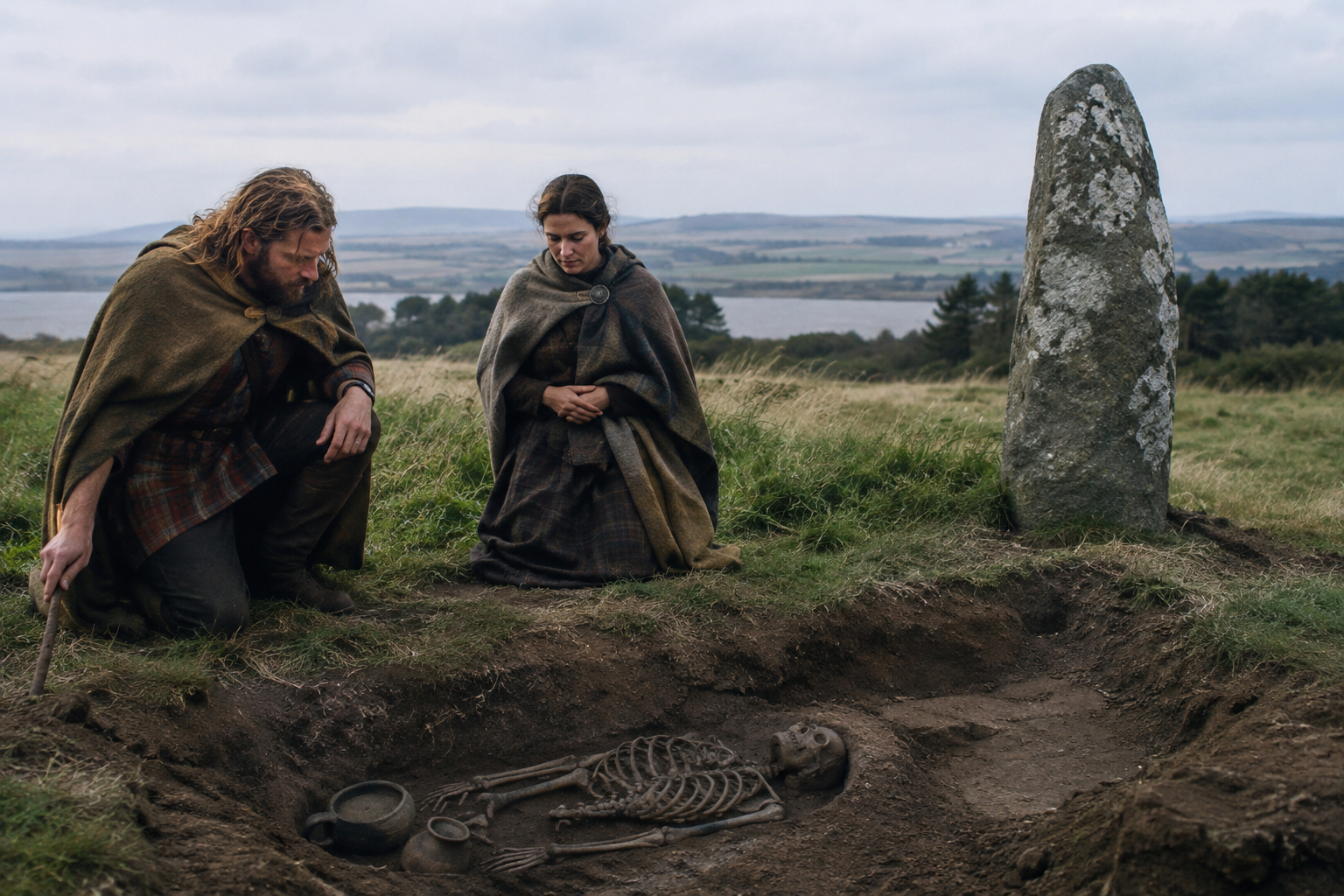
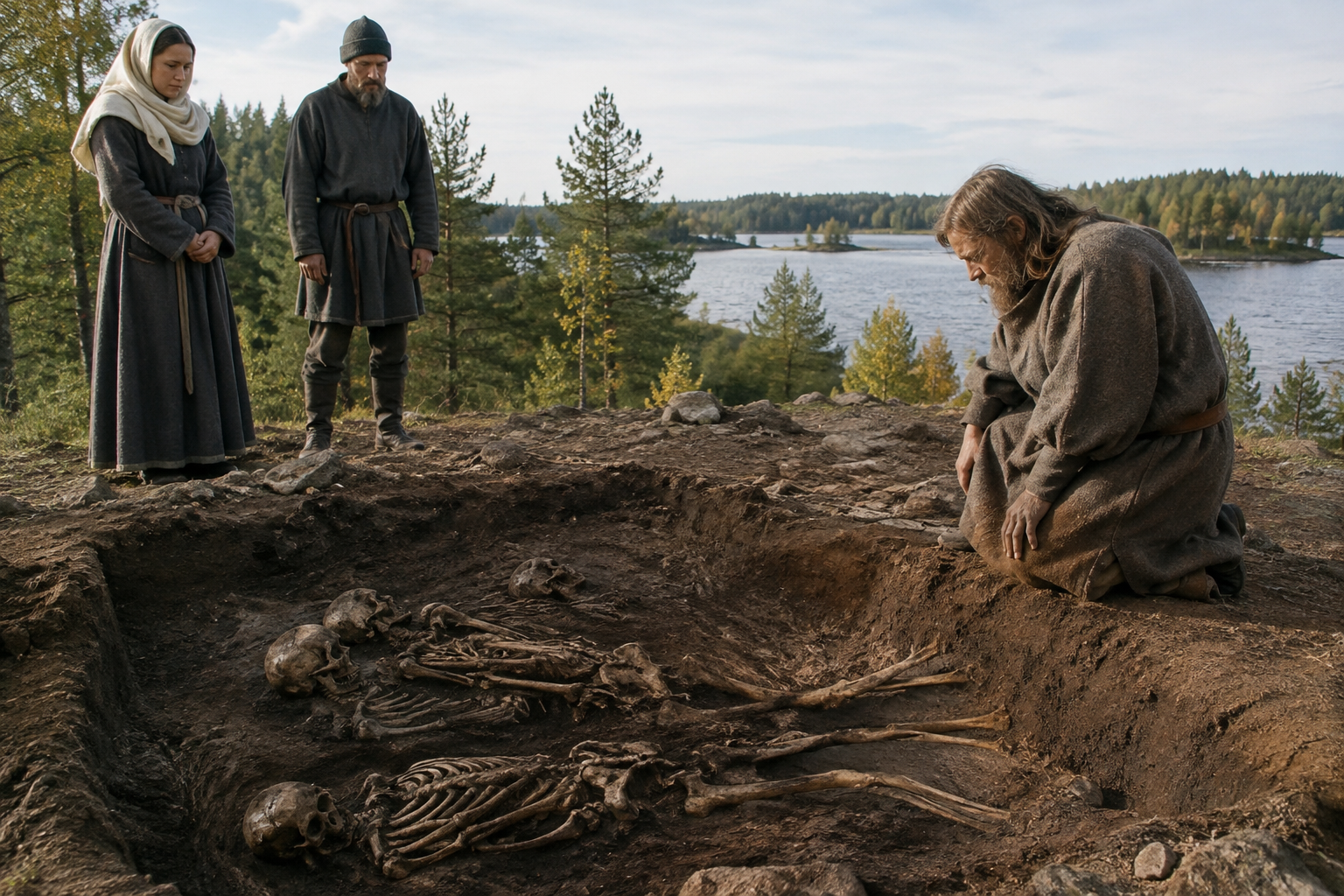
At Wetwang Slack in East Yorkshire, one Iron Age burial has become especially interesting for paternal-line research: sample I36872, dated to around 225 BC and identified with the Celtic Parisi of Iron Age England. On its own, that is already a striking combination of place, date, and culture. Add the reported Y-DNA branch R1b1a1b1a1a2c1b2, and the grave becomes a small but useful window into how one paternal line appears within the archaeology of later prehistoric Britain.
This matters because Y-DNA follows a direct male line only: father to son, and so on. It does not define a person's whole ancestry, language, or identity. But when a branch such as R1b1a1b1a1a2c1b2 turns up in a securely dated Iron Age context, it helps place that paternal line in a real landscape of communities, cemeteries, and historical change rather than in a merely abstract haplotree.
Wetwang Slack sits in one of the most archaeologically distinctive parts of Iron Age Britain. East Yorkshire is well known for the Arras culture burials of the middle and later Iron Age, a regional tradition often discussed alongside the people later called the Parisi in classical sources. That does not mean every individual from the area can be straightforwardly turned into a tribal emblem; still, the regional context is unusually strong, and that is what gives I36872 its weight.
The sample is identified simply and solidly: a Parisi-period burial from Iron Age East Yorkshire, around the 3rd century BC. Even with sparse personal detail, that is enough to make the case historically vivid. We are not dealing with a vague "ancient British" male from an unknown site, but with a man from a recognisable archaeological zone where burial practice, regional identity, and local continuity have long been debated.
In other words, R1b1a1b1a1a2c1b2 here is not floating free. It is anchored to a particular social world: later prehistoric eastern Yorkshire, where communities buried their dead in ways distinct enough to make the region stand out in British archaeology.
The long form of this haplogroup name tells you immediately that we are dealing with a narrow paternal branch nested inside the much broader R1b family. That broader family is famous in western European population history, but that fame can be a trap. It would be careless to pour the whole story of R1b into this one much smaller subclade as though they were interchangeable.
For this article, the defensible point is simpler. The branch R1b1a1b1a1a2c1b2 is reported here in an Iron Age male from East Yorkshire. That places this paternal line, or a lineage very close to it, within pre-Roman Britain before the upheavals of Roman rule, post-Roman migration, and the reshaping of medieval populations.
That sort of evidence is especially valuable in Britain, where later history can easily drown out earlier layers. A lineage found in a securely pre-Roman grave reminds us that some paternal lines associated with modern people in Britain and nearby regions may reach back into local Iron Age populations, even though no single burial can stand for an entire people.
It is tempting to dismiss a lone sample as too slight to say much. Sometimes that is true. But archaeology often advances by fixing one reliable point on the map and then asking better questions around it.
With I36872, the key contribution is chronological and regional. The lineage is not merely "British" in some broad and fuzzy sense; it is tied to a specific Iron Age setting in East Yorkshire, before Roman political incorporation. That helps distinguish deep local paternal presence from later introductions.
It also sharpens an old historical question about eastern Britain. East Yorkshire was never culturally isolated, and Iron Age Britain was not a sealed world of static tribes. Material culture, contacts across the North Sea, and continental connections all complicate the picture. A paternal lineage in this setting therefore belongs not to a romantic cartoon of "pure Celts", but to a real and mobile Iron Age society with regional habits and wider links.
A recent ancient DNA preprint on Iron Age and later British material is linked with this sample's research trail, and while one should be cautious not to overstate any unverified detail, it reflects the growing effort to place burials like Wetwang Slack into a broader genomic history of Britain: https://www.biorxiv.org/content/10.64898/2026.08.03.742615v2.
One of the most important lessons from ancient DNA in Britain is that archaeological labels and genetic patterns do not line up in tidy one-to-one fashion. A burial can be culturally "Iron Age British" without that meaning all such people shared the same paternal ancestry. Equally, a Y-line found in one cemetery may continue through many later populations that changed language, politics, and identity several times over.
That is exactly why a sample like I36872 is useful. It provides a fixed observation from the centuries before Rome arrived. When later studies explore Roman Britain, early medieval England, or post-medieval regional populations, pre-Roman burials offer the essential baseline.
For descendants researching a branch such as R1b1a1b1a1a2c1b2, the attraction is not that this single man can be turned into an ancestor in the family-tree sense. The attraction is that he demonstrates the branch in an identifiable Iron Age community of eastern Britain. That is a properly archaeological statement, and quite a powerful one.
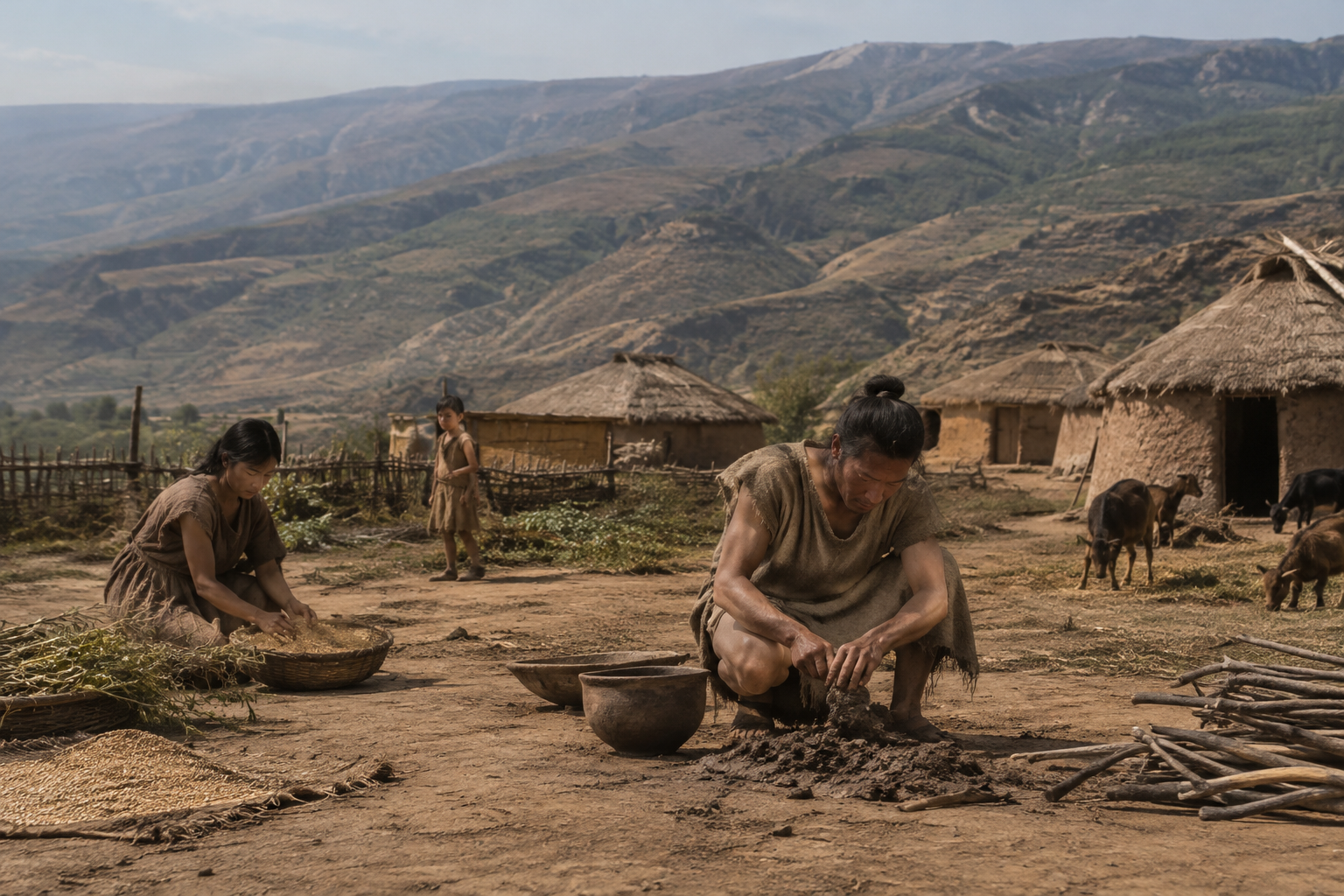
The date matters as much as the place. Around 225 BC, Britain was not on the edge of written history waiting for Rome to explain it. It already contained mature regional societies with their own burial customs, exchange networks, and local identities. East Yorkshire's cemeteries are part of that story, and they remain some of the best evidence for how communities in later prehistoric Britain marked status, memory, and belonging.
In that sense, the Y-DNA result adds another layer to an already rich archaeological region. It does not replace the artefacts, cemetery pattern, or landscape archaeology. Rather, it joins them. A lineage such as R1b1a1b1a1a2c1b2 becomes historically meaningful when attached to a place like Wetwang Slack, where the wider setting is so well established.
That also makes the sample a useful counterweight to over-simple narratives of migration. Some paternal branches certainly moved over long distances in prehistory. But by the Iron Age, what we often see archaeologically is not a neat arrow on a map, but a settled local world shaped by generations of continuity as well as older movements.
For R1b1a1b1a1a2c1b2, the strongest point here is not grandeur but grounding. This branch is represented by an Iron Age male from Wetwang Slack in East Yorkshire, within the archaeological world of the Parisi, around the 3rd century BC. That places the lineage in Britain well before the Roman and medieval eras that more often dominate family-history imagination.
So if you carry this paternal line, the most responsible historical takeaway is that your direct male ancestry belongs to a branch already present in at least one documented Iron Age community in Britain. It is a modest claim, but a meaningful one: your Y-line is not just a code on a chart, but part of the human history of a real burial ground in pre-Roman Yorkshire.
Comments