Haplogroup R1b1a1b1a1a2c1a4e

– 4 min read


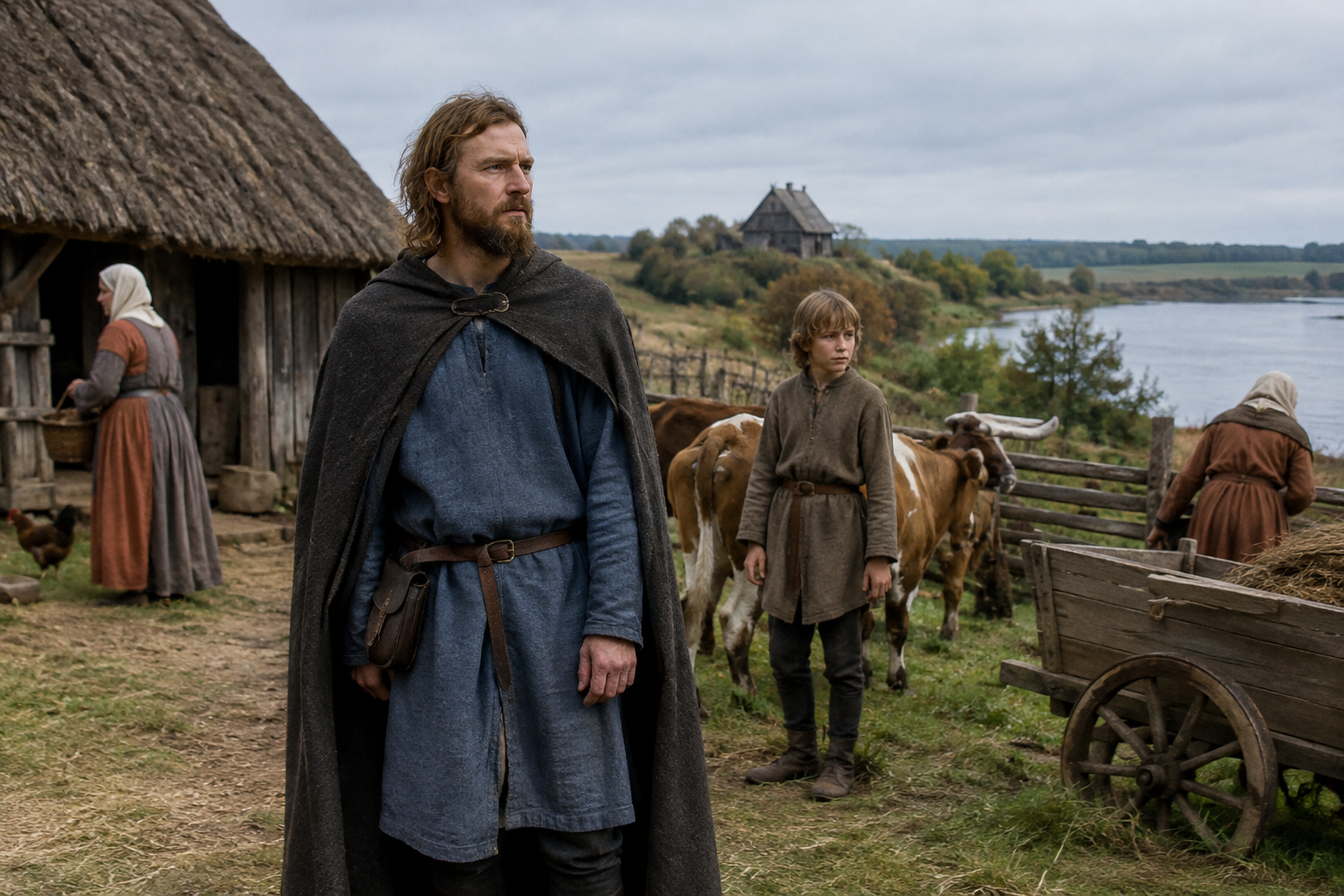
In medieval Jutland, at Tjaerby near Randers, one man dated to around AD 1325 has become a small but intriguing witness to the history of paternal ancestry in Scandinavia. He is recorded as sample CGG100682, and he is the clearest ancient anchor here for the Y-DNA branch R1b1a1b1a1a2c1a4e. That may look like an intimidating string of letters and numbers, but archaeologically the point is rather human: a man from late medieval Denmark carried a paternal line that today survives in living descendants and can now be placed, however cautiously, within a real historical setting.
What makes this especially interesting is the date. By the fourteenth century, Denmark was long past the Viking Age and deep into a Christian, literate, and politically connected medieval world. So this haplogroup does not appear here in some misty prehistoric vacuum. It turns up in a settled agricultural landscape of parishes, churchyards, lordship, and regional trade. Y-DNA traces only one direct male line, not a person's whole ancestry, but even that single line can be a useful thread when it is tied to an excavated individual rather than to modern surname lore alone.
The known ancient evidence in this case is spare but solid enough to be worth attention. CGG100682 comes from Tjaerby in Jutland, the peninsula that formed the mainland core of the medieval Danish kingdom. A medieval Jutland burial dated to about AD 1325 places this paternal lineage in a society shaped by centuries of demographic mixing within Scandinavia and around the North Sea.
That setting matters. Medieval Jutland was not an isolated backwater. It stood at the crossroads of movement between the Danish islands, the North Sea coast, the Baltic, and the wider German-speaking world to the south. A lineage found there might reflect older Scandinavian continuity, earlier migration-period movements, Viking-era mobility, or later medieval circulation of people within a Christian kingdom. With only one ancient sample, it would be rash to choose just one of those stories. But it is entirely fair to say that this branch was present in Denmark by the later Middle Ages.
A broader ancient DNA study of Denmark has shown just how much population history lies behind such a seemingly simple result, with major shifts between the Mesolithic, Neolithic, Bronze Age, and later periods. For readers wanting the larger Scandinavian background into which this medieval man fits, research on ancient genomes from Denmark is available at https://www.nature.com/articles/s41586-022-05247-2.
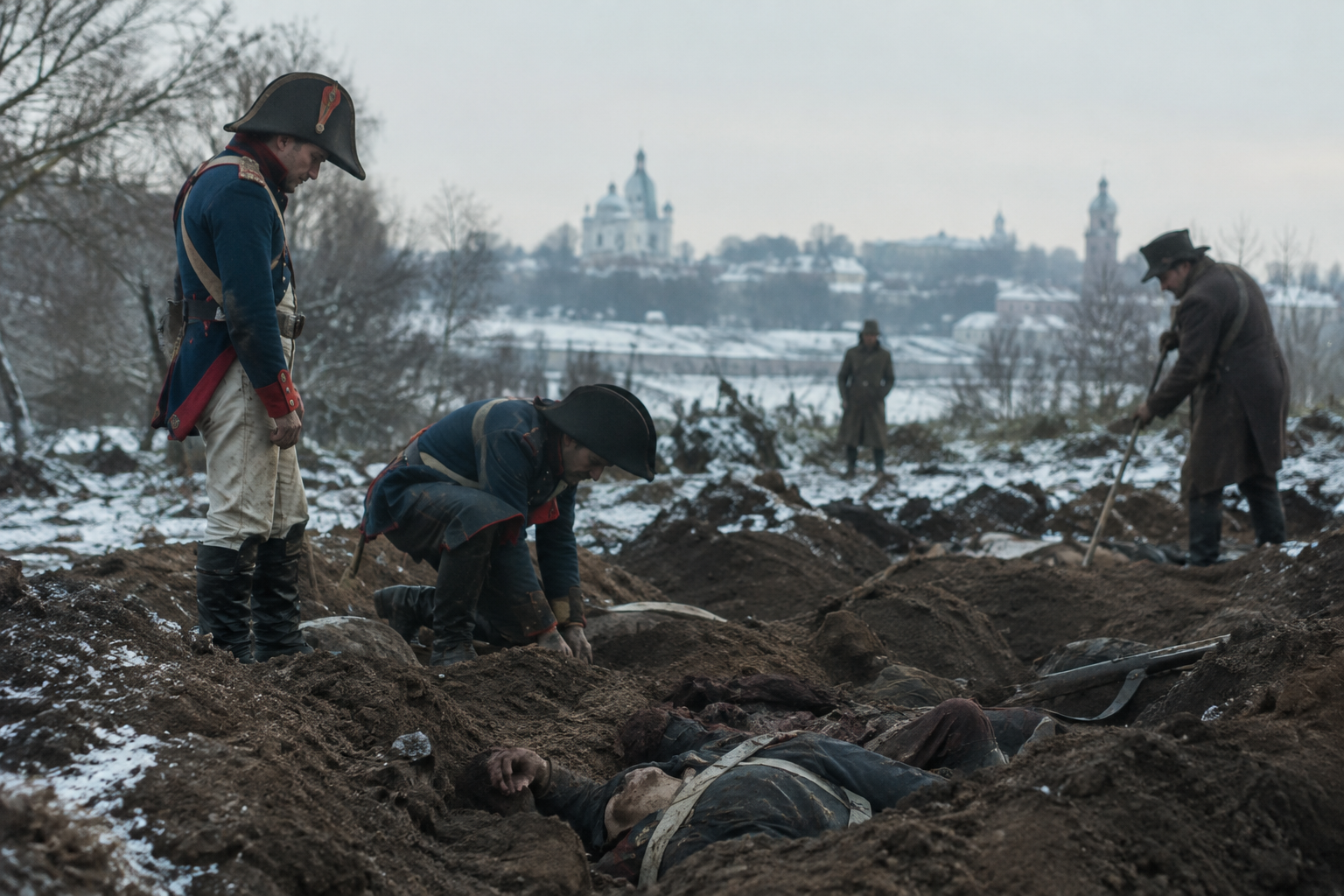
Denmark before the Middle Ages
The exact article haplogroup, R1b1a1b1a1a2c1a4e, is a very narrow twig on the far larger R1b tree. That distinction is important. The ancient and modern history of broad R1b lineages across western Eurasia is not automatically the history of this precise subclade. A downstream branch can have a much more specific and much later story than its parent.
So the medieval Tjaerby man should not be used as a license for sweeping claims about all R1b lineages in Europe, still less as proof of a single ethnic identity. Paternal branches do not map neatly onto labels like "Danish," "Germanic," or "Viking." What they can do is show that one line of descent had reached, or remained in, a documented population at a documented time. In this case, the secure point is late medieval Jutland.
That may sound modest, but modest evidence is often the most useful kind. It narrows the field. Instead of drifting among legends, we can place this lineage inside the historical landscape of medieval Denmark, where communities were already the product of many earlier layers of settlement and exchange.
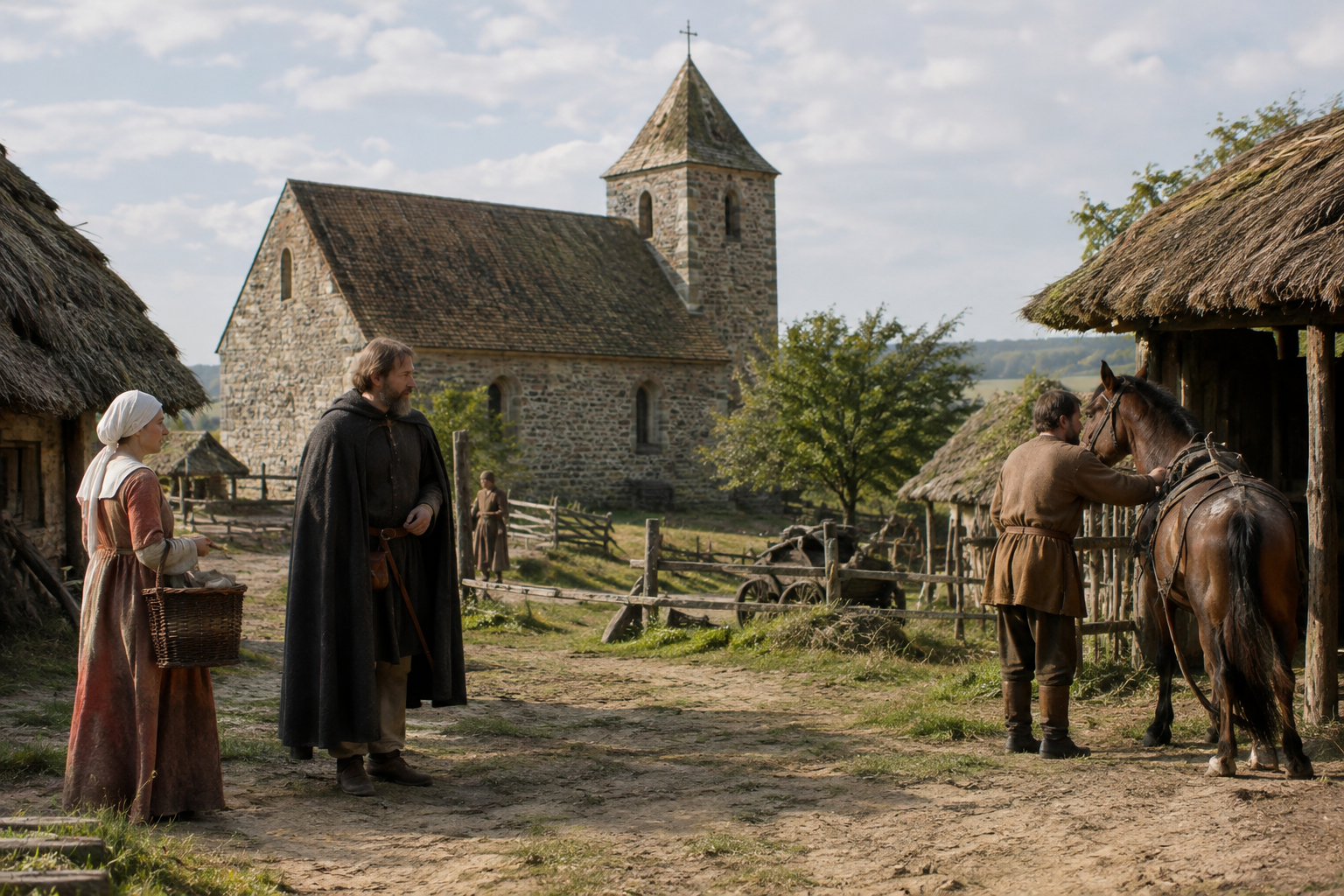
There is a temptation, whenever a Scandinavian sample appears, to leap straight to longships and saga heroes. But CGG100682 belongs to a different chapter. Around AD 1325, Denmark was a kingdom of churches, markets, regional law, and landed power. Burial customs had long been transformed by Christianity, and the old pagan-Viking world was centuries in the past.
This is precisely why the sample is useful. It reminds us that Scandinavian genetic history did not stop with the Viking Age. Paternal lines continued through periods of political consolidation, ecclesiastical organization, plague-era disruption, and everyday village life. Many surviving lineages may owe as much to the reproductive history of medieval farmers, townsmen, and parish communities as to any dramatic earlier migration.
Jutland itself was central to these developments. It linked Denmark to the Holy Roman Empire's northern orbit while remaining deeply Scandinavian in language and social structure. A Y-line found there in the fourteenth century could easily belong to a family whose local roots went back many generations, or to one whose ancestors had arrived through older North Sea or Baltic movements. The sample does not let us choose between those options, but it securely places the branch within that connected world.
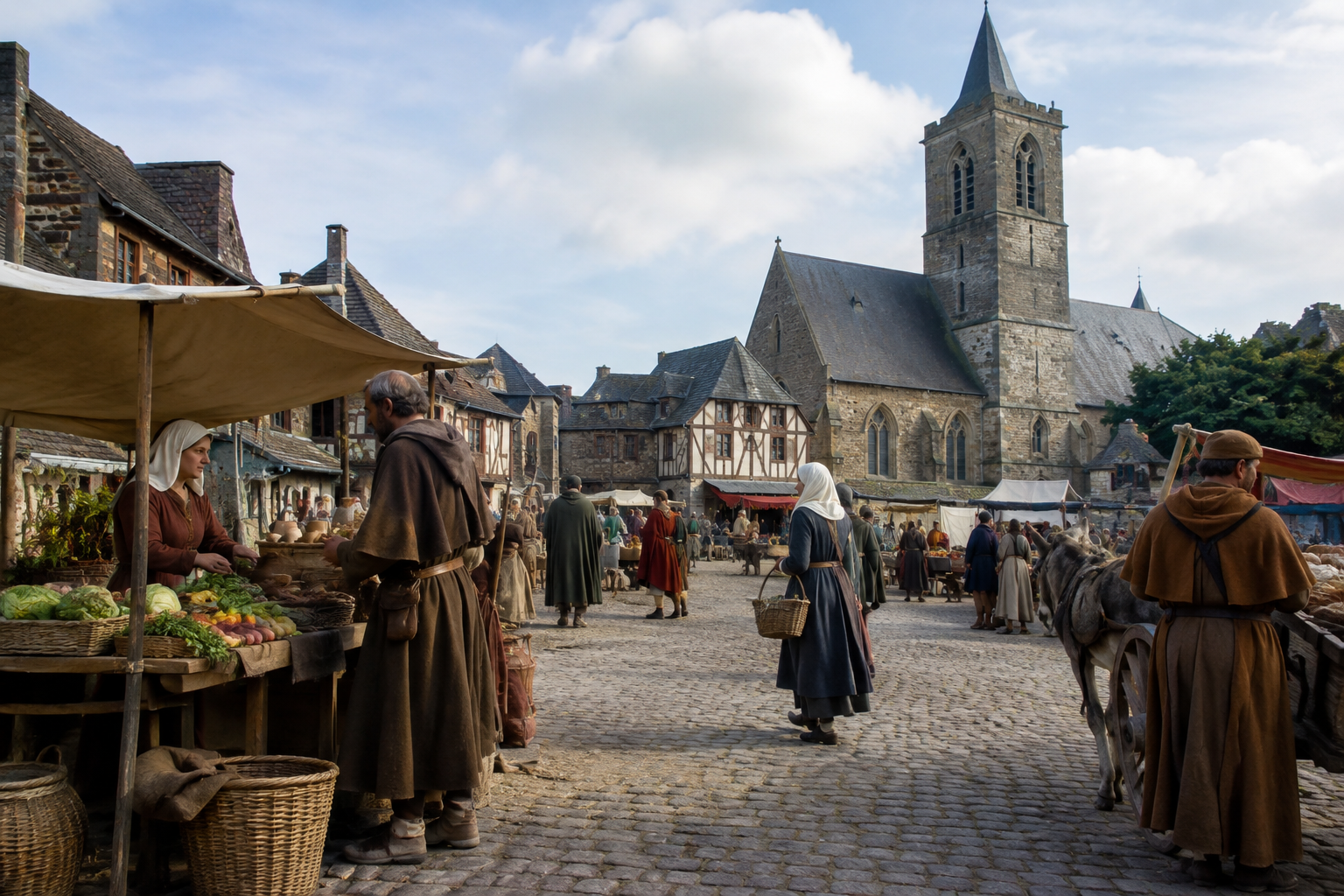
Germanic languages and ancient genomics
Ancient DNA articles often shine when they have dozens of individuals, kin groups, or cemetery clusters. Here the evidence is thinner: one named medieval Danish individual, one place, one approximate date. Yet that kind of find still has real value. For many narrow Y-DNA branches, the problem is not too much evidence but too little. Even a single ancient placement can mark the difference between abstract phylogeny and grounded history.
It also helps that the context is northern Europe in a period where documentary history and archaeology can speak to each other, even if not directly to this man by name. We know the kind of society he inhabited. We know Jutland's role in regional networks. We know that medieval populations of Scandinavia were not biologically frozen relics of an earlier age, but part of a long, dynamic history.
That perspective matches a growing body of work across northern Europe, where ancient genomics is steadily filling in the centuries after Rome and beyond the Viking Age. The result is less a tale of pure peoples than of continuity, reshuffling, and local survival within broader historical change.
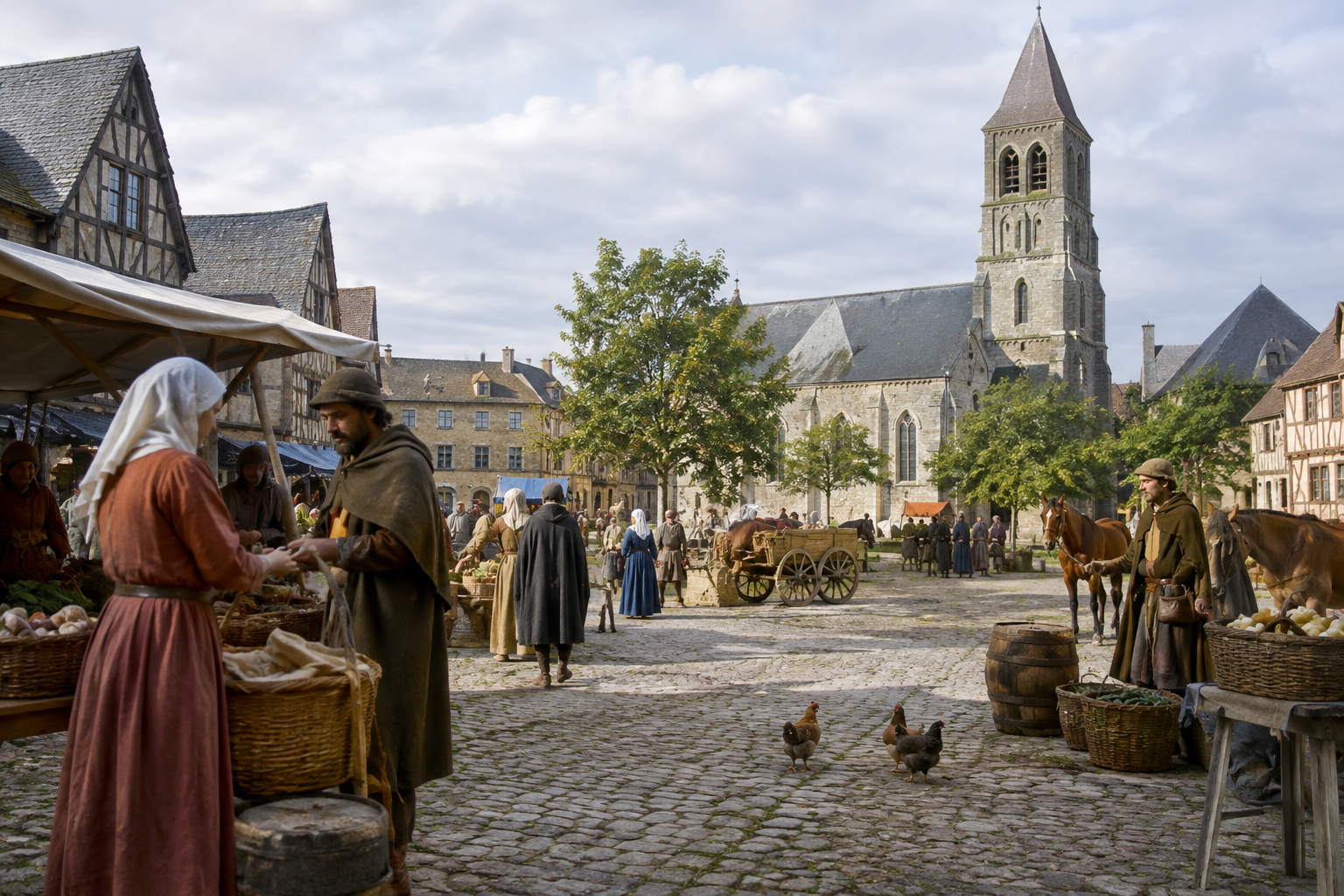
Post-Viking Christian Scandinavia
For someone researching R1b1a1b1a1a2c1a4e today, the strongest supported takeaway is not a romantic origin myth but a historically grounded foothold: this paternal branch is attested in medieval Denmark through CGG100682 from Tjaerby, Randers, around AD 1325. That does not prove that every modern bearer descends from Denmark, and it does not compress all of R1b into one Scandinavian story. But it does show that this lineage belonged to the lived population of medieval Jutland, in a region central to the making of later Scandinavian history.
Sometimes that is the most useful kind of ancient DNA result: not a grandiose claim, but a real person in a real place, keeping one paternal line visible across the centuries.
Comments