Haplogroup R1b1a1b1a1a2c1a1d4a

– 4 min read


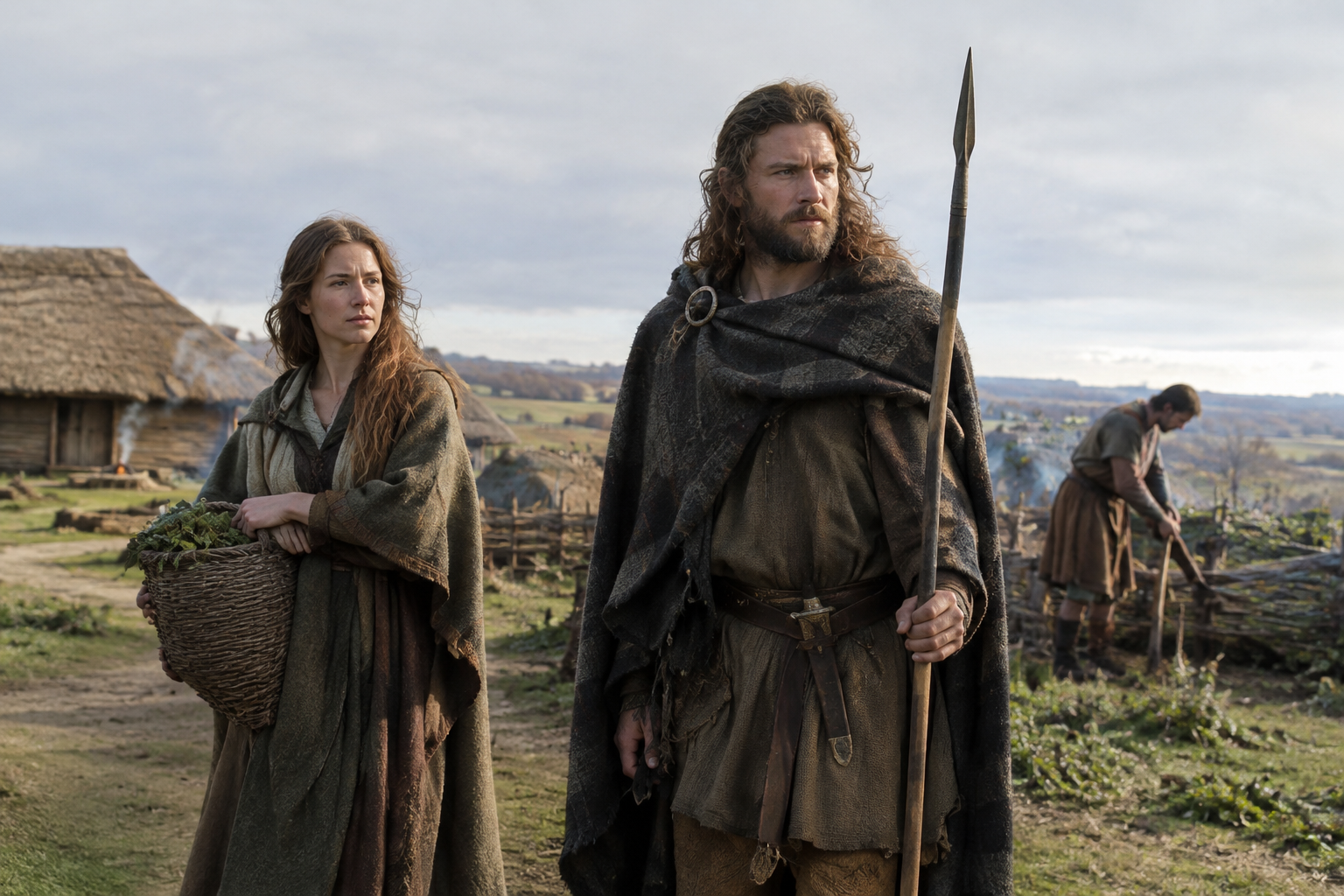
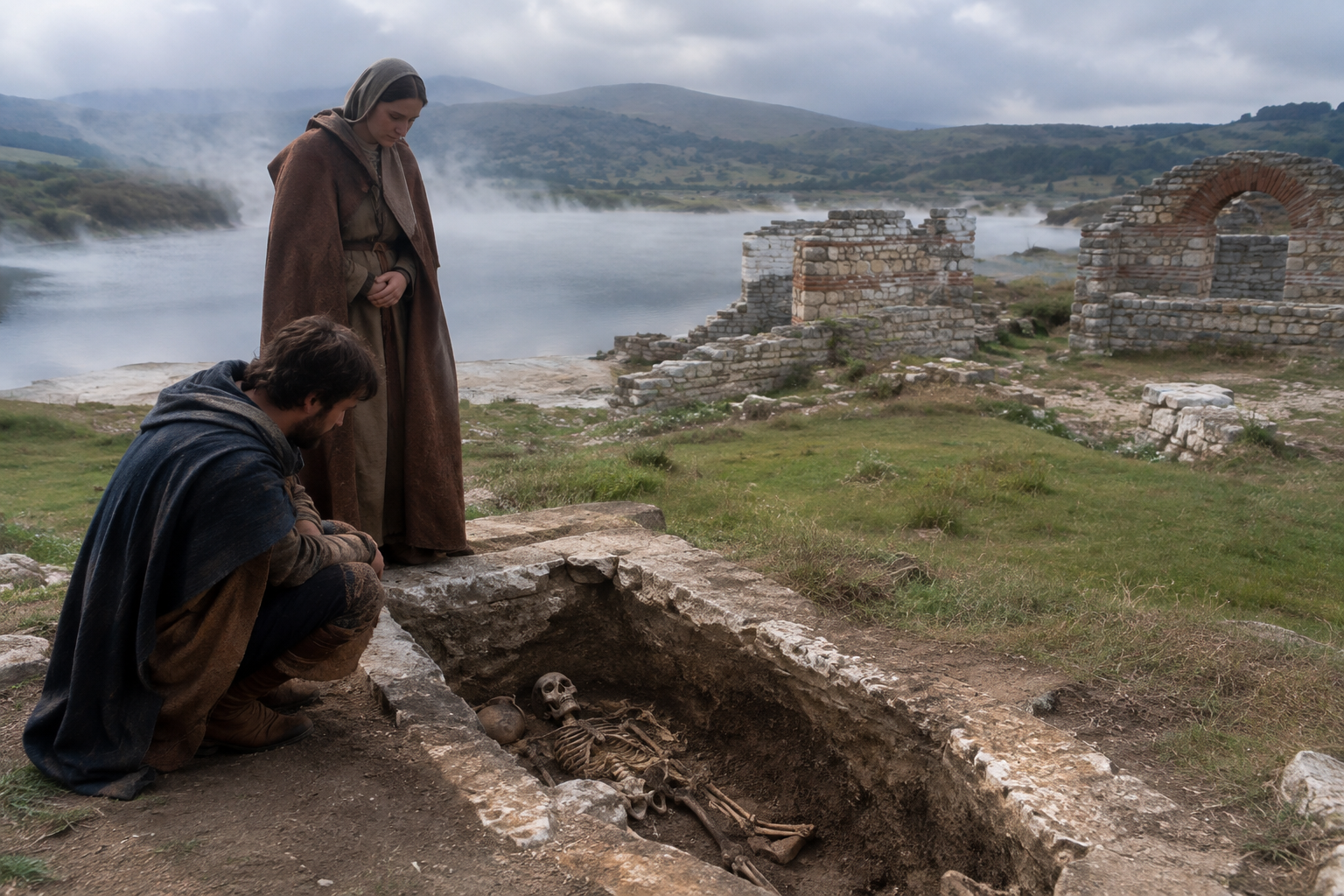
At Pocklington in East Yorkshire, one of the most closely watched Iron Age burial landscapes in Britain has produced a man identified as I21624, dated to around 225 BC and classified with the Celtic Parisi of Iron Age England. That is already interesting enough archaeologically: Pocklington has become one of the key places for thinking about Late Iron Age life in eastern Yorkshire. But for Y-DNA researchers, this individual matters for another reason as well. He has been associated with the paternal lineage R1b1a1b1a1a2c1a1d4a.
That long string of letters and numbers is not a label for a people, a tribe, or a nationality. It is a very narrow Y-chromosome branch, tracing one direct paternal line among countless other ancestors. Still, when a branch this specific appears in a documented Iron Age burial from Britain, it gives us something precious: a securely placed point in time and space for a lineage that can otherwise feel abstract.
The Parisi are known from Iron Age East Yorkshire, especially from the Arras culture zone with its distinctive burial traditions. Pocklington sits within that wider archaeological world. It is exactly the kind of place where genetics can be most useful, not because it replaces archaeology, but because it lets us ask whether the men buried there belonged to paternal lines that were already well established in Britain, or whether some of those lines reflect broader connections across Iron Age Europe.
With I21624, the evidence is modest but important. We have an ancient individual, a broad cultural attribution to the Celtic Parisi, a date around the 3rd century BC, and a reported association with the branch R1b1a1b1a1a2c1a1d4a. That does not make him a "founder" of anything, and it certainly does not let us speak for all Parisi men. But it does place this paternal line inside a real Iron Age community in northern Britain rather than in a purely modern testing context.
The wider background here is the huge and complicated family of western Eurasian R1b lineages. Many branches of R1b became prominent in later prehistoric and historic Europe, especially after Bronze Age population changes. But that broad history should not be lazily poured into a much narrower twig like R1b1a1b1a1a2c1a1d4a. A deep subclade has its own later story, and often a much more regional one.
So what can be said responsibly? First, this branch was present in Iron Age eastern England by around 225 BC. Second, it turns up in a setting associated with a community that archaeologists already regard as distinctive within Britain. Third, because Y-DNA follows only the direct male line, it tells us nothing by itself about the full ancestry, language, appearance, or social role of I21624. That may sound limiting, but in practice it is how useful history is built: one well-placed piece at a time.
A recent ancient DNA study connected with Iron Age and later British populations is relevant here because it reflects the growing effort to place British burials into a denser genomic framework. Even when one article or preprint does not answer every question about a particular subclade, that broader regional work is exactly what gives a sample like I21624 its value.
East Yorkshire is not just another dot on the map. In Iron Age archaeology it has long stood out because of its burial record, especially in contrast to areas of Britain where formal burial is less visible or survives differently. That makes the region unusually rich ground for comparing cultural practice and biological ancestry.
When a specific paternal lineage appears here, the interest lies partly in local continuity and partly in wider links. The Parisi have often attracted discussion because classical writers mention a group of that name, and because Yorkshire's Iron Age archaeology sometimes seems to point toward continental connections. Genetics does not solve that question on its own. But a securely dated male lineage from Pocklington gives us firmer evidence for the biological diversity within that eastern British world.
There is a temptation, whenever an Iron Age sample carries a narrow Y-DNA branch, to turn it into a saga of migrating warriors or tribal dynasties. That is exactly where caution matters most. From the evidence available here, I21624 is one ancient man from one region and one period. We should not inflate him into the representative of all Britons, all Celts, or even all men buried at Pocklington.
What he does offer is something more solid. He anchors R1b1a1b1a1a2c1a1d4a in a documented archaeological landscape before the Roman conquest of Britain. That matters especially for users whose present-day paternal line falls on a very narrow branch and who want to know whether it can be glimpsed in the ancient record. Sometimes the most useful answer is not grandiose at all: your lineage was there, in a known community, at a known time.
Across Iron Age Britain, ancient DNA is steadily replacing old assumptions with more textured histories. Some communities show signs of continuity from earlier local populations; others reveal mobility, mixture, and shifting social patterns. The point is not that every region behaved the same way, but that Britain before Rome was already diverse in both culture and ancestry.
Pocklington helps make that diversity visible. A lineage such as R1b1a1b1a1a2c1a1d4a, tied to I21624, reminds us that paternal histories can be very local in their ancient visibility even when their deeper background belongs to much larger European stories. If you want a broader sense of how these regional patterns are being reconstructed, the emerging picture in Roman and early medieval Britain shows just how much population history can shift across periods without erasing older foundations.
The most distinctive thing about this haplogroup, on current evidence, is not a royal pedigree or a mythical migration trail. It is that one of its ancient signposts stands in Iron Age East Yorkshire, among the Parisi, before Rome remade Britain's political world. For someone researching a paternal line, that is a meaningful sort of depth: not fantasy ancestry, but a real man in a real archaeological landscape, carrying a direct male line that survived into the present in at least some descendants.
Comments