Haplogroup R1b1a1b1a1a2c1a1a1a1a1b2
– 5 min read


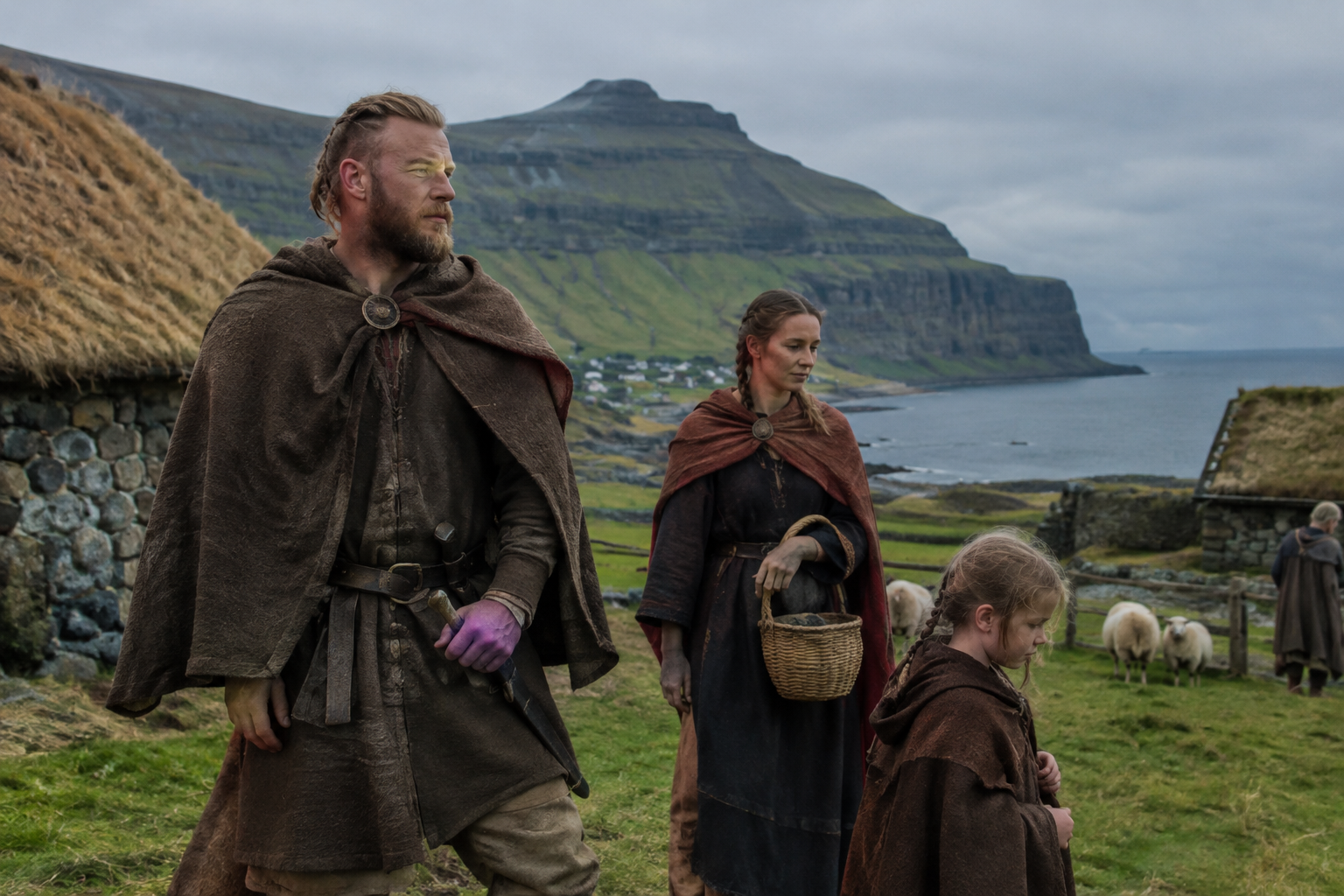
At Panum in the Faroe Islands, one Viking Age man has become unexpectedly important for the history of a very narrow paternal line. He is listed as VK24, dated to around AD 1050, and associated here with the Y-DNA haplogroup R1b1a1b1a1a2c1a1a1a1a1b2. That is an extraordinarily specific branch name, and the striking thing is not that it belonged to a famous king or saga hero, but that it turns up in a place that sits right on the edge of the medieval North Atlantic world.
The Faroes are often treated as a sort of Viking stepping-stone between Scandinavia, the British Isles, Iceland, and beyond. But ancient DNA gives them a more human scale. A single Y-chromosome result such as this does not tell us everything about VK24's ancestry, language, or identity. It traces one direct paternal line only. Even so, a find like this matters because it places that paternal branch in a real person, in a real island community, at a moment when the Faroes were already deeply woven into the sea-routes of the Viking and early Christian North.
By about AD 1050, the Faroes were no longer a raw frontier in the dramatic saga sense. They were settled, connected, and politically entangled with larger Scandinavian worlds. A burial or skeletal context from this period belongs to communities living after the first phase of Norse colonization, in a society shaped by farming, maritime travel, and regular contact across the ocean.
That makes VK24 especially useful. The haplogroup attached to him, R1b1a1b1a1a2c1a1a1a1a1b2, is not a broad umbrella like "R1b" in general, but a fine-grained twig on a much larger paternal tree. One ancient individual in the Faroes cannot define the branch's whole history, of course. What he can do is anchor it in the medieval North Atlantic, showing that this lineage was present among the men who inhabited one of Europe's most maritime island societies.
A population-genetic study of the Faroese and related North Atlantic material has helped frame exactly this wider context, even when individual line assignments remain more precise in some records than in others. For the broader background to settlement, ancestry, and isolation in the islands, see this research on Faroese ancient and population genomics.
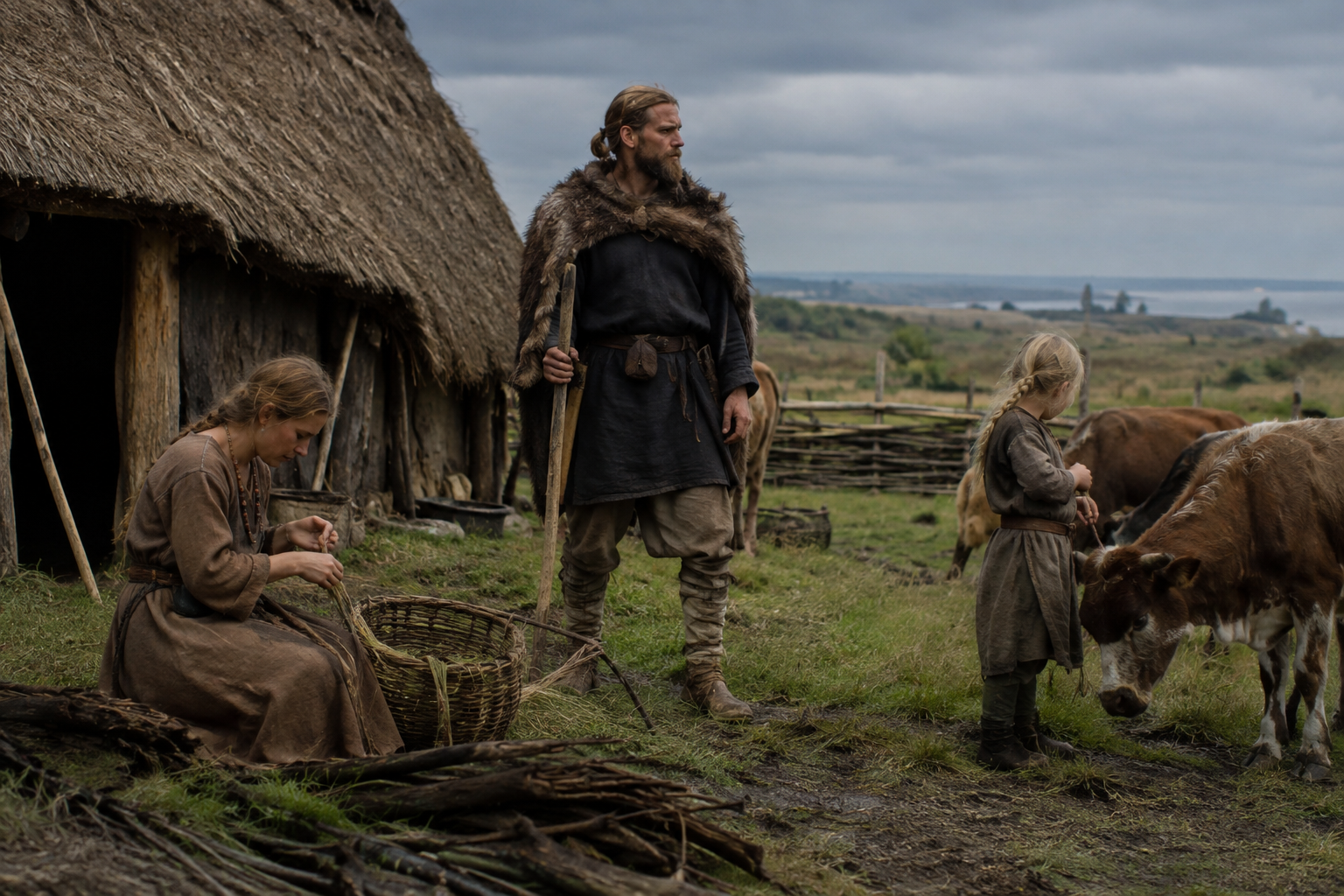
Faroese ancestry and selection
With a haplogroup this long, the temptation is to turn it into a grand migration tale all by itself. Better not. The safe point is that VK24 is associated with an extremely downstream branch within the wider R1b paternal family, one of the major Y-chromosome groupings found across western Eurasia. The broader parent lineage has a very large and complicated history, but that history cannot simply be pasted onto this exact subclade without direct evidence.
So the value of the Panum sample lies in scale and precision. Instead of saying only that some ancestor belonged to a common western Eurasian paternal family, this ancient man lets us say that a very specific branch had reached, or persisted in, the Faroes by the mid-11th century. That is exactly the sort of detail that matters in genetic genealogy: not grand slogans, but a branch tied to a place and date.
The archaeology and historical setting of the Faroes make them particularly interesting for Y-DNA interpretation. Medieval island communities in the North Atlantic were not sealed containers. Their people emerged from movement: settlers from Scandinavia, contacts with the Norse colonies to the west, and substantial ties to the British Isles, which ancient DNA has repeatedly shown to be important in the making of North Atlantic populations.
That does not mean VK24 can be labelled "Norwegian," "Gaelic," or anything similarly neat on the strength of a single paternal line. What it does mean is that his lineage belonged to a social world shaped by ships, kin networks, marriage exchange, and long-distance movement. In that setting, a branch like R1b1a1b1a1a2c1a1a1a1a1b2 may reflect how male lines were carried into island communities and then preserved there across generations.
The Faroes are often overshadowed by Iceland and Greenland in popular Viking storytelling, but they are arguably even more useful for understanding continuity. These islands were not a brief experiment. They were enduring settlements, and lineages found there speak to survival, inheritance, and ordinary family history as much as to exploration.
Ancient DNA articles are often strongest when they have many burials, rich grave reports, or clear kinship groups. Here the evidence is more spare, which makes the sample's usefulness different rather than lesser. VK24 matters because he is a fixed point: Viking Age, Faroe Islands, around AD 1050, and associated with this exact Y-line. For a descendant testing today, that sort of anchor can be more valuable than a cloud of vague historical claims.
It also reminds us that the Viking world was not made only by raiders and rulers. It was made by households. A Y-chromosome lineage survives not because it appears in textbooks, but because generation after generation of men had sons. That is the quiet reality behind every deep haplogroup name.
Work on northern European language spread and migration has also underlined how genetics can illuminate networks without reducing them to a single ethnicity. A useful companion piece on this wider question is MyTrueAncestry's discussion of Germanic languages and ancient genomics, which helps place North Atlantic paternal lines in a broader historical frame.
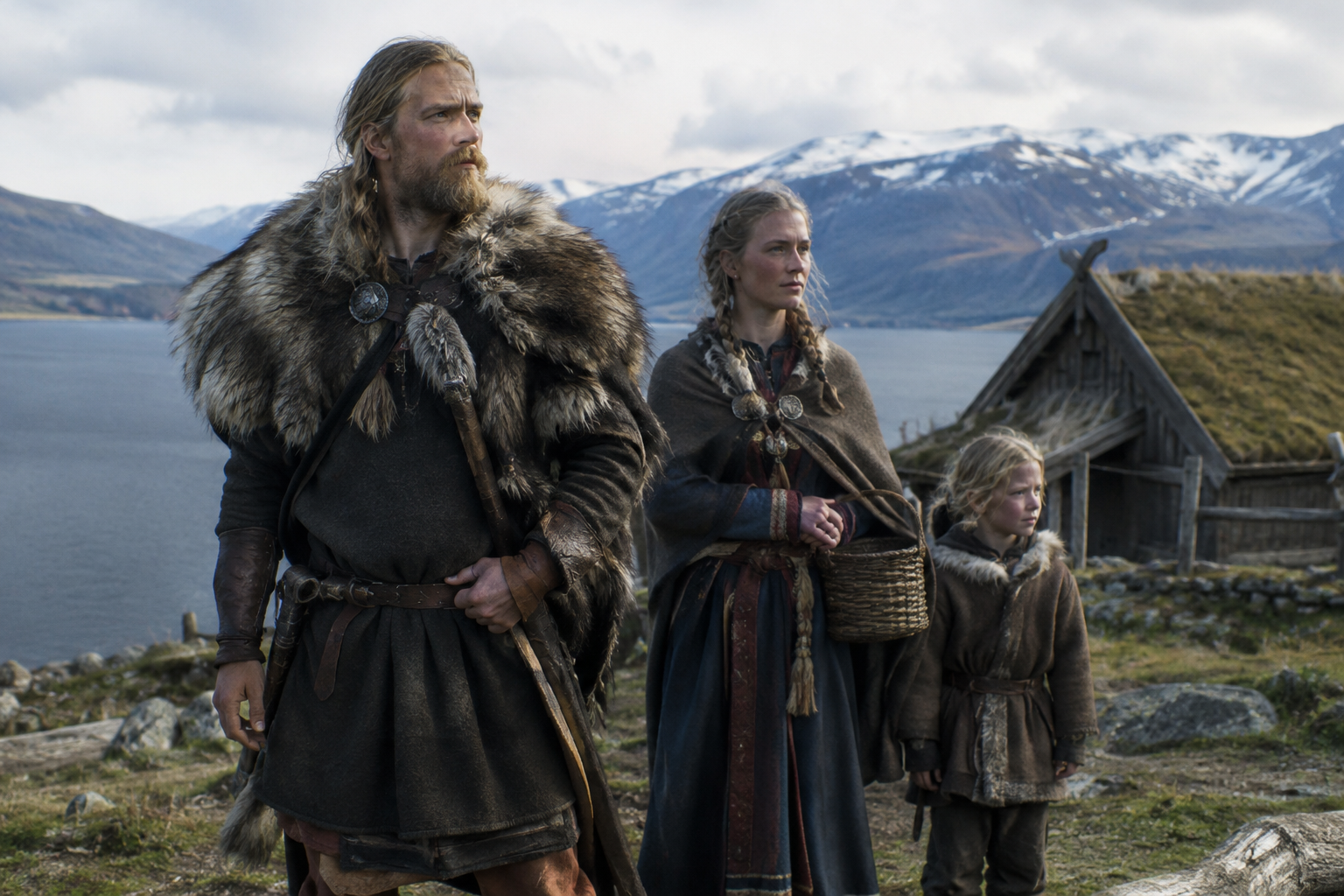
Seen in isolation, VK24 is one man from one island setting. Seen historically, he belongs to the same oceanic zone that linked the Faroes to Shetland, Orkney, Iceland, Norway, and the Norse settlements farther west. Ancient DNA from across that world keeps showing that mobility was normal, but so was local continuity. Communities were mixed in origin, yet stable enough to preserve lineages over centuries.
That balance is important. The presence of R1b1a1b1a1a2c1a1a1a1a1b2 in the Faroe Islands around AD 1050 does not prove where the branch began, nor does it map its entire route across Europe. What it does show is that by the high Viking Age it was part of the lived population history of the North Atlantic islands. For anyone researching this paternal line today, that is a concrete and rather evocative finding: not an abstract tree label, but a medieval man in a windswept island society at the far maritime edge of Europe.
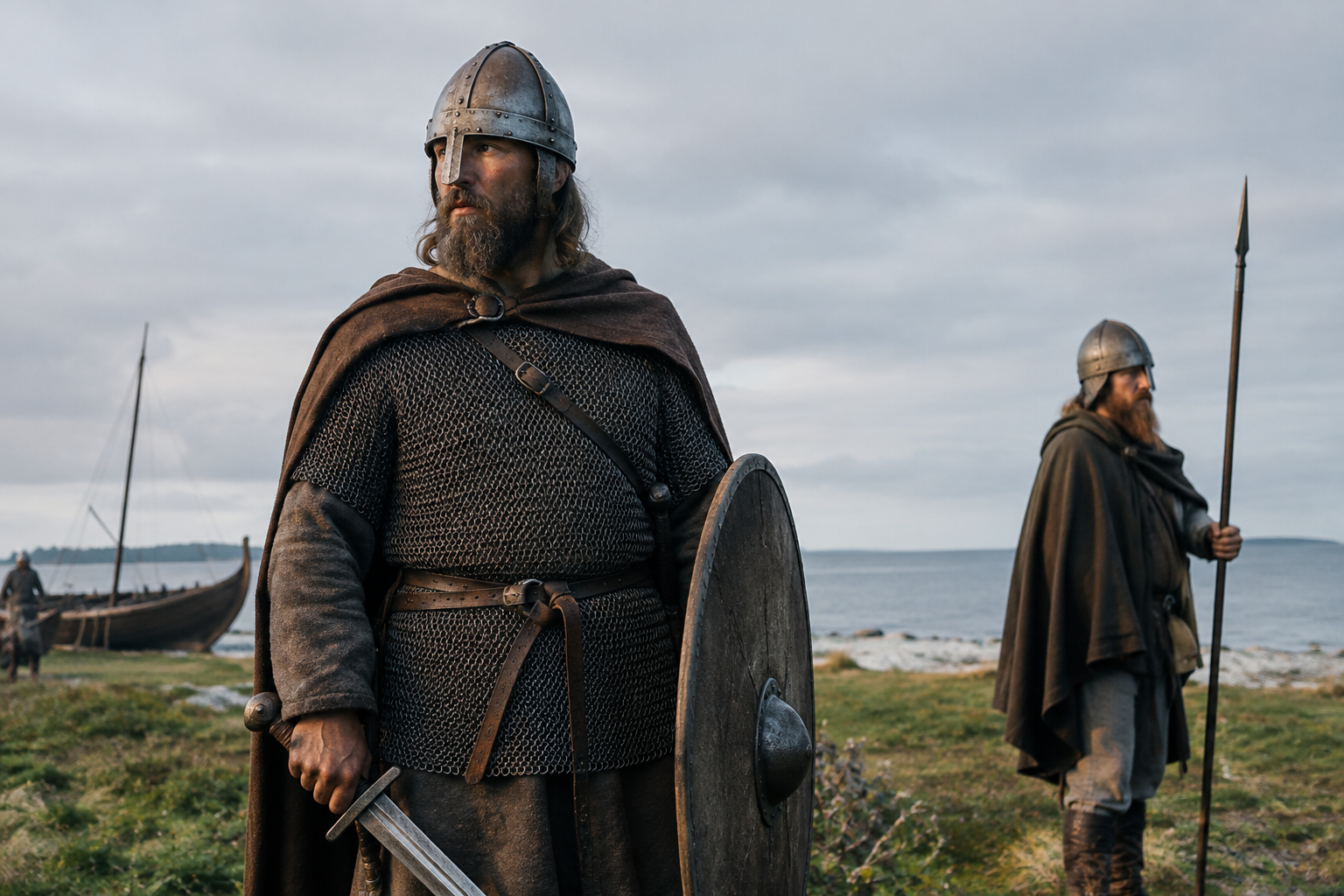
North Atlantic Viking settlers
The most distinctive thing about this haplogroup, on the evidence here, is its appearance in VK24 from Viking Age Panum in the Faroe Islands. That does not turn the branch into a "Viking haplogroup" in any simplistic sense, but it does place it firmly within a documented medieval North Atlantic setting. If this is your paternal line, the strongest historical takeaway is not a royal fantasy or a tribal label. It is something better grounded: at least one bearer of this very specific branch was living in the Faroes around AD 1050, inside the connected seaborne world of the Norse Atlantic.
Comments