Haplogroup I1a5
– 5 min read


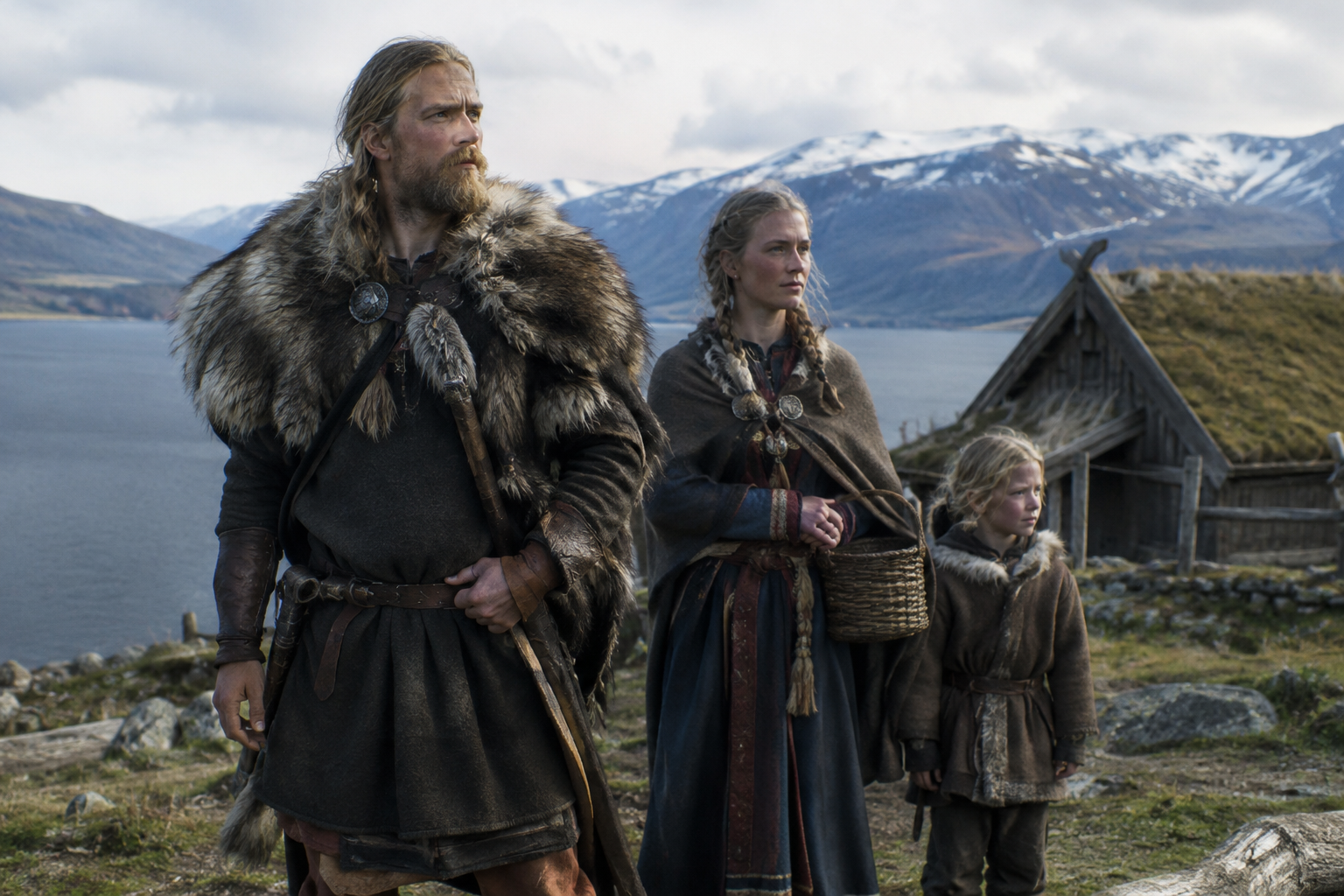
In Hedmark, inland eastern Norway, one Viking Age man has become an unexpectedly useful guide to the history of Y-DNA haplogroup I1a5. He appears in the record simply as VK420, dated to around AD 950. That is not a saga hero's name, and that is precisely the point. Ancient DNA often advances not through kings and famous raiders, but through ordinary or at least unnamed people whose remains were preserved well enough to let us glimpse a paternal line in its historical setting.
For I1a5, VK420 matters because he places this branch in a recognizably Viking Age Scandinavian context. Hedmark was not a distant frontier. It was part of the interior world that linked farm districts, assembly sites, upland routes, and the wider exchange networks of Norway. A Y-chromosome result does not tell us everything about a person, of course; it traces one direct paternal line rather than total ancestry. But when a branch like I1a5 turns up in a Viking Age burial from Norway, it gives us a firm archaeological anchor instead of a purely modern distribution map.
Hedmark is a helpful place to begin because it reminds us that Viking Age Scandinavia was not only about ships on the open sea. Inland eastern Norway had its own importance: productive valleys, overland connections into Sweden, and political ties to the developing Norwegian kingdom. A man living there around AD 950 stood in a world shaped by mobility, but also by deep local continuity.
The sample VK420 therefore should not be reduced to a cartoon "Viking warrior." The most defensible thing to say is simpler and more interesting. He represents a paternal lineage present in Norway during the late Viking Age, at a time when Scandinavian populations were both regionally rooted and increasingly connected across the North Sea and Baltic worlds.
A broad ancient DNA study of the Viking world, circulated at this research preprint, helped frame precisely that larger picture: Viking Age communities were not genetically uniform, and Scandinavian history cannot be read as a single tribal block moving in lockstep. That wider context matters when thinking about I1a5. A subclade may sit within a lineage strongly associated with Scandinavia, yet still belong to a population full of local variation, migration, and mixture.
The haplogroup name here is specific: I1a5. That is a branch within the wider I1 paternal lineage, one long associated in population genetics with northern Europe and especially Scandinavia. But it is important not to let the larger reputation of I1 do all the work. The narrower branch I1a5 is not automatically identical with the whole history of I1, nor can every movement of Germanic-speaking peoples be assigned to it.
In practical terms, VK420 shows that a man reported with this branch, or associated with it in the available classification, lived in Viking Age Norway. That is a strong historical placement. It does not by itself tell us where the branch first formed, how common it was in all Norwegian districts, or whether every later bearer of I1a5 descends from a specifically Viking expansion. Ancient Y-DNA is at its best when we keep the scale honest.
This is also where the archaeology helps. A lineage becomes historically meaningful not because it sounds old, but because it appears in a dated and situated human being. VK420 is useful precisely because he ties a genetic label to a real Scandinavian landscape in the 10th century.
I1 branches are often discussed alongside the spread of Germanic-speaking populations, and that is a reasonable background topic so long as the distinctions stay clear. Language, identity, and Y-DNA are not the same thing. Still, the Viking Age Norwegian context of VK420 fits comfortably within the northern European zone where Germanic languages were long established.
That makes I1a5 relevant to a larger question: how much of later North Atlantic and North Sea paternal ancestry reflects lineages already established in Scandinavia before the great outward movements of the early medieval centuries? A sample like VK420 does not answer that on his own, but he helps pin the question to evidence rather than legend. He stands on the Scandinavian side of the story, before modern surnames and long after the earlier Iron Age foundations of the region.
At first glance, one ancient sample may seem meagre. In fact, one well-placed sample can be extremely valuable when the branch under discussion is narrow. Many haplogroup articles are tempted to overstate sparse evidence. Better to do the opposite: ask what one sample securely establishes.
In this case, VK420 securely places I1a5 in late Viking Age Norway, in Hedmark, around AD 950. That alone gives the branch historical depth in Scandinavia. It also suggests that modern men with this paternal line may be looking at a lineage that was already part of the established Norse world before the end of the Viking Age.
The regional context matters as much as the date. Hedmark was connected to wider Scandinavian developments without being merely coastal or colonial. That makes VK420 a reminder that Norse paternal lines were sustained not only by famous voyaging zones, but by inland communities that supplied people, goods, alliances, and continuity.
Once we place I1a5 in Viking Age Norway, the next historical question is not whether every later carrier was a Viking in the popular sense. It is how such paternal lines persisted through the social changes that followed: Christianization, kingdom-building, changing burial customs, and the integration of regional populations into medieval states.
Ancient DNA from later Scandinavian contexts increasingly shows that the end of the Viking Age was not a clean demographic rupture. There were changes in religion, politics, and exchange patterns, but many family lines clearly endured. That makes a sample like VK420 feel less like an isolated curiosity and more like one point in a continuing paternal history.
For readers with northern ancestry, that continuity is often the most meaningful part. A lineage can pass through dramatic historical periods while remaining, at the household level, simply a chain of fathers and sons living through ordinary local history. The glamour of the Viking label should not distract from that quieter truth.
So what does haplogroup I1a5 offer when the evidence is handled carefully? It offers a documented foothold in Viking Age Norway through VK420 from Hedmark, around AD 950. That does not turn every modern carrier into a raider, a nobleman, or a member of a named dynasty. It does, however, place this paternal branch in a real Scandinavian population at a historically important moment.
For family historians, that is already quite a lot. I1a5 points toward a paternal story with credible roots in the Norse north, and specifically in a late Viking Age Norwegian setting. As more ancient Scandinavian Y-DNA is published, branches like this will become sharper and more local. For now, VK420 gives I1a5 something invaluable: not myth, but a man, a place, and a date.





Comments