Haplogroup I1a1b1a1e2b2
– 5 min read


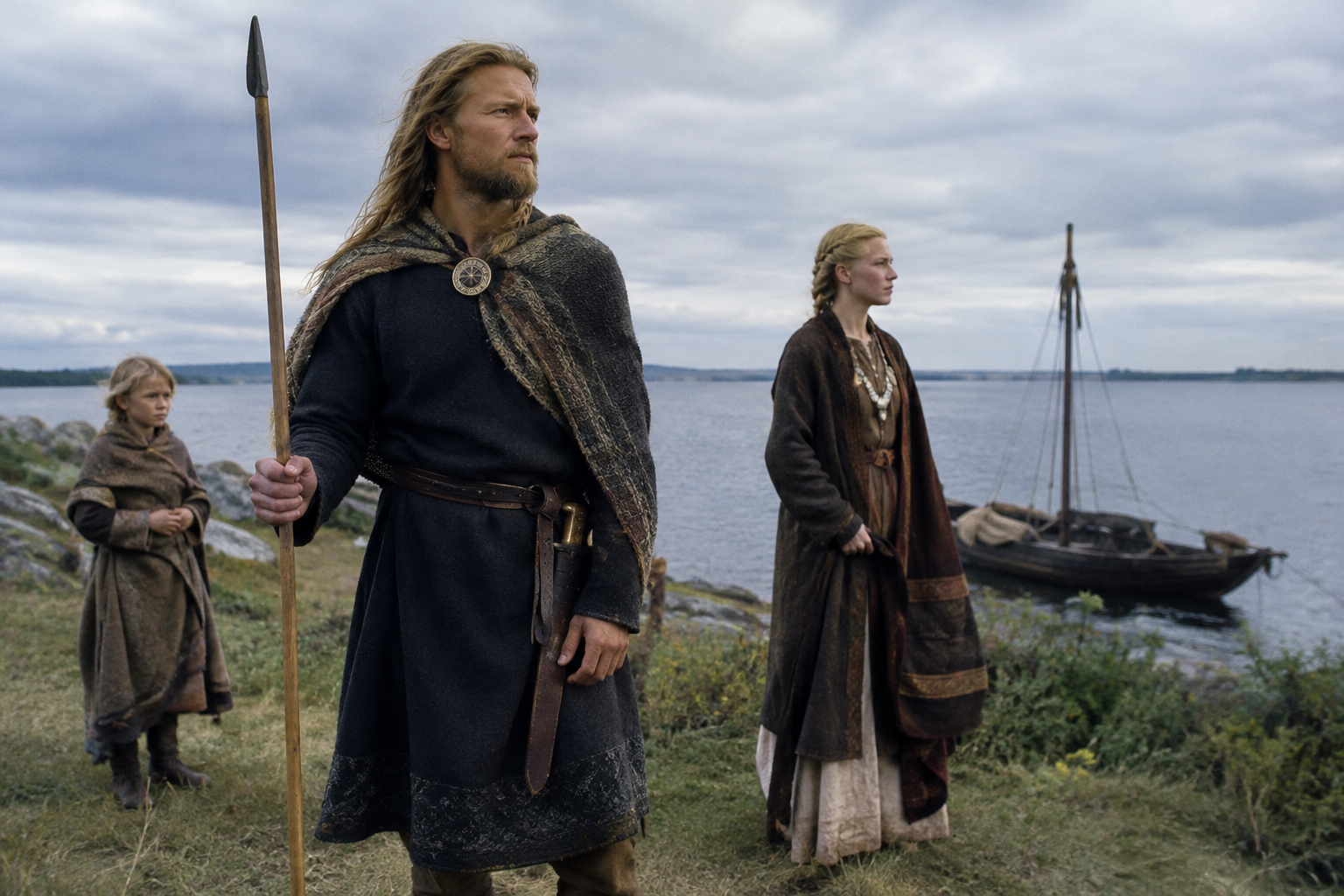
In about AD 725, a man now catalogued as VK553 was buried at Salme II on Saaremaa, the large Estonian island that faces the Baltic Sea. He belongs to a site that has become one of the most arresting discoveries of the early Viking world: a group of armed men deposited far from the Scandinavian heartlands, on an island that sat directly on important sea routes linking Sweden, the eastern Baltic, and beyond. Within MyTrueAncestry's haplogroup framework, VK553 is associated with I1a1b1a1e2b2, a very specific branch within the wider I1 paternal lineage.
That matters because Salme is not just another Viking-Age cemetery. It is evidence for mobility, conflict, and male-line ancestry at a moment when Scandinavian expansion around the Baltic was becoming historically visible. Y-DNA traces one direct paternal line rather than a person's total ancestry, but at Salme that single line is still historically useful: it places one man from this remarkable burial group inside a paternal branch strongly associated with northern Europe and especially with later Scandinavian and Germanic-speaking populations.
The Salme finds are famous because they appear to represent a rare early Viking-Age martial burial context in the eastern Baltic, dated to the 8th century. Saaremaa was not a marginal backwater. It stood on a maritime crossroads, and the people who arrived there were moving through a zone shaped by trade, raiding, alliance, and seasonal seafaring.
VK553 comes from Salme II, the second of the two Salme boat-burial contexts. Even where one resists the temptation to embroider the story, the archaeology is striking enough on its own: a burial setting tied to seaborne men, an island frontier, and a date that falls just before the classic Viking Age of the 9th to 11th centuries. The result is a snapshot of the Baltic before the sagas, but already full of the same hard-edged mobility that later made the region famous.
An ancient DNA study examining this broader Scandinavian and Viking-era world was circulated as research on Viking Age population genomics. Without overstating what any one paper can prove for a single burial, that line of research has helped show how varied, mobile, and interconnected these northern populations could be.
Baltic Connections in Early Medieval Finland
The haplogroup name here is extremely narrow: I1a1b1a1e2b2. That is not the same thing as saying "all I1 men" or "all Scandinavians" belonged to this branch. The broader parent lineage, I1, is well known in northern Europe and is especially frequent in Scandinavia in later and modern populations, but a deep subclade like this represents only one twig on that larger paternal tree.
So the careful way to read VK553 is this: one man from the Salme II burial group is linked, in MyTrueAncestry's classification, to a tightly defined descendant branch of a wider northern-European Y-DNA lineage. That supports a paternal-line story consistent with the Scandinavian-facing character of the site, but it does not by itself tell us his language, personal identity, social rank, or the full ancestry of everyone buried beside him.
This distinction is more than technical fussiness. Archaeology works best when the categories are kept apart. A burial assemblage can be Scandinavian in style, a genome can show mixed ancestry, and a Y-chromosome can trace one paternal line through all of that at once.
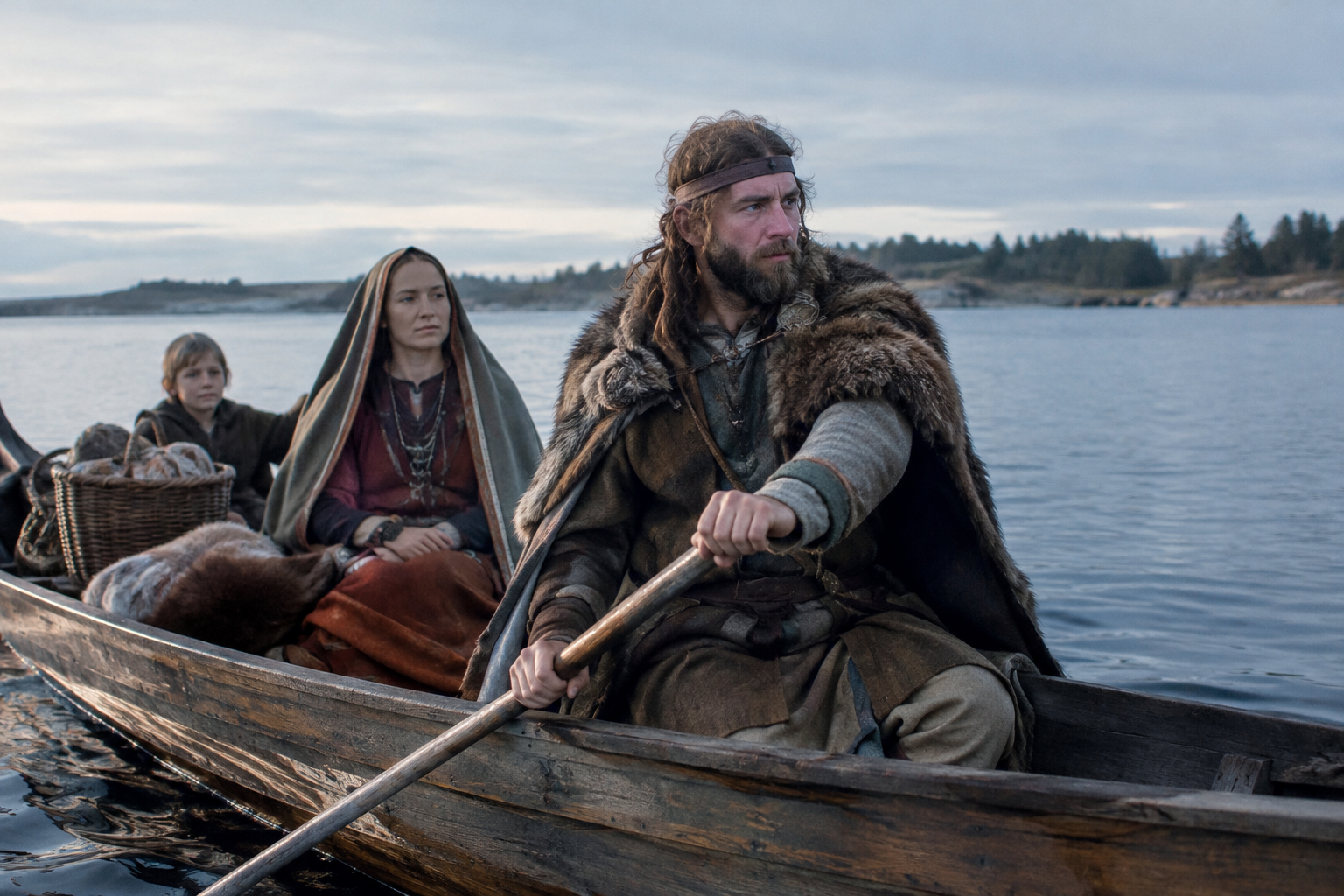
Saaremaa sits in precisely the kind of place that turns up again and again in Baltic history: not at the edge of events, but in the middle of maritime traffic. Long before medieval kingdoms fixed firmer borders, islands like this were meeting grounds and danger zones. They linked Swedish shores, the Gulf of Finland, the eastern Baltic coast, and the routes that eventually connected into the river systems of eastern Europe.
That setting makes VK553 especially interesting. A paternal line such as I1a1b1a1e2b2 appearing in this context is not simply a matter of "where the haplogroup is found today." It is embedded in a historically meaningful landscape of ships, crews, and cross-Baltic movement. The Salme burials help show that these connections were already active and consequential by the early 8th century.
For readers following the spread of northern populations and languages, the wider implications overlap with discussions about how Germanic-speaking groups expanded and interacted around the North and Baltic Seas.
Germanic Languages and Ancient Genomics
A single ancient sample should never be turned into a sweeping map all by itself. Even so, VK553 fits a broader and very plausible historical pattern. The wider I1 lineage has deep importance in discussions of Scandinavian paternal history, and early medieval burials around the Baltic increasingly show that northern Europe was tied together by movement rather than sealed off into neat ethnic boxes.
That is one reason Salme has attracted such attention from both archaeologists and geneticists. It offers a context where bones, burial setting, chronology, and paternal-line evidence all point toward a mobile male group operating in a Baltic world shared by Scandinavians, Finnic peoples, and other coastal communities. The interest lies not in romantic labels, but in the combination of seafaring archaeology and recoverable DNA from a real place and time.
Other MyTrueAncestry work on Viking-Age genetics has explored the same larger question from different angles: not only where people ended up, but how mixed, local, and regionally connected they could be at the same time.
There is always a temptation, with an evocative site like Salme, to leap straight from a Y-DNA branch to a grand tale of warrior dynasties. That would be bad history. A shared or closely related paternal lineage can matter, but without explicit kinship results for the individuals in question one should not casually turn a burial group into a single family, let alone into a named lineage from later written sources.
What we can say is still substantial. VK553 anchors I1a1b1a1e2b2 in an early medieval Baltic context that is unmistakably tied to seaborne Scandinavian expansion. For someone researching this haplogroup today, that does not promise descent from a famous house, but it does place the branch in a world of northern maritime mobility that was historically real, archaeologically visible, and genetically recoverable.
That same caution is now shaping work across the Baltic region, where ancient DNA is increasingly used alongside burial evidence to sort out which links reflect family, which reflect cultural contact, and which reflect broader population history.
The most distinctive thing about I1a1b1a1e2b2 in this case is not abstract age estimates or a modern distribution map, but its appearance in VK553 from Salme II on Saaremaa around AD 725. That ties this paternal branch to one of the best-known early Viking-Age burial discoveries in the eastern Baltic. For descendants exploring this line today, the responsible historical takeaway is a northern-European paternal ancestry with a documented foothold in the seaborne Baltic world just before the Viking Age fully burst into written history.





Comments