Haplogroup R1b1a1b1a1a2b1c1a1a1a2

– 4 min read


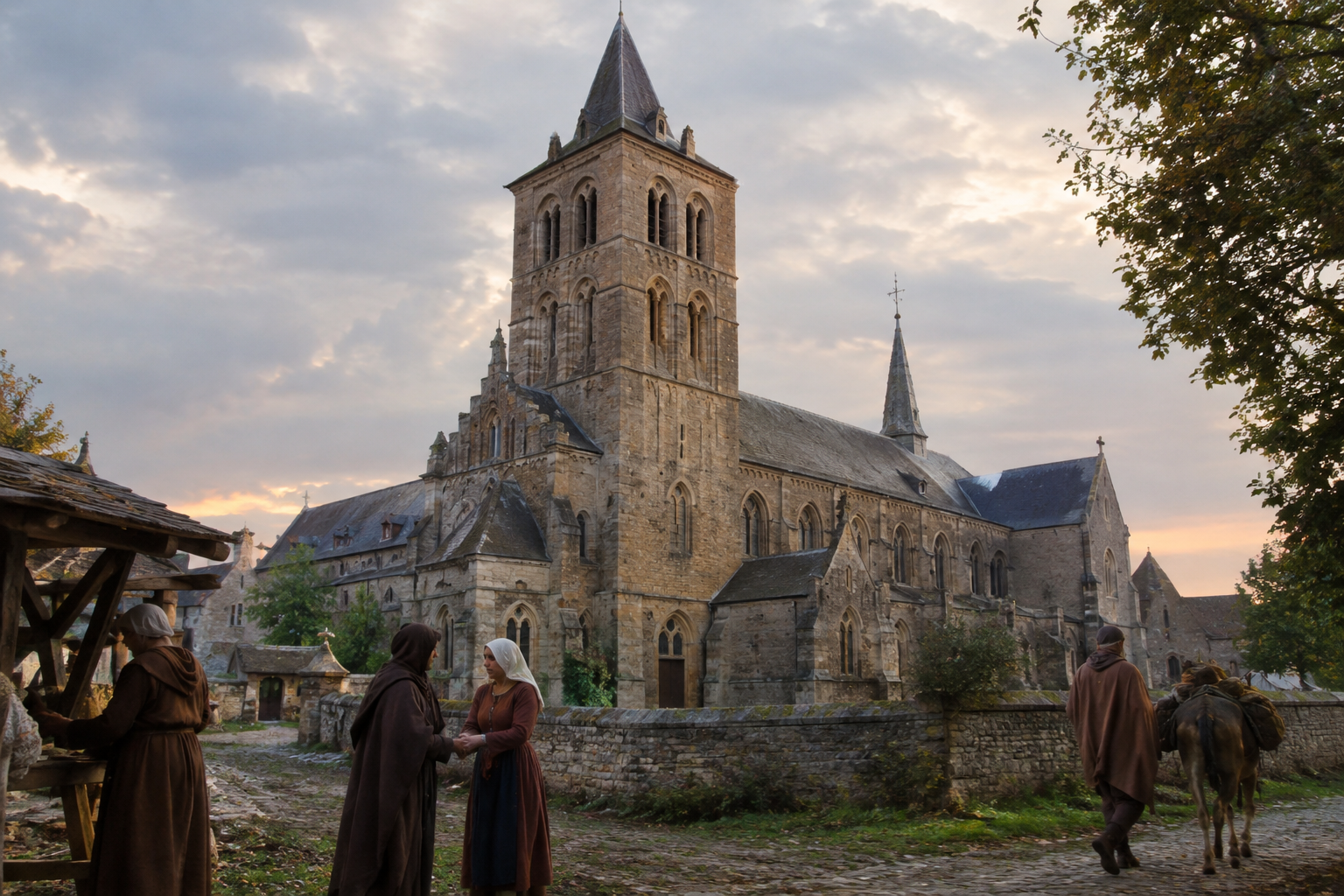
In the church of Onze-Lieve-Vrouwekerk at Sint-Truiden in medieval Belgium, one man identified as ST0042 has become an unexpectedly useful guide to a very narrow paternal lineage: R1b1a1b1a1a2b1c1a1a1a2. He was dated to around AD 1075, a period when towns in the Low Countries were growing, churches were accumulating burials, and local communities were being reshaped by trade, lordship, and Christianity.
That is already enough to make the find interesting. This is not a prehistoric chief in a barrow or a king in a marble tomb. It is a medieval man from an urban religious setting, and that matters because Y-DNA traces one direct paternal line rather than a person's whole ancestry. In this case, the branch sits inside the broader and very widespread R1b family, but the sample reminds us that a deep modern-looking subclade can also appear in the ordinary social worlds of medieval northwestern Europe.
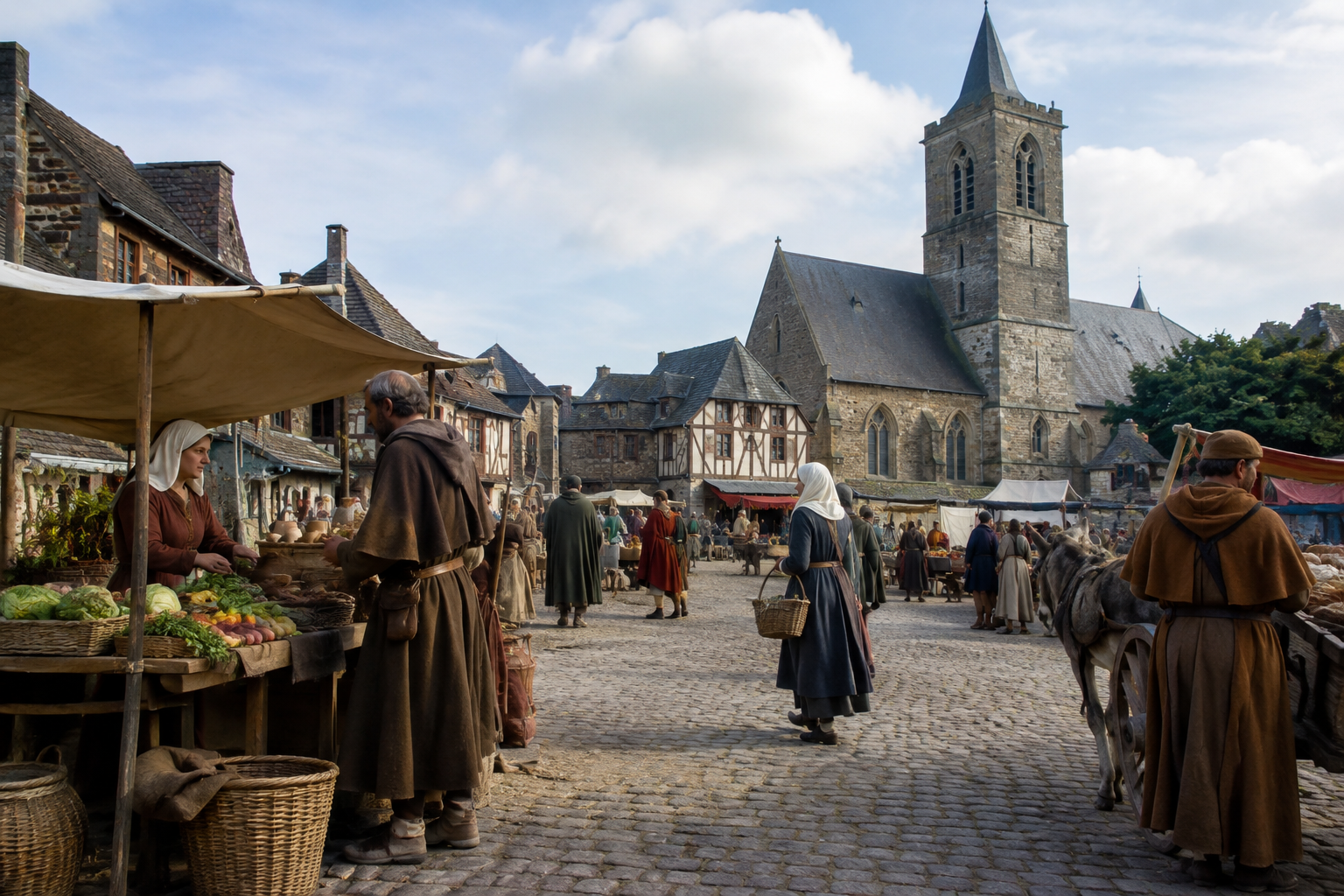
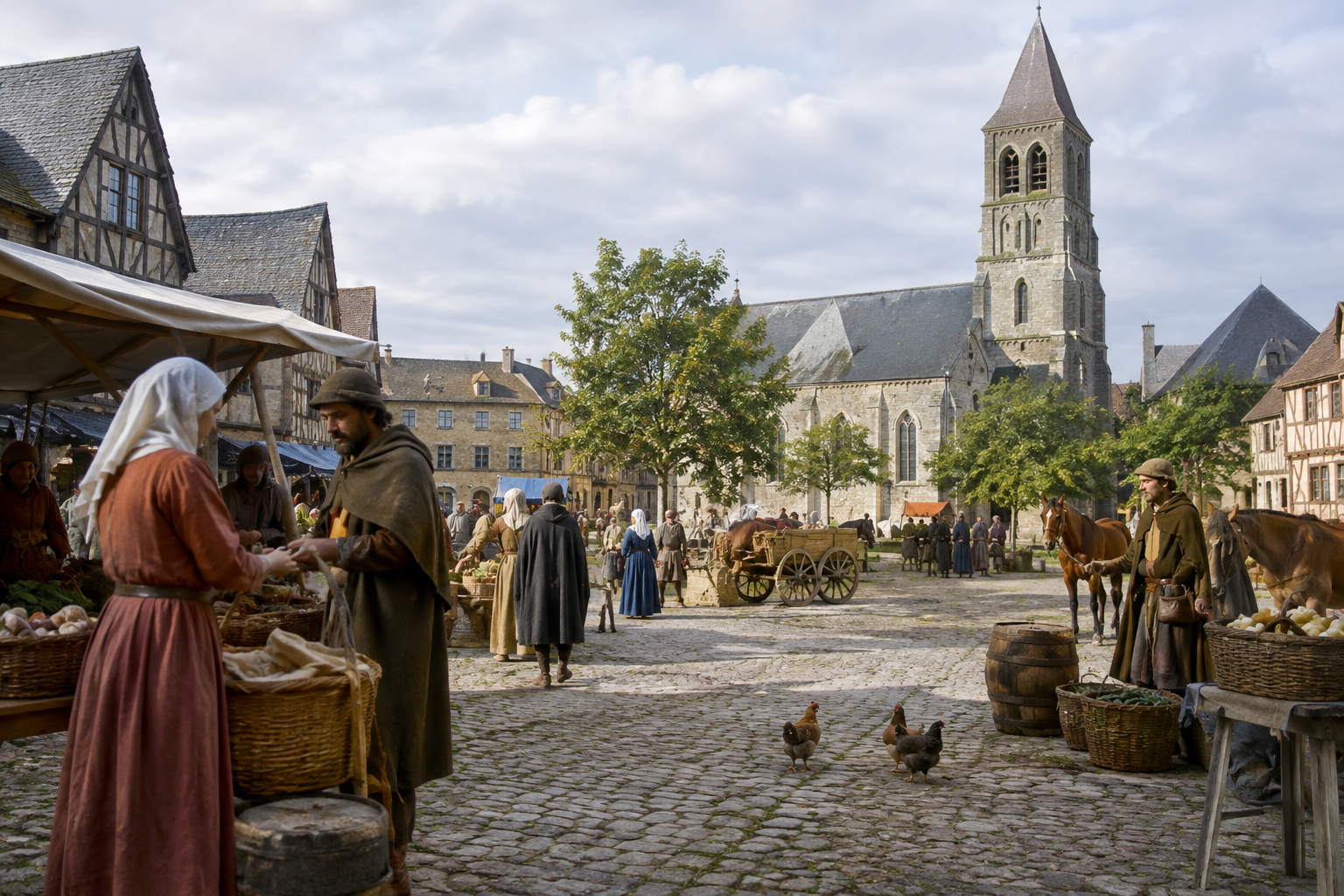
Sint-Truiden was no backwater. In the High Middle Ages it was part of a densely settled and economically active region where abbeys, churches, markets, and local power all pressed closely together. Burials from church contexts can therefore tell us something quite specific: not simply who lived in a broad region, but who was being buried within an important Christian institution at a moment when urban life was consolidating.
ST0042 comes from Onze-Lieve-Vrouwekerk, and even with limited biographical detail, the context is valuable. A man carrying the lineage reported here was present in that community by the late 11th century. That places this paternal branch firmly within the world of medieval Flanders-Brabant-Limburg style settlement history: parish life, ecclesiastical burial, and increasingly stable local populations rather than a dramatic one-off migration story.
A recent ancient DNA study on the medieval population of Sint-Truiden has explored exactly these broader questions of urbanization and biological continuity in the town's burial record, helping frame individuals like ST0042 within the lived population history of the region: research published on medieval Sint-Truiden.
The formidable string of letters and numbers, R1b1a1b1a1a2b1c1a1a1a2, is a fine example of how genetic naming works by ever narrower branching. The wider R1b umbrella includes many paternal lines found across western Europe and beyond. But a precise terminal branch like this is not shorthand for a people, a language, or a single historical event.
That distinction is important in medieval Belgium. A church burial around AD 1075 sits in a region shaped by centuries of Roman rule, post-Roman transformation, Frankish political expansion, and the gradual formation of medieval principalities. A paternal lineage present there could have much older roots in western Europe, but this one sample by itself does not let us assign ST0042 to a tribe, dynasty, or ethnic label. What it does show is continuity of a particular male line within the population landscape of the central Low Countries.
One of the most useful ways to think about ST0042 is not as an isolated curiosity but as part of a larger archaeological pattern. The Low Countries sat at the meeting point of Roman frontier systems, post-Roman settlement change, and medieval urban growth. Across late antiquity and the early Middle Ages, the region saw both movement and continuity. Ancient DNA has increasingly shown that these were not simple replacement stories.
That wider setting helps explain why a narrow R1b branch in a medieval Belgian burial is historically plausible without being historically simplistic. By the 11th century, communities in this zone had inherited a population history layered by local Iron Age ancestry, Roman-era mobility, and early medieval reshaping under Frankish and neighboring influences. The man from Sint-Truiden belongs to that later chapter: not the beginning of the story, but a well-documented point within it.
Archaeology has a habit of making the apparently ordinary rather revealing. A burial inside or around a medieval church is evidence of social belonging, religious practice, and local community structure. It gives us a man who was part of a Christian burial population in a thriving ecclesiastical center, rather than someone known only through a stray bone or uncertain field recovery.
That matters especially for paternal-line research. Many people understandably hope a rare-looking haplogroup label will lead straight to a grand migration or a named aristocratic house. But often the stronger historical insight is quieter: a direct male line was embedded in the daily life of a documented medieval town. ST0042 is useful precisely because he anchors the lineage in a real place, a real institution, and a real period of European history.
In that sense, Sint-Truiden offers a pleasing corrective to overblown genetic storytelling. Medieval towns were not populated by abstract categories like "Germanic," "Frankish," or "native" in any pure form. They were made up of individuals and families whose lineages had been mixing, persisting, and localizing for centuries. A narrow Y-DNA branch in that setting is best read as one thread in a settled community, not a banner announcing a single identity.
Because this branch sits within R1b, readers may wonder whether it connects to larger arguments about the spread of western European populations and even Indo-European speech. At the broadest scale, yes, R1b lineages have figured prominently in those discussions. But the leap from a very broad prehistoric pattern to a very specific medieval subclade must be made carefully.
It is safer to say that ST0042 belongs to a paternal tradition long at home in western Europe than to claim that his exact branch explains the linguistic or ethnic history of Belgium. Medieval Sint-Truiden was already the outcome of many earlier processes. By the time this man was buried, the interesting historical question is less "where did all this begin?" and more "how did paternal lines persist inside growing Christian towns?"
Germanic Languages and Genomics
The best-supported insight from this evidence is modest but solid. R1b1a1b1a1a2b1c1a1a1a2 is attested here in a man from medieval Sint-Truiden around AD 1075, placing the branch within the historical population of the Low Countries during a formative urban age. That does not make every modern carrier "Belgian" in origin, and it certainly does not promise descent from nobility. But it does offer a genuine archaeological foothold: this paternal line was present in a documented medieval church community in northwestern Europe.
For anyone researching this branch, that is the real pleasure of ancient DNA. It turns a string of letters into a human presence at a known place and time, in this case among the burials of a medieval Belgian town whose population was helping build the Europe we can still recognize.
Comments