Haplogroup R1b1a1b1a1a2a1a1a1a1
– 5 min read


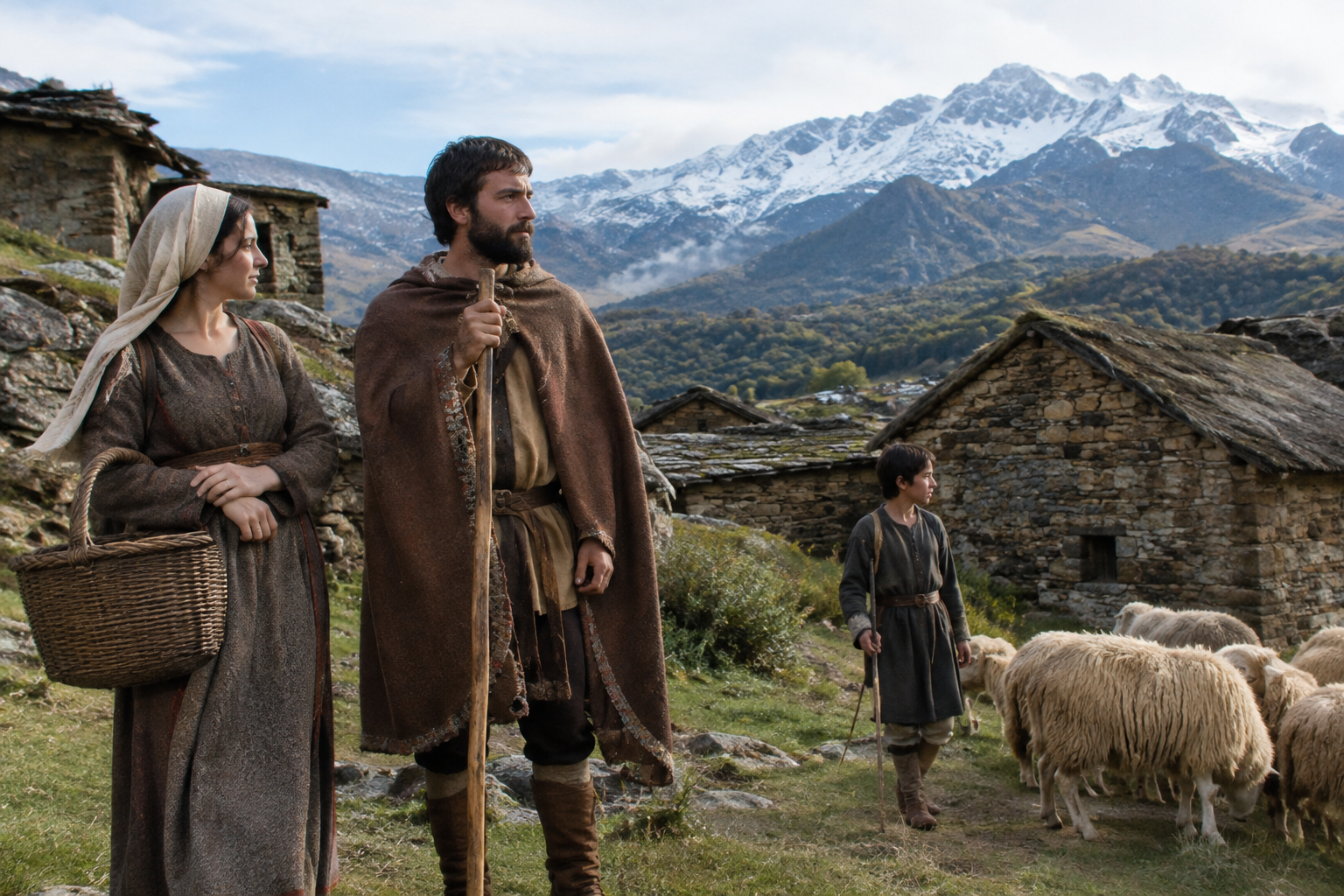
At Las Gobas in northern Spain, one medieval male sample - ldo060, dated around AD 1000 - offers a very specific glimpse of paternal ancestry in a place better known for its rock-cut hermitages, burials, and the shifting frontier world of early medieval Iberia. He is associated here with the Y-DNA haplogroup R1b1a1b1a1a2a1a1a1a1, a very narrow paternal branch nested deep within the much larger R1b family that is common in western Europe.
That distinction matters. A Y-DNA haplogroup traces one direct male line only: father to son to son across generations. It does not describe a person's whole ancestry, language, status, or identity. But when a lineage this specific appears in an excavated medieval context, it becomes archaeologically interesting because it anchors a living paternal line to a real place, a real burial landscape, and a real historical moment in Iberia.
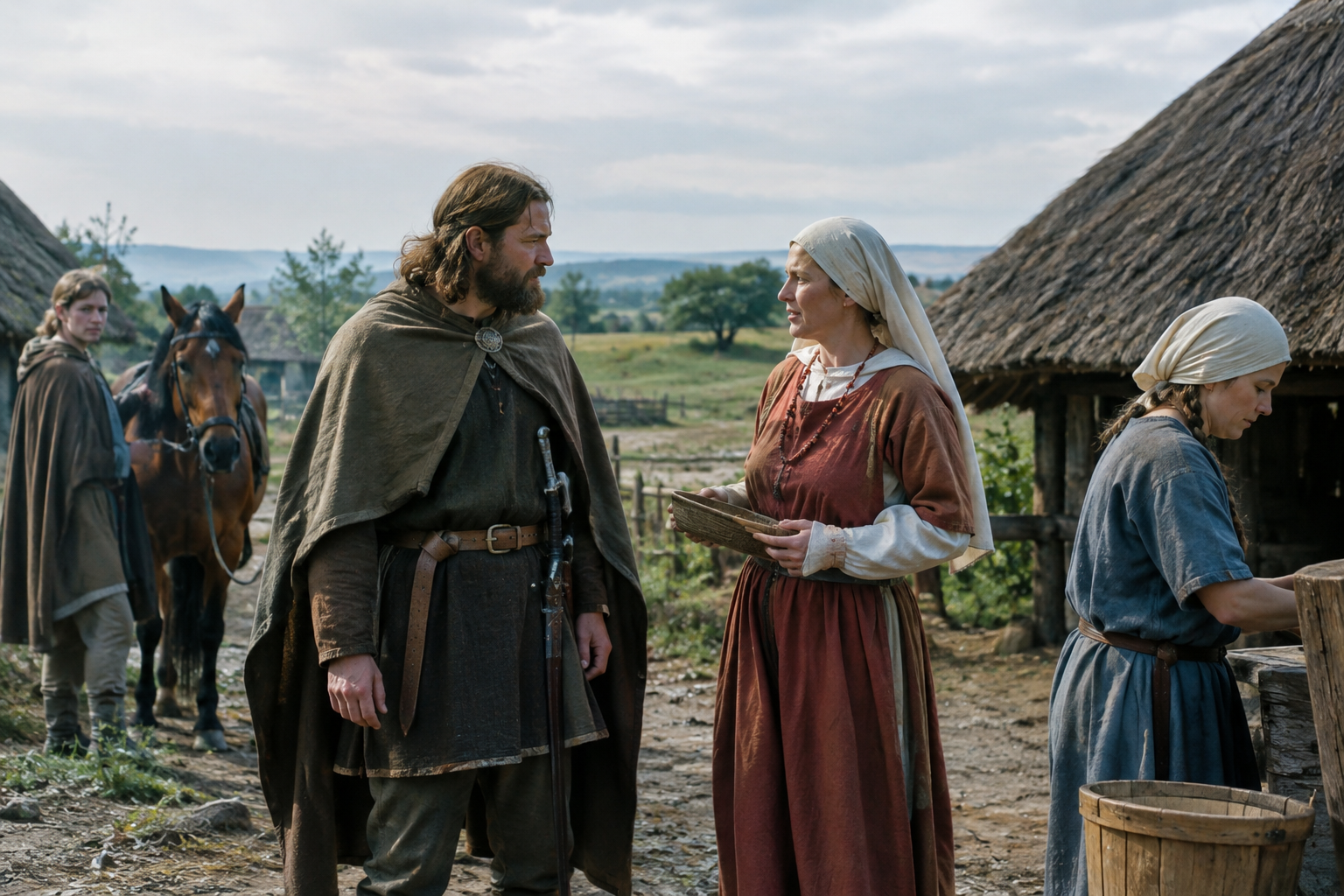
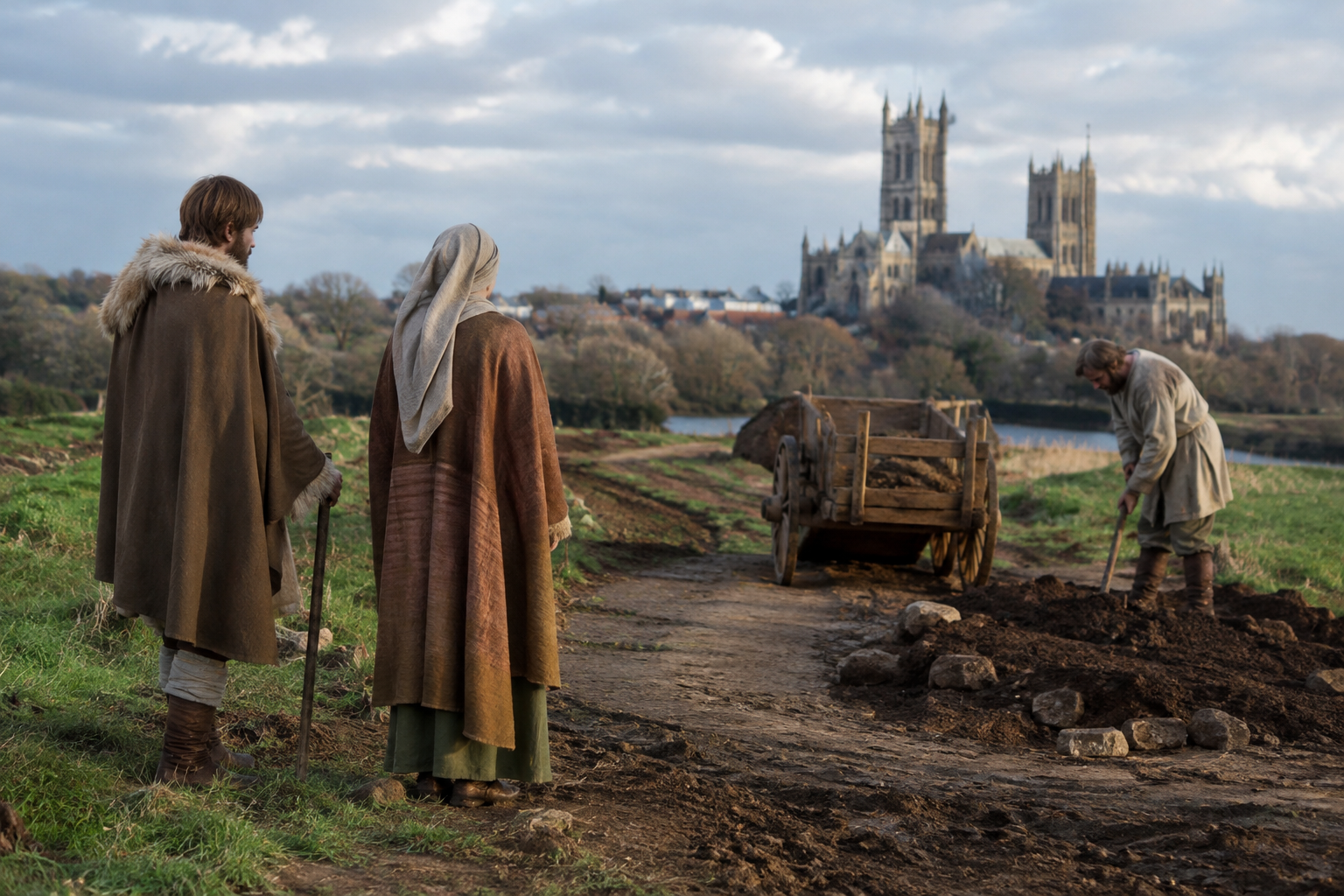
Las Gobas lies in the province of Burgos, in a region that was deeply shaped by the long transformation from late antiquity into the medieval kingdoms of northern Iberia. By around AD 1000, this was not an empty borderland but a lived-in Christian landscape of villages, churches, burial grounds, and older sacred spaces reused over centuries. Rock-cut sites in this part of Spain often preserve exactly that kind of long continuity: not a single dramatic event, but repeated acts of settlement, devotion, burial, and memory.
Sample ldo060 belongs to that historical world. Even with sparse personal detail, the value of the find is considerable. He provides a fixed point showing that the paternal branch reported here was present in medieval northern Spain, in a community participating in the social and religious life of the region during the central Middle Ages.
The label R1b1a1b1a1a2a1a1a1a1 is so detailed that it should be handled carefully. It is not interchangeable with all R1b, nor should it be made to carry every story ever told about western European male ancestry. The broader R1b family spread through many parts of Europe in prehistory and later history, but a terminal branch this narrow represents only one small twig on that much older tree.
So the secure historical point is modest but useful: one man from Las Gobas, around AD 1000, is linked to this paternal line. That does not make the branch uniquely Spanish, uniquely Castilian, or the signature of any kingdom or ethnic group. What it does suggest is local medieval continuity within a wider western European male-line background that had already been present in Iberia for a very long time by the High Middle Ages.
A genetic study of northern Iberian burials and landscapes published at https://www.ncbi.nlm.nih.gov/pmc/articles/PMC11352919/ helps frame why such sites matter. Research of this kind has increasingly shown that early and high medieval Iberia cannot be reduced to neat blocks of "Visigoth", "local Iberian", "Roman", or "repopulating settler". Communities were built from layers of continuity and mobility, and Y-chromosome evidence is only one strand within that larger picture.
Ancient DNA articles often celebrate grand sample sets, but archaeology has always known the importance of the individual case. One securely placed burial can test assumptions that were once based only on chronicles, place-names, or later genealogies. In regions like Burgos, where political frontiers shifted and local communities adapted over centuries, a single male-line identification can be more useful than a hundred romantic guesses.
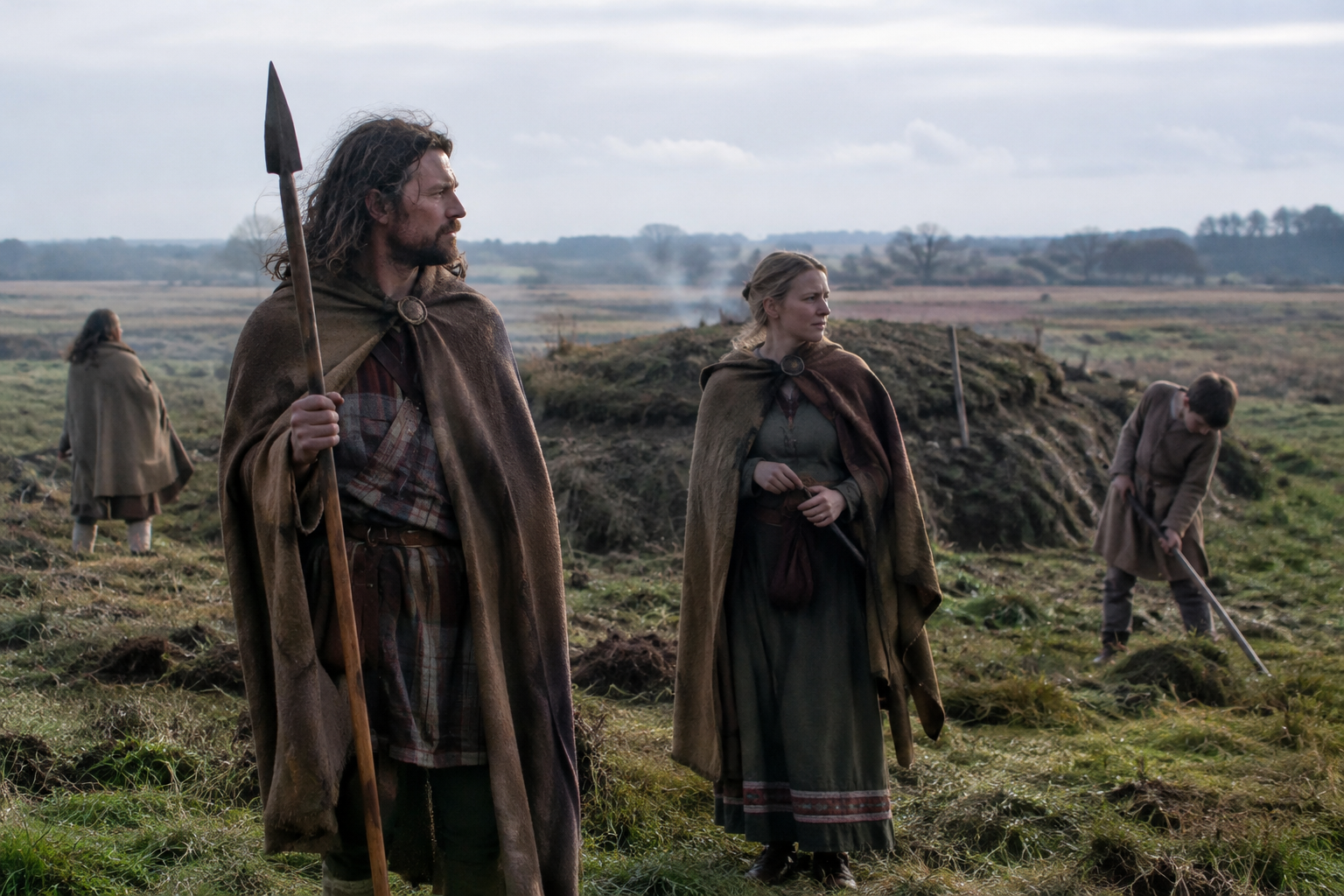
Las Gobas is especially valuable because it belongs to a zone where post-Roman society was being remade, not from scratch, but through local persistence and gradual reorganization. The cemetery context matters here more than any fantasy of heroic migration. A lineage found in such a place tells us that the men carrying branches of broader western-European R1b were not abstract map symbols; they were members of burial communities tied to churches, kin groups, and settled rural life.
Northern Spain around the first millennium AD is often discussed through conquest narratives: the end of Roman rule, Visigothic kingship, Islamic expansion, and the growth of Christian polities in the north. All of that is historically real, but genetic evidence usually reveals something less theatrical and more human. Populations do not simply vanish when regimes change. Local families persist, newcomers arrive in varying numbers, and communities absorb both disruption and continuity.
That is why a lineage like R1b1a1b1a1a2a1a1a1a1 in medieval Burgos fits an important broader pattern. It is entirely compatible with the idea that much of northern Iberia retained substantial local ancestry across the Roman and post-Roman periods, even while political identities changed. The paternal line of ldo060 may have been rooted nearby for many generations, or it may reflect movements within Iberia or from adjacent regions of western Europe at some earlier stage. The burial alone cannot choose between those possibilities, but it firmly places the branch within that historical landscape.
This is also a helpful corrective to the old habit of assigning every medieval skeleton to a named people. A Y-chromosome lineage is not a tribe. It does not make ldo060 a "Visigoth", a "Castilian", or anything else by itself. Archaeology and history place him in medieval northern Spain; the Y-DNA adds one direct paternal thread within that setting.
The real strength of this kind of evidence appears when Las Gobas is read alongside other Iberian studies. Work on Roman and post-Roman Iberia has repeatedly shown that the peninsula preserved deep local ancestry while also receiving newcomers from elsewhere in the Mediterranean and Europe. Some burial grounds look relatively local in their genetic profile; others reveal striking diversity. Together they show that Iberia was neither genetically static nor endlessly replaced.
For that reason, ldo060 should not be treated as an isolated curiosity. He belongs to a growing archive of ancient Iberian individuals who make medieval history less schematic. Instead of broad labels, we get actual people from actual cemeteries. Instead of assuming that a paternal line must correspond to a kingdom or a surname, we see how lineages sit within landscapes shaped by religion, settlement, and long demographic history.
Readers interested in how those long-term patterns played out across the peninsula may also find useful context in studies of Roman and later Iberian population change, including MyTrueAncestry's discussion of the genetic aftermath of Roman and Migration Period colonization in the Iberian Peninsula. The key lesson is much the same: historical change in Iberia was real, but it rarely worked as a simple population wipe-and-replace.
For someone exploring this haplogroup today, the value of Las Gobas is straightforward and substantial. Sample ldo060 shows that R1b1a1b1a1a2a1a1a1a1 has a documented foothold in medieval northern Spain by around AD 1000, in a burial context tied to settled Christian society in the Burgos region. That does not prove noble descent, exclusive regional origin, or a single migration story. But it does provide something better: a real archaeological anchor for one paternal line in the textured, layered history of Iberia.
Comments