Haplogroup R1b1a1b1a1a2a~

– 5 min read


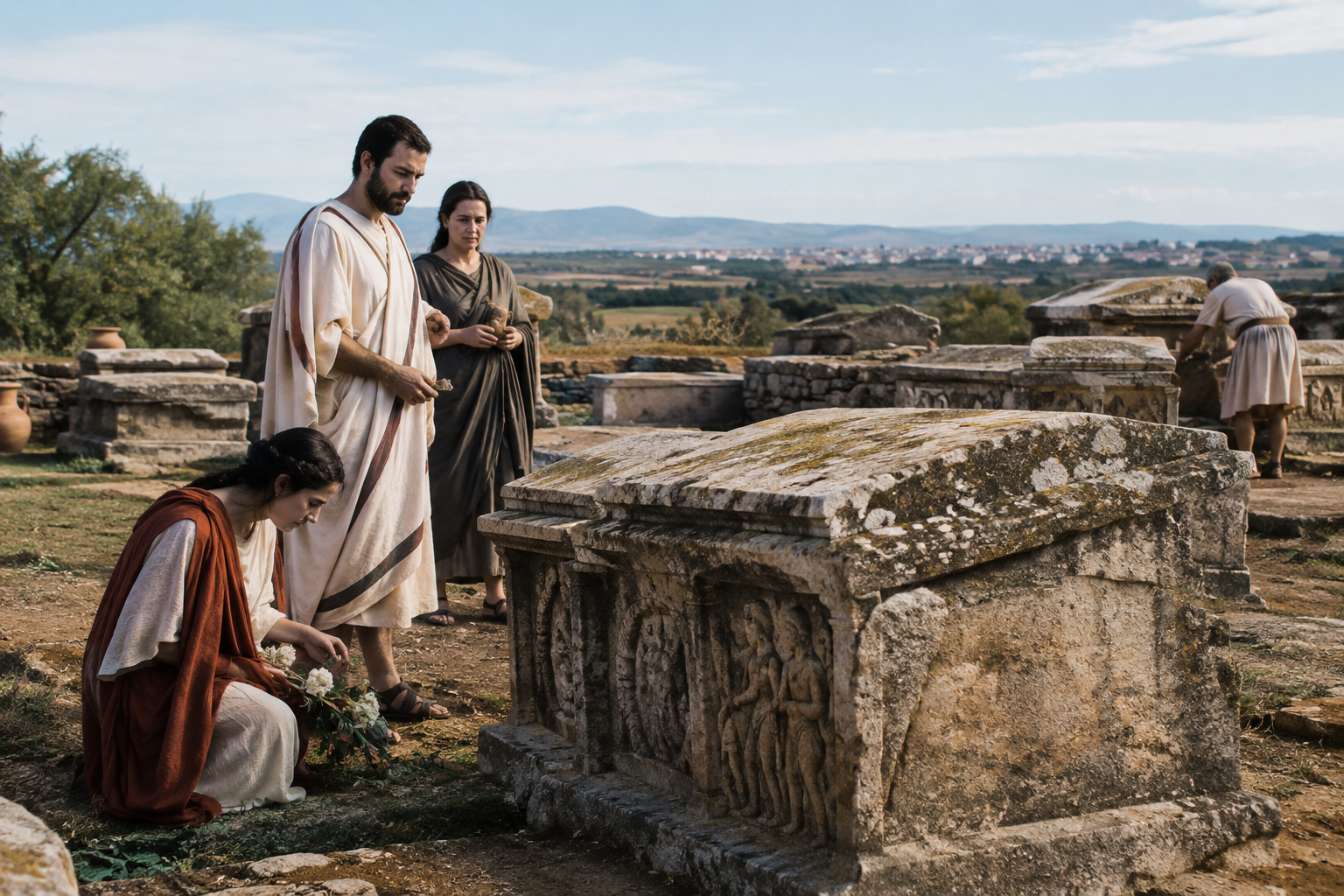
At Merida, the great Roman city of Augusta Emerita in western Iberia, one burial from the Blanes necropolis brings an unexpectedly sharp focus to a very small paternal signal. The individual identified as I23768, dated to around AD 250, is associated with the Y-DNA haplogroup R1b1a1b1a1a2a~. That tilde matters: it suggests an approximate placement within a branch, not a fully nailed-down terminal twig. Even so, this is exactly the sort of finding that makes ancient DNA so useful. A single Roman-period man, buried in one of Hispania's best-known cities, lets us ask how paternal lines sat inside the crowded social world of the empire.
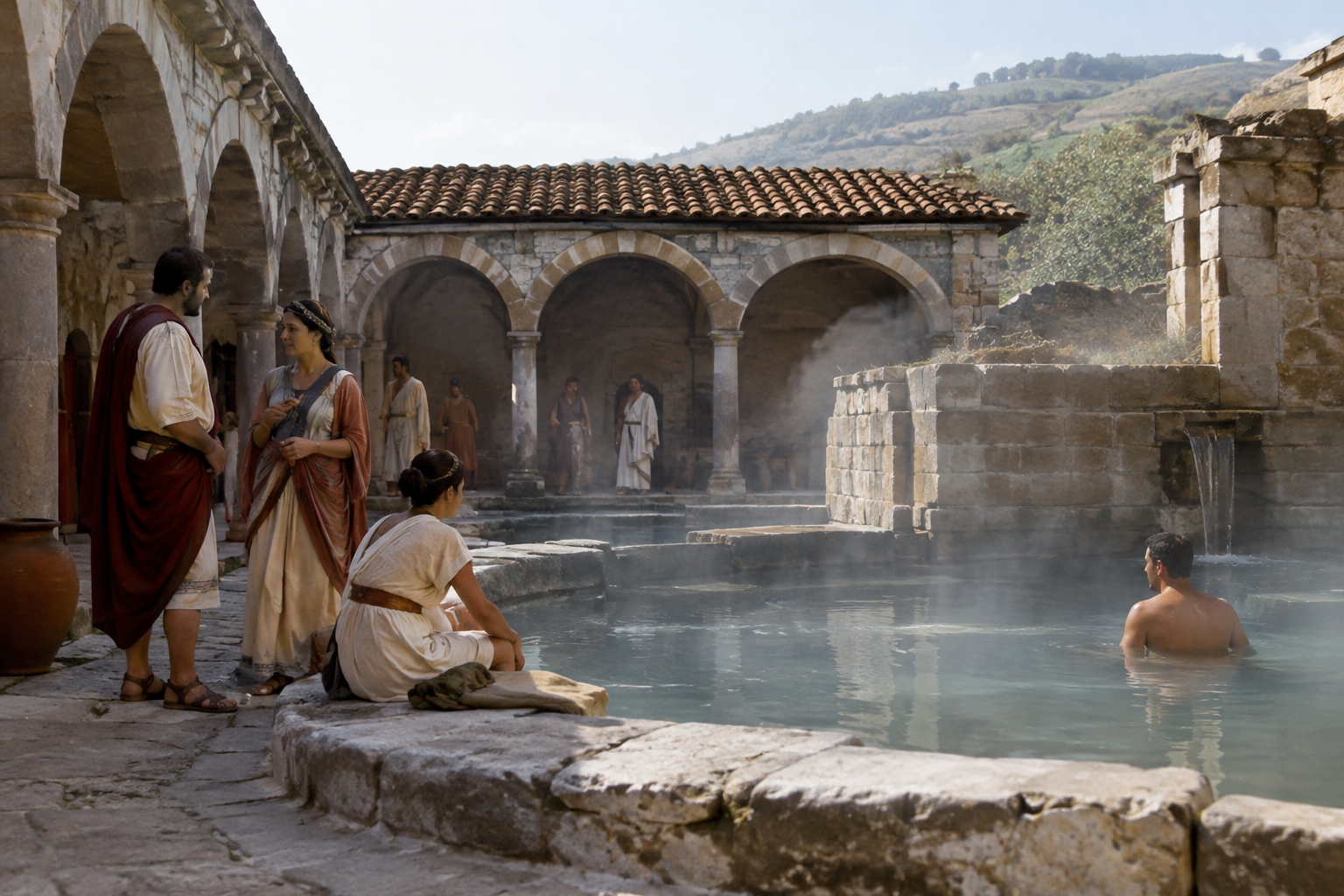
Merida was never a backwater. Founded for veterans under Augustus, it became one of the major urban centres of Roman Hispania, with theatres, bridges, temples, suburbs, cemeteries, and the full apparatus of Roman civic life. A Y-chromosome result from such a place does not tell us everything about the man himself; Y-DNA follows one direct paternal line, not a person's whole ancestry. But it does place one male line from haplogroup R1b1a1b1a1a2a~ firmly inside the lived reality of Roman Iberia.
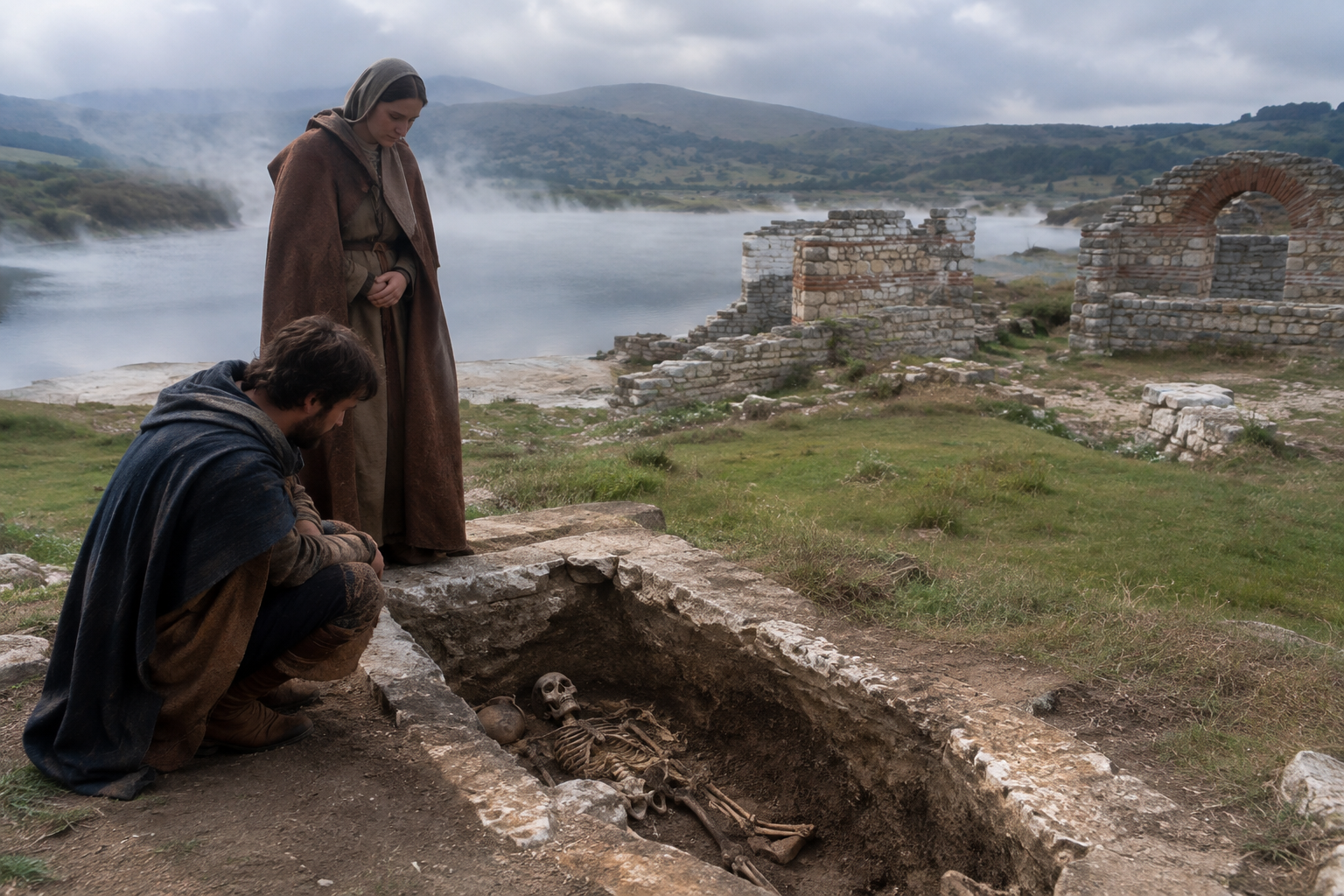
The most secure thing to say is also the most interesting. I23768 comes from the Roman Iberia Merida Necropolis Blanes context, and is dated around the mid-3rd century AD. That was a turbulent century for the empire as a whole, yet cities like Merida remained deeply Roman in administration, culture, and burial practice. A cemetery here is not just a place of death; it is a map of who belonged to the city and how communities reproduced themselves over generations.
In that setting, the appearance of R1b1a1b1a1a2a~ is a reminder that Roman urban populations were built from overlapping layers: older local Iberian ancestry, migrants from elsewhere in the peninsula, military and administrative movement, and the quieter mobility of marriage, trade, and family relocation. One male lineage in one grave does not prove where his father's father's line first arose, but it does show that this branch had entered the population of a major Roman city in Hispania by about AD 250.
For readers interested in the wider genetic setting of this region, Merida sits neatly alongside broader work on population change in Roman Spain.
The long label R1b1a1b1a1a2a~ belongs within the very large family of R1b lineages that today are well known across western Europe. But that broad fact can easily mislead if handled carelessly. A narrow branch is not the same thing as the whole parent haplogroup, and it would be wrong to pour the entire prehistoric history of R1b into this one Roman-era sample.
What we can say is more modest and more useful. By the Roman period, western European paternal lines of several kinds were already deeply entangled with local histories in Iberia. Some had been present for many centuries; others may have moved through later regional networks. The value of I23768 is not that he lets us announce a grand origin story, but that he gives this particular branch a clear archaeological anchor in a documented urban necropolis.
A genetic study linked to these Roman Iberian burials is available through this research archive. Without overstating any one sample, work of this kind has helped show how Roman-period communities in Iberia were shaped by both continuity and movement.
One of the hardest habits to break in ancient history is the urge to force people into single boxes: Roman or native, local or migrant, colonist or descendant. Real cities did not work like that. Merida was a colony with imperial foundations, but by the 3rd century AD it was also an old city, with families whose histories in the region could already stretch back many generations.
That is why a lineage such as R1b1a1b1a1a2a~ matters most when placed in a social rather than a heroic frame. A man buried at Blanes was part of a settled urban world in which ancestry was layered, not pure. He may have belonged to a family long rooted in Lusitania, or to one that had shifted there within the Roman period. The present evidence does not let us decide that question, and that restraint is important. Yet the sample still tells us something valuable: this paternal branch formed part of the human fabric of Roman Hispania, not merely the prehistoric background to it.
That larger point has become clearer as ancient DNA has complicated old stories of tidy population replacement. Roman rule moved soldiers, officials, merchants, enslaved people, and spouses across enormous distances, but local continuity remained powerful too.
There is a temptation to dismiss one Y-DNA result as too small to be meaningful. Archaeologically, though, single individuals are often exactly where the story begins. Cemeteries give us named contexts, dates, and communities. Once a branch appears in a securely dated burial like I23768, it stops being an abstract modern test result and becomes part of a real historical population.
That is especially useful for branches reported with approximate resolution, as here. The tilde in R1b1a1b1a1a2a~ warns us not to overclaim a precise terminal placement. But even an approximate assignment can still be historically informative if the site and date are solid. It helps map when and where a paternal line is attested, and that is the groundwork from which better-resolved comparisons can later grow.
Seen in that light, Blanes is not just one grave among many. It is one fixed point in the larger effort to understand how paternal lineages persisted, dispersed, or blended inside imperial settings. If your own line falls somewhere near this branch, the Roman cemetery at Merida offers a tangible historical scene in which such a line was already present nearly eighteen centuries ago.
Merida also makes sense as part of a wider Iberian picture. Ancient DNA from the peninsula has repeatedly shown that Iberia cannot be reduced to a single genetic narrative. Prehistoric foundations mattered. So did Phoenician, Greek, Roman, and later movements. Different regions and different centuries produced different mixtures.
That is why Roman-period Merida is such a good place to encounter a branch like R1b1a1b1a1a2a~. It sits at the crossroads of local depth and imperial connectivity. A western European-associated paternal line appearing here is not surprising in itself; what matters is the context. It belongs not to a vague map of modern frequencies, but to a specific man in a specific necropolis in a major city of Roman Lusitania.
Another useful comparison comes from later central Iberia, where ancient DNA has revealed just how varied post-Roman communities could be.
For haplogroup R1b1a1b1a1a2a~, the clearest lesson from the current evidence is not a grand migration tale but a historically grounded presence. One documented bearer, I23768 of the Blanes necropolis at Merida, shows this paternal line in Roman Iberia around AD 250, inside a city shaped by both local continuity and imperial movement. If you carry a related Y-line today, that does not make you "Roman" in any simple sense. But it does place your direct paternal ancestry in a lineage that can already be seen, archaeologically and genetically, in the streets-and-cemeteries world of Roman Hispania.

Comments