Haplogroup R1b1a1b1a1a1c2b2a1b1a4b1a1a2b

– 5 min read


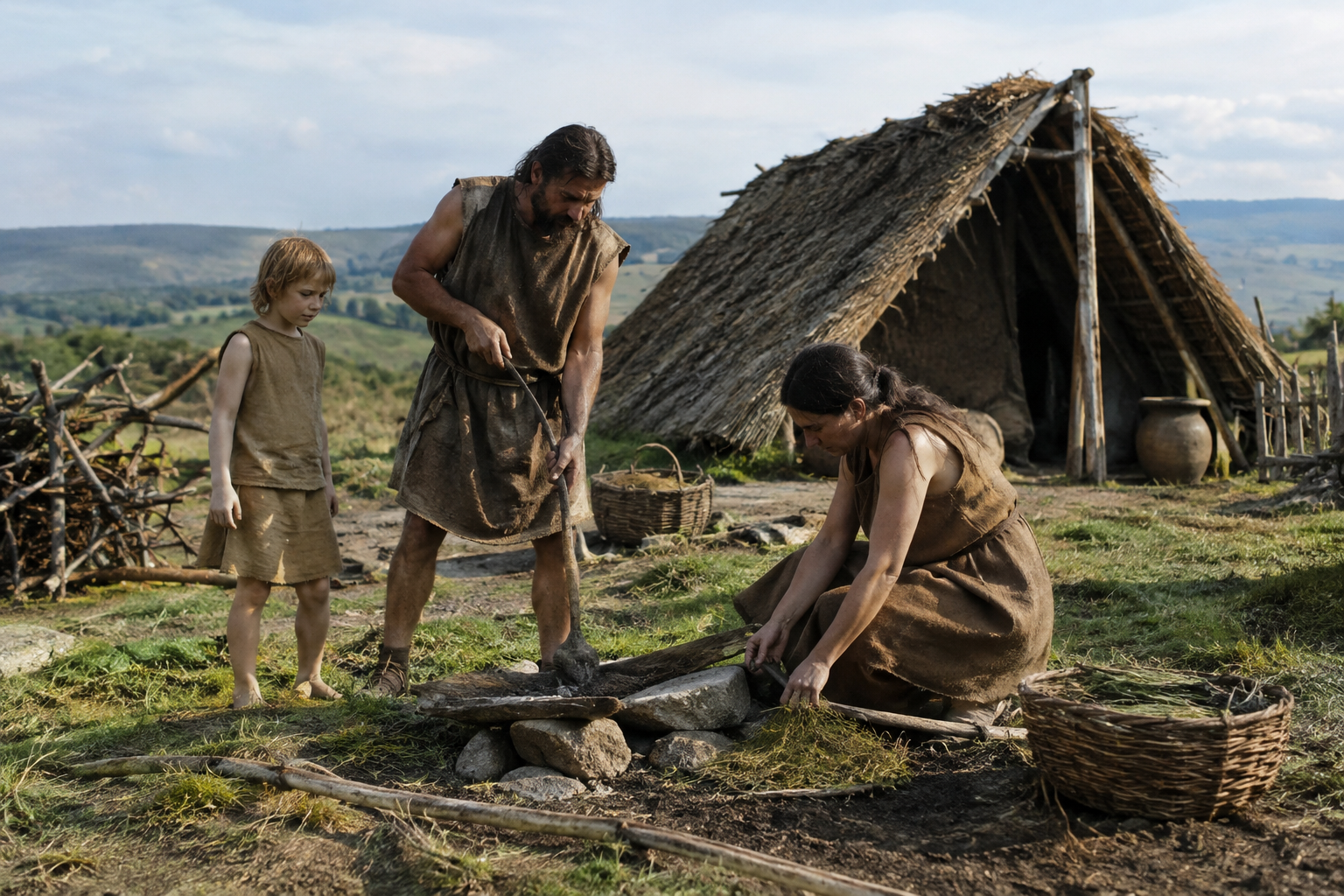
At Unterhautzenthal in Bronze Age Austria, one ancient man stands out because he gives a very precise anchor for an otherwise forbiddingly long Y-chromosome label: UZH019, dated here to around 1900 BC. He is the concrete point where the paternal lineage R1b1a1b1a1a1c2b2a1b1a4b1a1a2b meets the archaeological record. That matters because haplogroups often float about the internet as if they were tribal badges or ready-made ethnic labels. In reality, they become historically useful only when they are tied to an actual excavated person in an actual place.
Unterhautzenthal lies in Lower Austria, within a region that was deeply involved in the social reshaping of Central Europe during the Early Bronze Age. So the real interest here is not simply that UZH019 carried a branch of R1b, but that this paternal line appears in a landscape where communities were farming, burying their dead in formal cemeteries, and participating in wider networks that linked the Danube basin to neighboring regions. A Y-chromosome traces one direct male line only, not a person's total ancestry, but it can still illuminate how particular paternal branches were present in these Bronze Age populations.
The haplogroup name in this article, R1b1a1b1a1a1c2b2a1b1a4b1a1a2b, is a narrow twig on the much larger R1b tree. That distinction is important. The wider R1b family is found across large parts of Eurasia and is especially prominent in later prehistoric and historic Europe, but that broad fact does not automatically tell us the exact history of this tiny sub-branch. What we can say with confidence is much narrower: a man from Bronze Age Unterhautzenthal, identified as UZH019, has been associated with this lineage in the ancient DNA record.
That alone already tells us something useful. By about 1900 BC, this paternal branch, or a very close part of it, was present among communities in northeastern Austria. The significance is regional and chronological, not mythical. It places the line within the world of Early Bronze Age Central Europe rather than in some vague, timeless "ancient Europe."
For readers exploring the broader genetic setting of this region, this background piece is especially relevant:
A date around 1900 BC places UZH019 in a period when Central Europe had already absorbed major changes from the third millennium BC: new metalworking traditions, more formalized burial landscapes, and populations shaped by mixtures that had been building for centuries. In genetic terms, many Bronze Age communities in this zone carried substantial ancestry linked to earlier Steppe-derived expansions, but that ancestry was blended with older European farming populations in different local proportions. A haplogroup such as this one belongs inside that larger demographic setting.
Archaeology makes the point even more clearly. A cemetery is not just a storage place for skeletons. It is evidence for a settled community with rules about burial, kinship, land, and memory. So when a lineage like R1b1a1b1a1a1c2b2a1b1a4b1a1a2b appears in such a context, it suggests continuity within community life rather than an isolated wandering figure detached from the social world around him.
That said, one sample is not a people. UZH019 cannot stand in for all Bronze Age Austrians, still less for every later population in which related R1b branches became common. The value of the sample is that it gives a securely ancient foothold for this paternal line in a historically important corridor of Central Europe.
Austria often appears in prehistory as a crossroads, though that word can be overused. In this case it is justified. The Danube zone connected western and eastern Central Europe, and the communities of Lower Austria sat within networks of exchange, marriage, and movement that extended beyond any modern frontier. That is one reason ancient DNA from the region matters so much: it helps us see paternal lines not as national possessions, but as parts of mobile prehistoric populations.
Research on Early Bronze Age burials in northeastern Austria has also drawn attention to the health and historical context of these cemeteries, including work on plague in nearby burial grounds. A study connected to this regional setting can be found here. Without overclaiming what that publication says about UZH019 specifically, it reminds us that these Early Bronze Age communities were living through a world of real biological as well as social pressures.
That wider context is useful for interpreting haplogroups. A paternal line survives not because it has some historical destiny, but because actual men had sons in communities that endured upheaval, disease, migration, and cultural change. Ancient DNA puts that almost brutally plainly.
The larger R1b family has long been associated with major prehistoric transformations in western and central Europe, especially after the third millennium BC. But articles about R1b can become lazily sweeping, as though every downstream branch shared the same route, date, and historical meaning. Your lineage, R1b1a1b1a1a1c2b2a1b1a4b1a1a2b, is much more specific than that, and the safest ancient point offered here is this Bronze Age Austrian individual.
That means the strongest story is not "this lineage founded Europe" or "this was the haplogroup of one famous tribe." The stronger, more honest story is that a very fine-grained paternal branch was already established in Central Europe by the Early Bronze Age and is recoverable in a named excavated individual. That is exactly the sort of evidence ancient DNA is good at: turning abstract lineages into dated human realities.
Readers interested in how Central European ancient genomics has been used in larger debates over language spread may also want this article:
There is an understandable temptation, when faced with a haplogroup this specific, to want a neat identity label attached to it: Celt, Germanic, noble, princely, or something equally tidy. UZH019 does not give us that. Around 1900 BC, those later historic identities did not exist in the form readers usually imagine, and archaeological cultures should not be flattened into ethnic stereotypes anyway.
What the sample does offer is better than a fantasy pedigree. It shows that this paternal branch belongs within the lived history of Bronze Age Central Europe, in a region that would remain important for later population developments across the Danube world. If your own Y-DNA falls on this branch or a near neighbor, that does not make you the direct heir of a named Bronze Age household, but it does place one line of your ancestry in the same broad historical theater as men like UZH019.
For a wider regional comparison just to the north and west, this piece on Lower Austria is also worth reading:
The most distinctive thing about R1b1a1b1a1a1c2b2a1b1a4b1a1a2b is not grandeur but precision. At present, the sample from Unterhautzenthal gives this lineage a firm place in Early Bronze Age Austria, around 1900 BC, in a real cemetery landscape shaped by the social and biological pressures of its age. For anyone tracing this paternal line today, that is the responsible takeaway: not a ready-made legend, but a documented connection to the communities of Bronze Age Central Europe.

Comments