Haplogroup R1b1a1b1a1

– 6 min read


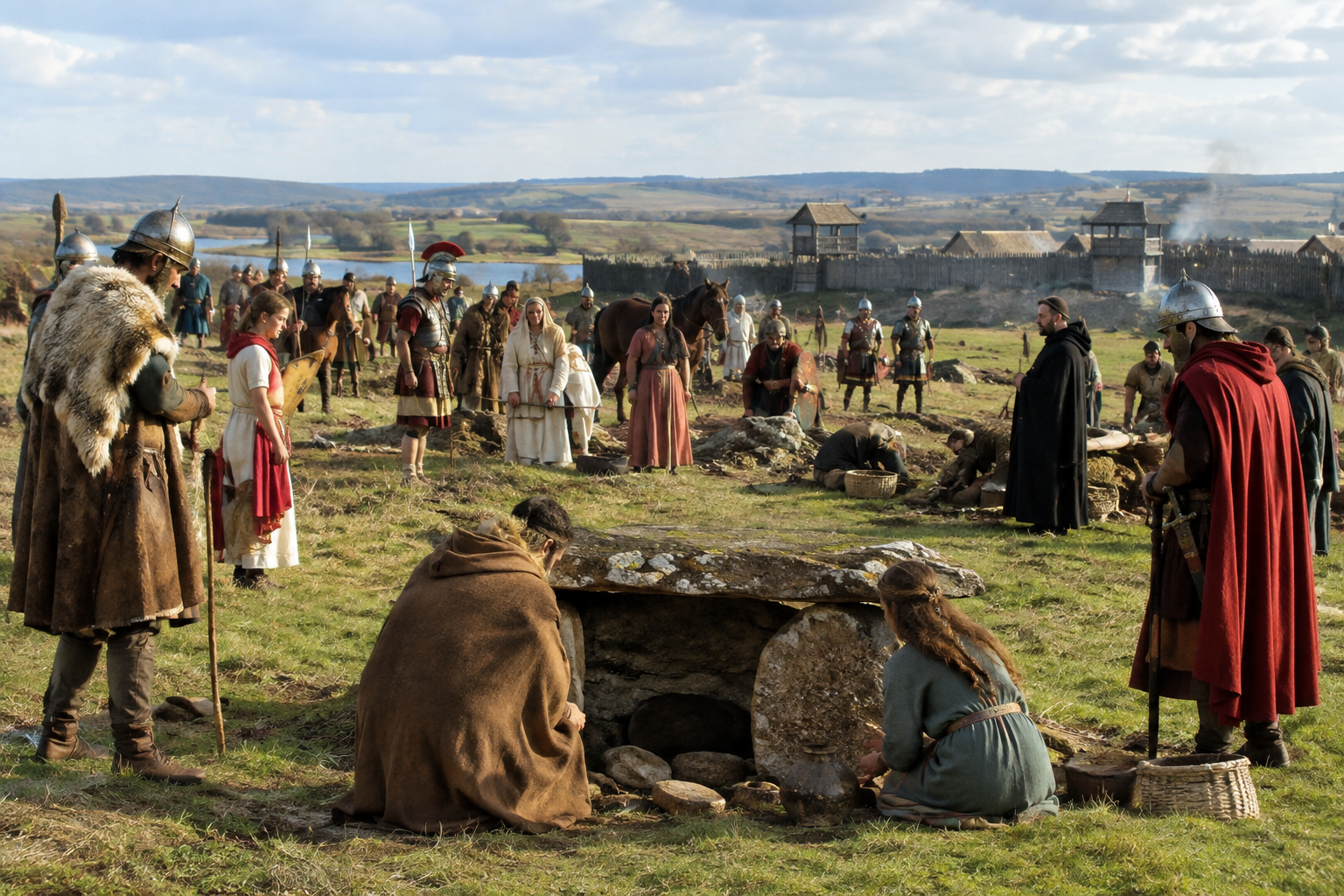
There is something especially arresting about a Y-chromosome lineage that turns up in a Bronze Age kurgan on the Serbian plain, reappears in richly furnished Celtic burials in southwest Germany, turns up again in Roman and post-Roman Britain, and then surfaces in medieval contexts from Portugal to Poland and Scandinavia. Haplogroup R1b1a1b1a1 belongs to that sort of story: not a single people, not a tidy dynasty, but a paternal line found again and again in some of the most historically interesting corners of ancient and medieval Europe.
As ever with Y-DNA, a small warning is also part of the fascination. A Y-haplogroup traces only one direct paternal line - father to father to father - and does not describe a person's total ancestry. Nor does sharing a broad lineage prove close kinship, noble descent, or membership in a particular ethnic group. What it does offer is a remarkable way of following one thread through time, and in the case of R1b1a1b1a1 that thread runs through steppe horizons, Bronze Age Europe, Iron Age elites, Roman mobility, and medieval lordship.
R1b lineages, in broad terms, are deeply important in the paternal history of later Europe. But one must be careful not to dump the entire history of all R1b branches onto a narrower label like R1b1a1b1a1. Still, the sample list here gives a persuasive outline of the wider setting in which this lineage was moving: east-central and southeastern Europe in the Bronze Age, then central and western Europe in growing numbers.
One of the earliest anchors is I20499, a Bronze Age Serbia Yamnaya Zabalj-Medisova-humka individual dated to 2633 BC. That matters because Yamnaya-related populations loom large in discussions of Bronze Age population change across Europe. It does not mean every later bearer of R1b1a1b1a1 descends directly from this man, or that this exact branch was uniquely "Yamnaya." But his presence helps place the lineage within that world of mobile pastoralist expansion and cultural transformation.
From there, the map broadens quickly. We find LEU064 from Bronze Age Unetice Thuringia Leubingen Sommerda Germany dated to 1950 BC; I5757 from Bronze Age Switzerland Sion-Petit-Chasseur Dolmen XI dated to 2225 BC; VLI081 from Bronze Age Vlineves Bohemia CWC dated to 2100 BC; and Rise566 from Bell Beaker Czech dated to 2150 BC. Taken together, these are not random dots. They suggest a paternal presence across the central European zone where Corded Ware, Bell Beaker, and early Bronze Age societies reshaped the human landscape.
Explore Celtic origins through ancient DNA
If the Bronze Age gives us distribution, the Iron Age gives us personalities - or at least social rank. Some of the most striking individuals in this set come from high-status Celtic contexts. At Magdalenenberg in Germany, MBG013, an Elite Celtic Burial Germany Magdalenenberg Villingen-Schweningen individual dated to 530 BC, places the lineage in one of the grand burial landscapes of early Celtic Europe.
Even more famous are the Hochdorf-linked burials in Germany: HOC001, Elite Prince Celtic Germany Eberdingen-Hochdorf Biegel dated to 515 BC, together with HOC001b and HOC001c. These are precisely the sort of burials that remind us how useful ancient DNA has become. Once, archaeologists could describe wagons, feasting gear, imported luxuries, and princely display. Now they can sometimes add paternal line data to the picture. Not to reduce a prince to a haplogroup, but to place him inside wider biological histories of mobility and local continuity.
The same pattern continues westward. CGG023634 from Gallic France Aedui Tribe Vix dated to 505 BC, ATT3 from an Attichy-Bitry Male Gallic Chariot Burial France dated to 275 BC, and I21403 from Gallic Chemin de Coupetz Marne France dated to 250 BC show this paternal line in distinctly Iron Age French settings. Then in Britain there is I16600 from Celtic Briton Amesbury Down Wiltshire England dated to 590 BC, I11146 from Meare Lake Village Somerset England dated to 300 BC, and I21307 from Iron Age Hillfort Battlesbury Bowl England dated to 59 BC.
What emerges is not one "Celtic haplogroup," which would be far too crude, but a paternal lineage well represented in Iron Age communities that archaeologists describe as Celtic across central Europe, Gaul, and Britain.
Read about Celtic mobility in Switzerland
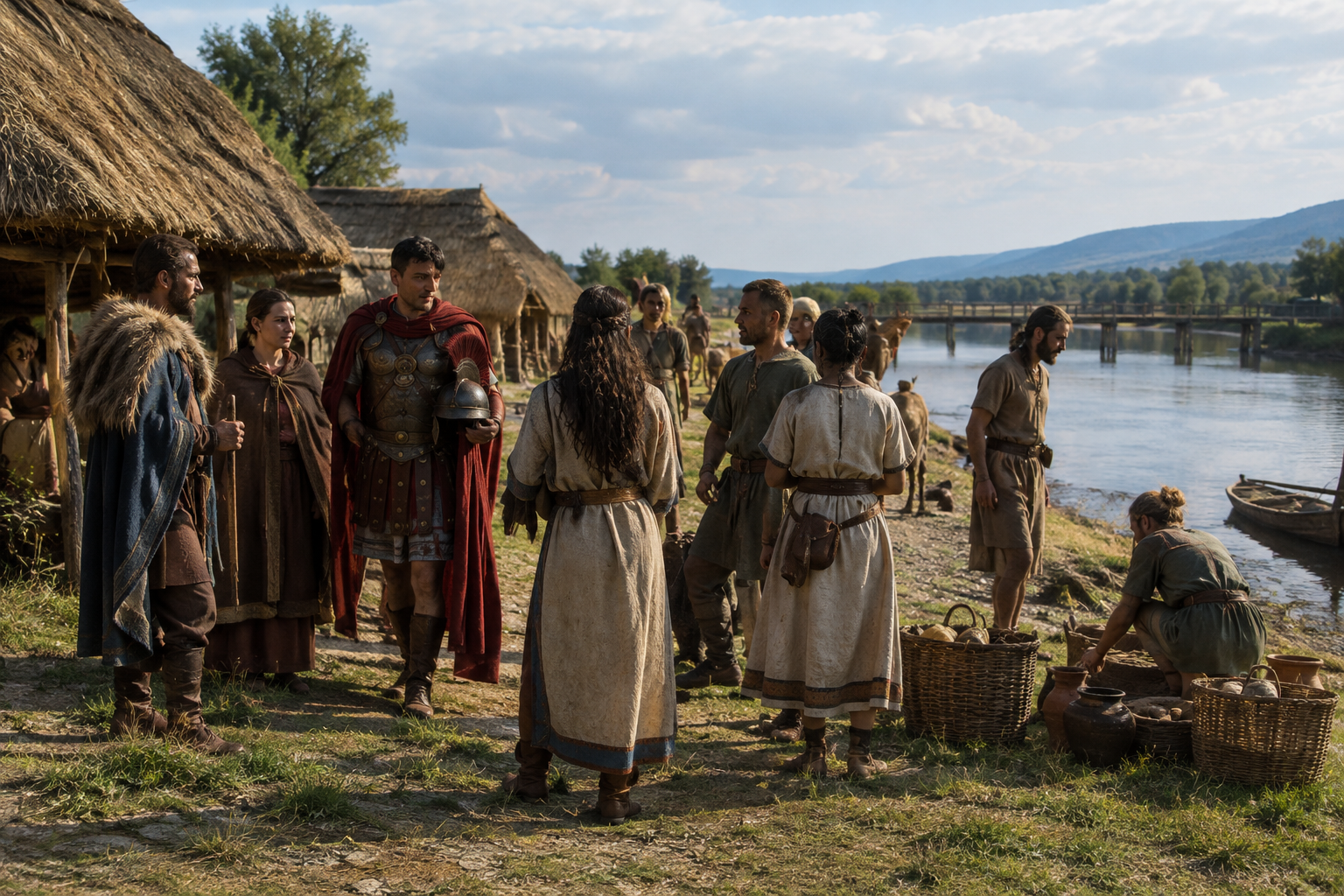
Then Rome arrives, and with Rome comes movement. One of the pleasures of this sample set is that it shows R1b1a1b1a1 in Roman-era Britain not once but repeatedly. There is NWC009 from Roman Era England Northwest Cambridgeshire Eddington dated to 150 AD; ARB003 from a Roman Era High Class Burial Cambridgeshire Arbury Wooden Coffin dated to 200 AD; and DUX003 from Roman Era Cambridgeshire Duxford dated to 112 AD. Add to that the Durotrigan-associated individuals WBK17, WBK192, and WBK10 from Duropolis Winterborne Kingston, dated to 125 AD.
This is exactly the sort of evidence that complicates lazy ideas of conquest replacing population. Roman Britain was full of local survival, regional mixing, and incoming people from different provinces. A lineage like this can appear in indigenous British settings, in Romanized burials, and later in post-Roman communities without implying that all these men belonged to the same family.
Post-Roman Britain is equally revealing: I20602 and I20608 from Post Roman Era Sussex Apple Down West Chichester dated to 550 AD; I11573, I11574, I11577, and I11578 from Worth Matravers Dorset England dated to 600 AD; and ELY003 from Angle Ely Cambridgeshire dated to 550 AD. The point is not that one line "owned" Britain, but that paternal continuity and migration both mattered.
Explore Roman and early medieval Britain
By the early medieval period, the lineage appears across a striking range of historical worlds. In northern Italy, COL_150, COL_150b, and COL_150x come from a Lombard Warrior Elite Collegno Northern Italy burial dated to 580 AD. In eastern Scotland, the cluster LUN004, LUN004a, LUN004b, LUN004c, LUN004d, LUN004e, LUN004f, LUN004g, and LUN004h from Early Medieval Pict Era Scotland Lundin Links Cemetery dated to 550 AD brings the haplogroup into Pictish territory.
Ireland is there too, with KIL045, KIL038, and KIL030 from Medieval Ireland Kilteasheen Roscommon Bishops Seat dated to 650 AD. Iberia is represented by I29896 from Early Medieval Spain Malaga Pizarra Castillejos de Quintana dated to 775 AD, LP117_3 from Medieval Portugal Castro de Avelas Torre Velha Christian Conquest dated to 1100 AD, and LP114_7 from Kingdom of Portugal Sao Miguel de Odrinhas dated to 1300 AD.
And then there is medieval Poland: PCA0503 from Piast Dynasty Poland Santok Lubusz Province Gorzw Wielkopolski dated to 1100 AD, and PCA0665, Piast Prince Konrad I, dated to 1247 AD. These are especially tantalizing because dynastic samples tempt readers into direct-line fantasies. We should resist that. What they show, responsibly stated, is that this paternal lineage appears in the orbit of an important medieval ruling house.
The supplied noble-family field is blank, so there are no family-and-castle details here that can be responsibly expanded into a separate genealogical section. That absence itself is worth noting. Genetics often reaches periods and persons that written genealogy cannot, while genealogy can name houses and castles that genetics has not yet securely linked. The two forms of evidence are at their best when they complement one another rather than pretend to do the same job.
Discover the Piast genetic story
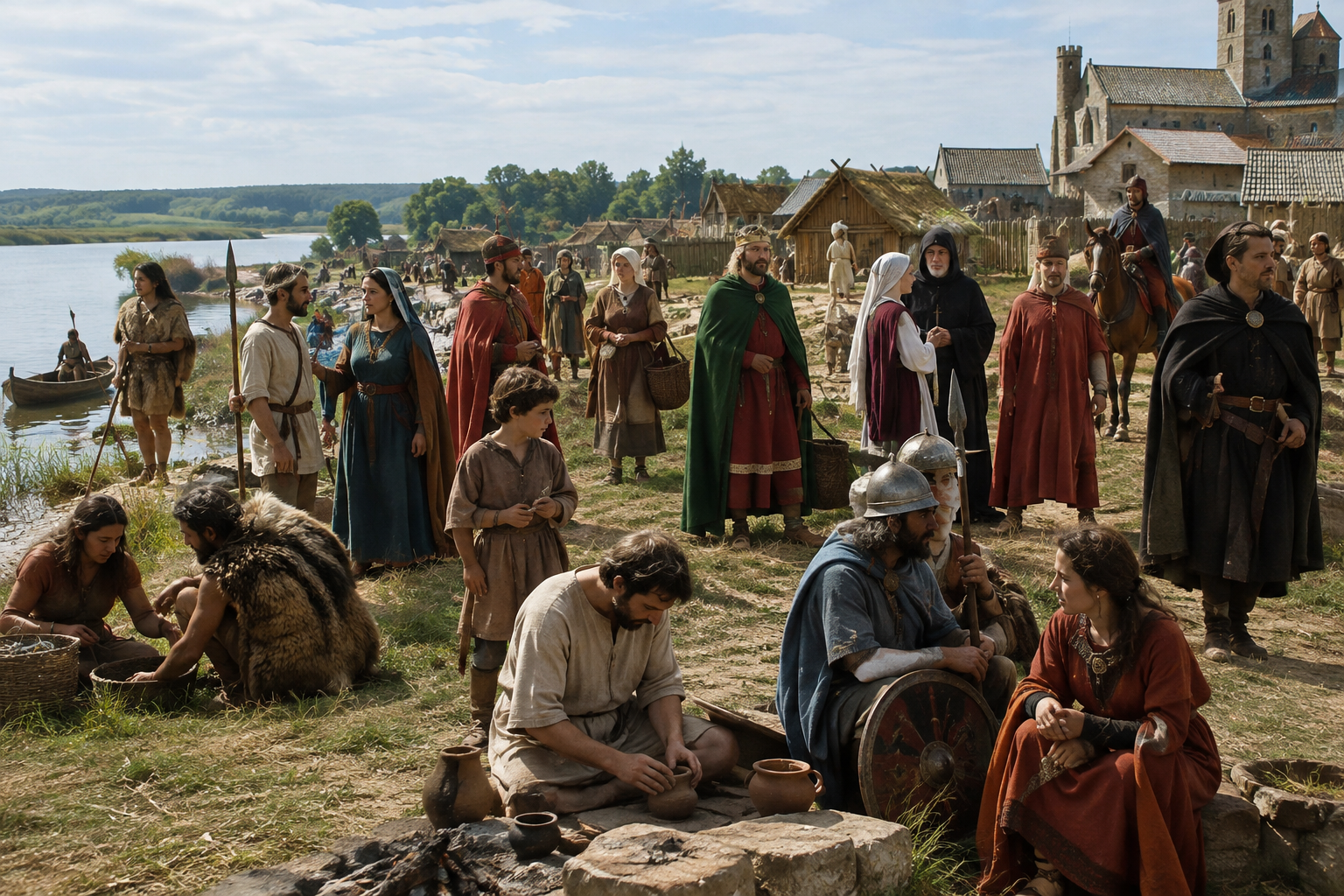
So what sort of history does R1b1a1b1a1 suggest? A broad one, certainly. It appears in contexts linked with Bronze Age expansions, in central European and western European Iron Age communities, in Roman Britain, among Lombard elites, in Pictish and Irish early medieval settings, and in later medieval populations stretching from Belgium and England to Portugal, Poland, Sweden, and even Viking Greenland through VK75 dated to 1300 AD.
That does not mean all these men were closely related, nor that the lineage belonged to one language, kingdom, or people. It does mean that one paternal branch could persist through immense political and cultural change: from kurgans to chariot burials, from hillforts to Roman coffins, from migration-period warrior graves to medieval princely burials. Ancient DNA is so good at puncturing neat historical myths because it shows exactly this sort of continuity amid change.
For MyTrueAncestry users, that is the real excitement. A Y-line like R1b1a1b1a1 may connect your direct paternal ancestry, in a broad deep-time sense, to some of the most famous archaeological transitions in Europe. But the most interesting question is rarely, "Was my family noble?" It is usually, "Through which worlds did this paternal line travel, and what kinds of societies carried it forward?"
If you want to explore whether your own DNA shows connections to ancient individuals like MBG013, HOC001, I20499, PCA0665, or the many other samples in this story, MyTrueAncestry can help place your results alongside the archaeological record. These comparisons can open remarkable windows onto the past, even when they do not prove direct descent from any one ancient person or dynasty.
Comments