Haplogroup R1b1a1b

– 6 min read


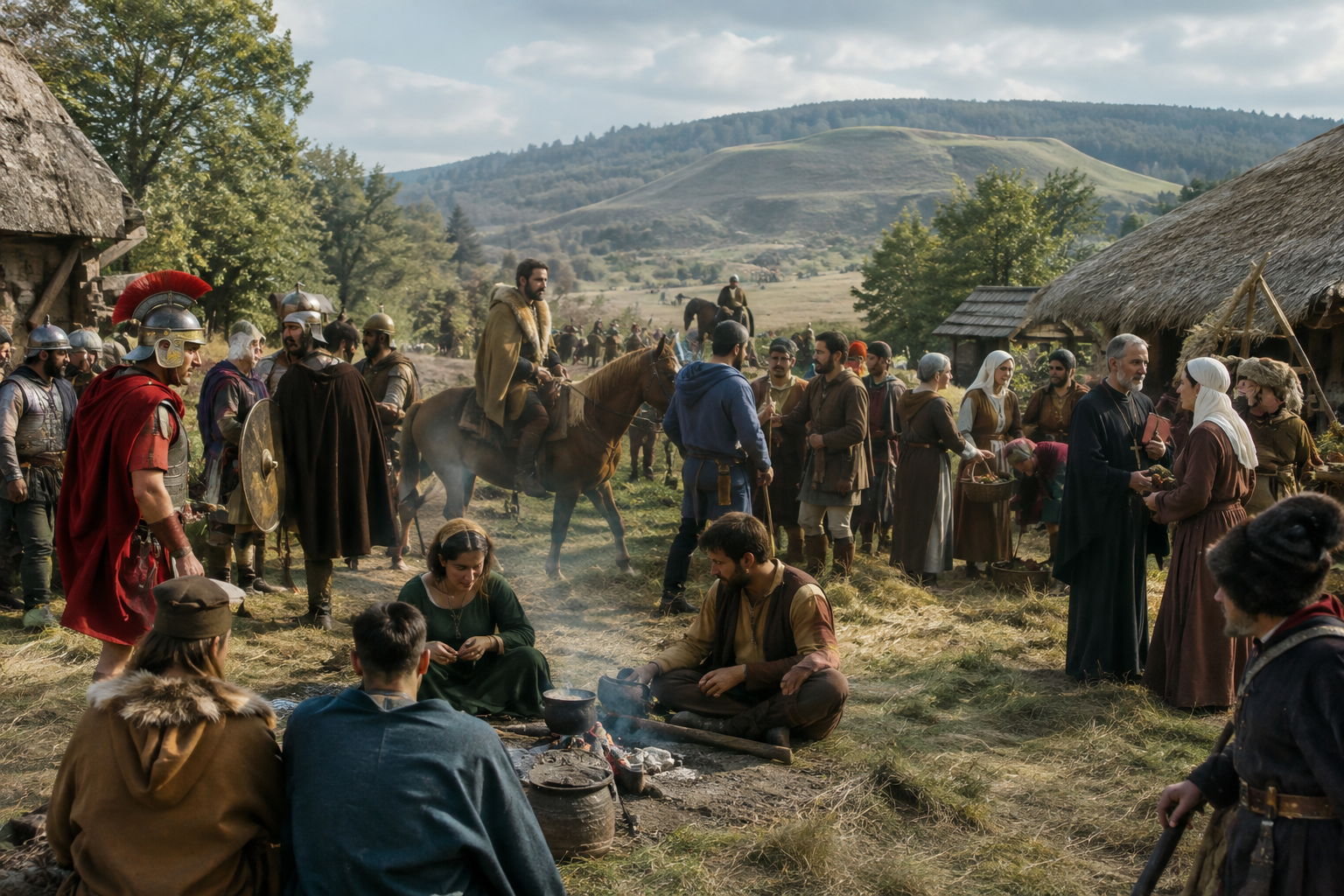
Some Y-chromosome lineages turn up in one region or one period and stay politely in place. R1b1a1b is not one of them. In the ancient DNA record supplied here, it appears in graves stretching from the steppe and the Caucasus to Iron Age Celtic Europe, Roman Britain, Lombard Italy, medieval Flanders, Sicily, Denmark, Hungary, Poland, and beyond. That does not mean all these men belonged to one neat historical people. Quite the reverse. It shows how a paternal lineage can travel through very different worlds while written history, language, and political identity keep changing around it.
That is what makes Y-DNA so useful and so easy to misunderstand. A Y-DNA haplogroup traces one direct paternal line only: father to father to father. It is not a person's whole ancestry, not a shortcut to ethnicity, and certainly not proof of descent from a king, a clan chief, or the owner of a castle. But when ancient burials are placed side by side across time, a haplogroup like R1b1a1b becomes a remarkable historical thread, helping us see how male lineages moved, survived, and sometimes flourished within very different archaeological cultures.
R1b1a1b sits within the wider R1b family, one of the best-known paternal lineages in western Eurasian population history. For this article, caution matters: we should not simply pour the entire grand story of broad R1b into this narrower label as though nothing changed along the way. Even so, the sample list strongly places R1b1a1b within the great zone of interaction linking the Pontic-Caspian steppe, the Balkans, central Europe, and later western Europe.
Some of the earliest signposts come from steppe-associated contexts and nearby regions. We see I3510, an Early Bronze Age Hungary Yamnaya individual from Hajdu-Bihar Puspokladany dated to 2501 BC, and I10415, an Early Bronze Age Moldova Yamnaya individual from Crihana-Veche dated to 2573 BC. Nearby in time and geography is I10174, Early Bronze Age Moldova Crihana-Veche, dated to 2050 BC. These samples do not by themselves prove a single linear migration story, but they do place this paternal lineage in the world of early Bronze Age mobility between the steppe and southeastern Europe.
That broader setting is reinforced by 9NP004, a Middle Bronze Age North Caucasus Yamnaya Kurgan individual dated to 2800 BC, and later Caucasus-related finds such as ILL001 from the Late Bronze Age Lola Kurgan at Ilinskiy, dated to 1950 BC, and ESY006 and ESY007 from Iron Age Pre-Scythian Russia, Caucasus, Essentukskiy Maykop, both dated to 1100 BC. The point is not that all later European bearers of R1b1a1b came directly from any one of these men. It is that the haplogroup is well attested in exactly the corridor where so much Bronze Age population movement took shape.
Explore North Pontic migrations
By the Iron Age, R1b1a1b is turning up in settings that would have looked utterly different from the open kurgan landscapes of the earlier steppe. At Magdalenenberg in Germany, two elite Celtic burials, MBG003 and MBG014, are both dated to 530 BC at Villingen-Schweningen. These are not anonymous scraps of data. They come from a famous princely burial landscape in the Celtic world, where status, display, and local power were written into the funerary archaeology.
There is more. LAN001, an Elite Celtic La Tene Iron Age Germany sample from Langenenslingen Alte Burg, dated to 300 BC, joins a cluster of Iron Age continental finds that make R1b1a1b hard to separate from the historical expansion of Celtic-speaking societies across central and western Europe. Other suggestive samples include CGG022441 from Celtic Iron Age France Bucy-le-Long, dated to 318 BC, CGG101222 from Celtic Iron Age Upper Austria Salzkammergut dated to 550 BC, and BUCH48-2 from a Belgic context at Bucheres, France, dated to 350 BC.
Britain adds another layer. The Durotrigian world of southern England is represented by WBK33, WBK104, and WBK107 from Celtic Durotriges burials at Duropolis, Winterborne Kingston, dated to 125 AD, while I21315 from Celtic Durotriges Ham Hill Somerset is dated to 80 BC. Elsewhere in Iron Age Britain we find I16619 at Bevendean in Sussex, dated to 106 BC; I19207 at Yarnton in Oxfordshire, dated to 300 BC; and I20624, I20625, and I20634 from Fin Cop in Derbyshire.
What is striking here is continuity of presence across the Channel world rather than a single tribe or kingdom. The same paternal branch appears among elites, hill-fort populations, and regional Iron Age groups. That is exactly the sort of pattern ancient DNA has made much easier to detect.
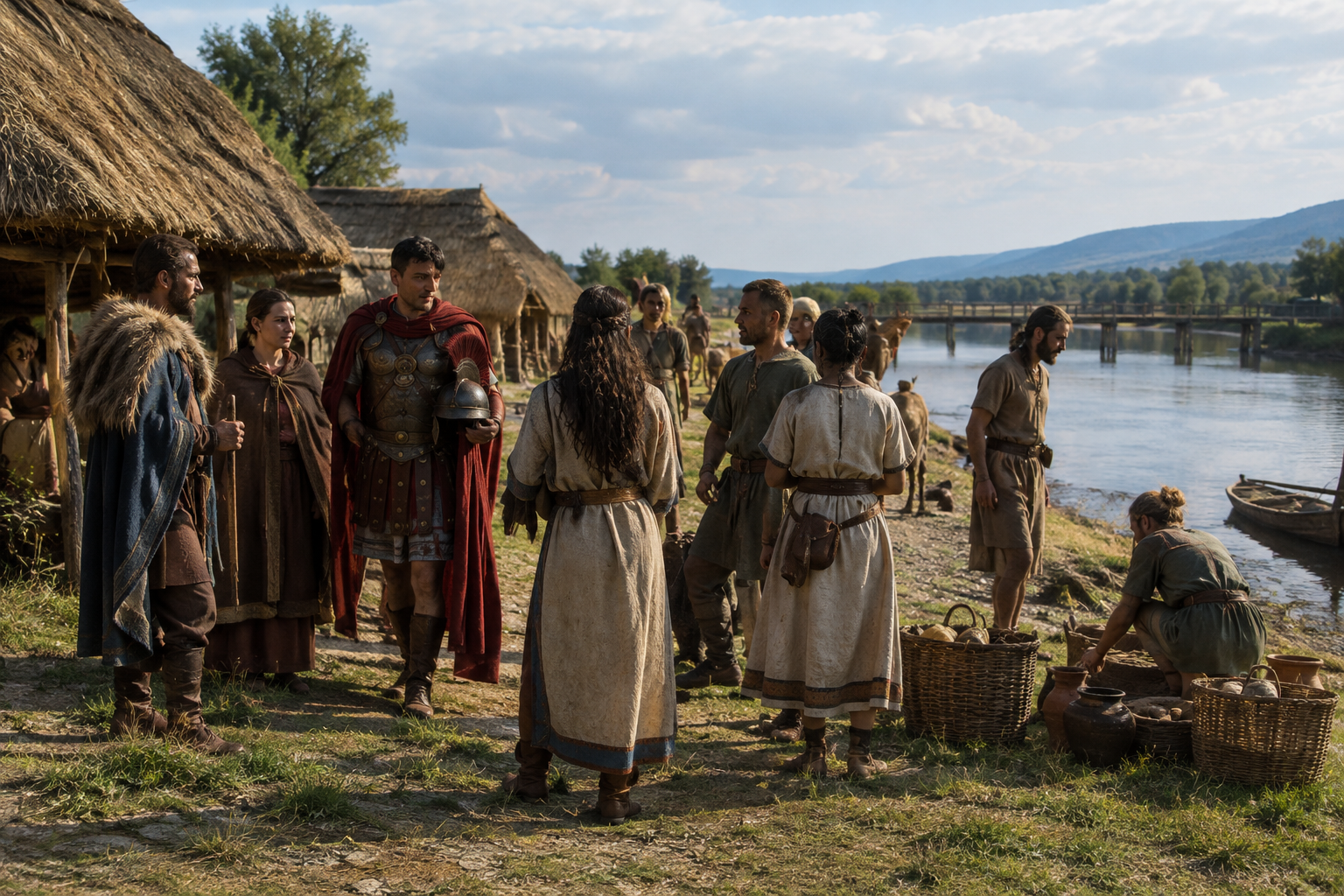
Roman Britain is especially revealing because it lets us watch old local lineages continue in a world transformed by empire. In Cambridgeshire and nearby districts alone, the list includes KNF020 from Knobbs Farm Somersham, dated to 200 AD; NWC003 from Eddington, dated to 150 AD; FEN009, FEN011, and FEN013 from Fenstanton, all dated to 100 AD; ARB002, a Roman Era male nobility burial in an Arbury lead coffin dated to 200 AD; and VIC006 from Cambridge Vicars Farm, also dated to 200 AD. There is even a pre-Roman local comparator in DUX014 from Duxford, dated to 180 BC.
This is the sort of evidence that reminds us the Roman Empire did not wipe the slate clean. Some paternal lines persisted locally; others arrived with trade, the army, administration, or marriage. The Y chromosome cannot tell us which man spoke Latin, Brittonic, or some other tongue at home, but it can show that direct paternal ancestry crossed the Roman conquest without vanishing.
The post-Roman and early medieval record is equally busy. In southern Britain there is I20636 from Kingdom of Wessex England, Worth Matravers Dorset, dated to 600 AD, and I11567 from post-Roman Worth Matravers, also dated to 600 AD. In Sussex we have I20600 and I20603 from Apple Down West Chichester, both dated to 550 AD. On the continent, migration-period and early medieval examples include OBM021 from the Thuringii tribe in Germany, DRH016 from Deersheim Saxony-Anhalt, and BRC060x, BRC001x, and BRC003x from Bruecken, all around 500 AD.
Then there are the Lombards. The Collegno cemetery in northern Italy has a remarkable cluster: COL_142, COL_142b, COL_142x, COL_017, COL_017b, and COL_017x, all described as Lombard warrior elite and dated to 580 AD. Here R1b1a1b appears in a recognizably early medieval, martial, mobile setting. Again, no melodrama is needed. The archaeology is exciting enough.
Read Roman and early medieval Britain
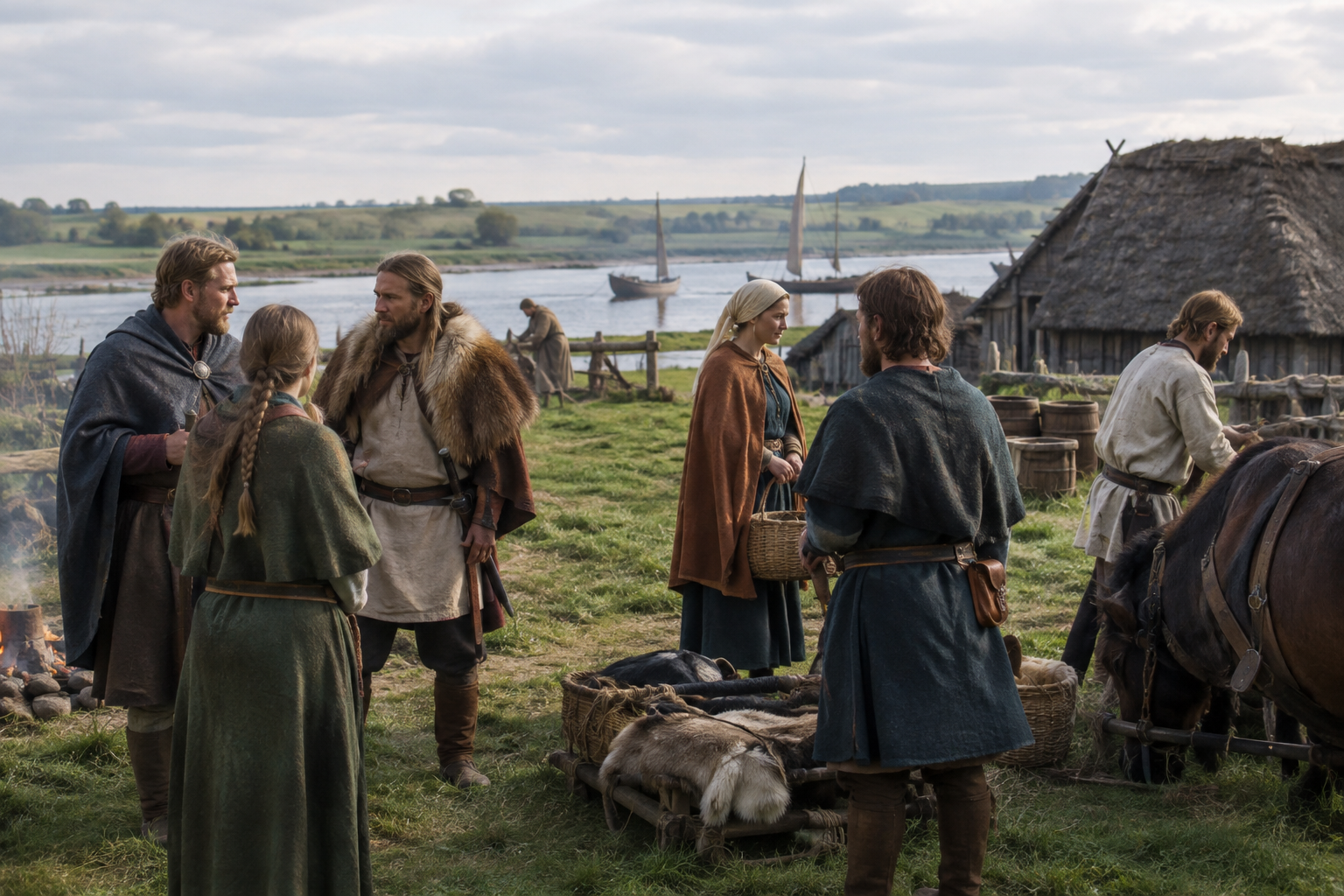
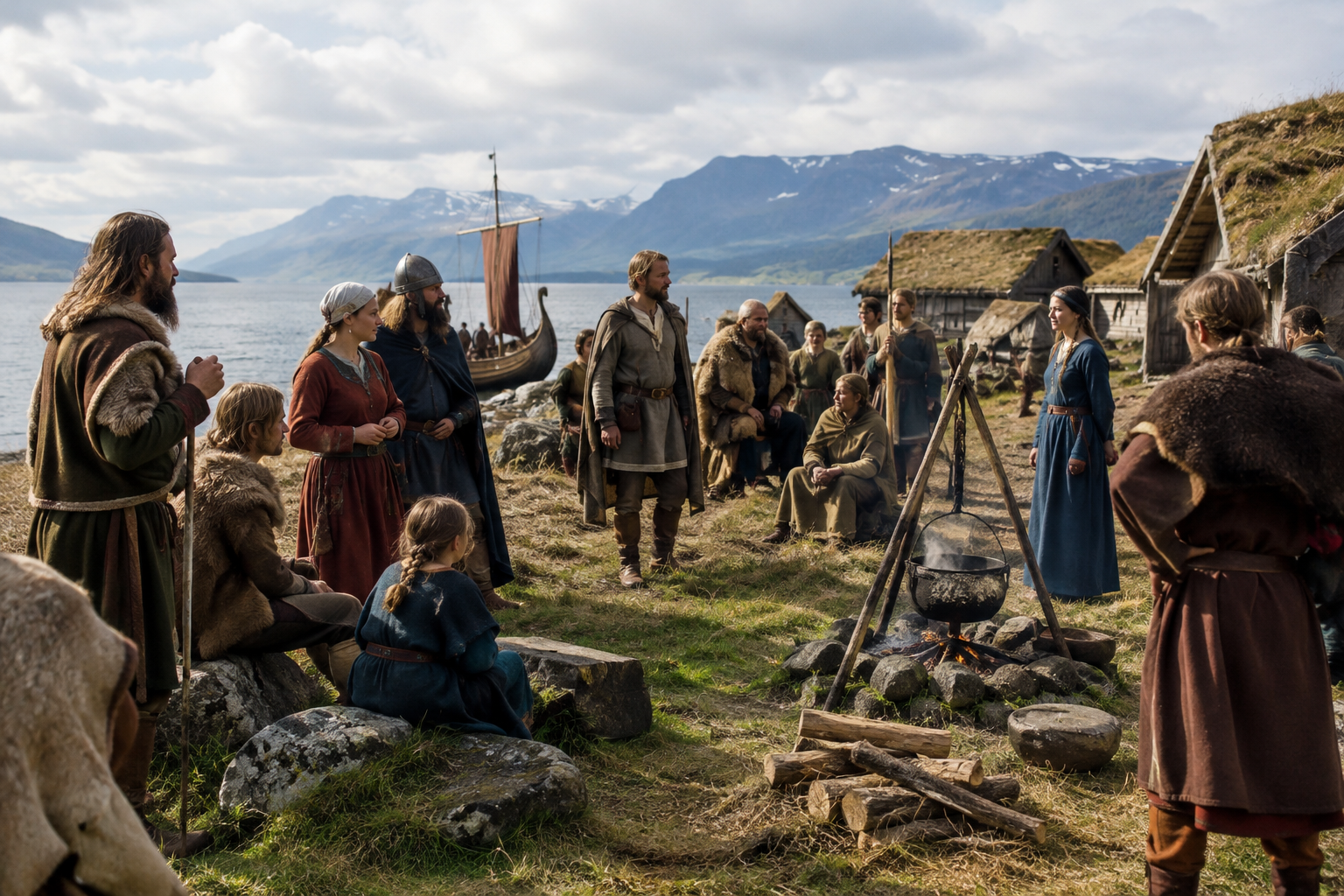
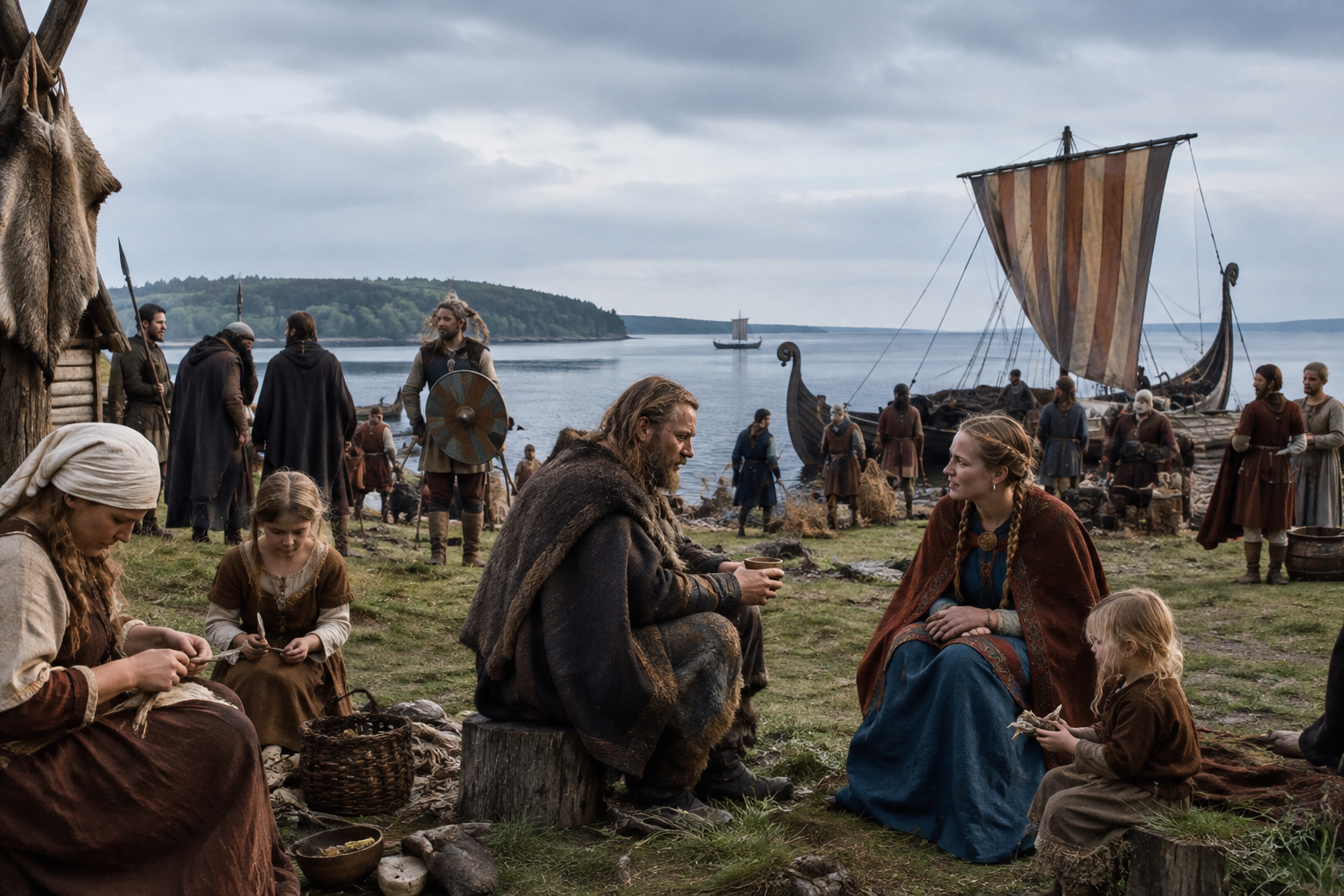
By the medieval period, R1b1a1b is scattered across a wide European map. In Flanders we find KOS010, a Merovingian burial at Koksijde dated to 675 AD. In Belgium there is a substantial Sint-Truiden cluster, including ST1838, ST0273, ST0557, ST0785, ST2997, ST2257, and ST2391, along with later burials such as ST0046 and ST0064. In Denmark the line appears in CGG107529 from Viking Age Nymarksgaard, CGG106792 from Viking Age Langeland Kaagarden, and medieval Tjaerby samples CGG100689 and CGG100749.
Eastern and central Europe are no less interesting. Hungary contributes AHPS111 from Arpad-period Visegrad, plus AHS66 and AHS69 from Zalavar Varsziget. Poland offers a dynastic cluster in the Piast Masovian line: PCA0644, PCA0654 associated with Wenceslaus of Plock, PCA0647, and PCA0636. These are especially important because they show how a paternal lineage visible in prehistory and antiquity can also appear within documented ruling houses. But a historian has to add the obvious health warning: sharing a broad haplogroup is not proof that every branch of a dynasty, still less every claimant to noble descent today, belongs to the same exact paternal line.
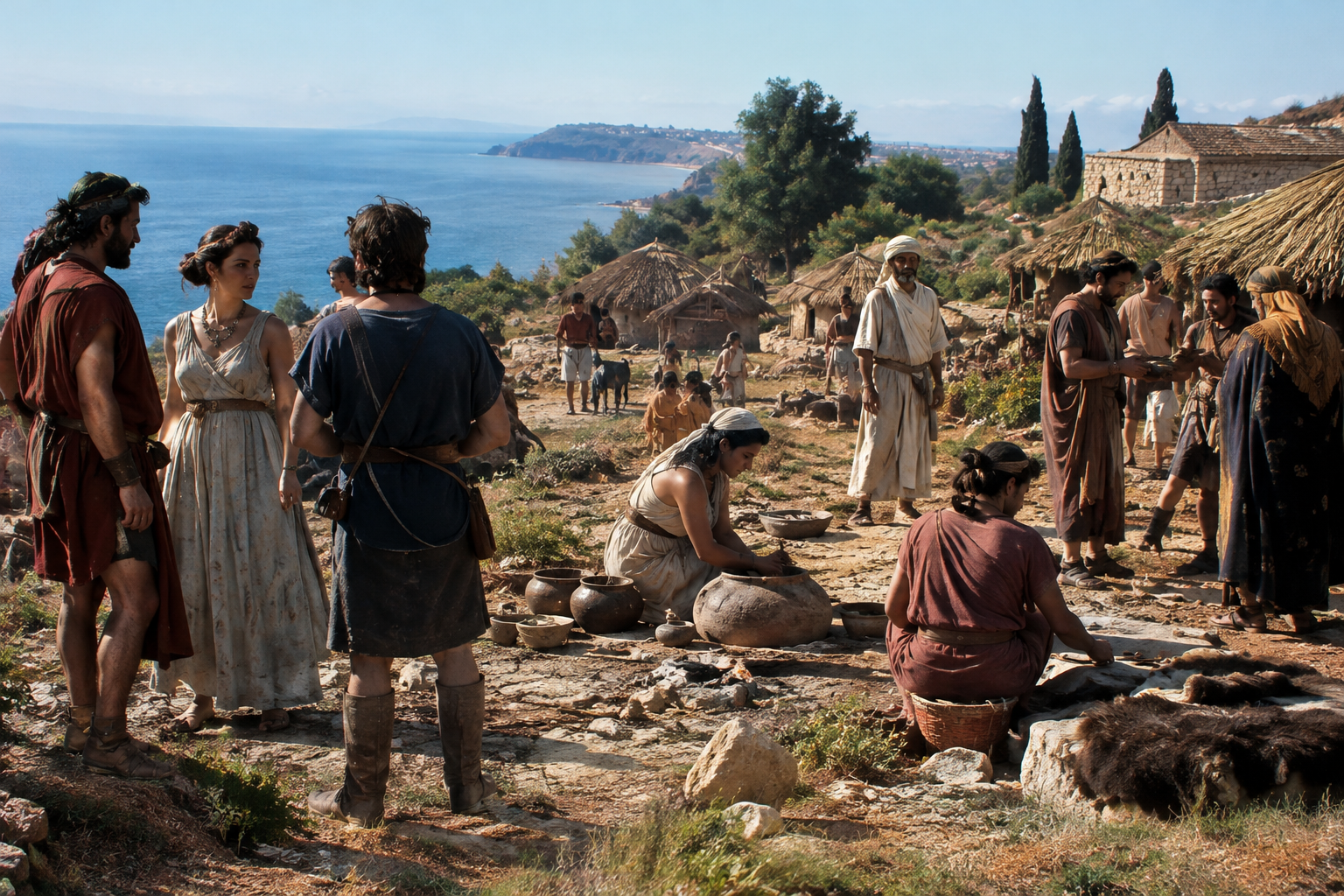
The Mediterranean record is also worth lingering over. ASM_S66 from Imperial Roman Italy at Amiternum, dated to 295 AD, SGBN26 from medieval Sicily Teatro di Segesta, dated to 1290 AD, and I20162 and I20163 from the Greek colony of Himera in Sicily, dated to 550 BC, all show how this paternal lineage moved through places shaped by Greeks, Romans, Lombards, and medieval island societies.
The supplied noble-family field is empty here, which is in its own way a useful reminder. Not every haplogroup article should pretend to have a castle at the end of the road. Sometimes the ancient DNA evidence is rich while the family-specific historical association is not supplied, and the honest thing is to say so. Castles, dynasties, and ancestral seats can preserve the memory of lineages in a region, but they do not by themselves provide genetic proof.
Still, the medieval samples in places like Visegrad, Sint-Truiden, Koksijde, Segesta, and Plock show the sort of historical landscapes where later noble houses emerged: fortified towns, ecclesiastical centers, dynastic burial places, and contested frontier regions. In that sense, ancient DNA and medieval architecture belong to the same conversation. One preserves bones; the other preserves power in stone.
If Sicily caught your eye, the island's complexity is explored further in the MyTrueAncestry community article below.
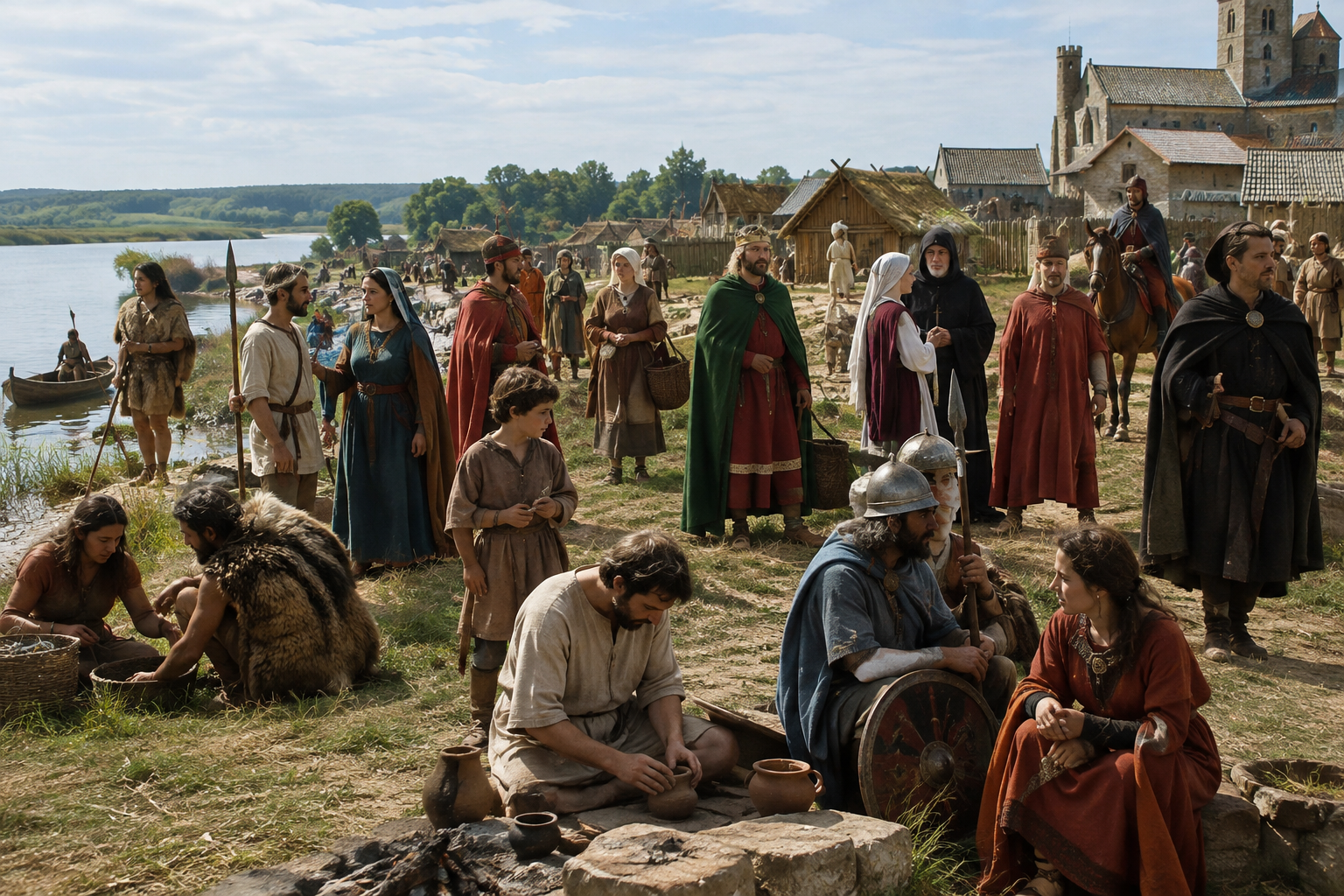
R1b1a1b is historically interesting not because it belongs to one famous people, but because it refuses to stay inside one historical box. In the evidence here, it appears among early Bronze Age steppe-linked groups, Iron Age Celtic elites, Roman-era communities in Britain, migration-period warriors, Viking Age Scandinavians, medieval townspeople, and dynastic burials. That breadth is precisely what makes Y-DNA powerful: it can track one paternal thread while cultures, languages, and political worlds change around it.
For family historians, that is both thrilling and sobering. A match to this haplogroup may connect you to a very old paternal story across Europe and western Eurasia. It does not make you "Celtic," "Yamnaya," "Lombard," or "royal" by itself. But it does place your direct paternal line inside one of the great documented lineages of Eurasian history, now visible through real ancient individuals such as I3510, MBG003, ARB002, COL_142, KOS010, SGBN26, and PCA0654.
If you want to see whether your own DNA shows links to ancient burials, archaeological cultures, and historical populations like these, MyTrueAncestry can help you explore them. Those comparisons can offer remarkable historical perspective, even when they do not prove direct descent from any specific ancient person or noble family.
Comments