Haplogroup R1b1a1a2a1a1c2b1

– 4 min read


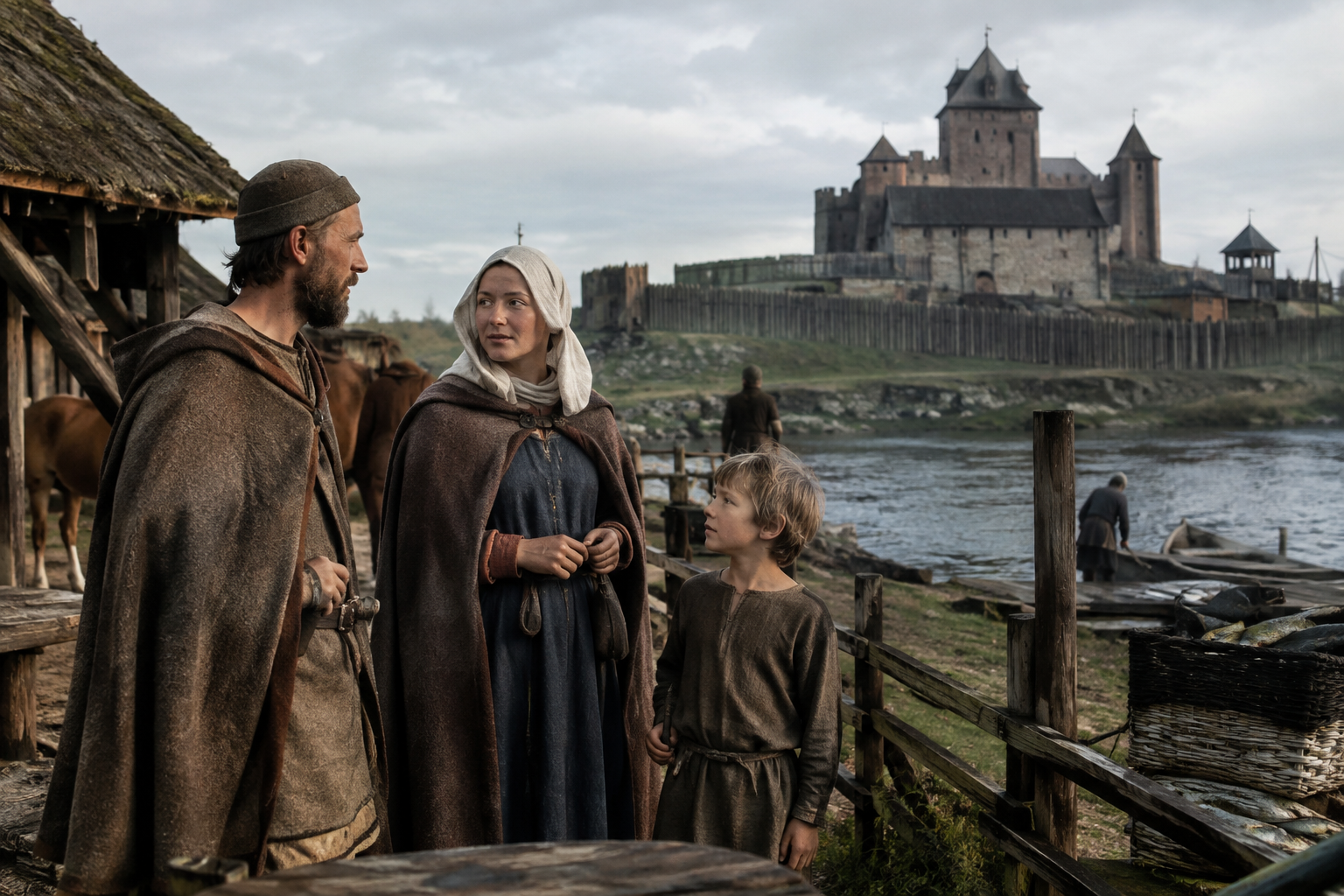
At Vasterhus in Sweden, one medieval man identified as mbv143 gives us a small but unusually vivid foothold into the history of the Y-DNA haplogroup R1b1a1a2a1a1c2b1. He is dated to 1313 AD, which places him in a Scandinavia that was no longer Viking in the old heroic sense, but deeply Christian, locally rooted, and tied into the broader world of medieval northern Europe. That matters, because a Y-chromosome lineage is not a whole identity, but it can show how one direct paternal line persisted within a real community at a very specific historical moment.
With this haplogroup, the evidence in hand is narrow rather than sprawling. That is not a weakness. In archaeology, one securely placed individual can be more useful than a grand but vague migration story. Here, the interest lies not in inventing a saga for R1b1a1a2a1a1c2b1, but in seeing how a very fine-grained paternal branch appears in a documented medieval Swedish setting.
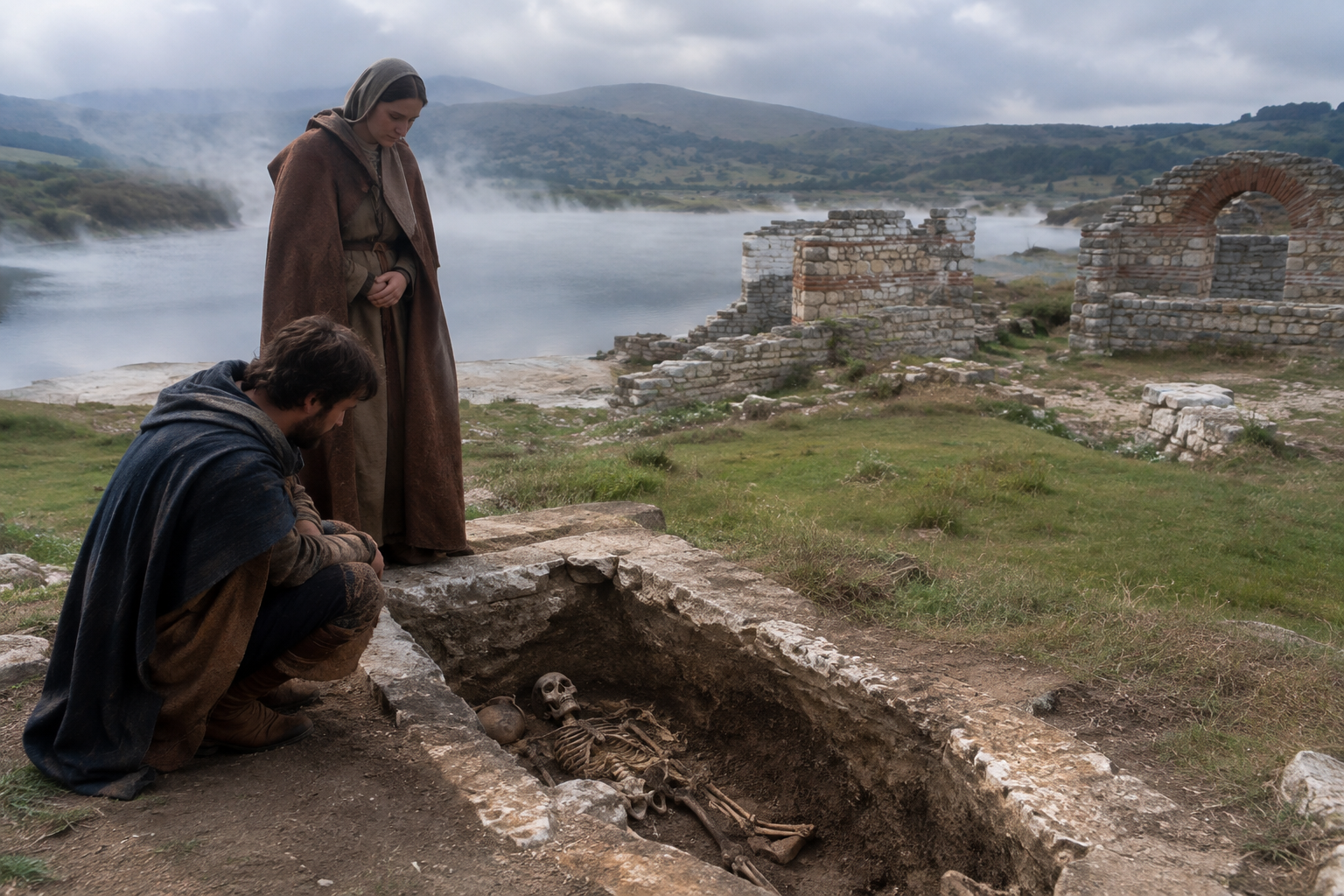
Vasterhus is best known to archaeologists as a medieval burial site that helps illuminate local life, kinship, and demography in Scandinavia after the conversion to Christianity. Sample mbv143, dated to 1313 AD, belongs to that world: parish society, churchyard burial, and communities whose histories are often visible only in fragments of bone, soil, and records.
The haplogroup label here is extremely specific. Its broader parent lineage, R1b, is one of the major Y-chromosome branches in western Eurasia, but that does not mean every detail known about R1b in general can be projected onto R1b1a1a2a1a1c2b1. What the Vasterhus evidence gives us is much more modest and much more solid: this direct paternal branch, or a reported association with it, was present in medieval Sweden by the early 14th century.
A research project on medieval Swedish multiple burials and kinship provides the closest scientific context for this material, even if caution is still needed about how much can be inferred from a short sample listing alone: research on medieval Swedish genomes and social kinship.
Medieval Swedish graves and kinship
A date like 1313 AD places mbv143 in a period that is historically rich but genetically underappreciated by the public. People often leap from prehistory to Vikings and then stop, as if the medieval centuries were merely an epilogue. In fact, these are the centuries when many local Scandinavian populations took the shape that later parish registers, family names, farms, and regional identities would inherit.
By the early 14th century, Sweden was part of a Christian kingdom with ecclesiastical organization, regional law traditions, and connections across the Baltic and North Sea. A Y-line found in such a context may represent continuity from earlier Scandinavian populations, or it may reflect movements that had already become thoroughly absorbed into local society generations earlier. Either possibility is historically plausible; neither should be asserted as certainty from one sample alone.
That is one of the useful correctives offered by ancient DNA. Medieval northern Europe was not static. It was full of marriage, mobility, trade, and shifting political ties, but those forces worked through ordinary communities as much as through kings and raiders.
For readers tracing paternal ancestry, the temptation is to ask a very direct question: is this a "Germanic" lineage, a "Celtic" one, a Viking one, or something else? The honest answer is that haplogroup R1b1a1a2a1a1c2b1 is too narrow a branch to be reduced to one neat historical label on present evidence. Y-DNA follows one father-to-son line. History, by contrast, is a crowded business full of language shifts, cultural borrowing, and repeated migrations.
What can be said is that a branch nested within the large R1b family appears here in medieval Sweden, and that fits a broader picture in which paternal lineages associated with western and northern Europe were already thoroughly entangled long before the 1300s. The significance of mbv143 is not that he stands for all Swedes, or all Scandinavians, but that he anchors this lineage in a specific archaeological landscape.
Germanic languages and ancient genomics
There is also a larger historical point here. Medieval cemeteries in Sweden are not merely places where old skeletons happen to survive. They record the social effects of conversion, settlement stability, family structure, and the rhythms of parish life. A man like mbv143 was buried in a world shaped by church institutions and local community belonging, not by the older furnished burial traditions that dominate popular images of Scandinavian archaeology.
That shift in burial practice is important because it changes the kind of history we can tell. Earlier periods often leave striking grave goods and dramatic identities; the medieval cemetery often gives us something subtler and, in its own way, more intimate: evidence of continuity, kin ties, health, childhood mortality, and ordinary belonging. A paternal lineage found there is not a badge of tribal essence. It is a thread passing through a settled social world.
This is one reason Scandinavian medieval aDNA has become so valuable. It helps bridge the gap between Viking-age mobility and later historic populations, showing that the story did not end with ships and sagas. It continued in farmsteads, churches, towns, and churchyards.
Post-Viking Christian DNA in Scandinavia
Some haplogroup articles can range across many centuries and half a continent. This one should not pretend to do that. With mbv143 from Vasterhus, the strength of the article lies in precision: one named ancient individual, one medieval Swedish context, and one very specific paternal designation, R1b1a1a2a1a1c2b1.
That makes the sample useful in another way. As more medieval and early modern Scandinavian genomes are studied, lineages like this may become easier to place in patterns of regional continuity, local kin groups, or wider Baltic connections. At present, though, the careful approach is best. The sample shows presence, context, and chronology. It does not by itself reveal a dynasty, a migration episode, or an ethnic label.
For anyone carrying this haplogroup today, that is still meaningful. Your paternal line is not just a string of letters on a tree; it is a lineage that appears, at least in the evidence currently highlighted here, in a real medieval Scandinavian community. That is a quiet sort of historical connection, but a powerful one: not legend, not prestige, just a man in 1313 AD Sweden whose direct male line touched the same deep paternal branch.
Early medieval Baltic connections
The best-supported insight for R1b1a1a2a1a1c2b1 is not a sweeping origin myth, but a grounded medieval presence. Sample mbv143 places this paternal line, or a reported association with it, in early 14th-century Sweden, inside the everyday social world of a Christian burial community. For family historians, that is often where the most interesting ancestry begins: not with fantasy lineages, but with a real place, a real date, and a lineage that endured.


Comments