Haplogroup R1a1a1b2a2a

– 5 min read


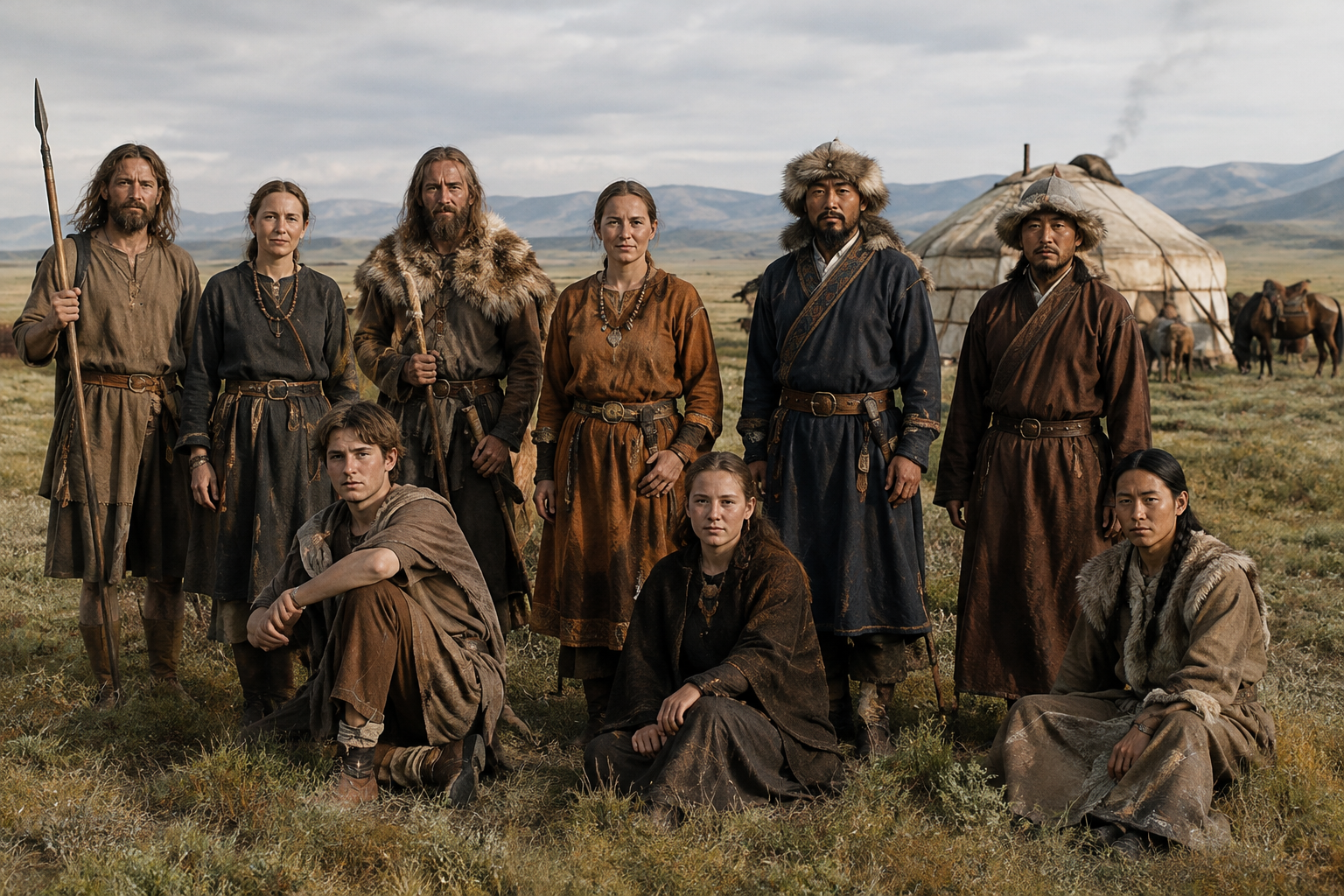
Some Y-DNA lineages make their history easy to tell. Others refuse to sit neatly inside one region, one people, or one period. Haplogroup R1a1a1b2a2a belongs to the second category, and that is exactly what makes it so interesting. In the ancient DNA record provided here, this paternal branch appears in Bronze Age southern Germany and also far away on the Mongolian steppe, later turning up again in contexts associated with Xiongnu-period and late medieval Mongolia. That is not a simple family tree. It is a reminder that paternal lineages can move across astonishing distances while the cultures, languages, and political worlds around them change completely.
As ever with Y-DNA, a caution is built into the story. A Y-chromosome haplogroup traces one direct paternal line only: father to father to father. It does not represent a person's whole ancestry, still less their whole identity. But because it follows that narrow line so stubbornly through time, it can be extraordinarily useful. In the case of R1a1a1b2a2a, the value lies not in any grand claim of a single "people," but in showing how one paternal branch can surface in very different archaeological settings across Eurasia.
R1a1a1b2a2a sits within the wider R1a family, one of the major Y-chromosome branches of Eurasia. The broader R1a tree is often discussed in relation to steppe-linked expansions, Bronze Age mobility, and later distributions across parts of Europe and Asia. But one of the easiest mistakes in popular genetics is to take the history of a large parent haplogroup and dump it wholesale onto a much narrower subclade. We should not do that here.
What can be said responsibly is that this branch belongs to a paternal family with deep importance in Eurasian prehistory, and that the supplied ancient samples place it in two especially revealing zones: Bronze Age Central Europe and the eastern steppe world. That combination suggests a lineage participating, directly or indirectly, in the long networks of movement that connected European river valleys, upland corridors, and Inner Asian grasslands. Exactly how that happened is still a matter for evidence, not mythology.
If you want a broader introduction to how archaeologists and geneticists reconstruct such stories, MyTrueAncestry has a helpful overview in Ancient DNA and the Rise of Archaeogenetics.
The strongest cluster in this dataset comes from southern Germany. Several individuals associated with Bronze Age contexts carry this haplogroup assignment: RISE436 from Tiefbrunn, dated to 2649 BC; RISE473 from Regensburg-Dechbetten, dated to 1448 BC; RISE478 from Schoegeising, dated to 1338 BC; RISE556 from Manching-Oberstimm, dated to 1300 BC; and RISE558 and RISE560, both from Augsburg and both dated to 1300 BC.
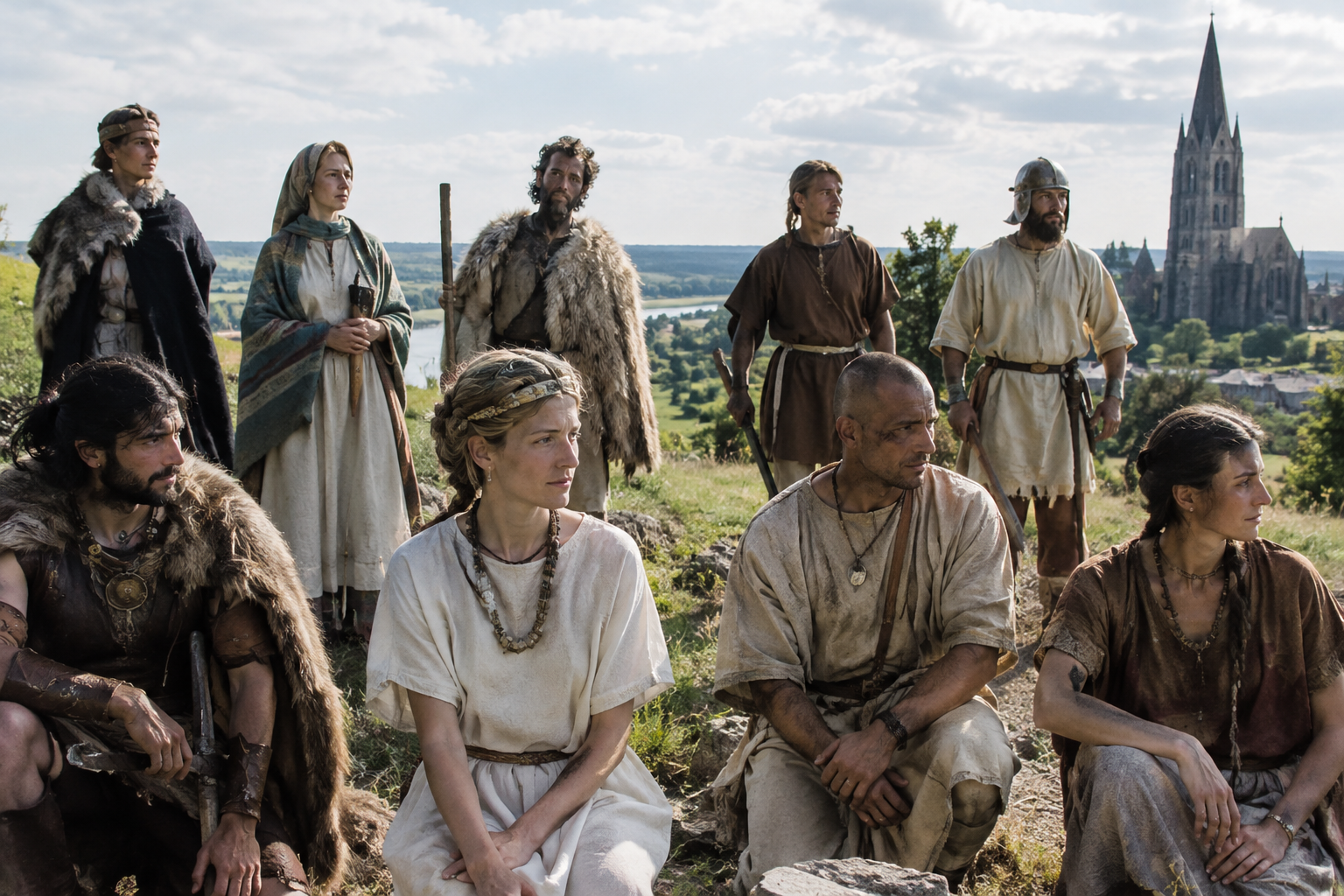
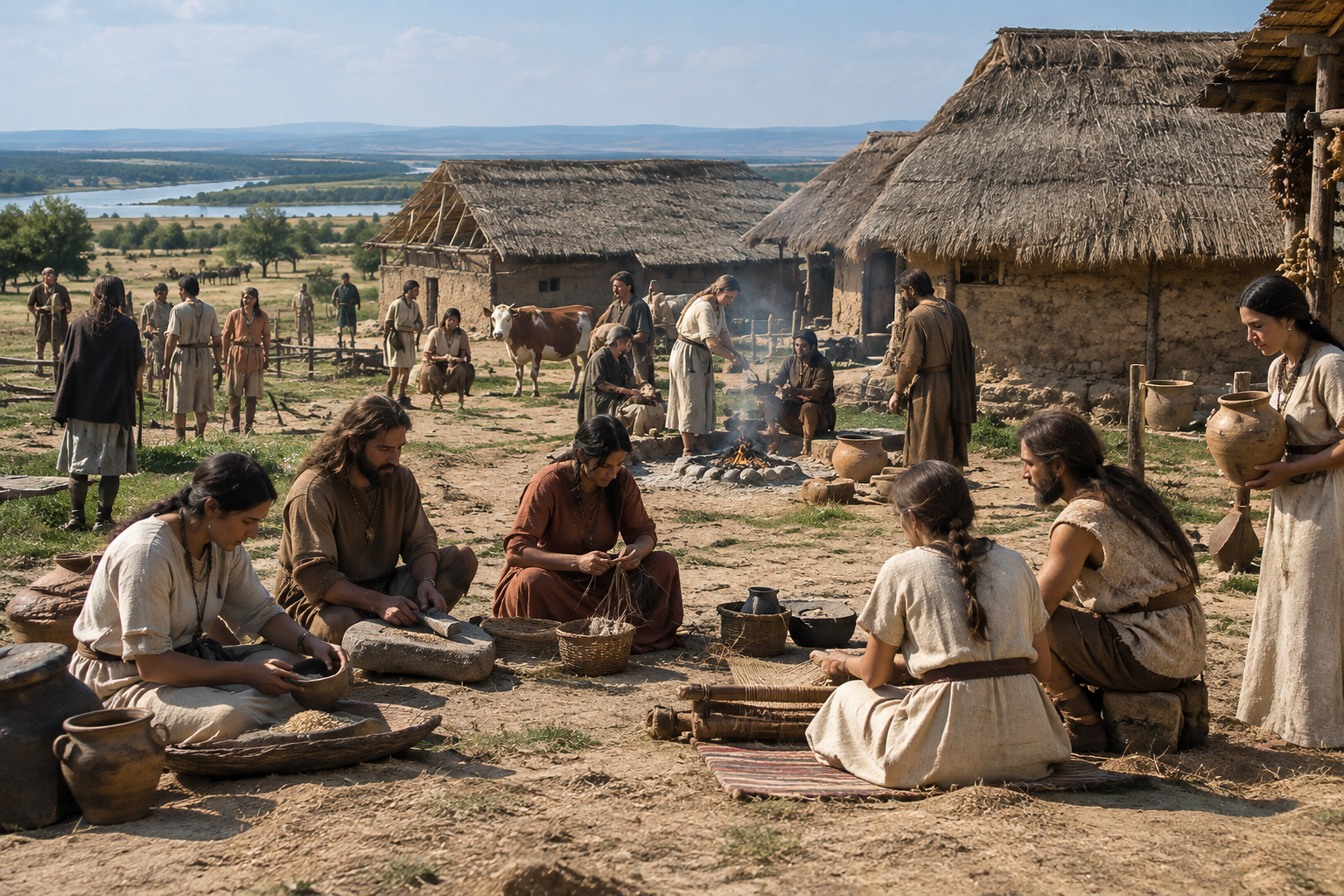
That is not a stray appearance. It is a pattern. Southern Germany in the Bronze Age was not an isolated backwater but a busy zone of exchange, craft production, burial traditions, and changing social hierarchies. Rivers connected communities. Metal connected them even more. A lineage like R1a1a1b2a2a appearing across multiple Bavarian-area sites hints at paternal continuity or repeated presence in this region over a long span.
Yet even here we must keep our feet on the ground. Shared haplogroup does not mean all these men were close kin. It does not mean a single ruling dynasty either. What it does show is that this paternal branch had a real foothold in Bronze Age Central Europe. If we imagine the male line as one thread in a much larger social fabric, then in southern Germany that thread appears again and again.
Readers interested in this wider setting should also look at Late Bronze Age Central Europe: Ancient DNA, Isotopes and Burials Reveal Local Continuity Amid Cultural Change, which gives useful context for how genetics and archaeology are read together in this region.
Explore Bronze Age Central Europe
Then the story takes a dramatic geographical turn. ARS026, from Late Bronze Age Arbulag Soum Mongolia, is dated to 1060 BC. Later still, the same haplogroup appears in UGU005 from Uguumur Uul Xiongnu Period Mongolia, dated to 650 AD, and in TAV011 from Late Medieval Xiongnu Tavan Tolgoi, dated to 1300 AD.
This is the sort of evidence that makes ancient DNA so awkward for tidy historical storytelling. It does not allow us to say, "Here is a European lineage," or "Here is an East Asian one," as though the past respected modern categories. Instead, it points to the steppe as what it often was: a vast corridor of mobility, alliance, conquest, marriage exchange, and survival.
The Xiongnu world in particular has become increasingly important in archaeogenetics because it demonstrates just how mixed steppe confederations could be. A shared paternal branch between Central European Bronze Age contexts and later Mongolian finds does not prove direct descent from one named population to another. But it does fit a larger picture in which lineages associated with wider R1a networks traveled through or persisted within steppe-linked societies over very long periods.
For readers wanting more on that eastern context, Ancient DNA and Genetic History of the Mongolian Steppe is the obvious companion piece, and Unlocking the Origins of the European Huns explores another side of steppe mobility and Xiongnu-related debate.
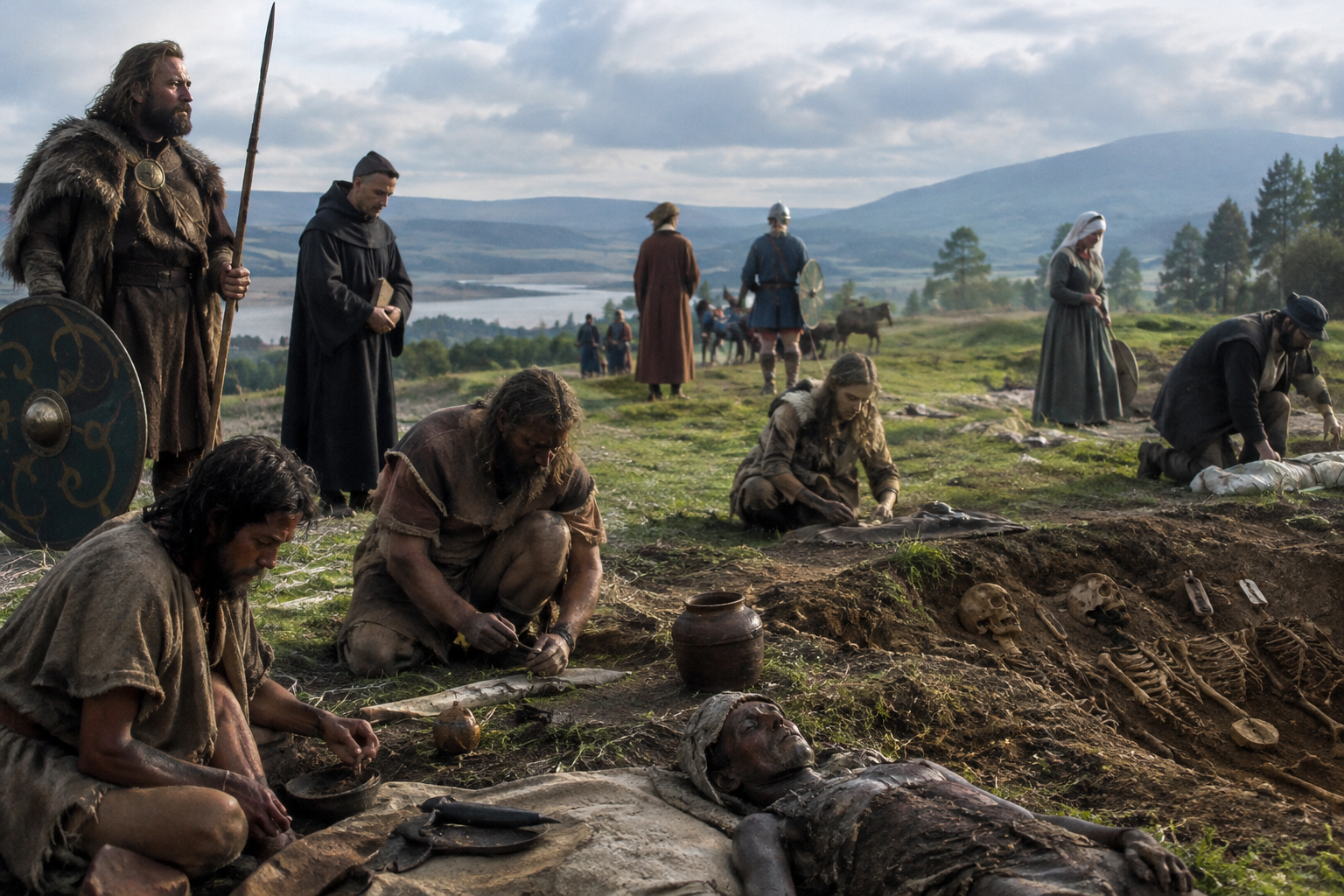
What, then, does R1a1a1b2a2a reveal? First, that paternal lines can have remarkable time depth and geographical spread. Second, that archaeology matters. A burial in Augsburg around 1300 BC and a burial in Mongolia many centuries later may share a branch on the Y tree, but they belong to entirely different local histories. Genetics gives us a line of connection; archaeology tells us what sort of world each man actually lived in.
This is where ancient DNA becomes most useful when paired with written history. Medieval chronicles tell us about kings, monasteries, raids, inheritances, and castles. Genetics tells us that beneath those records, some paternal lines were much older than the documents and sometimes far more mobile than the chroniclers ever knew. The line itself can persist while languages, allegiances, religions, and political borders change beyond recognition.
No associated noble families or castles were supplied for this article, and that absence is worth stating plainly rather than filling with fantasy. Too often, haplogroup writing rushes from prehistory to aristocratic surname claims as if a Bronze Age Y-chromosome should naturally end up in a medieval great hall. History is not that obliging.
Still, the broader lesson is clear enough. When noble houses later emerged across Central Europe or in steppe-border kingdoms, they did so in landscapes already occupied for millennia by older paternal lineages. A medieval dynasty might preserve one such line, replace it, or absorb it through adoption, non-paternity, alliance, or social reinvention. Castles preserve family memory in stone; Y-DNA preserves one narrow paternal memory in biology. They are related kinds of evidence, but not the same thing.
For a case where dynastic questions and ancient DNA are brought together more directly, readers may enjoy Genetic Origins and Dynastic Connections of the Medieval Polish Piast Rulers.
R1a1a1b2a2a matters because it refuses to be provincial. In the evidence supplied here, it is present among Bronze Age men of southern Germany and later among men buried in Mongolia in settings linked to the wider steppe world. That does not give us a fairy-tale pedigree. It gives us something better: a glimpse of Eurasian history at human scale, where paternal lines endure while cultures shift around them.
For anyone who carries this haplogroup today, the real value is not in claiming a single heroic origin. It is in recognizing that your direct paternal line may belong to a story much larger than any modern border or family legend. Ancient DNA does not hand us a coat of arms. It gives us evidence, puzzles, and occasionally a rather wonderful shock.
If you want to see whether your own DNA shows connections to ancient individuals like RISE473, RISE558, ARS026, or UGU005, MyTrueAncestry can help place your results beside the archaeological record. Those comparisons can open remarkable historical perspectives, even though they do not by themselves prove direct descent from any specific ancient person or noble house.
Comments