Haplogroup R1a1a1b1a3c

– 5 min read


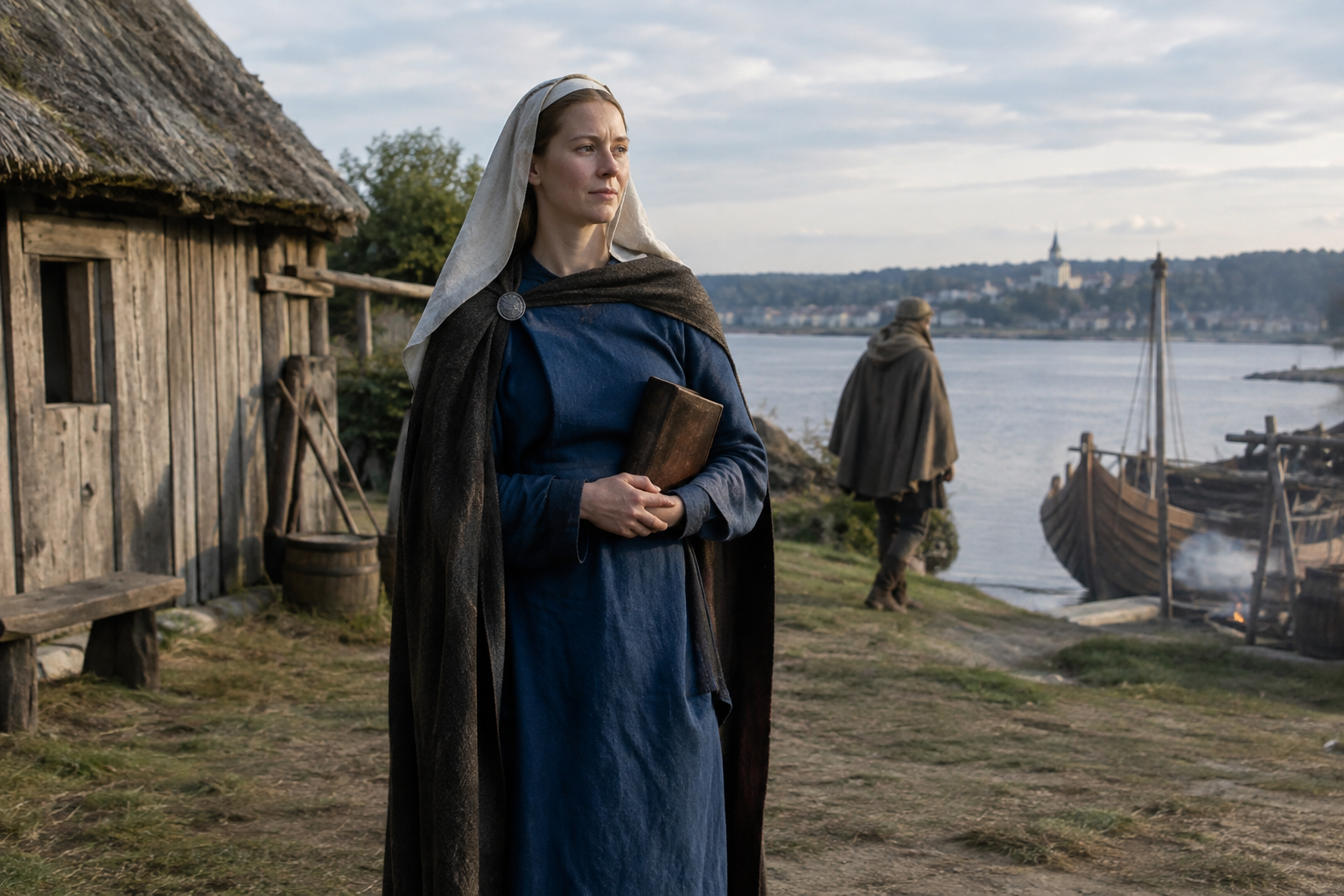
In Viking Age Sigtuna, one of the most important early towns of medieval Sweden, an individual identified as nuf029 offers a small but telling glimpse into a paternal line now labelled R1a1a1b1a3c. The burial is dated to around AD 1050, right at the point when Scandinavia was being reshaped by Christianity, urban growth, and widening contacts across the Baltic and beyond. That matters because a Y-DNA lineage is not a whole identity, but a direct paternal thread, and in a place like Sigtuna even one thread can lead into a much larger historical fabric.
The immediate evidence here is deliberately modest. We have a named ancient individual, a date, a place, and a reported association with this branch. But modest evidence is not weak evidence. In archaeology, especially ancient DNA, a securely placed person in time and space can be more illuminating than pages of grand speculation. With R1a1a1b1a3c, the interest lies not in pretending we can reconstruct an entire dynasty from one grave, but in seeing this lineage present in a town that stood at the crossroads of late Viking and early medieval Scandinavia.
Sigtuna was not an anonymous village. Founded in the late 10th century, it became one of Sweden's earliest urban centers, a royal and ecclesiastical place where coinage, craft production, trade, and Christian institutions took root. By about AD 1050, when nuf029 lived or was buried, this was a world in transition: older Scandinavian customs had not simply vanished, but they were increasingly sharing space with new religious and political structures.
That setting is crucial for understanding why a paternal lineage found here is historically interesting. A Y-chromosome branch such as R1a1a1b1a3c does not tell us whether this man thought of himself as Swedish, Norse, Christian, pagan, trader, townsman, or newcomer. What it does tell us is that this direct male line was part of the population living in or buried at Sigtuna during a formative moment in Scandinavian history.
An ancient DNA study highlighted in research on Viking Age and medieval Scandinavian burials has helped sharpen this broader picture by showing how genetics can be woven together with archaeological context. Even without over-claiming for a single grave, that kind of work makes it possible to place individuals like nuf029 inside real communities rather than treating them as isolated laboratory results.
The first thing to say, sensibly, is that R1a1a1b1a3c is a very specific branch within the much larger R1a family. That larger haplogroup has a long and complicated history across Eurasia, and it turns up in many different populations over a very long period. It would be careless to pour all of that history straight into this narrower subclade.
So the safer historical approach is this: the sample from Sigtuna shows that this paternal branch, or a lineage reported within it, was present in central Sweden in the 11th century. From that alone, one cannot infer a single place of origin, a fixed ethnic label, or a neat migration path. But one can say that this branch belonged to the male-line diversity of a Scandinavian town deeply involved in Baltic exchange, royal consolidation, and Christianization.
That is often how ancient DNA is most useful. It does not hand us a saga hero with a name and family tree. Instead, it shows which lineages were actually present in places where history was being made. In Sigtuna, that presence links R1a1a1b1a3c not to fantasy-Vikings in horned helmets, but to the very real social world of early medieval Sweden.
The site information here points to Nunnan, Sigtuna. Even when a burial lacks a famous inscription or lavish finds in the summary record, its importance should not be underestimated. Town cemeteries and associated burial grounds are where ancient DNA does some of its best work, because they let us move beyond kings and chronicles and ask who actually lived in these emerging urban centers.
Nuf029 matters precisely because he seems to belong to that everyday history. Around AD 1050, Sigtuna was part of a North European zone of intense movement: merchants crossed the Baltic, missionaries traveled north, craftsmen shifted between settlements, and political alliances tied Swedish regions into wider networks. A paternal line found there may reflect deep local roots, more recent movement within Scandinavia, or connections across the eastern Baltic world. The point is not to choose one dramatic answer without evidence, but to recognize how plausible mobility was in this setting.
This also helps correct a common misunderstanding about Viking-Age genetics. The archaeology of the period increasingly shows that Scandinavian communities were not static, sealed populations. They were connected, mixed, and often surprisingly cosmopolitan. A single Y-line in Sigtuna is therefore best read as part of a busy human landscape, not as a badge of pure or exclusive identity.
Central Sweden in the 11th century was not peripheral to the Viking world; it was one of its engines. The lake systems and waterways of the Mälaren region connected inland settlements to the Baltic, and from there to Finland, the eastern trade routes, and the broader North Sea sphere. Sigtuna sat in that network, and its cemeteries preserve the human side of those connections.
For a haplogroup article, that context is more useful than a forced tale of conquest or tribal descent. If your paternal line belongs to R1a1a1b1a3c, this sample suggests that the branch had a place in the male-line population of Viking-Age or immediately post-Viking Sweden. It fits especially well with the broader picture emerging from Scandinavian archaeogenetics: lineages associated with the north were distributed through communities shaped by both continuity and movement.
That is why the date matters so much. AD 1050 is late enough to stand in the world of churches, towns, and kings, but still close enough to the Viking Age to preserve its demographic legacy. Nuf029 is not simply "a Viking" in the loose modern sense. He belongs to the more interesting historical moment when Viking-age societies were becoming medieval ones.
It is worth being exact about what the evidence can bear. The article haplogroup is R1a1a1b1a3c, but ancient Y-DNA reporting sometimes varies in resolution, and not every public summary explains the full technical path from raw data to final subclade assignment. So the strongest statement is that nuf029 is reported in association with this branch in Viking Age Sigtuna, and that this places the lineage in 11th-century Sweden.
Still, even a single well-placed individual can be historically meaningful. Ancient DNA has transformed archaeology not because every grave becomes a complete biography, but because many carefully contextualized individuals gradually reveal population structure, kinship patterns, and long-term change. A town like Sigtuna is exactly the sort of place where that accumulation matters most.
If you want a wider Scandinavian comparison, evidence from neighboring regions also helps frame the question of mobility and continuity in the north. Early medieval and Viking-period cemeteries across Sweden and Finland are proving especially valuable in showing how local communities were linked to broader Baltic networks.
For someone exploring a modern paternal line in R1a1a1b1a3c, the most distinctive point here is not a claim to fame, but a claim to presence. This branch appears in an individual from Sigtuna, Sweden, around AD 1050, in one of the key urban and political settings of late Viking Scandinavia. That anchors the lineage in a real historical landscape of towns, trade, conversion, and Baltic-world mobility.
In other words, this is a lineage with a documented foothold in the Scandinavian world at the threshold between the Viking Age and the Middle Ages. That is already quite a lot. It places a direct paternal line not in legend, but in a cemetery, a town, and a moment of historical change.




Comments