Haplogroup R1a1a1b1a3a2b1a

– 5 min read


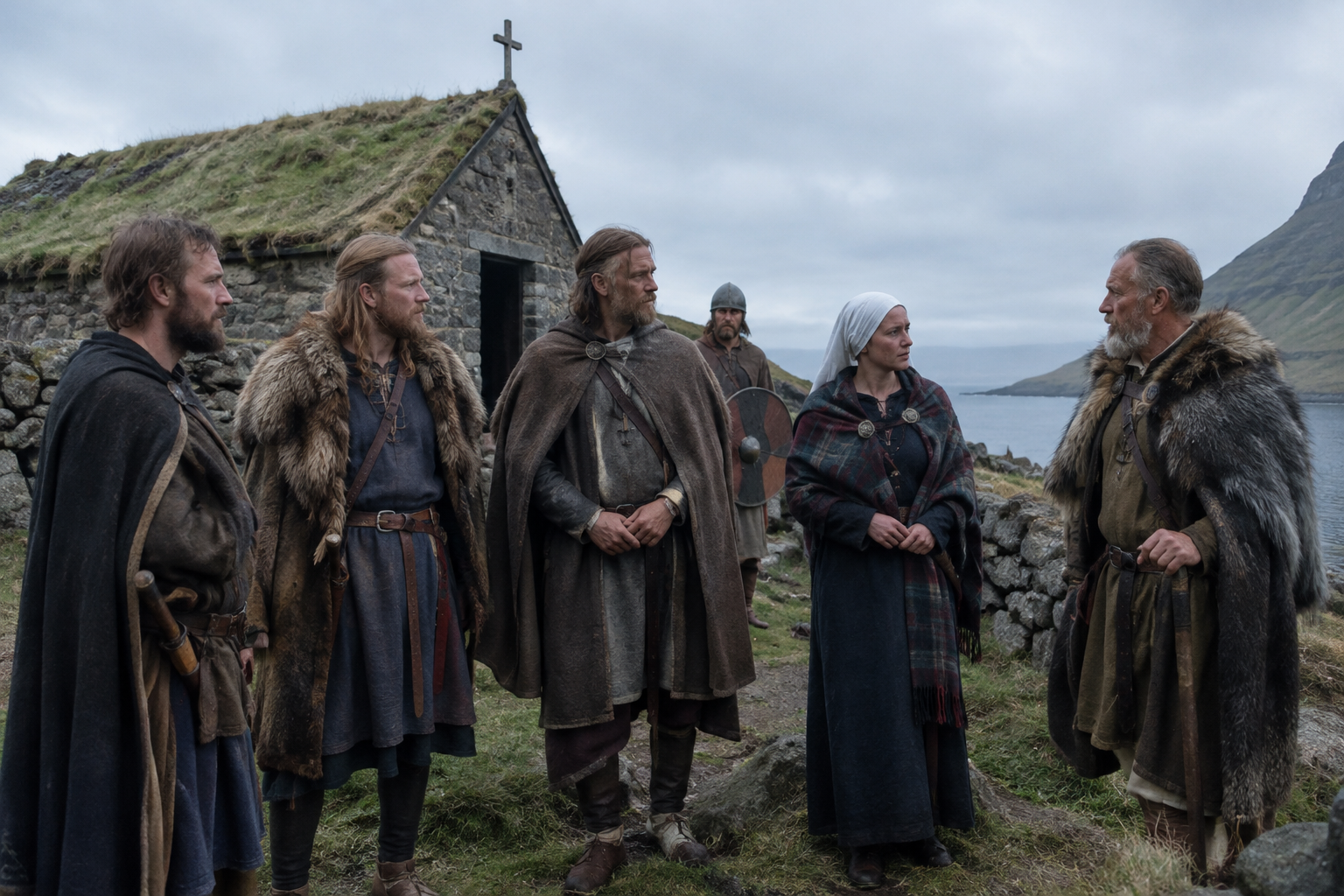
At Sandoy Church in the Faroe Islands, two men buried around AD 1600, identified as VK46 and VK245, carry a paternal line associated here with R1a1a1b1a3a2b1a. That is already an interesting finding, not because a single grave can explain an island population, but because the Faroes sit at one of the great meeting points of the North Atlantic world: settled in the Viking Age, shaped by movement between Norway, the British Isles, Iceland, and beyond, yet also famous for later isolation.
The striking thing is that this same branch also appears in Viking Age and early medieval Icelandic contexts: VK225 from Hofstadir, VK127 from Hringsdalur, and two early settlers dated around AD 935, DKS-A1 and GRS-A1, the latter described as a Saxon settler in Viking Iceland. In other words, the evidence is not for one glamorous chieftain or one royal house, but for a recurring paternal thread in the Norse North Atlantic colonies.
Y-DNA traces one direct paternal line: father to son to son across generations. That makes a subclade such as R1a1a1b1a3a2b1a useful for following one narrow male-line history, but it does not describe a person's whole ancestry, language, status, or identity. A man in Viking Iceland with this Y-line could still have most of his ancestry from elsewhere in Scandinavia, the British Isles, or a mix of both.
The larger haplogroup R1a has a wide and complicated Eurasian history. What matters here is the much narrower pattern actually represented by the ancient samples: this particular branch turns up in medieval Faroese burials and in several Icelandic individuals linked to Viking Age and early settlement contexts. That is a concrete North Atlantic story, and it is more useful than trying to force the lineage into some grand universal saga.
The earliest samples in this group are DKS-A1, classified as Viking Norse Iceland and dated around AD 935, and GRS-A1, classified as a Saxon settler in Viking Iceland from the same approximate date. Those labels matter. They remind us that Iceland's founding population was never simply "purely Norse" in any tidy textbook sense. The colony was created in a world of mobility across the Norwegian Sea, with people moving not only from Norway but also through the Norse-controlled zones of the British Isles.
That is exactly why a paternal lineage found in Iceland cannot be reduced to a single ethnic badge. One male line may have arrived with a man who identified as Norse, another with someone from an Anglo-Saxon background, and both could end up embedded in the same new island society within a generation or two. Research on Viking Age populations in the North Atlantic has repeatedly stressed this mixture of Scandinavian and insular inputs, as seen in the ancient DNA work published in http://science.sciencemag.org/content/360/6392/1028, though any one Y-line remains only part of that larger picture.
There is also something properly archaeological about these early Icelandic identifications. They come not from saga pedigree alone, but from excavated human remains assigned to specific places and periods. That is important because sagas, however brilliant, were written later. DNA from real burials gives us a different kind of evidence: less chatty, perhaps, but often firmer.
Two more individuals, VK225 from Hofstadir and VK127 from Hringsdalur, both dated around AD 1050, extend the same paternal signal deeper into the established Icelandic commonwealth period. By then Iceland was no longer a raw settlement frontier. It was a functioning society with farms, legal assemblies, churches beginning to appear, and family networks already several generations old.
Hofstadir is especially evocative because it is one of the best-known high-status Viking Age sites in Iceland, long discussed for what it reveals about feasting, religion, and changing social life. One should be careful: the presence of VK225 does not mean this haplogroup was the line of a local dynasty, still less of all Icelanders at the site. But it does show that R1a1a1b1a3a2b1a, or a very closely associated paternal branch, belonged to men living in substantial Icelandic communities in the later Viking Age.
Hringsdalur adds a second setting. Archaeologically, that matters because repeated appearances in different Icelandic locations reduce the chance that we are merely looking at one unusual family enclave. The pattern begins to look less like an isolated curiosity and more like part of the male-line diversity carried into and sustained within Iceland's early population.
Icelandic genomes and ancestry
The two Sandoy Church individuals, VK46 and VK245, bring the story forward to around AD 1600. By that date the Faroe Islands had been Christian for centuries, tied politically to the Scandinavian world, and shaped by long habits of maritime life. Yet they remained, in demographic terms, a relatively small island population where founder effects and drift could preserve particular lineages unusually well.
That makes the Sandoy burials valuable. They suggest that this paternal branch was not just part of the first expansion into the North Atlantic, but could persist there over many centuries. A genetic study of Faroese population history and selection, connected to this wider body of research, is reflected in https://www.biorxiv.org/content/10.1101/703405v1. Even without leaning too hard on any single paper, the broader lesson is straightforward: island communities can preserve old male lines while the rest of the genome continues to mix, shift, and adapt.
One should not imagine uninterrupted descent from a named settler in AD 935 to a named man at Sandoy in AD 1600. The evidence does not give us that chain. What it does give is something subtler and in many ways more interesting: the same paternal branch appearing in two neighbouring North Atlantic island societies across roughly six and a half centuries.
Faroese ancestry and selection
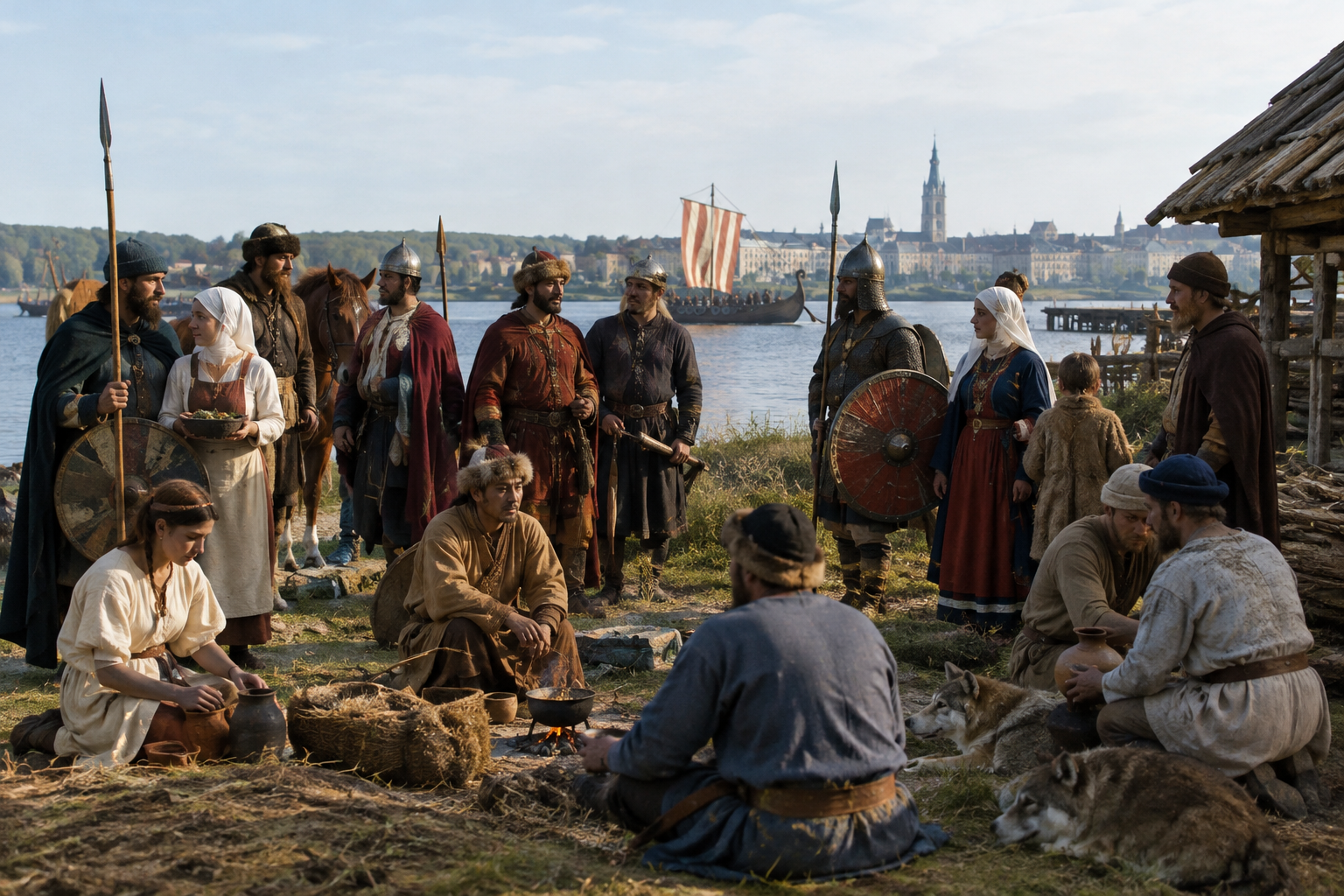
There is a temptation with any R1a lineage to rush eastward into steppe prehistory or to claim sweeping links to famous warrior peoples. That would miss what is distinctive here. The supplied ancient evidence is concentrated in the Norse Atlantic: Iceland and the Faroes, between the 10th and 17th centuries. The historical setting is colonisation, conversion, farm life, seaborne mobility, and the mingling of Scandinavian and British-Isles ancestry in new island societies.
That pattern also fits well with what MyTrueAncestry readers may already know from broader work on the region: Viking Age communities were often more mixed than later nationalist stories preferred to admit. The North Atlantic colonies were not populated by a single unmoving "people" but by networks of households, retainers, spouses, labourers, foster-kin, and migrants moving along sea-routes that linked Norway, the Hebrides, Ireland, northern Britain, Iceland, Greenland, and the Faroes.
If your paternal line falls under R1a1a1b1a3a2b1a, these ancient matches point most clearly toward a documented presence in the North Atlantic Norse world: early Icelandic settlers, later Viking Age Icelanders, and early modern Faroese men. That does not prove descent from any one excavated individual, but it does place your line in a real historical landscape of colonisation, mobility, and long continuity on the oceanic edge of medieval Europe.
Comments