Haplogroup R1a1a1b1a3a2b1

– 5 min read


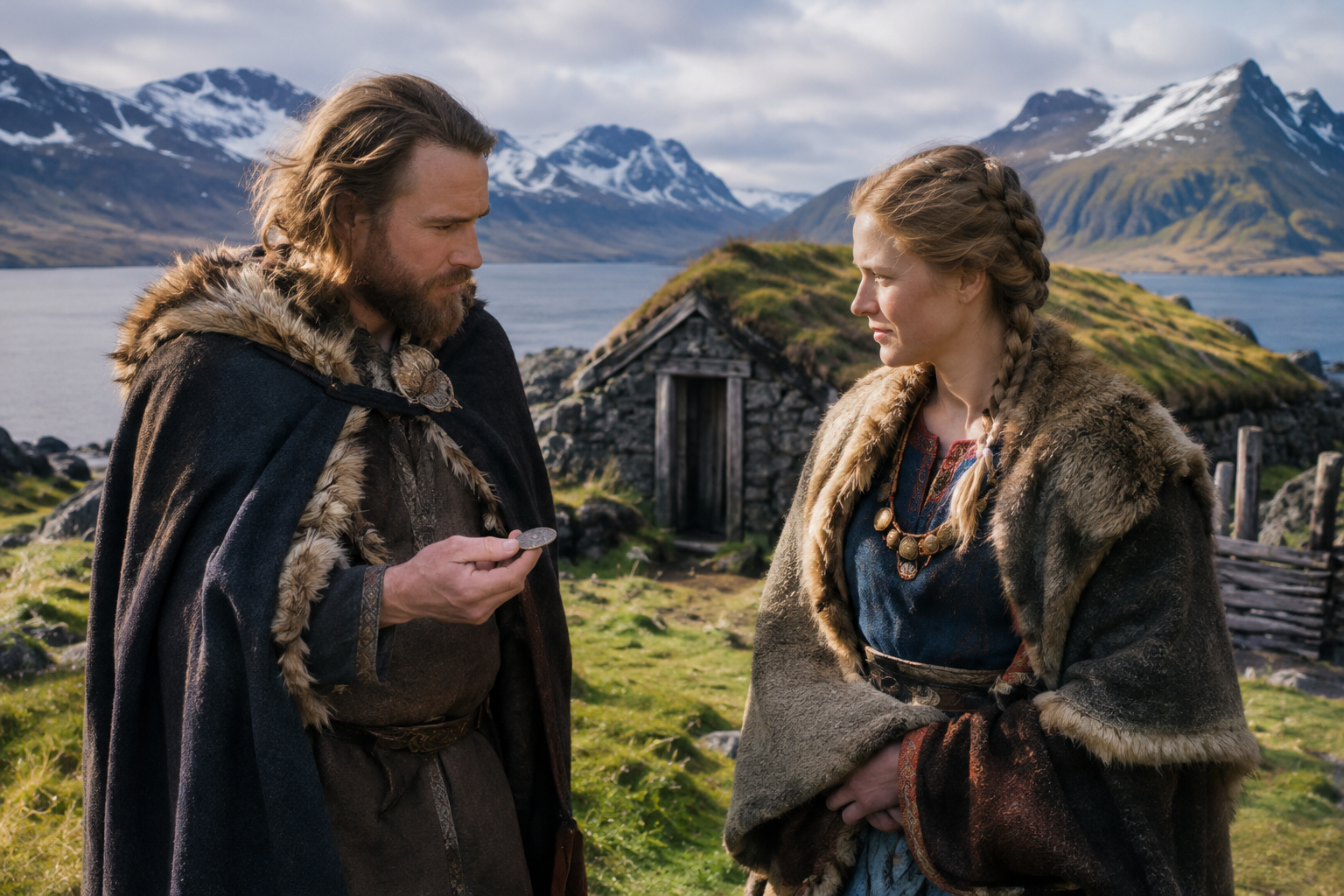
At Drantum in Lower Saxony, one excavated man from around AD 750 - sample DRU003 - offers a useful starting point for the haplogroup R1a1a1b1a3a2b1. The date places him in the Carolingian world, a period when northern Germany stood at a busy frontier of older Saxon traditions, expanding Frankish power, and growing Christian influence. That matters because a Y-DNA lineage found here is not floating in abstraction: it belonged to a real man living in a contested and changing landscape.
A second match comes much later and much farther north: MKR-A1, from medieval northern Iceland, dated to around AD 1477. With only two ancient individuals listed here, caution is essential. Still, the pairing is intriguing. It places this paternal line in two very different settings: one in the early medieval southern North Sea world, the other in the North Atlantic centuries after Viking settlement. Y-DNA traces only one direct male line, not a person's whole ancestry, but even that narrow thread can reveal how durable some paternal branches were across medieval Europe.
R1a1a1b1a3a2b1 is a very specific downstream branch within the wider haplogroup R1a, one of the major paternal lineages found across large parts of Eurasia. The important point is that the history of the broad parent haplogroup is much older and wider than the evidence we have for this exact subclade. We should not simply pour the whole story of R1a into this narrower branch and assume they are identical.
What the ancient matches do show is that a line associated here with R1a1a1b1a3a2b1 appears in medieval German and Icelandic contexts. That is already historically suggestive. It fits a world shaped by movement around the North Sea and Baltic, by shifting lordships, marriage networks, migration, trade, and colonization. But it does not, by itself, prove one neat migration route, one ethnicity, or one famous dynasty.
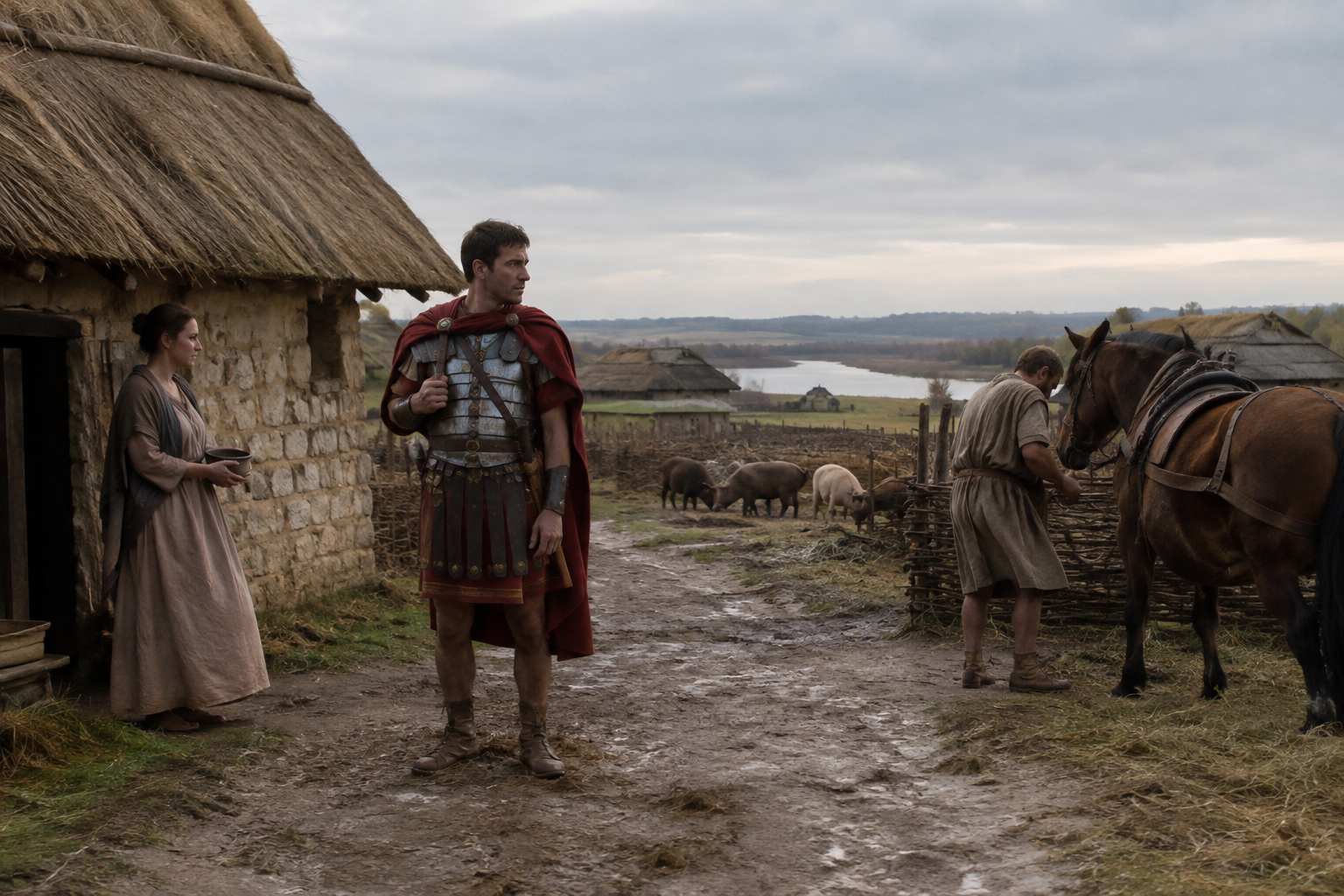
The Drantum sample is the earlier of the two anchors, and in some ways the more historically revealing. Lower Saxony in the eighth century was not a quiet backwater. It was part of the wider zone affected by the long struggle between the Carolingians and the Saxons, and by the slow remaking of local society that followed. A man like DRU003 lived in a region where political authority, religion, and identity were all being negotiated in practical, local ways.
That makes the presence of this paternal branch in Drantum especially useful. It situates the lineage within the demographic fabric of northern Germany during the early medieval period, not merely in later genealogical memory. Research on early medieval populations around England and the North Sea has shown how complicated these regions were, with ancestry patterns reflecting repeated contacts rather than a single clean ethnic divide. A genetic study of these wider movements and mixtures can be found here: https://www.researchgate.net/publication/363736520_The_Anglo-Saxon_migration_and_the_formation_of_the_early_English_gene_pool.
Drantum is valuable, then, not because it lets us tell an overconfident tale about "the Saxons" in capital letters, but because it shows this paternal line embedded in a real early medieval community at a time when northwestern Europe was being politically and culturally reorganized.
The later sample, MKR-A1 from northern Iceland around AD 1477, belongs to a very different chapter. By the late fifteenth century Iceland was not a newly settled Viking frontier. It was an old Norse-descended society with centuries of local continuity behind it, tied into the Scandinavian world but also marked by isolation, adaptation, and its own internal regional histories.
Finding the same specific paternal branch in medieval Iceland does not mean that we can identify the first ship, the founding household, or the exact century when that line arrived. But it does place the lineage within the enduring male population of the North Atlantic. That is important because Icelandic genetic history often preserves long-term signals from settlement-era populations, even while later drift and local founder effects can reshape frequencies.
The broader context of Icelandic and Scandinavian population history has become much clearer through ancient DNA work on the North Atlantic world. That includes studies of settlement, continuity, and health in Iceland itself, themes that resonate with this medieval individual even when they do not speak directly to his exact subclade.
It is tempting, of course, to draw a dramatic line from Carolingian Germany straight to Viking Iceland. Historians and geneticists both have to resist that temptation unless the evidence really supports it. These two samples do not prove direct descent from DRU003 to MKR-A1, nor do they prove that every bearer of this haplogroup moved by a specifically Scandinavian route.
What they do support is a more modest and more interesting picture. This paternal branch appears in two regions connected, over centuries, by some of the most important mobility systems in medieval Europe: the North Sea, the Danish straits, Norwegian seafaring, and the colonizing circuits of the North Atlantic. Northern Germany was one of the great contact zones feeding those systems, whether through trade, raiding, military recruitment, political expansion, or ordinary family movement.
For that reason, the pairing of Drantum and northern Iceland is historically plausible in a broad structural sense even where genealogy remains unprovable. It suggests that R1a1a1b1a3a2b1 belonged to the mobile, entangled populations of the medieval north rather than to one isolated pocket.
Ancient DNA articles sometimes dazzle readers with dozens or hundreds of genomes. Yet even two securely placed individuals can be illuminating if they sit in the right historical settings. Here, one man belongs to the Carolingian-era mainland of northern Germany; the other to the mature medieval society of Iceland. Together they give this branch both depth and range.
They also remind us that paternal lines do not always map neatly onto cultural labels. A lineage found in early medieval Lower Saxony need not be "Frankish" or "Saxon" in any simple biological sense, just as one found in Iceland need not be reduced to a saga-age stereotype of "the Viking haplogroup." Archaeology and genetics work best together when they make the picture messier, and therefore truer.
A landmark ancient DNA study of Viking Age mobility and mixture across the wider Scandinavian world helped reinforce that broader lesson: medieval northern populations were diverse, connected, and rarely as homogeneous as older national stories imagined. For readers interested in that wider background, see http://science.sciencemag.org/content/360/6392/1028.
So what can someone with R1a1a1b1a3a2b1 take from these ancient matches? Not a promise of royal descent, not a single ethnic label, and not a tidy migration map. What the evidence responsibly suggests is that this direct paternal line was present in the medieval northern European world from at least Carolingian Lower Saxony to late medieval Iceland, spanning both mainland and North Atlantic settings.
That is a small but solid historical footprint. It places your paternal line among the men who lived through the making of medieval northern Europe: its frontiers, its sea-routes, and its long-settled island communities.
Comments