Haplogroup R1a1a1b1a2b3a4a2b

– 4 min read


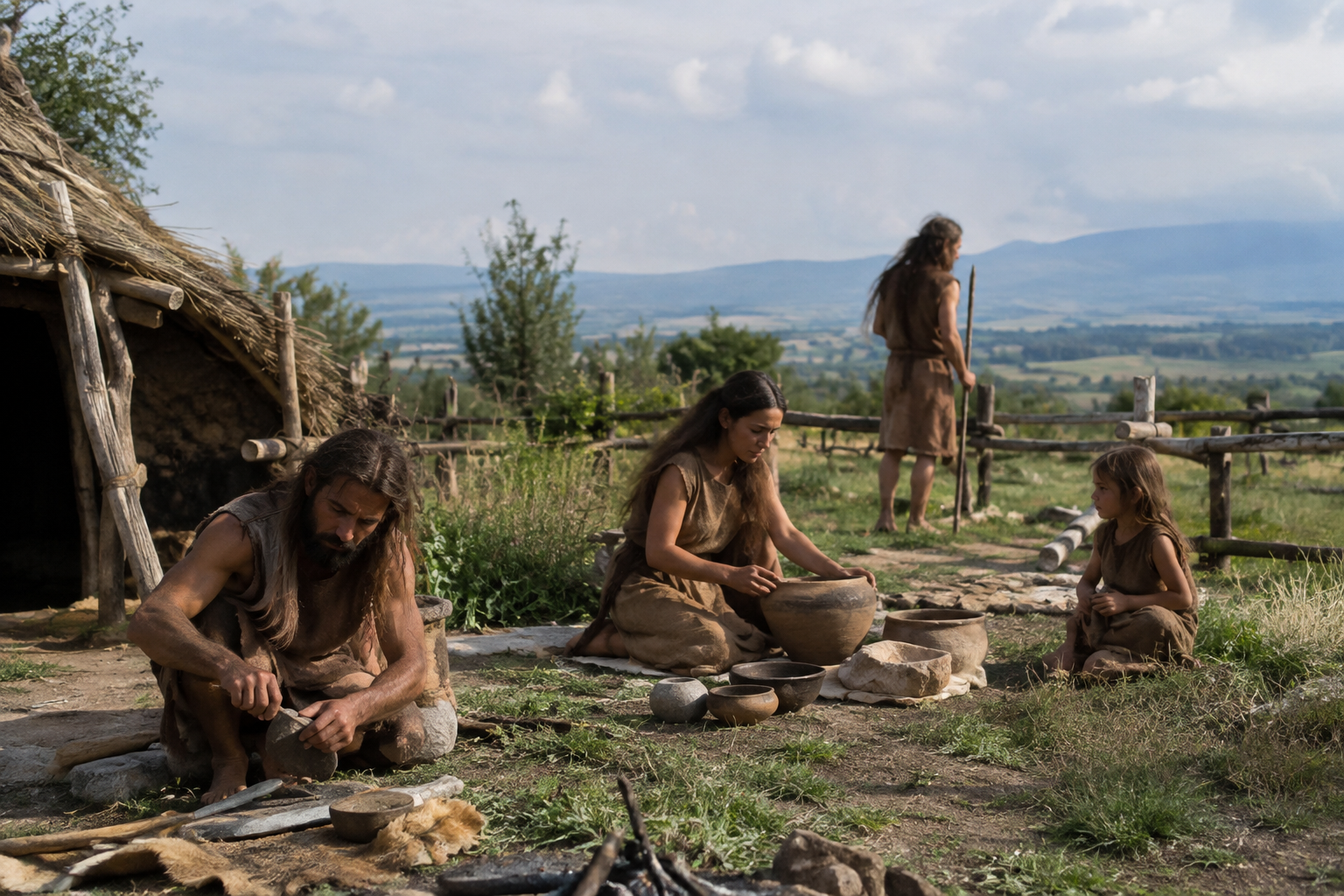
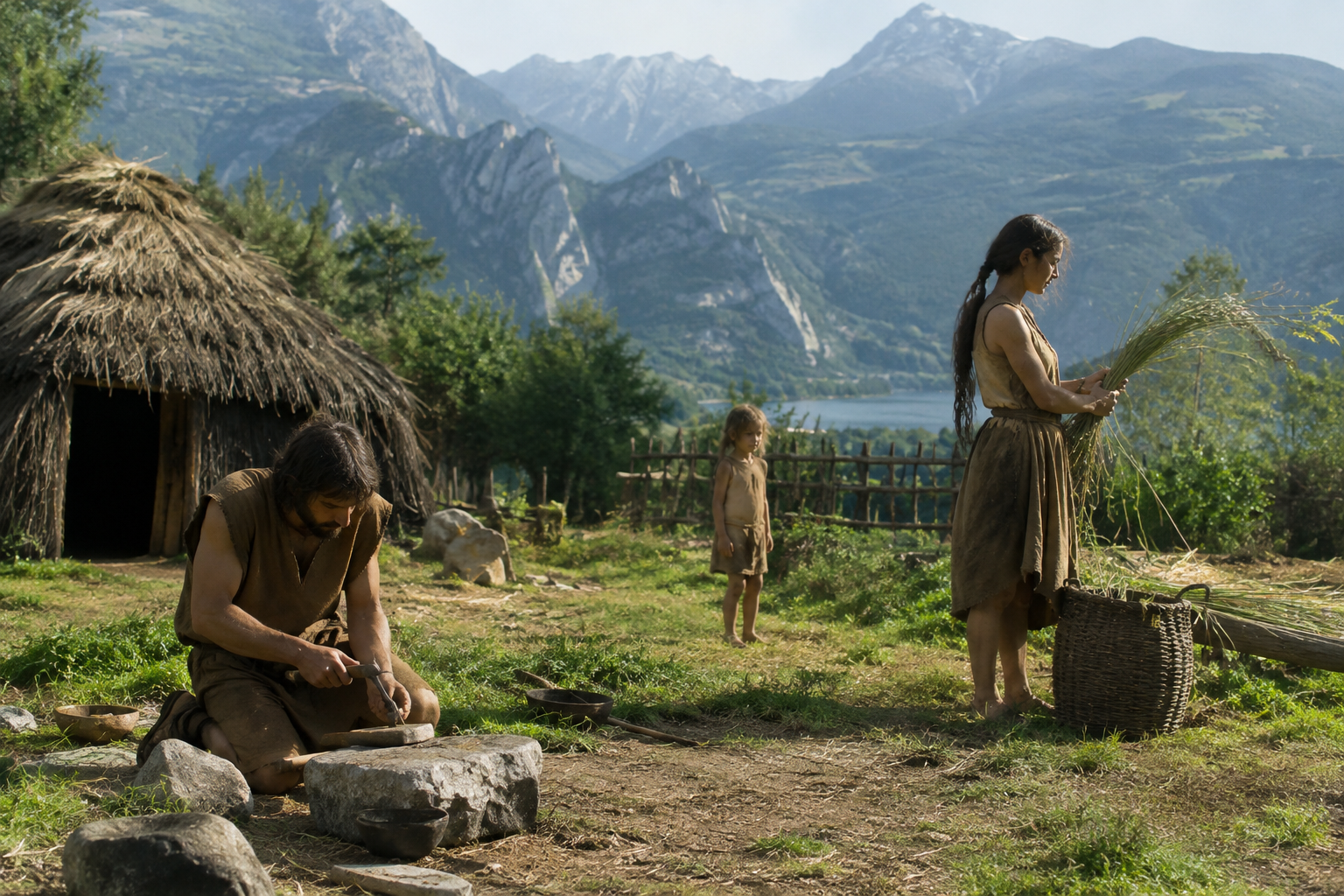
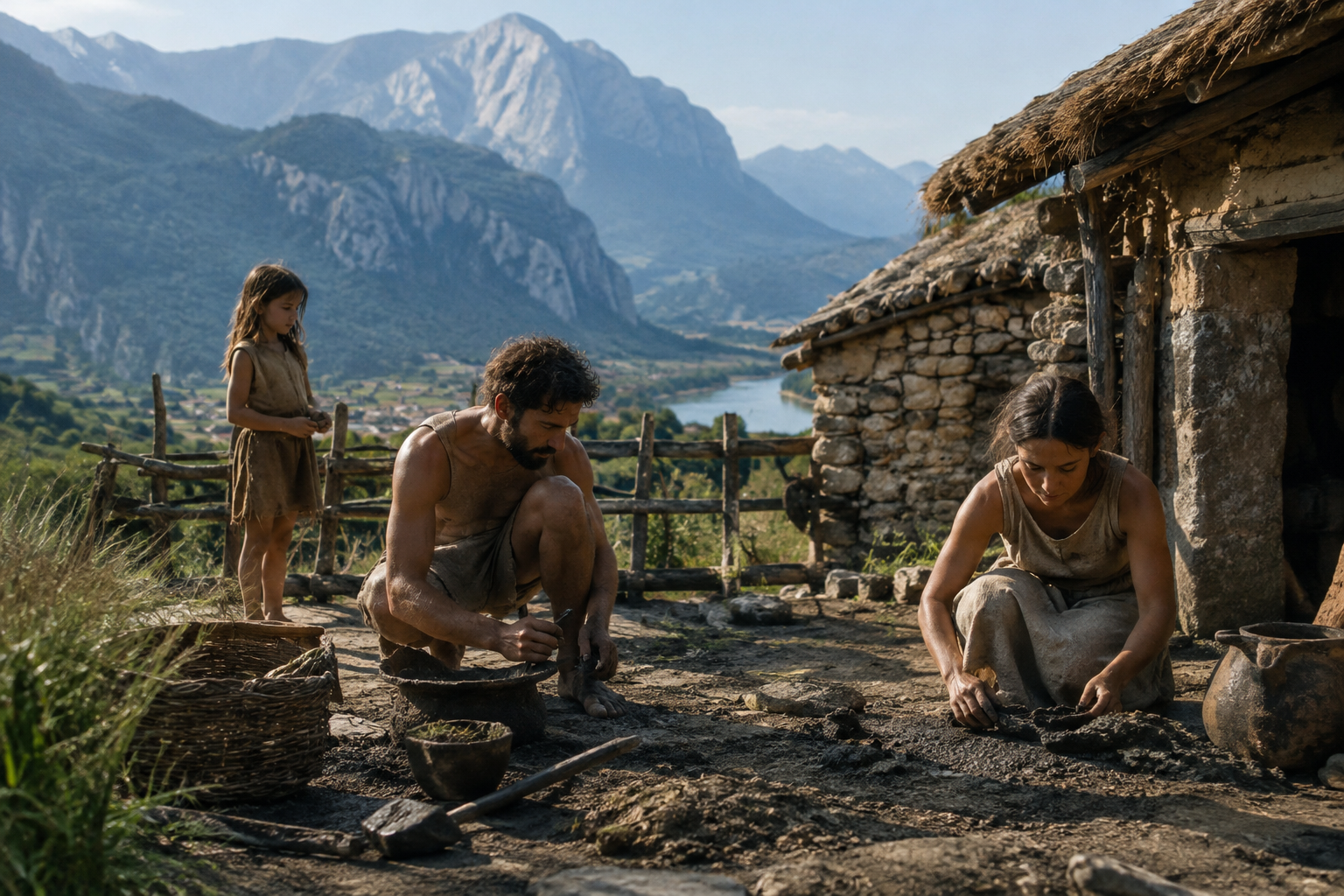
At Schleinbach in Lower Austria, one Bronze Age man known as SLB024 offers a small but arresting clue to the history of the Y-chromosome branch R1a1a1b1a2b3a4a2b. He is dated here to around 1875 BC, in the Early Bronze Age world north of the Danube, where cemeteries, settlement networks, and long-distance exchange were reshaping everyday life. One ancient individual is never the whole story, of course, but when a paternal line appears in a securely ancient Central European context, it gives us something solid to start from: a real man, at a real site, in a real archaeological landscape.
That matters because Y-DNA tracks one narrow line of descent: father to son, back through time. It does not describe a person's whole ancestry, language, or identity. Still, a lineage like R1a1a1b1a2b3a4a2b becomes historically interesting when it can be tied to excavated people rather than to modern maps alone, and Schleinbach places this branch within the lived world of Bronze Age Central Europe.
Schleinbach lies in a part of Austria that was deeply involved in the cultural changes of the 3rd and early 2nd millennia BC. By the time of SLB024, communities in this region were participating in a Bronze Age economy of metal use, farming, herding, and regional exchange. Burial grounds from Lower Austria are especially valuable because they let archaeologists compare chronology, funerary practice, mobility, disease, and kinship within the same local setting.
In that sense, SLB024 is useful precisely because he is not an abstract genetic label. He belongs to a documented archaeological horizon in which ancient DNA can be placed alongside cemetery evidence. Research on early Bronze Age burials in northeastern Austria, including work connected with nearby cemetery contexts and disease history, has helped sharpen the broader setting in which such individuals are studied, as seen in research published on Early Bronze Age graves in Austria. That does not mean every detail from one cemetery can be transferred to another, but it does show how intensively this region is now being investigated.
The long name R1a1a1b1a2b3a4a2b marks a very specific downstream branch within the wider R1a family. That wider family is well known across parts of Eurasia, especially in discussions of later prehistoric and historic populations, but it would be a mistake to pour the entire history of R1a into this one narrow twig. The evidence here is more modest and more useful: it places a member of this branch, or a reported association with this branch, in Bronze Age Austria.
That narrower focus is important for anyone using ancient DNA seriously. A deep subclade can anchor a paternal line in a particular archaeological context, but it does not by itself prove a single migration route, a language, or a named people from later written history. What it does offer is a point on the map of time: this branch had reached, or was present within, a Central European Bronze Age community by the late 3rd or early 2nd millennium BC.
Lower Austria in the Bronze Age was no remote backwater. It sat between the Carpathian Basin, the Alpine zone, the Danubian corridor, and the plains further north and east. That made it an excellent place for populations to mix, move, and settle over generations. A paternal lineage found here may reflect older local continuity, newer arrivals, or some combination of both, and only broader cemetery-level comparison can distinguish those possibilities.
This is one reason why individual finds such as SLB024 are so valuable. They remind us that ancient haplogroups are recovered from social landscapes, not from tidy ethnic boxes. A man carrying a branch of R1a in Bronze Age Austria belonged to a farming and burial community embedded in Central European history, whatever more distant ancestry may also have contributed to his background.
Lower Austria kinship networks
Readers sometimes expect ancient DNA to work only when dozens of graves all say the same thing. In fact, a single well-provenanced sample can already be informative. SLB024 shows that this paternal branch was not merely a modern genealogical curiosity. It existed in an archaeologically attested person from Bronze Age Austria, giving the lineage a time depth of nearly four thousand years in Central Europe.
That sort of evidence becomes more powerful when later discoveries arrive. If additional men from neighboring Austrian, Moravian, Slovak, or Hungarian Bronze Age sites turn up on nearby branches, historians can begin asking better questions about family continuity, regional mobility, and how paternal lines were distributed across cemeteries. For now, the safe conclusion is narrower: this lineage belongs within the male genetic diversity of Bronze Age Central Europe.
There is a broader historical reason this matters. Central Europe during the Bronze Age was one of the places where older Neolithic populations, steppe-derived ancestry, and new social forms had already been interacting for many centuries. Y-chromosome evidence often reveals shifts in male-line representation more sharply than autosomal ancestry does, which is why even one paternal assignment can be historically suggestive.
That does not turn SLB024 into the founder of a people or the emblem of an entire culture. It does, however, fit a pattern familiar from ancient genomics: Bronze Age societies often carried lineages whose earlier roots stretched across large parts of Eurasia, yet whose local histories were written in very specific cemeteries and villages. For Central Europe, that mix of scale and locality is one of the most interesting lessons ancient DNA has to offer.
Ancient genomics and language spread
If your Y-DNA falls under R1a1a1b1a2b3a4a2b, the most distinctive point here is not a romantic dynasty or a sweeping tribal label. It is the grounded fact that a man associated with this branch, SLB024, was living in Bronze Age Austria around 1875 BC. That places your paternal line, or a very close neighboring one, within the world of early metal-using Central European communities where kinship, mobility, and exchange were already linking the Danube to much wider horizons.

Comments