Haplogroup R1a1a1b1a2b3a4a2

– 5 min read


Some Y-DNA branches announce themselves with royal bombast. Others appear in quieter, more revealing places: a monastery vault, a village cemetery, a frontier settlement, a grave tied to movement across regions and languages. Haplogroup R1a1a1b1a2b3a4a2 belongs to that second kind of story. It sits deep within the broader R1a tree, a major Y-chromosome lineage long associated, at a very general level, with parts of Eurasia and especially with many eastern and central European paternal histories. But this very specific branch should not simply inherit every grand claim ever made about R1a as a whole.
That is where ancient DNA becomes so useful. Y-DNA traces one direct paternal line only: father to father to father. It does not describe a person's total ancestry, culture, language, or identity. What it can do, though, is illuminate how particular male-line branches appear in real historical settings. In the case of R1a1a1b1a2b3a4a2, the supplied evidence places us not in abstract prehistory, but in a striking medieval landscape stretching from Moravia to Saxony-Anhalt, and on to late medieval Hungary.
Broadly speaking, R1a is one of the better-known Y-chromosome haplogroups in Eurasian population history. Its different branches have been found across a wide geographical arc and in a range of archaeological and historical settings. Some are linked with steppe-related expansions in prehistory; others became established in later European populations, including Slavic-speaking regions, parts of central Europe, and beyond. But it is important not to flatten all of that into one tale.
For a downstream branch as specific as R1a1a1b1a2b3a4a2, the safest historical approach is to work from documented appearances rather than sweeping assumptions. The evidence supplied here points especially toward medieval central and eastern Europe, and toward communities shaped by Slavic settlement, frontier movement, and elite lineages in the Carpathian Basin. That is already a rich enough story without pretending we can map every mutation to a tribe, kingdom, or language group with certainty.
If you want a wider introduction to how ancient genomes help reconstruct these larger paternal histories, MyTrueAncestry has a useful overview of the field itself.
One of the most telling samples here is POH11, from Early Medieval Pohansko Moravia Czech, dated to 975 AD. Pohansko is one of those sites that reminds us how misleading modern borders can be when thinking about early medieval Europe. Moravia in this period was part of a world of shifting powers, fortified centers, Christianization, regional lordship, and Slavic-speaking populations whose political map was still in motion.
A sample like POH11 matters because it places this paternal branch in a real early medieval setting before the better-documented high medieval world of charters, castles, and dynasties. It offers a glimpse of continuity or at least regional presence in a zone central to early Slavic state formation and to the political reordering of central Europe.
Then the evidence becomes unusually dense. A remarkable cluster of individuals from Medieval Germany Sachsen-Anhalt Western Slav Settler Niederwuensch, all dated to 1100 AD, carries the same branch: NDW197, NDW198, NDW091, NDW098, NDW053, NDW055, NDW057, NDW062, NDW068, NDW084, NDW044, NDW051, NDW003, NDW008, NDW015, and NDW020.
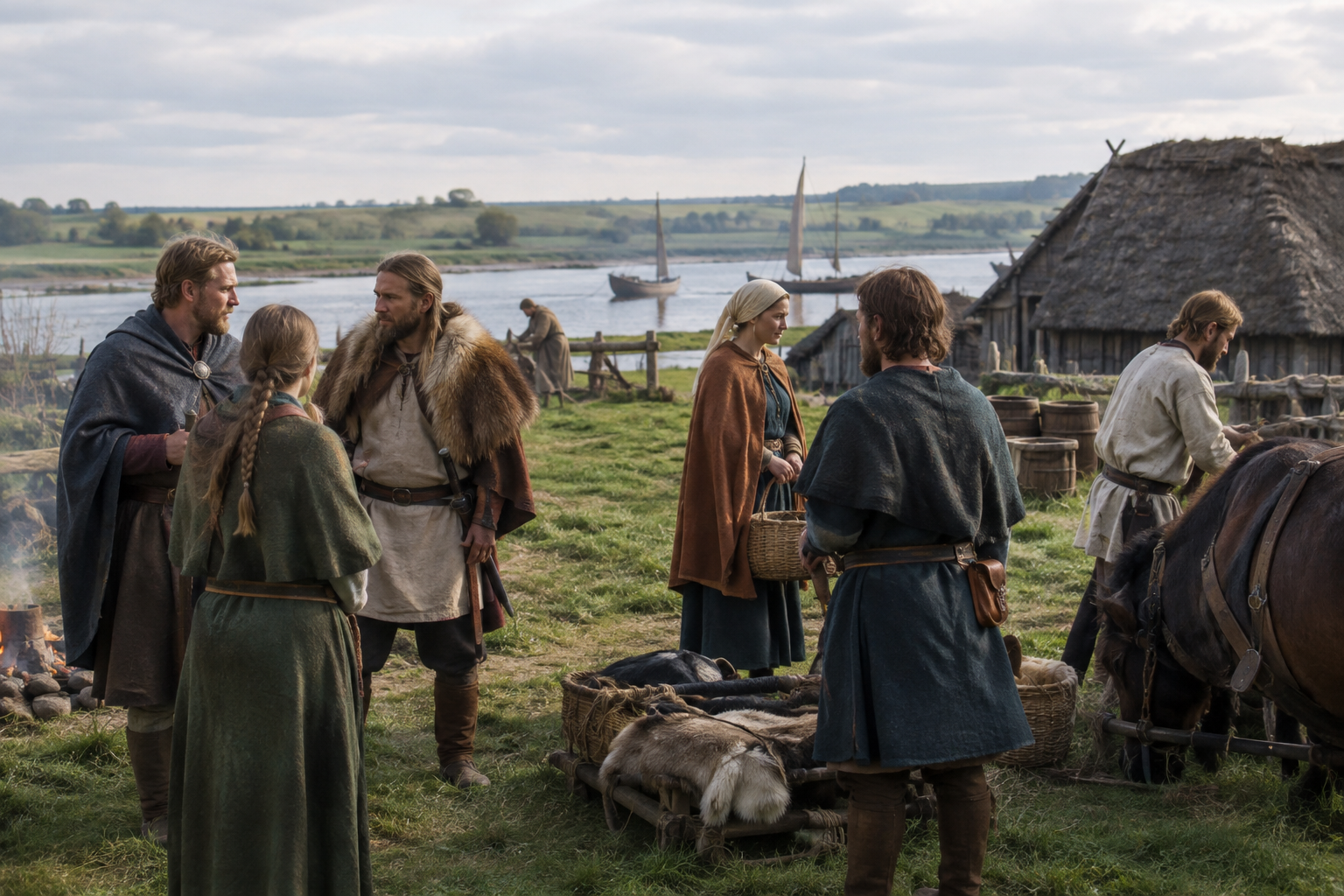
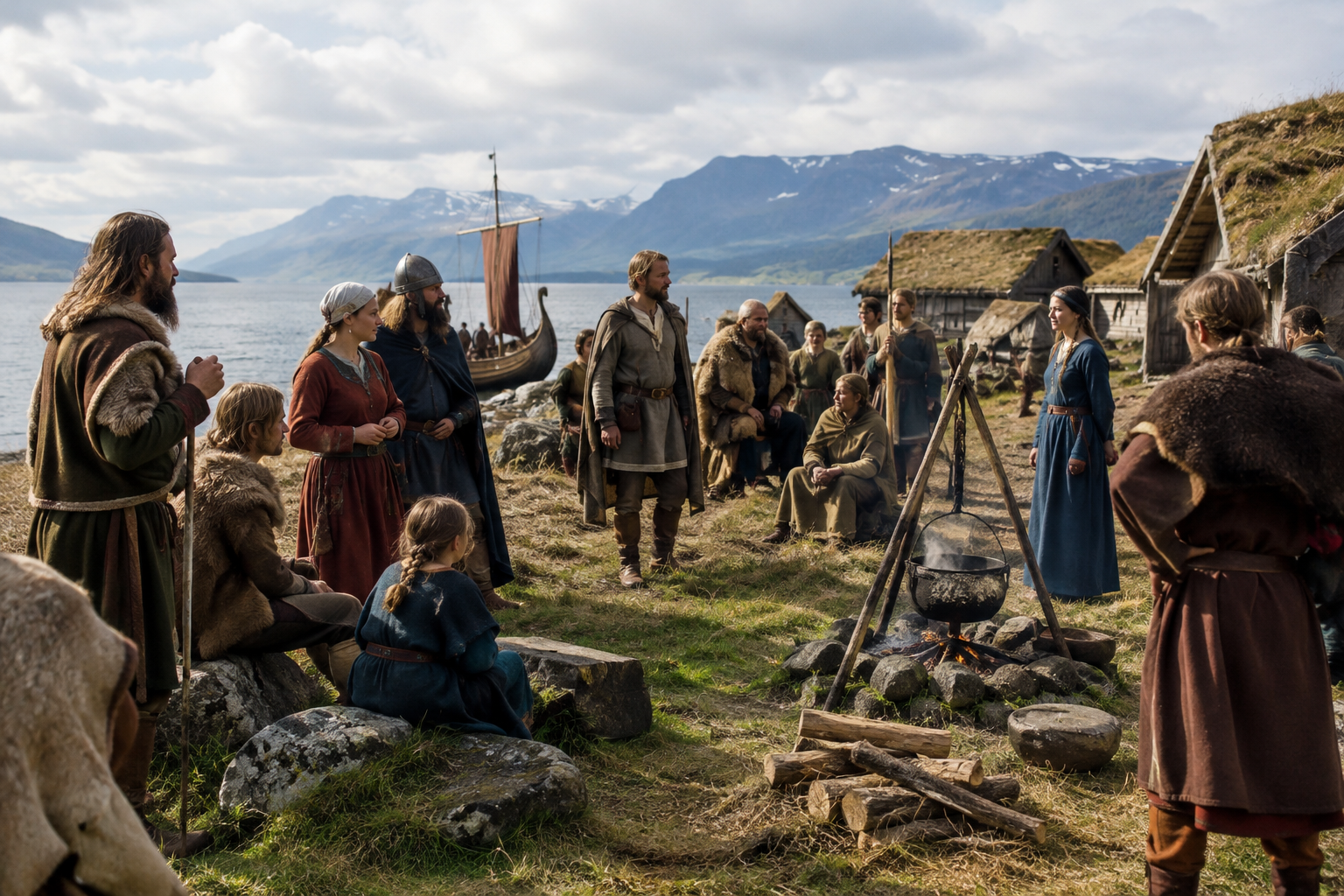
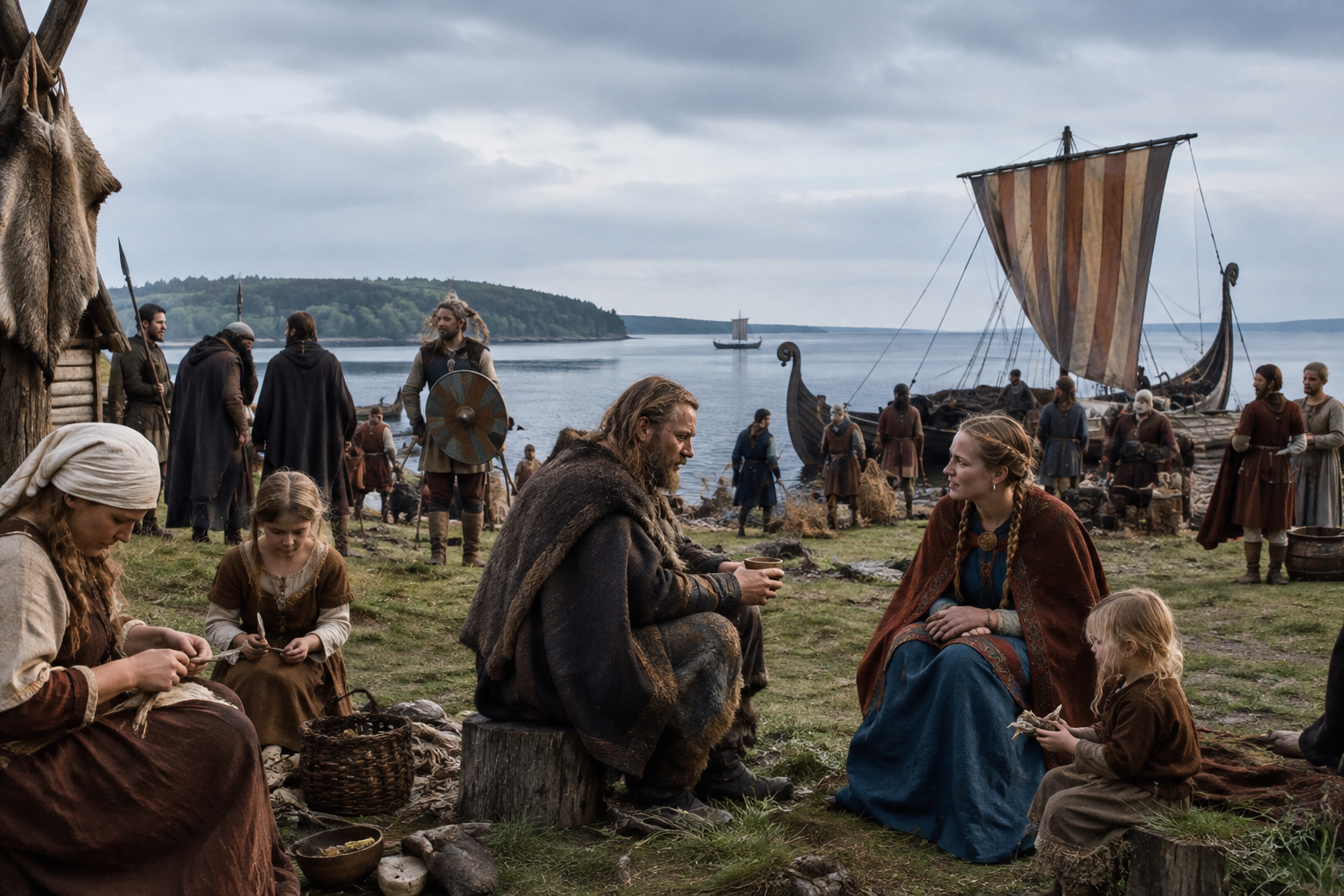
That cluster is historically fascinating. Sachsen-Anhalt in the 11th and 12th centuries was not some neat ethnic box but part of a contact zone where German-speaking polities and western Slavic populations interacted, settled, traded, intermarried, and competed. Niederwuensch gives us something extremely valuable: not a lone outlier, but repeated evidence of a paternal lineage embedded in a western Slavic settler community. That suggests not just movement, but local male-line persistence within a settlement context.
For readers interested in how genetics is reshaping the history of medieval Slavic populations in this region, one especially relevant companion piece is the Moravian study below.
Read About Moravian Slavic DNA
It is tempting, when one sees so many matching male-line results from one place, to leap straight to the idea of one family. Sometimes that may indeed be part of the explanation. But scientifically, the more careful conclusion is that this branch was present at notable frequency within that medieval western Slavic community. Whether the men were close kin, more distant paternal cousins, or representatives of a broader local lineage pool is a separate question.
Still, the historical implications are substantial. This is the sort of evidence that helps explain how Y-DNA branches become regionally characteristic over time. Written sources may tell us about bishops, margraves, tax obligations, or colonization. Ancient DNA adds the bodily evidence of who was actually buried there. In this case, R1a1a1b1a2b3a4a2 was not merely passing through. It was part of the lived demographic fabric of a medieval settlement in the Elbe-Saale zone.
That makes this haplogroup especially interesting for anyone with paternal roots in central or eastern Europe. Not because it proves descent from Niederwuensch - it does not - but because it places the lineage in a specific and historically charged frontier landscape.
For a broader regional comparison, this article on post-Roman and medieval central Europe is well worth exploring.
Explore Post-Roman Central Europe
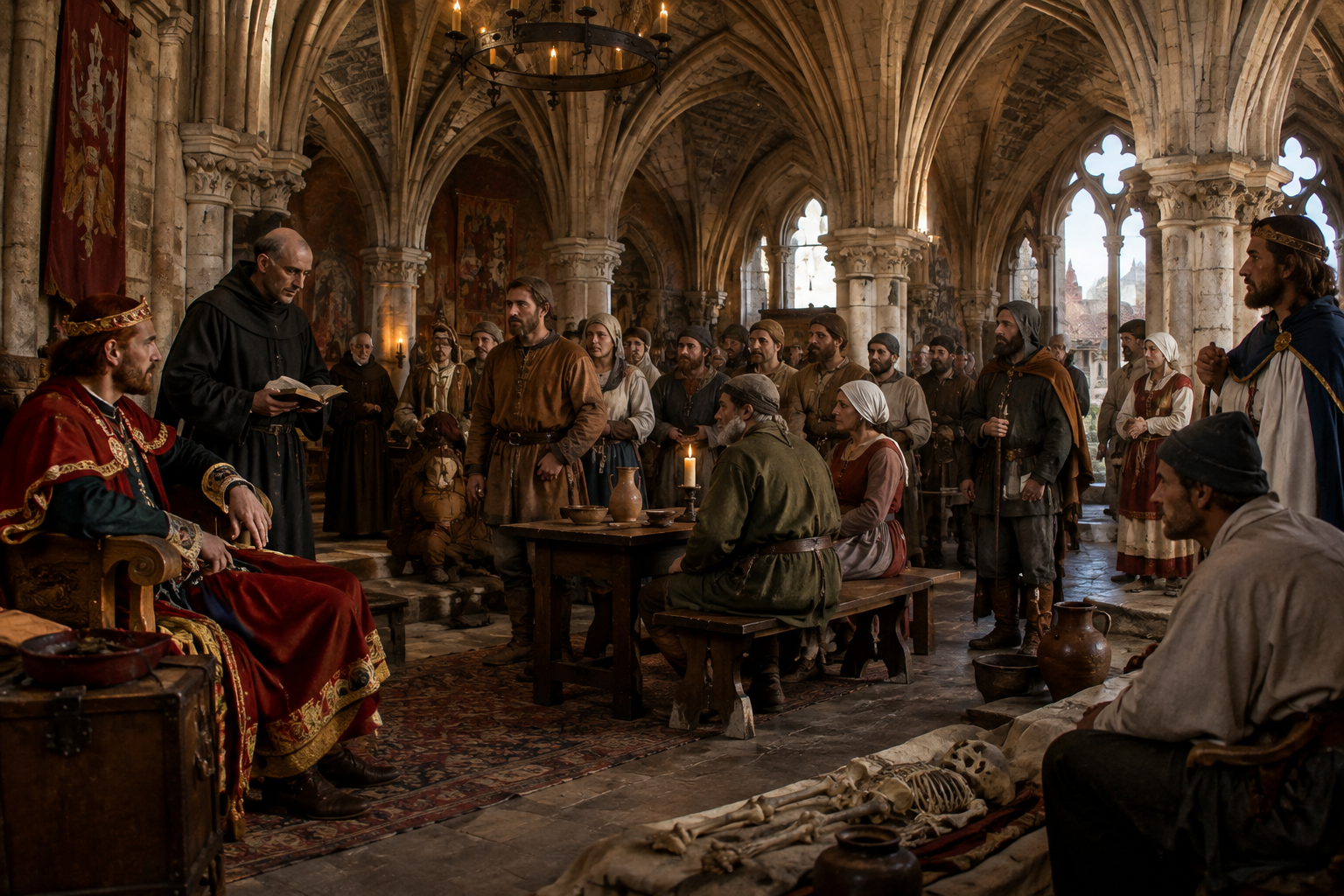
The most socially elevated sample in the supplied material is HUASper84, described as Hungarian Nobility Gothic Vault Royal House of Aba Benedictine Monastary, dated to 1405 AD. Here the scene changes dramatically. We are no longer in a village context but in the funerary world of late medieval Hungarian nobility, where monasteries, family patronage, and dynastic memory intertwined.
The Royal House of Aba occupies an important place in medieval Hungarian history. The Aba kindred was among the great noble lineages of the kingdom, associated with high office and regional power. A burial in a Gothic vault within a Benedictine monastery evokes precisely the kind of setting in which aristocratic memory was staged: piety, status, architecture, and lineage all gathered together under stone.
Now, caution first. A genetic association in one noble burial does not prove that every member of the House of Aba carried this haplogroup, nor does it authorize a tidy genealogical bridge from the Niederwuensch settlers to Hungarian magnates. But it does show that this paternal branch appears both in a western Slavic settler context and in a late medieval noble context within the wider central European world. That is not proof of one family story; it is evidence of a regional male-line history with both local and elite expressions.
Readers interested in how elite Hungarian burials are transforming the history of the kingdom should also look at this related study.
Discover Medieval Hungarian Elite DNA
One final sample deserves mention for its very different character: I3345, listed as Skeleton Lake Traveller - Hellenic, dated to 1810 AD. This is much later than the medieval material and tied to a mobile individual rather than a rooted settlement or noble vault. Precisely because it stands apart, it is a reminder of something important: paternal branches do not stay put. By the modern period, lineages could travel widely through trade, military service, pilgrimage, migration, or other forms of mobility.
That does not mean we should construct an elaborate migration narrative from one late sample. But it does underscore that Y-DNA branches can appear in surprising places far from their earlier documented concentrations.
R1a1a1b1a2b3a4a2 is interesting not because it can be draped in romantic certainties, but because the evidence is so concrete. It appears in POH11 in early medieval Moravia, in a large series of Niederwuensch western Slavic settlers around 1100 AD, and in HUASper84 from a noble Hungarian monastic vault in 1405 AD. Taken together, these samples place the branch firmly in the historical world of central Europe, especially in regions shaped by Slavic settlement and by the political complexity of the medieval Carpathian and Elbe zones.
That is precisely where ancient DNA is at its best. It does not replace written history, and it does not magically identify your coat of arms. What it does offer is a sharper sense of where particular paternal lines were actually living, being buried, and sometimes rising into elite settings.
If your own Y-DNA falls within R1a or one of its downstream branches, MyTrueAncestry can help you explore whether your results show links to ancient individuals from places like Moravia, medieval Saxony-Anhalt, or noble Hungary. Those comparisons do not prove direct descent from a named medieval house, but they can open a much more grounded view of your paternal past.
Comments