Haplogroup R1a1a1b1a2b3a1d5a2a

– 5 min read


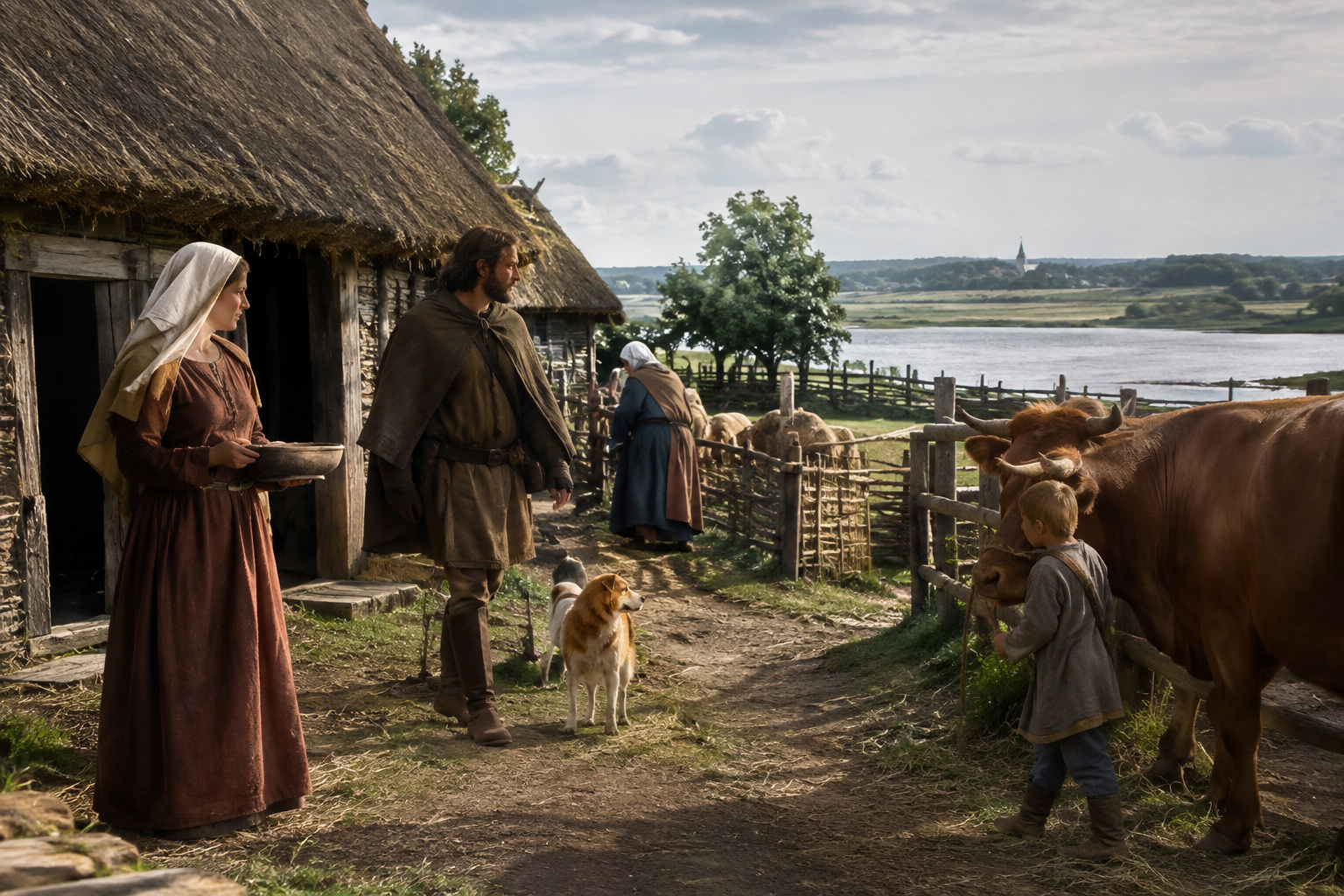
In late medieval Jutland, at Tjaerby near Randers, one man dated to around AD 1325 has become an unexpectedly useful signpost for a very narrow paternal lineage. He is recorded as sample CGG100920, and in MyTrueAncestry's classification he is associated with the Y-DNA haplogroup R1a1a1b1a2b3a1d5a2a. That may look forbiddingly technical, but the historical interest is quite straightforward: it places a very specific paternal line in Denmark at the end of the High Middle Ages, in a region tied into the traffic of the Kattegat, the North Sea, and the Baltic.
That is the right place to start, because haplogroups are most meaningful when they belong to real people in real landscapes. Y-DNA tracks one direct male line only, not a person's whole ancestry, but it can still illuminate how paternal branches persisted, moved, and became part of medieval communities. In this case, the evidence is modest but intriguing: a sharply defined branch of the wider R1a family appearing in a Danish individual from Jutland at a time when Scandinavia was neither isolated nor culturally uniform.
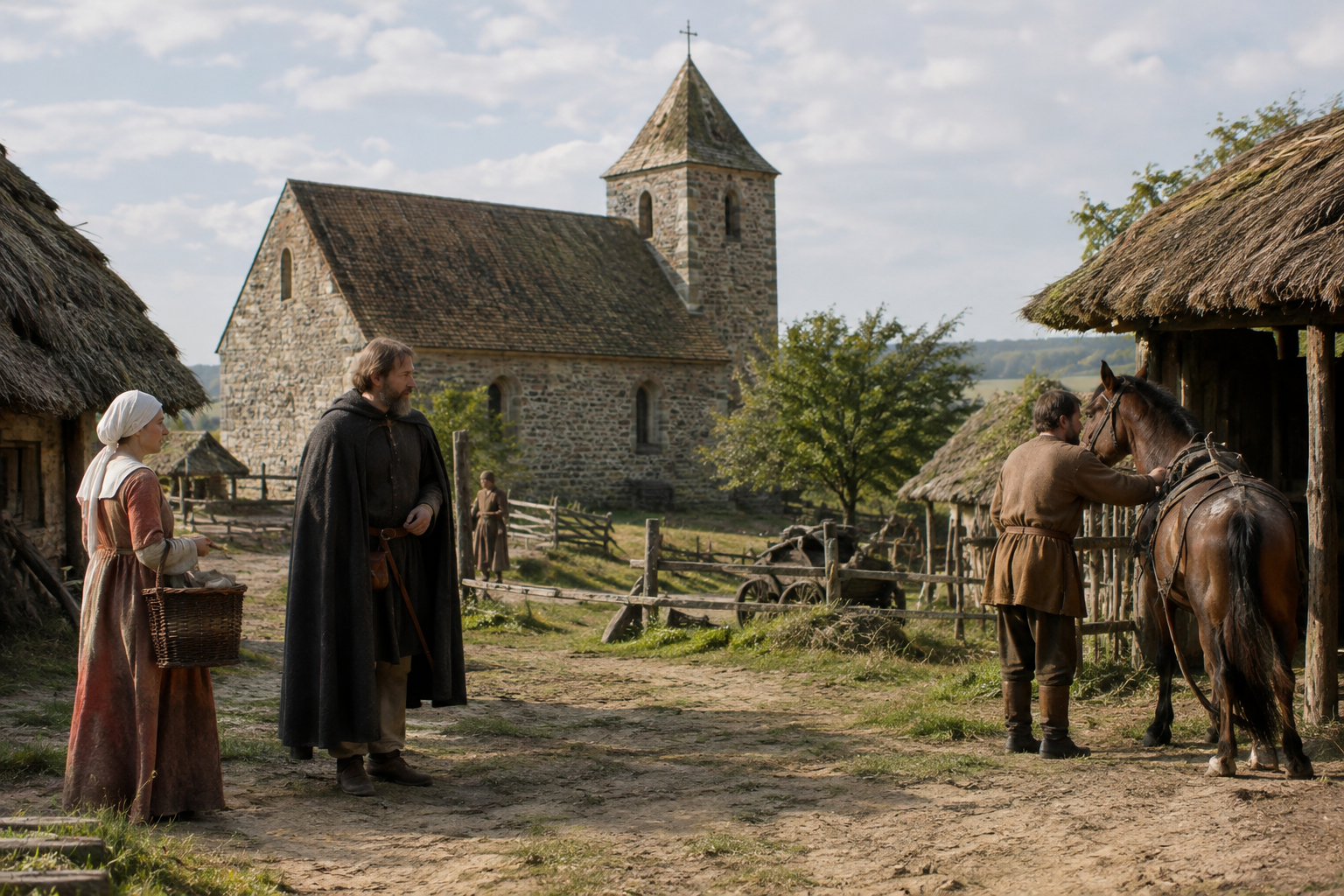
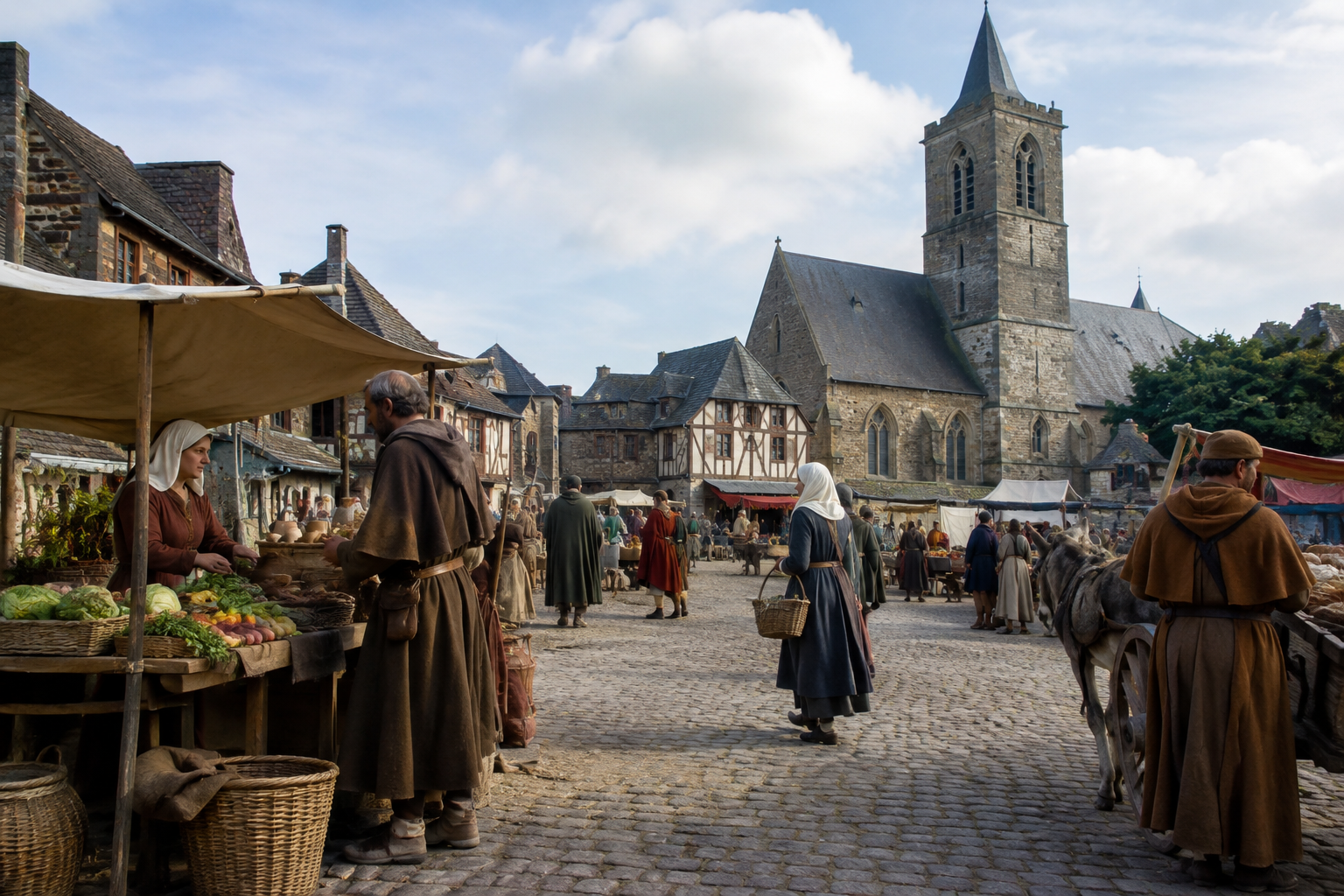
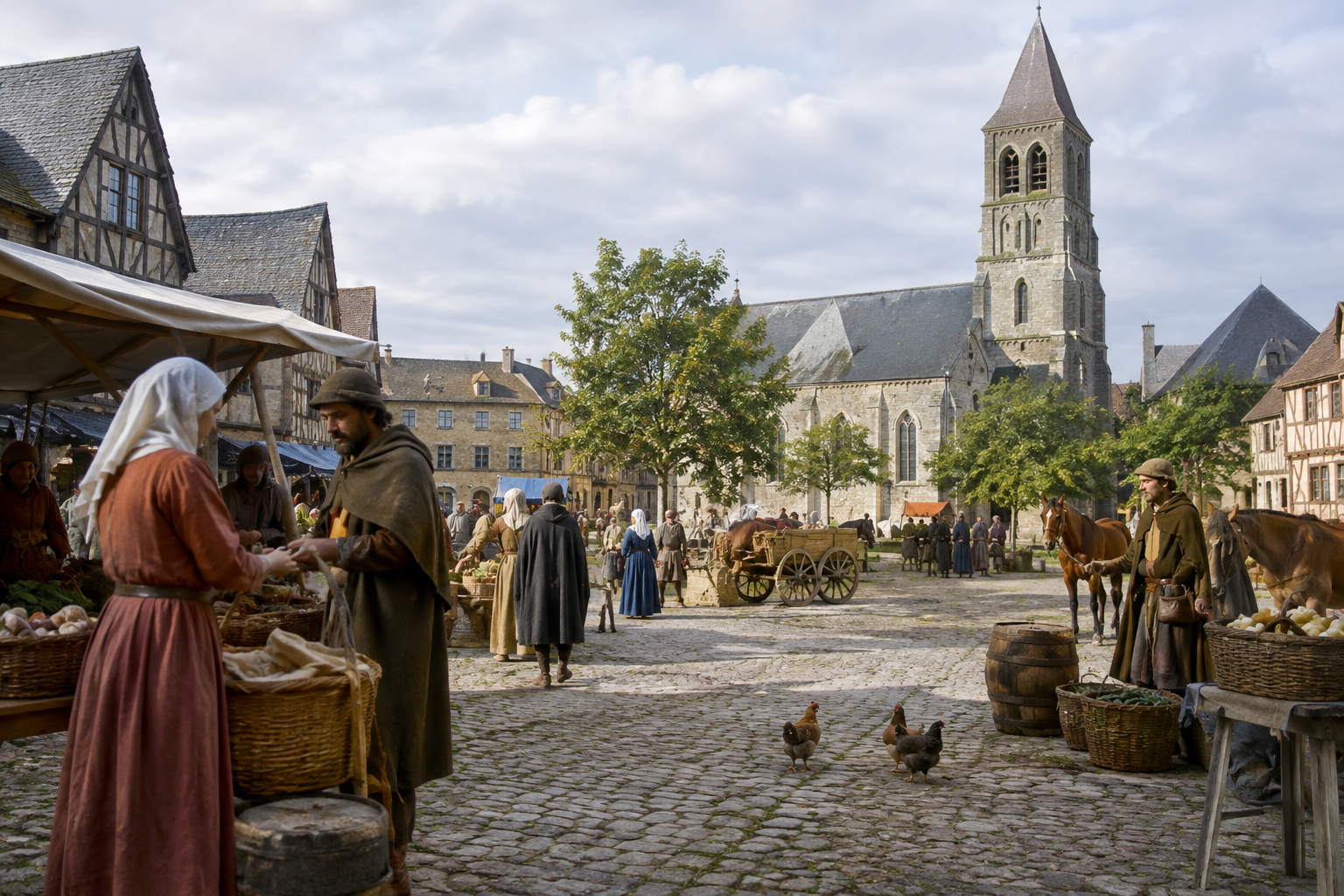
The most concrete anchor for this article is Tjaerby in eastern Jutland. By the early 1300s, this was a Christian and thoroughly medieval world of parish life, local lordship, farming communities, and maritime exchange. Randers sat on a fjord system with access inland and outward, and eastern Jutland was part of a Danish kingdom shaped by trade, conflict, and regional mobility.
Sample CGG100920 belongs to that setting. The date, around AD 1325, matters because it is long after the Viking Age but still before the full transformations of the later medieval and early modern periods. If a rare or narrow paternal branch turns up here, we are not looking at some dim prehistoric abstraction; we are looking at a lineage carried by a man living in a documented medieval society.
A broad ancient-genomic study of Denmark and nearby regions, published in Nature, helped show how dramatically population structure in Scandinavia changed across deep time. That wider background is useful here, even if our individual belongs to a much later horizon: medieval Denmark inherited layers of ancestry and paternal lines formed over millennia, not a single frozen "Danish" genetic profile.
R1a1a1b1a2b3a1d5a2a is a very narrow twig on the much larger R1a tree. That distinction is essential. The parent haplogroup R1a has a wide prehistoric and historic distribution across parts of Eurasia, and it appears in many different archaeological and linguistic settings. None of that, by itself, tells us the precise story of this one late medieval Danish branch.
So the responsible reading is a smaller one. This sample shows that a descendant of that paternal line was present in Jutland in the early 14th century. It does not mean that every earlier appearance of R1a is directly ancestral to him, nor that the branch can be tied neatly to one tribe, one language, or one migration event.
That may sound cautious, but in fact it is where the history becomes more interesting. Medieval Scandinavia was a meeting ground. Men carrying related paternal lines could have reached Denmark through much earlier Bronze Age and Iron Age processes, through Viking-Age and post-Viking networks around the Baltic, or through later medieval movement within northern Europe. A single sample cannot decide between those paths, but it does prove the branch had become part of the population of Jutland by this date.
AD 1325 is not an accidental date in northern history. Denmark in the 14th century was tied to the Hanseatic world, to the politics of the Baltic, and to enduring links with Norway, Sweden, northern Germany, and the North Atlantic routes beyond. Jutland in particular was a peninsula of connections, not a cul-de-sac.
That matters because genetic lineages do not move as labels in textbooks. They move with families, marriages, settlement, service, trade, ecclesiastical careers, and local inheritance. A paternal line found in late medieval Randers could have been established there for centuries, or it might reflect more recent regional movement within the Scandinavian and Baltic sphere. Both possibilities fit the known historical setting better than any simplistic "one people, one haplogroup" formula.
Research on the spread of early Germanic languages has also emphasized that language history and genetic history overlap only imperfectly. Population change mattered, but so did social transmission, local continuity, and contact zones.
Germanic Languages and Genomics
Seen in that light, CGG100920 is valuable precisely because he is late. He belongs to a world for which archaeology, documentary history, and regional political geography can all be brought into view together. He reminds us that paternal lineages associated in modern discussion with broad eastern or steppe-linked histories could also be entirely at home in a settled Scandinavian Christian community many centuries later.
One of the easiest mistakes in popular DNA history is to imagine a sharp break between "Viking" and "medieval" populations. The archaeology of Scandinavia does not support such tidy boundaries. Conversion, state formation, parish organization, and changing burial customs altered how people were buried and remembered, but they did not wipe the population clean and replace it with new men bearing wholly different paternal lines.
That makes a 14th-century Jutland sample especially useful for family historians. Even without a dramatic royal burial or a spectacular grave assemblage, a medieval churchyard individual can show continuity of male lines through the centuries after the Viking Age. In other words, a branch like R1a1a1b1a2b3a1d5a2a did not have to remain attached to heroic-age stereotypes. By around AD 1325 it was part of ordinary lived Scandinavian history.
This is where the sample also fits into a broader northern pattern visible in several MyTrueAncestry discussions: post-Viking and early Christian cemeteries often reveal that medieval communities combined local roots with wider regional ties. They are not biologically uniform, but nor are they random collections of strangers.
Post-Viking Christian Scandinavia
There is only one ancient individual here, and that imposes obvious limits. We cannot build a dynasty out of him, and we cannot pretend that one burial represents all of medieval Denmark. But one well-placed sample can still matter when it captures a narrow branch in a securely historical context.
For descendants researching this paternal line today, the most defensible insight is not a grand tale of conquest. It is something quieter and, in many ways, more useful: this branch is documented in medieval Denmark, in Jutland, by around AD 1325. That places it inside the historical societies of northern Europe, in a region shaped by both continuity and movement across the Baltic-North Sea world.
So the significance of R1a1a1b1a2b3a1d5a2a here is not that it unlocks a legendary ancestor. It is that it gives this very specific paternal line a real archaeological footing in late medieval Scandinavia. Sometimes that is the most valuable thing ancient DNA can do: not inflate the past, but pin it down.
Comments