Haplogroup R1a1a1b1a2a1a

– 5 min read


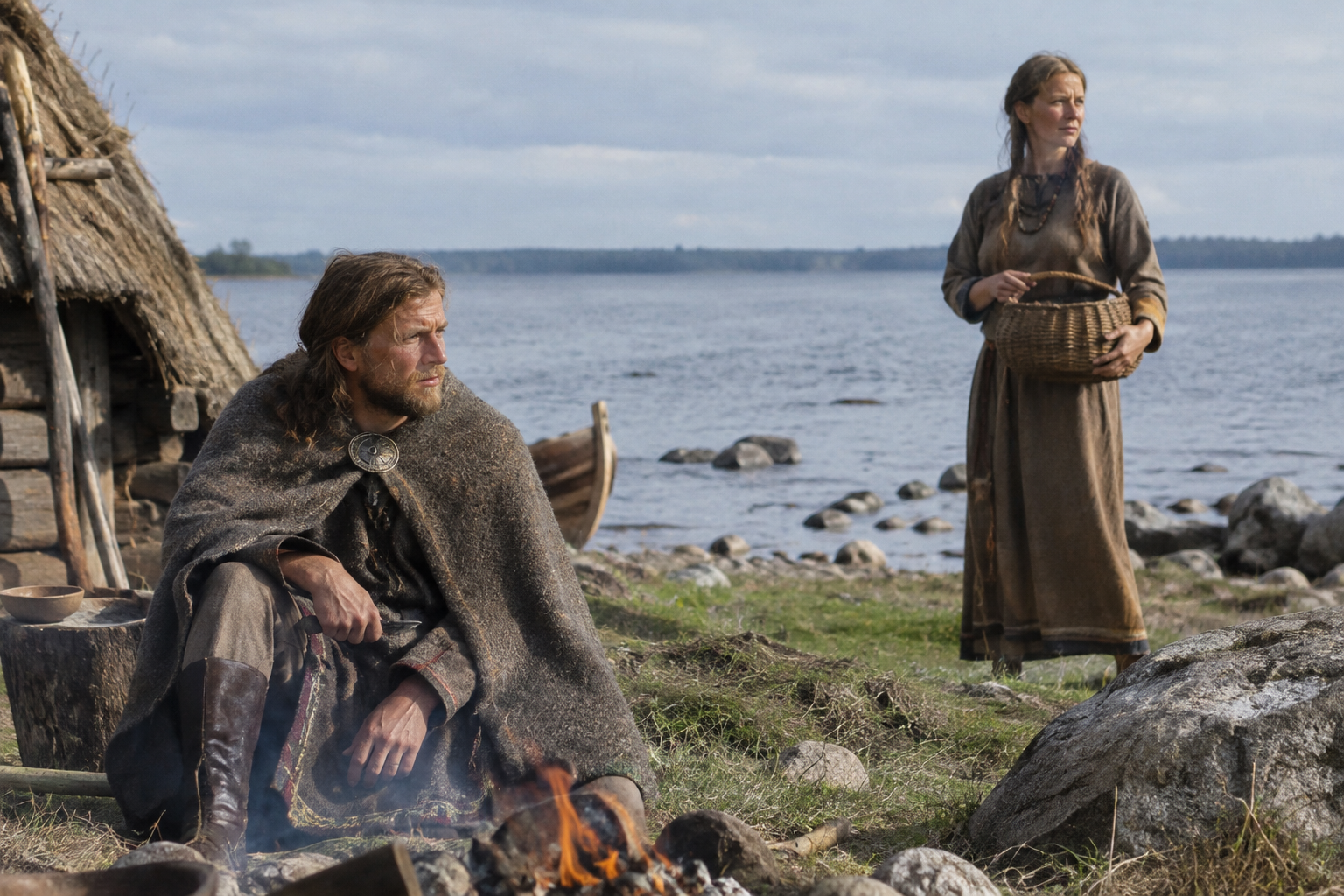
On the island of Saaremaa in Estonia, the Salme ship burials have become one of the most striking windows into the early Viking world. One of the men from Salme II, sample VK480, dated to around AD 725, is associated here with the Y-DNA haplogroup R1a1a1b1a2a1a. That matters because Salme is not just any burial ground: it is tied to a violent and mobile Baltic-Scandinavian world in which armed crews crossed the sea, fought, died, and were buried together far from home.
Set beside that later warrior-age find is a much earlier man, Turlojiske3, from Late Bronze Age Lithuania, dated here to about 905 BC. Taken together, these two samples do not give us a neat dynastic story, and they certainly do not reduce identity to one male line. But they do offer something more interesting: a glimpse of a paternal lineage appearing in the eastern Baltic across a very long span of time, from the Bronze Age into the Vendel or early Viking Age.
R1a1a1b1a2a1a is a very specific branch within the wider R1a family of Y-DNA lineages. Y-DNA follows one narrow line of descent, from father to son, so it tells us about a direct paternal ancestry rather than a person's whole background, language, or ethnic identity. That distinction is especially important in the Baltic, where archaeology and ancient DNA both show long histories of mixture, continuity, and regional variation.
With a branch this precise, caution is essential. The broader R1a tree is widespread across much of Eurasia, but that does not mean every sub-branch shares the same story. What we can say, based on the ancient evidence supplied here, is much more modest and more useful: this lineage is present in individuals linked to eastern Baltic contexts separated by more than 1,500 years.
The Salme burials are famous because they are ship burials from the island of Saaremaa, positioned on a crucial sea route between Scandinavia and the eastern Baltic. Sample VK480, dated to about AD 725 and identified here as coming from Salme II-VI, belongs to a period just before the classic Viking Age raids recorded in western chronicles. This is the older, rougher edge of that story: seaborne war-bands already moving across the Baltic and leaving dead behind them.
Archaeologically, Salme matters because it captures organized mobility rather than isolated travel. These were not anonymous peasants buried in a village cemetery. They were part of a martial setting that connects Estonia, Sweden, and the wider northern world. A genetic study of the region, circulated as research on ancient Baltic and nearby populations, helped place such eastern Baltic individuals into a broader regional frame, even if every fine-grained Y-line assignment must still be handled carefully.
Baltic Connections in Early Medieval Finland
The importance of VK480 is not that one man can stand for all Salme, still less for all Vikings. It is that he shows this paternal branch in a setting defined by warfare, seafaring, and Baltic contact. In historical terms, that places R1a1a1b1a2a1a within a world of movement across islands and coasts, not in some static ethnic box.
The earlier anchor for this article is Turlojiske3, dated here to about 905 BC in Late Bronze Age Lithuania. We are in a very different historical landscape from Salme: no early medieval war-band, no famous ship burial, and no sagas hovering in the background. Instead, this is the eastern Baltic in the Late Bronze Age, when communities were part of a changing northern European world shaped by metal exchange, local settlement systems, and regional cultural development.
Even with sparse sample-level detail, Turlojiske3 is important because Bronze Age Lithuania sits near one of the key zones for understanding later Baltic population history. If a lineage associated with R1a1a1b1a2a1a is already present here by the first millennium BC, then the Salme appearance many centuries later need not be explained as a sudden or exotic arrival. It may instead reflect one thread within a much deeper eastern Baltic paternal landscape.
That does not mean uninterrupted descent from Turlojiske3 to VK480, and it certainly does not mean every man in Bronze Age Lithuania shared the same line. Ancient populations always contain multiple paternal branches. But the pairing of these two finds, one in Lithuania and one in Saaremaa, suggests durability as well as mobility: a lineage rooted in the eastern Baltic zone and still visible in an era of maritime conflict.
It is tempting to imagine the Baltic as a fringe, a cold northern margin waiting for "history" to happen elsewhere. Archaeology says otherwise. The eastern Baltic was a contact zone for a very long time: linked by waterways, trade, marriage, conflict, and seasonal movement. Y-DNA lineages found there should be read against that backdrop.
By the Late Bronze Age, communities in Lithuania were already participating in wider northern exchange systems. By the eighth century AD, Saaremaa sat in a sea-lane world where Scandinavian and eastern Baltic groups met in ways that could be peaceful, opportunistic, or lethal. A lineage like R1a1a1b1a2a1a appearing in both settings reminds us that paternal history in this region is not a simple tale of one migration replacing another.
That is one reason eastern Baltic ancient DNA has been so valuable. Research associated with Baltic prehistory, including material linked through the supplementary dataset at this ancient DNA supporting file, has helped show how complicated continuity and change could be. Some ancestry patterns persisted locally, while others shifted through contact with neighboring regions. Y-chromosome evidence often sharpens that picture by showing how paternal lines could endure even when the surrounding population story was more mixed.
On the face of it, a Late Bronze Age Lithuanian sample and a Vendel Age burial from Saaremaa are separated by too much time and too many missing generations to be neatly joined. But historical interpretation is not always about drawing direct family trees. Sometimes it is about seeing which regions repeatedly produce evidence for the same paternal branch, and asking what that says about long-term population structure.
Here, the answer seems to lie in the eastern Baltic itself. Turlojiske3 gives us an early foothold for the lineage in Lithuania; VK480 shows it again in a martial maritime setting centuries later. That combination makes the branch historically interesting not because it can be tied to one named tribe or kingdom, but because it appears in a region where local continuity and cross-Baltic movement were both real at the same time.
There is also a broader methodological point. Ancient DNA works best when it complicates tidy stories. The Baltic is a good example: identities changed, political worlds changed, burial customs changed, yet some paternal lines can still be detected across very different archaeological horizons. That is not romance. It is exactly the sort of stubborn, layered evidence archaeologists like best.
For someone exploring the haplogroup R1a1a1b1a2a1a today, the clearest ancient signal in this small sample set is depth in the eastern Baltic world rather than a single dramatic origin story. One associated man appears in Late Bronze Age Lithuania; another turns up in the sea-connected warrior milieu of Salme on Saaremaa around AD 725. That is enough to suggest a paternal line that was present in the region long before the classic Viking Age and still part of its human landscape when Baltic conflict and long-distance sailing were already shaping history.
Medieval Finland and Archaeogenetics
It is a modest conclusion, but a strong one: this branch belongs in the story of the eastern Baltic as a place of both continuity and connection, where old local roots and far-ranging mobility lived side by side.






Comments