Haplogroup R1a1a1b1a1a1c1f

– 5 min read


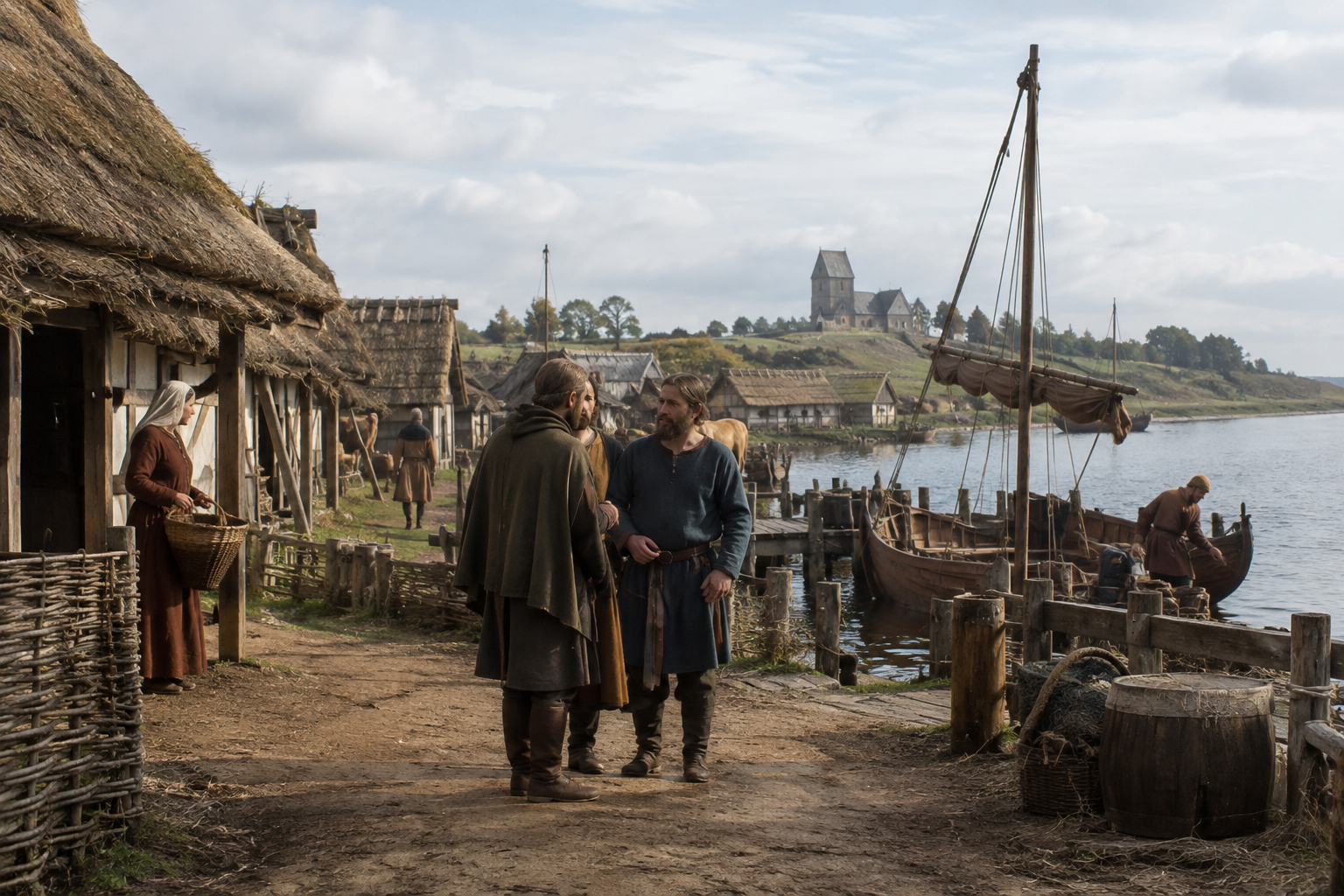
In medieval Holbaek on the island of Zealand, one man buried around AD 1150 has become an unexpectedly useful guide to a very specific paternal line. The individual identified as CGG101825, from Ahlgade in Holbaek, is associated here with the Y-DNA haplogroup R1a1a1b1a1a1c1f. That string of letters and numbers is not a grand ethnic label or a ready-made family saga. It is a narrow paternal branch, traced only through the direct male line, and its value lies in how firmly it pins one lineage to one real medieval Scandinavian context.
That matters because R1a is a very large and historically widespread Y-chromosome family. Once we move down to a lineage as specific as R1a1a1b1a1a1c1f, the story has to become more careful. We are no longer talking about all men carrying R1a, nor all Scandinavians, nor all medieval Danes. We are talking about one documented branch, and at present one especially concrete archaeological appearance: a man from twelfth-century Zealand, in a Denmark already reshaped by Christianity, town growth, trade, and the long afterlife of the Viking Age.
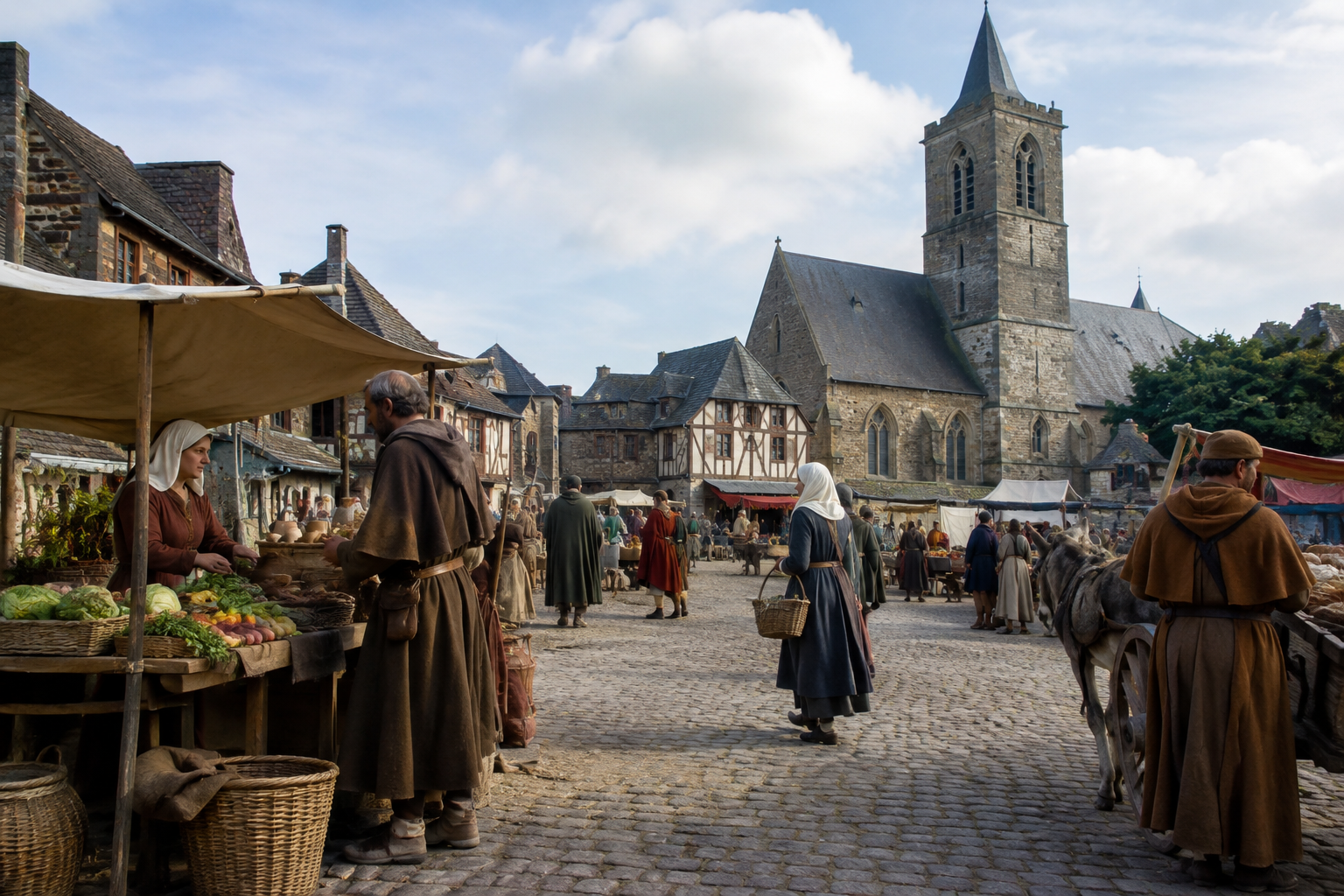
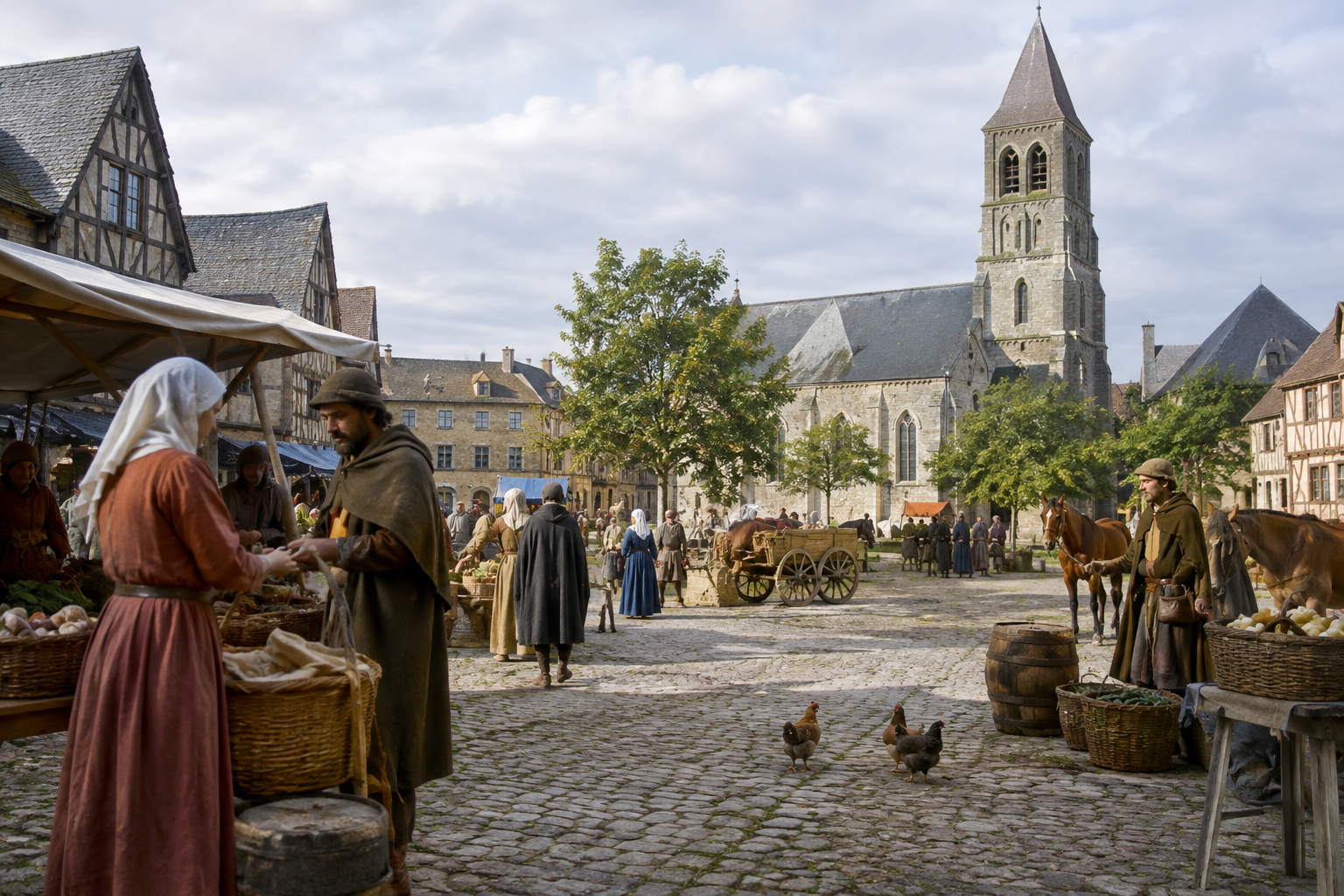
Holbaek is not one of those names that instantly summons a saga scene in the popular imagination. But that is precisely why the site is interesting. By around AD 1150, Zealand was part of a kingdom consolidating its institutions, building churches, tightening royal power, and developing market towns and local urban centres. A burial from Ahlgade belongs to that world: not prehistoric, not legendary, but stubbornly medieval and local.
The sample CGG101825 gives us a paternal lineage anchored in this period of transition. Men carrying branches of R1a had been present in different parts of northern and eastern Europe for a long time before the twelfth century, but this particular find shows that one fine-grained descendant branch was present in medieval Denmark itself. That is a useful correction to overblown ideas that lineages must belong neatly to one people, one migration, or one famous conquest.
A genetic study of medieval Danish material is linked through this research preprint, which is the relevant scientific lead attached to the sample. Without inventing details not given in the record, the safest point is that Holbaek offers a documented archaeological setting for this paternal branch in high medieval Scandinavia.
Denmark before the Middle Ages
It is tempting, especially in Scandinavian contexts, to slap the word "Viking" on everything. But the burial at Holbaek dates to a period after the classic Viking Age. By AD 1150, Denmark was a Christian kingdom with towns, parishes, and a very different political texture from the raiding age of the ninth and tenth centuries. The people buried in such settings were living in a society shaped by older Norse inheritances, certainly, but also by newer institutions and regional networks across the Baltic and North Sea.
That is where a precise haplogroup can help, if used sensibly. R1a1a1b1a1a1c1f is not a synonym for "Viking", "Slavic", "Germanic", or any other broad historical label. A Y-haplogroup marks one paternal thread only. A medieval man in Zealand could belong to a local Danish community while his wider ancestry, in the full genomic sense, drew on many older mixtures already present around the Baltic world.
In other words, the interesting part is not that one chromosome branch can magically identify a people. It is that this branch turns up in a real medieval Scandinavian burial, reminding us how paternal lines persist through cultural change. Languages shift, kingdoms reorganise, burial customs alter, and yet some male-line descent groups simply continue inside those changing societies.
Post-Viking Christian Scandinavia
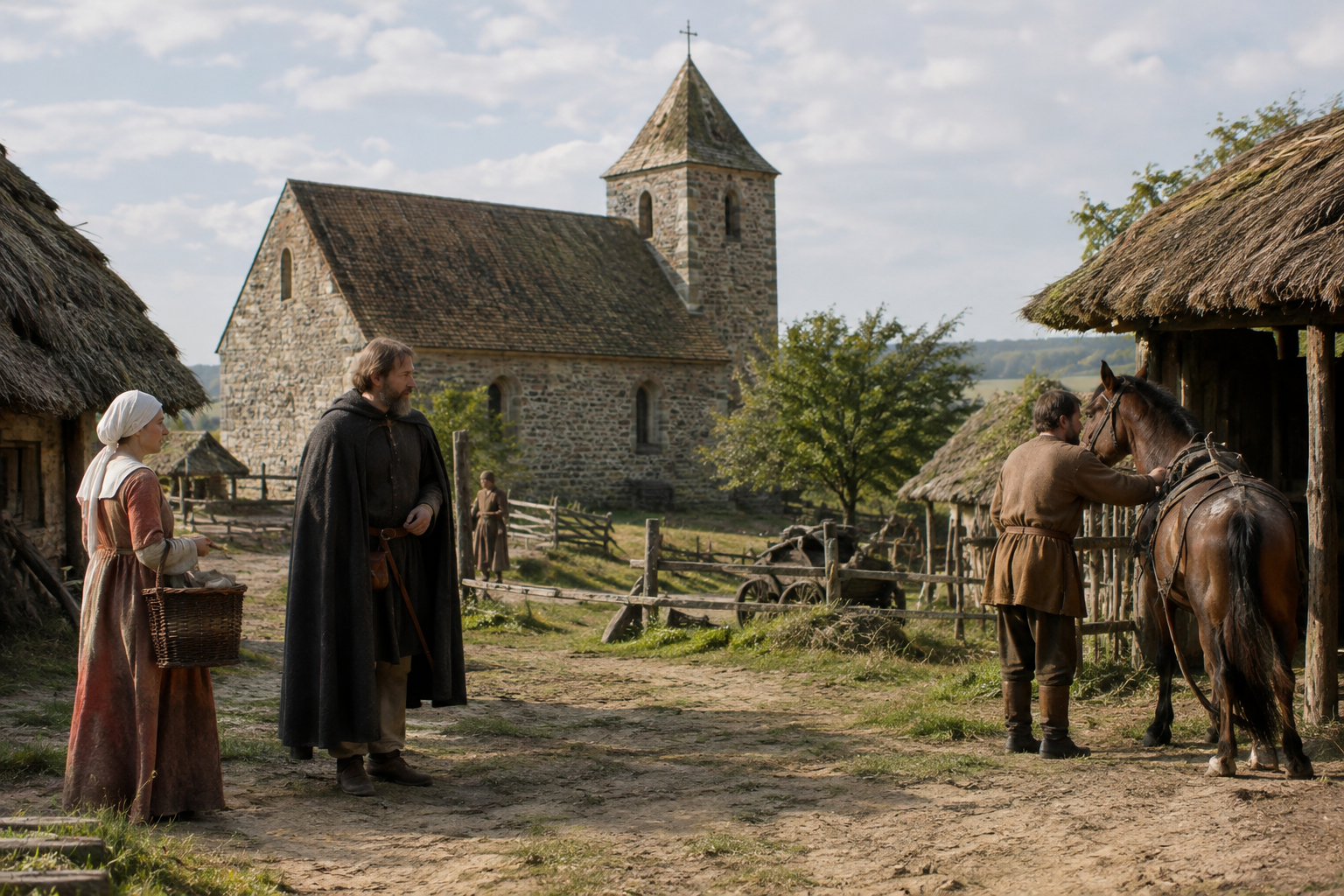
To understand why the Holbaek sample is worth attention, it helps to picture Zealand in the twelfth century not as a frozen "Viking" landscape but as a busy historical region. This was the age of expanding ecclesiastical organisation, growing settlement hierarchy, and stronger links between local communities and royal authority. The island sat at the heart of Danish power.
That means CGG101825 did not live in an edge zone cut off from history. He belonged to a region deeply involved in the making of medieval Denmark. Even if we know nothing here about his profession, status, or family relations, his Y-lineage places the branch R1a1a1b1a1a1c1f within a landscape of ports, roads, churches, and exchange routes that connected Scandinavia to the Baltic and beyond.
This broader context also helps explain why a single burial can still matter. Ancient DNA does not always need a king, a warrior grave, or a glittering object to be important. Sometimes its real force lies in showing that an otherwise abstract lineage was part of ordinary historical populations. The direct male line represented by this sample was not theoretical. It was walking around medieval Zealand.
The parent haplogroup R1a has a deep and complicated history across Eurasia, with many branches found in eastern, central, and northern Europe over long periods. But one should be wary of smudging that whole map onto this much narrower descendant line. The Holbaek find supports the presence of R1a1a1b1a1a1c1f in medieval Denmark; it does not, by itself, tell us exactly when that branch first entered Zealand or by which route.
Still, the setting invites sensible historical questions. Medieval Denmark was tied closely to the Baltic world, a zone of trade, warfare, dynastic ambition, and migration. Paternal lines could move with merchants, settlers, retainers, farmers, craftsmen, or simply through generations of regional marriage and local continuity. Not every movement leaves a saga, but some leave a chromosome.
This is one reason northern European genetic history can be so fascinating and so awkward at the same time. The old habit was to imagine crisp blocks of peoples moving like chess pieces. Ancient DNA keeps showing something messier and more human: continuity mixed with mobility, local roots mixed with wider contacts, and lineages surviving through periods whose cultural labels changed much faster than families did.
Germanic languages and genomes
For someone who discovers R1a1a1b1a1a1c1f in a modern Y-DNA result, the Holbaek burial is useful because it gives the branch a secure medieval foothold in Denmark. That does not mean every present-day carrier descends from Zealand, nor that the line was uniquely Danish. It does mean that by the mid-twelfth century this branch was part of the male population in one important Danish region.
That sort of evidence is often more valuable than grander claims. It grounds a lineage in a documented place and period. If future ancient samples turn up in nearby parts of Scandinavia or around the Baltic, the picture may become denser; for now, Holbaek provides a sober but significant point on the map.
There is also something pleasingly archaeological about that. The lineage survives not as myth or heraldry but as a burial from a town street context, a sample code, and a historical horizon that can be located in the making of medieval Denmark. For paternal ancestry, that is often how the past really appears: fragment by fragment, site by site, one man at a time.
The most distinctive thing about R1a1a1b1a1a1c1f, on the evidence here, is not an epic migration tale but a firm medieval anchor in Zealand through CGG101825 from Ahlgade, Holbaek, around AD 1150. That places this paternal branch inside the lived history of medieval Denmark: a Christian, connected, regionally powerful society in the centuries after the Viking Age. For anyone researching this line today, that is a modest claim, but a strong one - and in archaeogenetics, strong and modest is usually far better than dramatic and wrong.
Comments