Haplogroup R1a1a1b

– 6 min read


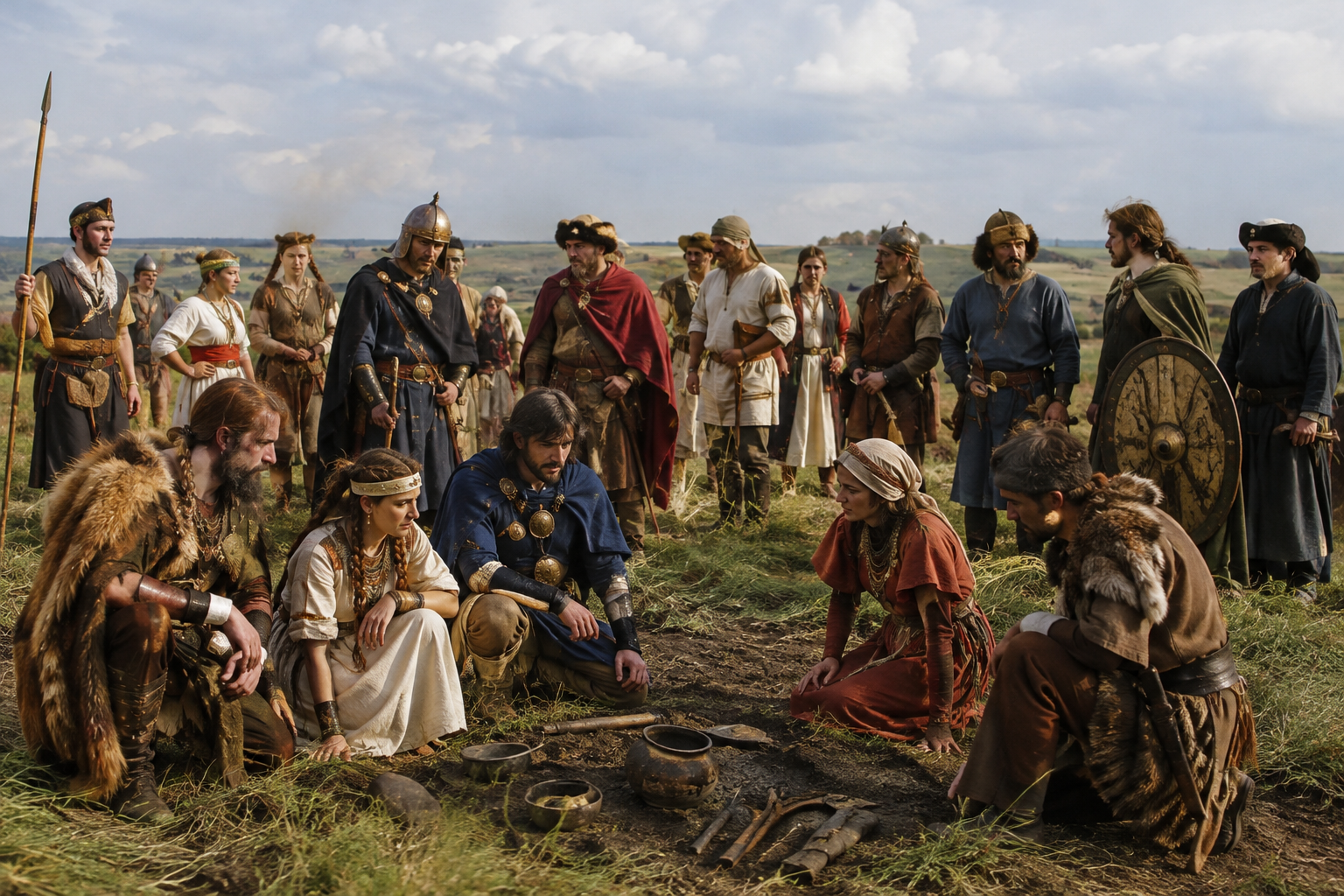
There are Y-chromosome lineages that sit quietly in a family tree, and then there are lineages like R1a1a1b, which seem to turn up wherever the history of Eurasia becomes most crowded, mobile, and argumentative. This is a paternal line associated, at a broad level, with parts of the wider R1a branch: a major Y-DNA family that has been important in discussions of steppe expansions, Bronze Age Europe, and later movements across the forests, plains, and frontier zones of Eurasia. What makes R1a1a1b especially interesting is not that it "belongs" to one people, kingdom, or language. Quite the reverse. Its story appears in many places at once.
That is worth saying clearly at the start. Y-DNA traces one direct paternal line only: father to father to father. It does not describe a person's whole ancestry, culture, identity, or social status. Still, when ancient DNA places related paternal branches in Scythian burials in Ukraine and Kazakhstan, Bronze Age graves in Central Europe, Iron Age and Roman-era contexts in Britain and the Baltic, and medieval settlements in Germany and Russia, we are looking at something historically valuable: a line of evidence for how male lineages moved, persisted, mixed, and reappeared across centuries.
In broad terms, R1a1a1b sits within the wider R1a family, a branch often discussed in connection with prehistoric Eurasian mobility. For this narrower lineage, the safest conclusion is not a single simplistic homeland, but a pattern. The samples supplied here place related paternal signatures across a very wide arc: the North Pontic region, Central Europe, Scandinavia, the Baltic, the Hungarian plain, and further east into Central Asia and even late medieval Mongolia. That distribution suggests long-term movement through interconnected worlds rather than one neat ethnic label.
Some of the earliest clues come from the Bronze Age. The sample RISE94, from Battlaxe Sweden Viby dated to 2472 BC, shows this paternal line already present in Scandinavia in the late Neolithic or early Bronze Age horizon associated with Corded Ware-derived traditions. In Central Europe, a cluster of Unetice-period males from Leubingen Sommerda in Thuringia - LEU021, LEU031, LEU011, LEU010, and LEU009, all dated 1950 BC - places it in one of the most important early Bronze Age cultural zones north of the Alps.
That matters because it shows that this paternal line was not confined to one eastern steppe setting. It also formed part of the male landscape of early complex societies in Central Europe, in regions later tied to elite burials, metal wealth, and expanding exchange networks.
Explore Bronze Age Central Europe
If one historical setting dominates this dataset, it is the great belt of Iron Age steppe and forest-steppe cultures often grouped under labels such as Scythian, Saka, and Sarmatian. Here the evidence is striking. In Ukraine, the lineage appears in UKR116 from Karavan, Kharkiv, dated 715 BC; UKR036 from Medvyn Tract Girchakiv Lis, dated 426 BC; UKR104 from the Siversky Donets Basin, dated 350 BC; and UKR014 from Mamay-Gora, Zaporizhzhia, dated 350 BC. These are not all the same community, nor should they be treated as a single dynastic line. But together they show repeated appearances in the northern Black Sea and forest-steppe zone over several centuries.
Further east, we find the same broad paternal branch among elite and high-status Iron Age burials in Kazakhstan: ESZ015 from Eleke Sazy dated 959 BC, BKB003 from Bakybulak dated 778 BC, and KOT002 from Koktubek dated 650 BC. Add KKM001 from Karakemer dated 600 BC, NUR002 from Nurken Village dated 540 BC, and AIG006 from the Aigyrly Sanctuary in the Sarmatian period dated 450 BC, and the picture becomes hard to ignore. This is a paternal signature that appears repeatedly in the mobile aristocratic and pastoral worlds of the eastern steppe.
The important point is not that R1a1a1b was "the Scythian haplogroup." Ancient Scythian and Saka populations were genetically varied. Rather, this branch was one of the recurring paternal lines within those worlds, especially across the steppe-to-forest frontier from Ukraine to Central Asia.
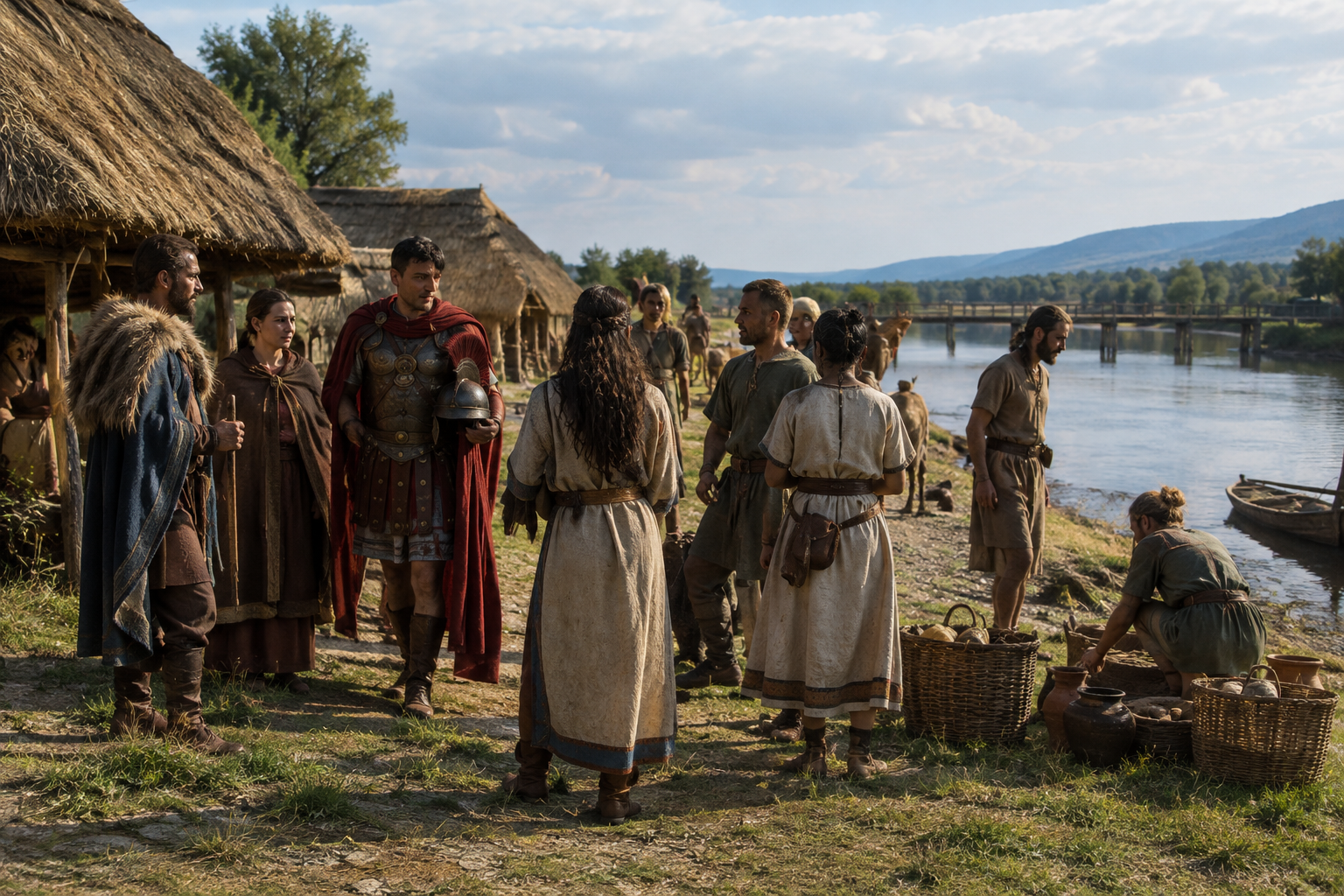
By the Roman and Migration periods, the same paternal story becomes even more complicated - which is to say, more interesting. In Britain, two males from Randwick, Gloucestershire, NEO845 dated 160 AD and NEO846 dated 343 AD, place this lineage in a Celtic Britain context under Roman rule. In Poland, R10620 from the Lugii Tribe at Weklice dated 10 AD hints at its presence in another frontier society often linked to movement between Central Europe and the Baltic.
Then come the Carpathian Basin finds: CGG021909 and CGG021913 from Sarmatian Madaras in Hungary, dated 345 AD and 363 AD; GYS012 from Late Antique Pannonia at Arrabona dated 425 AD; HMU057 from post-Roman Scarbantia Hegyko Barbaricum dated 525 AD; KUP025 from an Early Avar elite grave at Kunpeszer dated 609 AD; and RKF007, RKO020, and I18174 from Migration Period and early medieval Hungary around 650 AD. Here we are in a corridor where Roman provincial life, steppe newcomers, Germanic groups, and post-imperial local populations all met. The lineage turns up not in one simple category but across several.
That is precisely why ancient DNA is useful. Written sources love sharp labels: Scythian, Sarmatian, Avar, Slav, Jute, Viking. Real populations were usually messier. A paternal branch like R1a1a1b can cross those categories because men moved, served, traded, married, raided, settled, and adapted to new political worlds.
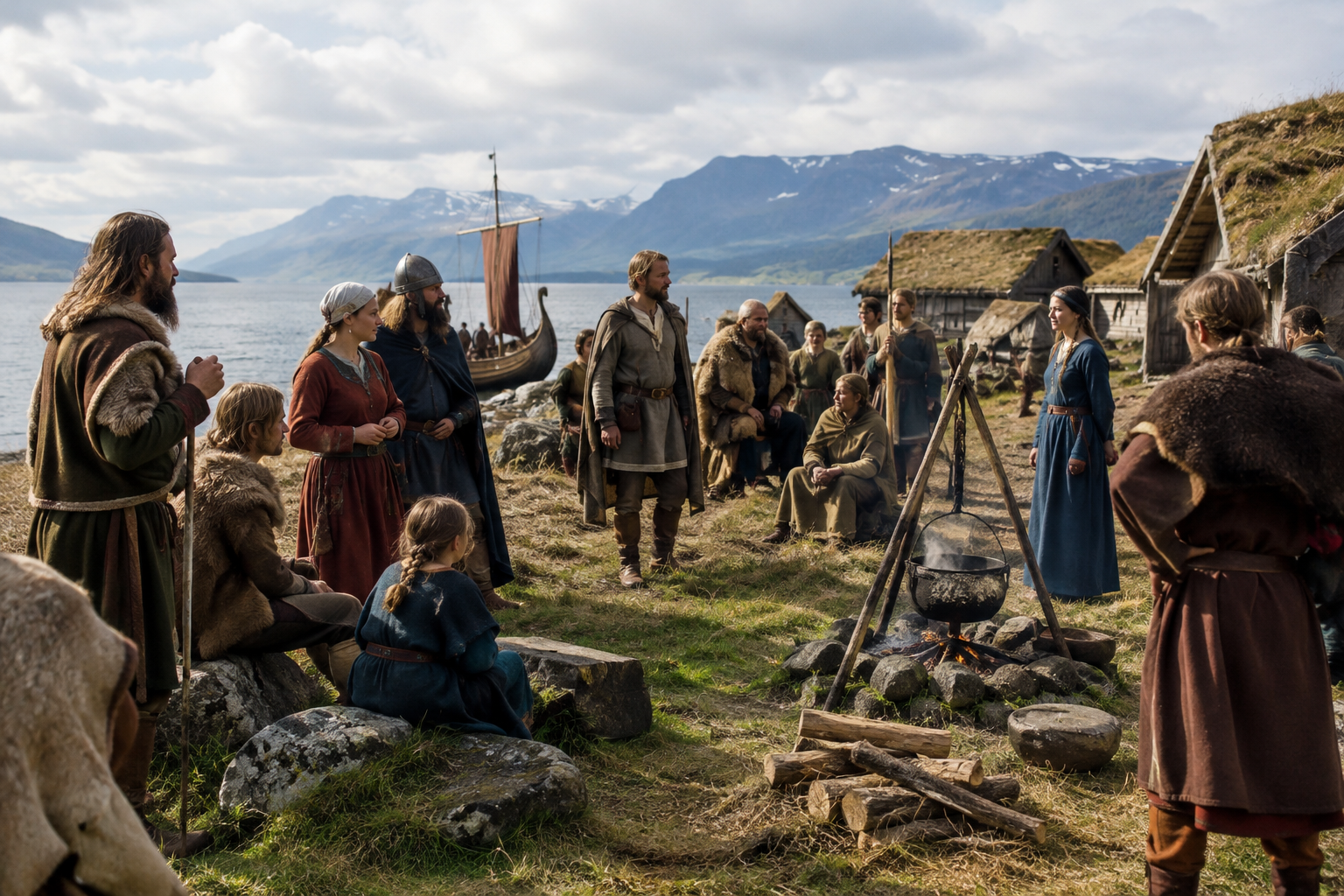
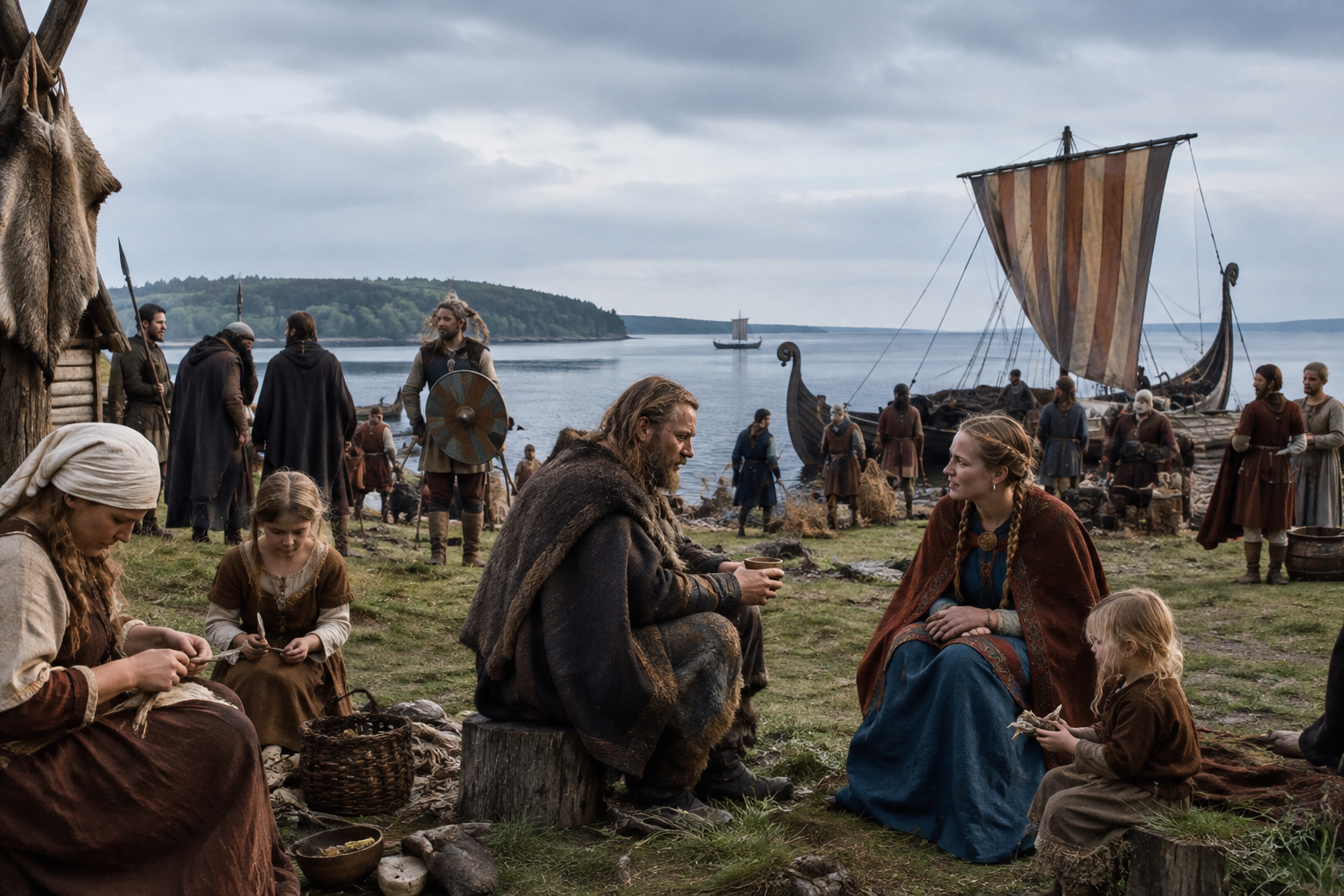
The northern evidence is just as revealing. In Scandinavia and the Baltic we see a chain of appearances stretching over a very long period: Olsund in Halsingland, Sweden, dated 2355 BC; CGG105622 and CGG105626 from Sund in Norway dated 1710 BC and 1175 BC; V14, X10, and X05 from Bronze Age Estonia; Turlojiske1 from Late Bronze Age Lithuania dated 905 BC; X04 from Iron Age Saaremaa dated 420 BC; Kivutkalns194 from Latvia dated 320 BC; CGG106804 from Jute-period Funen in Denmark dated 149 BC; CGG107005 from Iron Age Norway dated 224 AD; and CGG106774 from Viking Age Denmark dated 975 AD.
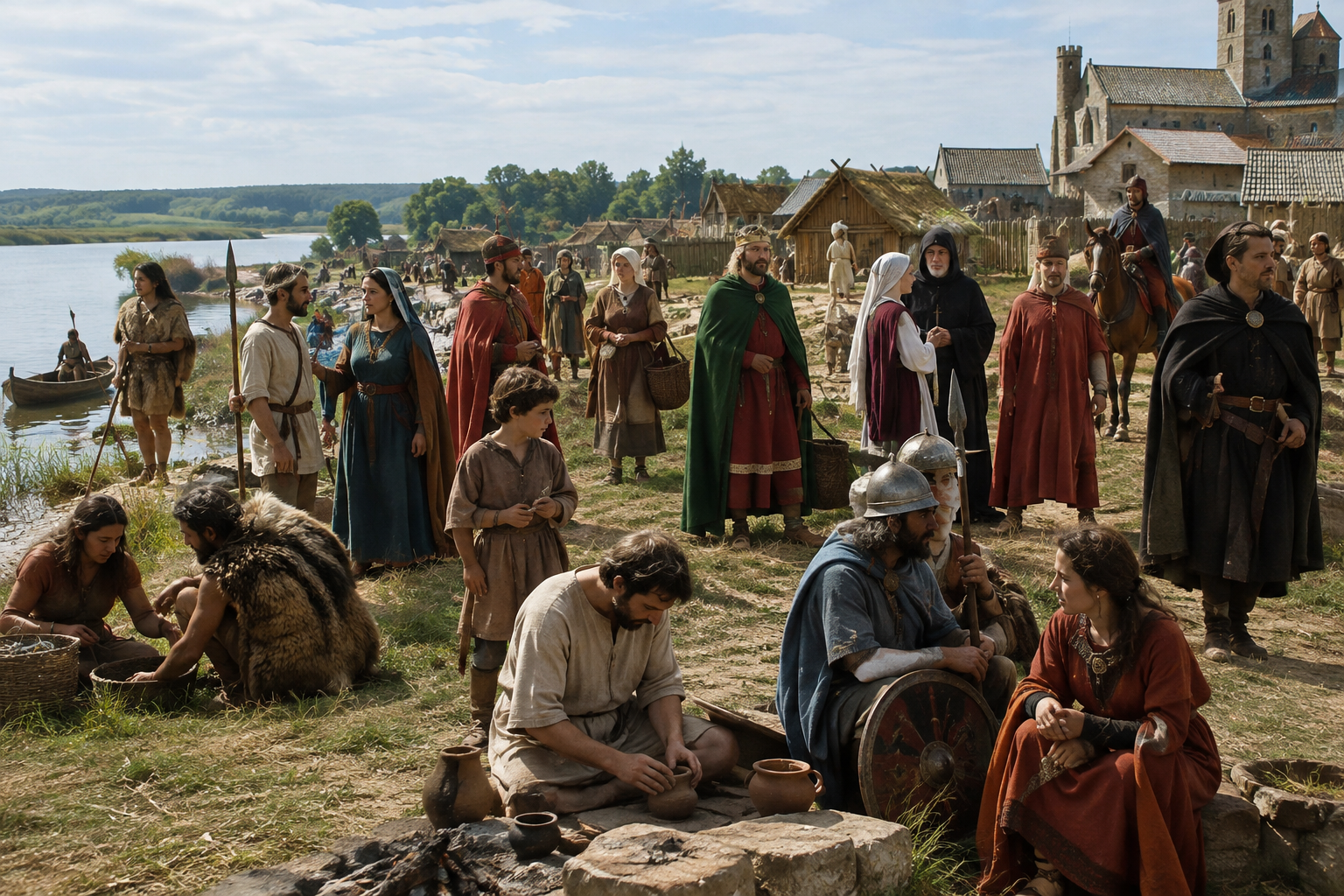
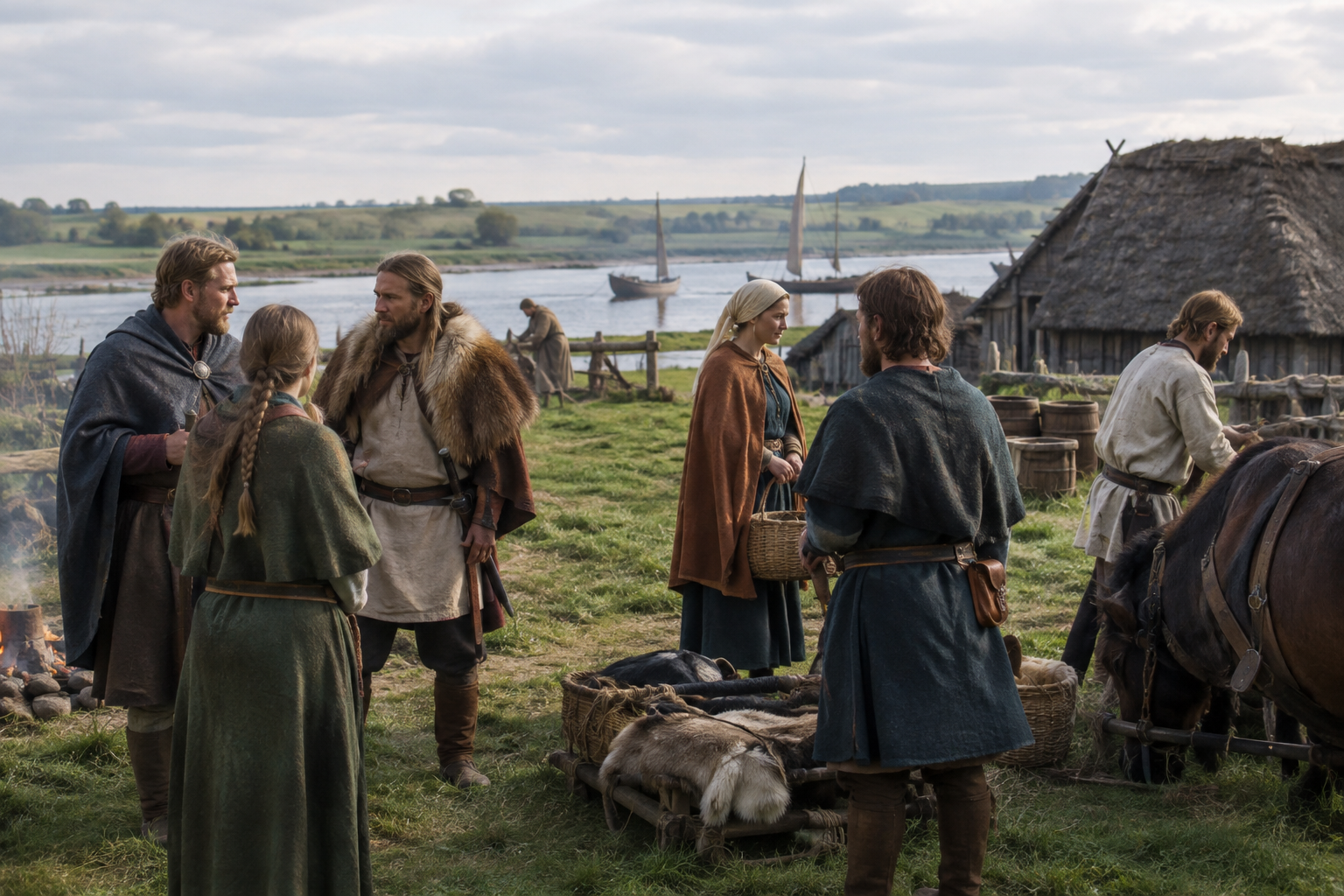
In eastern and central Europe, the medieval samples are equally suggestive. VK466 from Viking Age Gnezdovo in Russia dated 950 AD places the lineage in one of the key trading and military centers of the early Rus' world. In Saxony-Anhalt, western Slavic settler graves from Niederwuensch - NDW032, NDW007, NDW094, NDW056, NDW009, NDW016, NDW018, and NDW029, all dated 1100 AD - show repeated presence in a medieval Slavic-settled landscape west of the Elbe. Nearby, DRH014 from the Thuringii at Deersheim dated 500 AD adds another layer from the earlier post-Roman centuries.
So if there is a theme here, it is not conquest by one pure line. It is durability across borderlands: Baltic coasts, Scandinavian fjords, forest zones, river routes, and steppe corridors.
The supplied noble-family field is empty here, and that absence is actually useful to acknowledge. Too often, popular genetics rushes from an ancient haplogroup to a medieval dynasty as though centuries of migration, marriage, adoption, illegitimacy, and social reinvention did not exist. Without explicit family or castle data, it would be irresponsible to assign R1a1a1b to any named noble house.
Still, the historical backdrop is plain enough. Many of the regions in which this lineage appears - Thuringia, Bohemia, Poland, Hungary, the Baltic, Denmark, Russia, and the Ukrainian forest-steppe - later became landscapes of fortified seats, princely courts, and aristocratic lineages. Castles and noble genealogies preserve memory in one way; ancient DNA preserves another. The two can illuminate each other, but they are not interchangeable.
That distinction matters. A shared broad Y-DNA haplogroup does not prove direct descent from an ancient warrior in a kurgan, a Bronze Age chieftain in Thuringia, or a medieval settler in Saxony-Anhalt. What it can do is place a modern paternal line inside a much bigger map of historical possibility.
R1a1a1b is historically interesting because it keeps appearing where Eurasian history was being made on the move: among Bronze Age communities in Central Europe and Scandinavia, among Scythian and Saka burials from Ukraine to Kazakhstan, in the Roman and post-Roman frontier world of Hungary and Britain, and in medieval Baltic, Slavic, and Rus' contexts. It is a reminder that paternal ancestry can preserve deep patterns of mobility even when languages, identities, and political loyalties change.
For MyTrueAncestry users, that is the real attraction. A Y-DNA haplogroup does not hand you a costume, a flag, or a castle. It gives you a thread. Ancient DNA helps show where that thread has been found before, in real graves, in real landscapes, among real people who lived through the upheavals of prehistory and history.
If your own paternal line falls within this branch, or near it, MyTrueAncestry can help you explore whether your DNA shows connections to ancient individuals like UKR116, LEU021, BKB003, VK466, or the Niederwuensch settlers. Those matches do not prove direct descent or membership in any later noble family, but they can open a remarkably vivid window onto your place in the long human past.
Comments