Haplogroup R1a1a1

– 6 min read


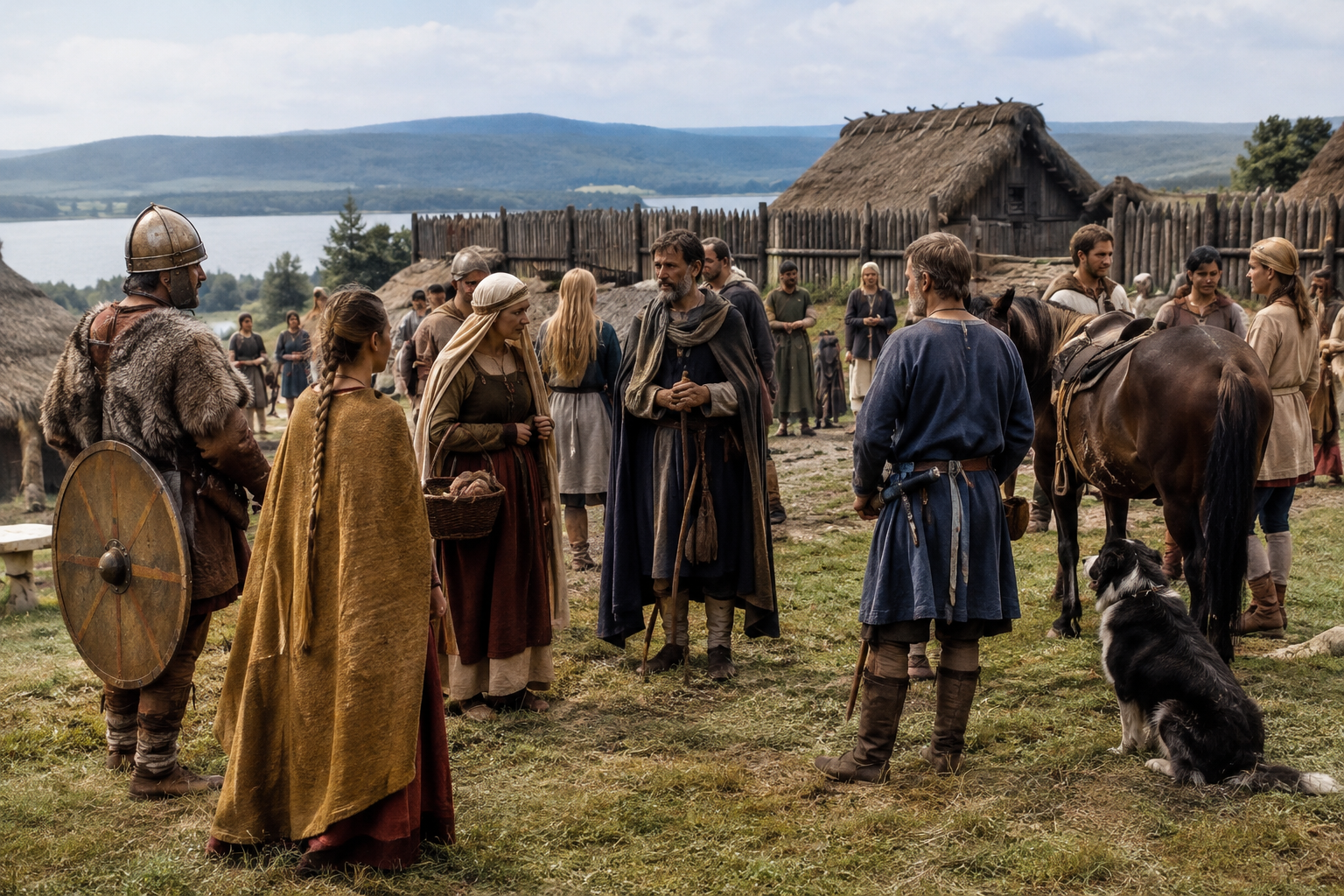
There are some Y-chromosome lineages that seem to sit quietly in the background of European and Eurasian history, and then there is R1a1a1. It appears in early farming frontiers, in Bronze Age central Europe, on the steppe among Iron Age horse cultures, in early medieval settlements, and later in the worlds of dynasties, kingdoms, and churches. Not because one single family ruled all of that - far from it - but because paternal lineages can persist, branch, travel, and reappear in strikingly different historical settings.
That is what makes R1a1a1 so interesting. In genetic terms, this is a Y-DNA haplogroup, meaning it traces one direct paternal line: father to son to son across generations. It is not a summary of a person's total ancestry, and it cannot by itself prove ethnicity, language, or noble descent. But when ancient DNA places related paternal branches in real graves, at real sites, in real historical landscapes, it gives us a rare tool for following part of the human past across thousands of years.
Broadly speaking, R1a belongs to a larger family of Y-chromosome lineages that became important across large parts of Eurasia. Ancient DNA has made clear that branches within this wider lineage were involved in major prehistoric population movements, especially those linked to steppe-related ancestry and to the spread of communities associated with the Corded Ware horizon in parts of Europe. For R1a1a1, the story is best told not as a single conquest tale, but as a long pattern of expansion, settlement, and regional continuity.
Some of the clearest early signposts come from central and eastern Europe. Samples such as RISE446, from Neolithic Germany Corded Ware Culture Bergrheinfeld dated to 2572 BC, and I0104 from Corded Ware Esperstedt Germany dated to 2370 BC, place this paternal line in the archaeological world often connected with profound demographic change in later prehistory. Other Corded Ware related finds - I7280 from Brandysek Czech at 2500 BC, I7207 from Czech Radovesice XVIII Axe CWC at 2450 BC, and Gyvakarai1 from Battle Axe Gyvakarai at 2545 BC - show just how broad that northern and central European distribution could become.
These are not "the first R1a men," nor do they settle every argument about origins. But they do show that by the later 3rd millennium BC, paternal lines within this branch were already well established in communities stretching from Germany to the eastern Baltic.
Explore Battle Axe and Corded Ware DNA
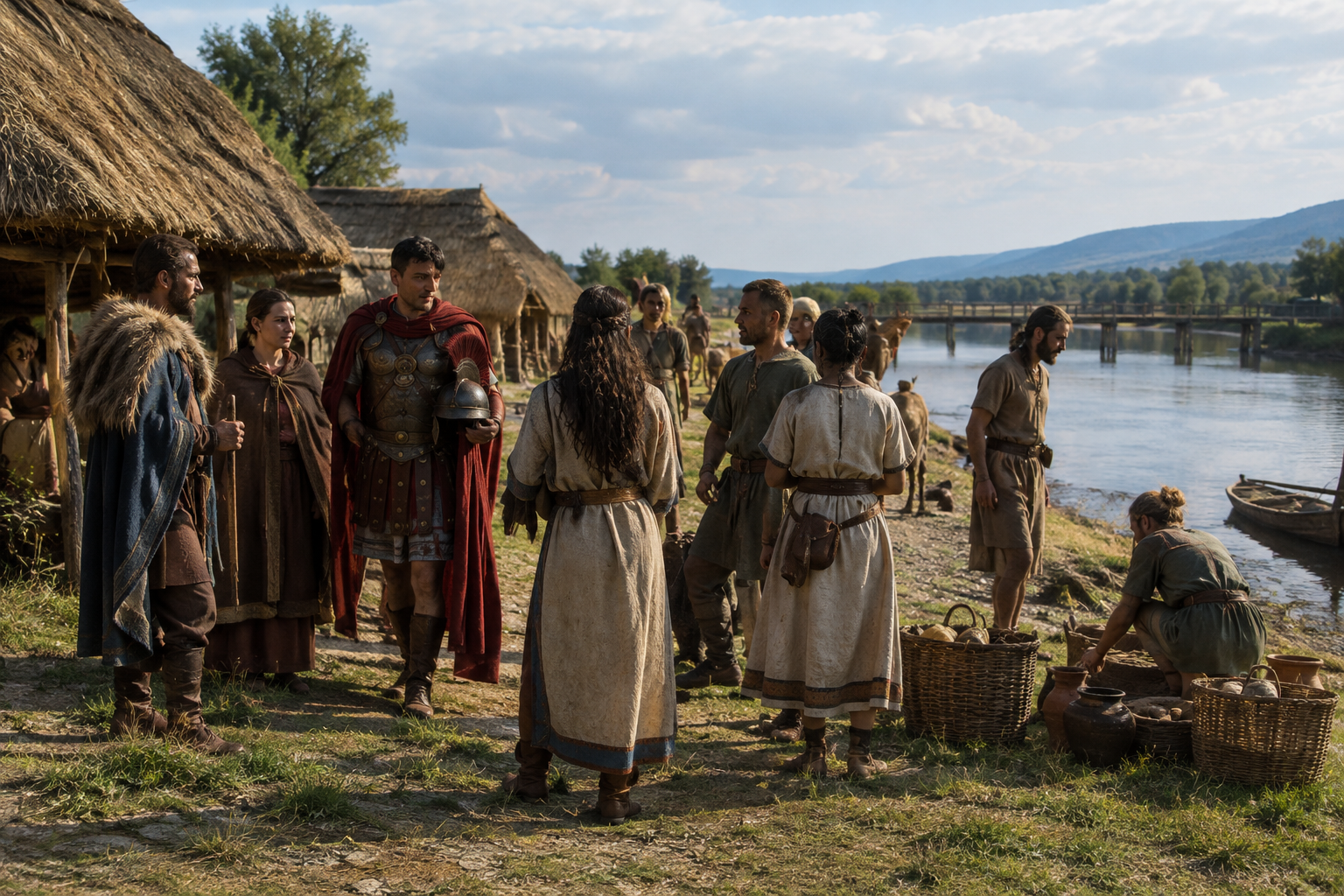
If the Corded Ware horizon marks one important stage, the Bronze Age shows what happened next: these paternal lines did not vanish. They became part of the social fabric of central Europe. At Leubingen Sommerda in Thuringia, Germany, two Bronze Age Unetice individuals, LEU008 and LEU033, are dated to 1950 BC. The Unetice world was one of early metalworking, elite burial traditions, and increasingly stratified societies. Finding this lineage there helps bridge the gap between late Neolithic mobility and the more settled hierarchies of the Bronze Age.
The same pattern appears in Bohemia and neighboring regions. There is I11158 from Early Bronze Age Czechia Praha-Jinonice Prague at 2075 BC, I7203 from Bronze Age Prague Jinonice Czech at 1950 BC, and I5037 from Bronze Age Czech Moravska Nova Ves at 2100 BC. Later examples continue into developed Bronze Age contexts: CAH005 from Bronze Age Prague Czech CWC at 1900 BC, BUT003 at 1880 BC, and VLI016 from Bronze Age Vlineves Bohemia CWC at 1500 BC.
One especially vivid setting is the Tollense Valley Battlefield in Mecklenburg-Vorpommern, where WEZ56 is dated to 1250 BC. Here R1a1a1 appears not in a tidy cemetery but in the wreckage of conflict. It is a useful reminder that haplogroups are carried by individuals living through very different historical realities: farmers, warriors, local elites, settlers, and perhaps victims as well.
Read about Late Bronze Age Central Europe
By the Iron Age, the geographical spread of this lineage looks even more impressive. In the Eurasian steppe, R1a1a1 turns up in elite and mobile cultures often associated with horse warfare and long-distance exchange. SHI008, an Elite Scythian Saka individual from Shilikty East Kazakhstan, is dated to 750 BC. Nearby in time and space are DA130 from the Eurasian Steppes Saka Scythian world at 775 BC and ESZ004 from Eleke Sazy East Kazakhstan at 550 BC. Add CLK001 from Iron Age Shalkar Kazakhstan at 500 BC and AIG002 from Iron Age Aigyrly Sanctuary Sarmatian Period at 450 BC, and one can see this paternal line operating in the great corridor between Europe and inner Asia.
That does not mean all steppe nomads were R1a1a1, nor that everyone carrying it was a Scythian or Sarmatian. But it does show that this branch formed part of the paternal landscape in societies that classical authors found so strikingly foreign.
Meanwhile, across northern Europe and the Baltic, the lineage appears in other guises: CGG106525 from Proto-Jute Iron Age Denmark Jutland Sosing at 218 BC, CGG106747 from Baltic Iron Age Denmark Bornholm Island Slusegard at 375 AD, X02 from Baltic-Slav Bronze Age Estonia at 1000 BC, X12 from Late Bronze Age Ida-Viru Estonia at 800 BC, and VIII8 from Iron Age Ingria at 130 AD. This is less a neat migration arrow than a map of persistence across a broad northern zone.
Discover Iron Age Scythian elite DNA
What makes ancient DNA so satisfying is that it does not stop before written history begins. R1a1a1 also appears in the more crowded and politically messy centuries of late antiquity and the Middle Ages. In Pannonia, GYS005 from Arrabona Szechenyi Square Hungary is dated to 425 AD and labeled an Invader Late Antique individual. In Iberia, I20270 from Early Visigothic Spain Girona Sarria de Ter Pla de lHorta at 475 AD places the lineage in the world that followed Rome's western collapse.
There are also medieval cases in regions later associated with Slavic and Baltic populations: NDW014, NDW102, NDW067, and NDW072 from Medieval Germany Sachsen-Anhalt Western Slav Settler Niederwuensch, all dated to 1100 AD; 0LS03 from Medieval Estonia Kukruse Ida-Viru County Toila Kabelimetsa Village at 1210 AD; and ILS01 from Late Medieval Livonia at 1560 AD. These are useful anchors for understanding why certain branches of R1a became historically associated with eastern and northeastern Europe, even though their older record is much wider.
England too enters the picture. I20673 from a Jute Anglo Saxon Cemetery West Heslerton Yorkshire dated to 550 AD, ATP_PSN_723 from Late Medieval England All Saints at 1150 AD, and ATP_PSN_881 from Early Modern Period England Providence Calvinist Baptist Chapel at 1833 AD remind us that paternal lines travel with people, not with modern maps.
One especially intriguing medieval case is PCA0254, a Piast Dynasty individual from Greater Poland Poznan Srodka Lad dated to 1100 AD. This does not prove that all Piasts shared the same Y-line, nor that any modern man with R1a1a1 descends from them. But it does place this paternal lineage in the orbit of one of medieval Europe's most important ruling houses.
Explore the Piast dynastic DNA story
The supplied noble-family field here is notably sparse, so caution matters. That in itself is rather instructive. Genetics often gives us ancient male-line evidence long before we can securely join it to heraldry, castles, or pedigrees. A medieval dynasty like the Piasts, represented here by PCA0254, is historically rich because it belongs to a world of court politics, ecclesiastical foundations, fortified centers, and emerging states. But a haplogroup alone cannot rebuild an entire family tree.
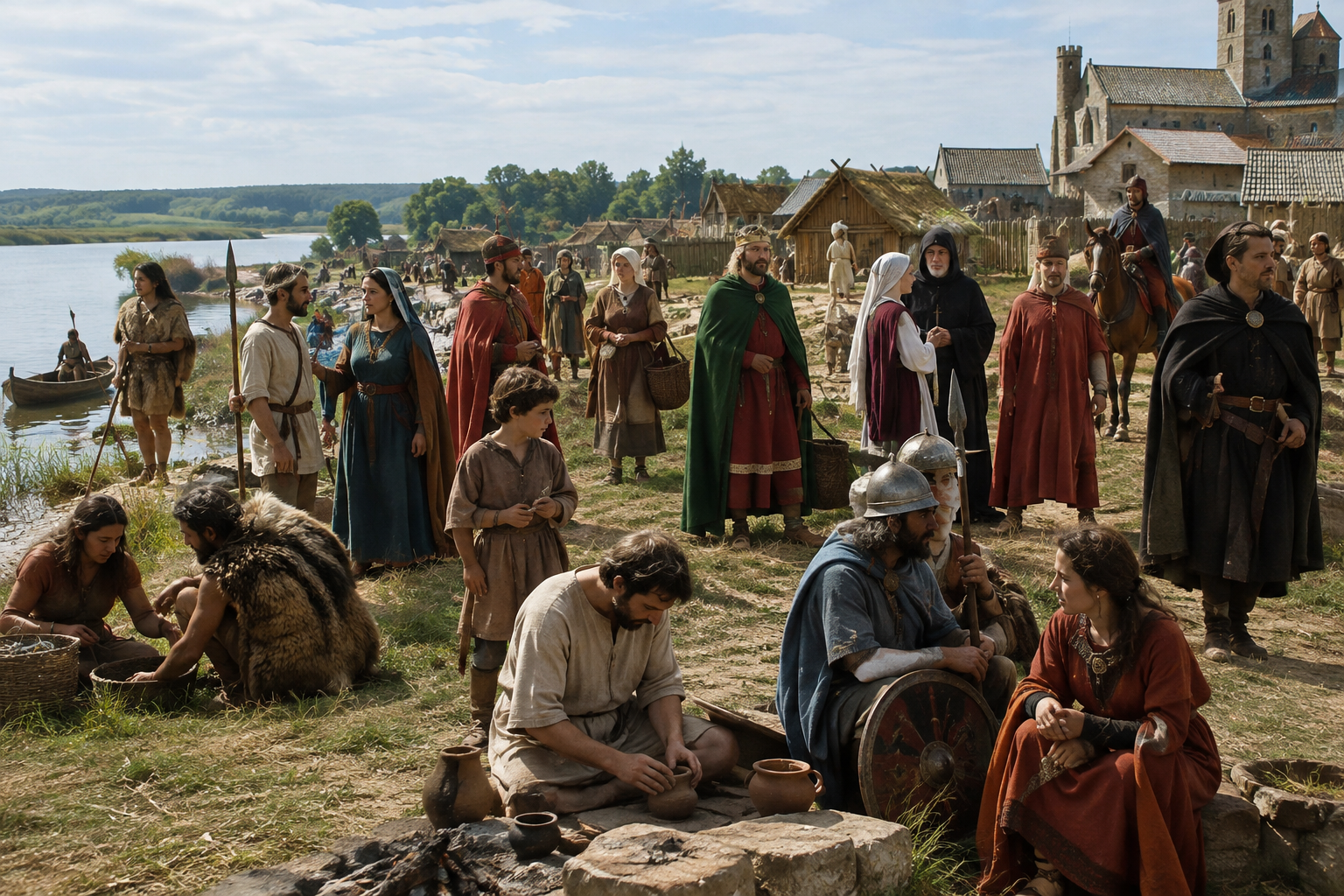
What it can do is offer context. When a lineage appears in Bronze Age Bohemia, in steppe elites of Kazakhstan, among western Slavic settlers in Sachsen-Anhalt, and in a Piast-period burial in Greater Poland, we begin to see how the paternal history behind medieval lordship was often far older than the castle walls themselves. Dynasties rose within landscapes already shaped by centuries of settlement, intermarriage, migration, war, and local continuity.
So if readers come to R1a1a1 hoping for a single "royal haplogroup," they will be disappointed. The truth is much more interesting. This is a lineage found in multiple historical worlds, sometimes among elites, sometimes among ordinary communities, and sometimes in frontier zones where identities were being remade.
R1a1a1 is a fine example of what Y-DNA does best. It does not tell the whole story of a person, but it can illuminate one very specific story with unusual clarity: the persistence of paternal lines across time. In this case, that story stretches from late 3rd millennium BC Corded Ware contexts such as I0104 and RISE446, through Bronze Age central Europe at Leubingen and Prague, into Iron Age steppe groups like SHI008 and ESZ004, and onward into medieval Poland, Estonia, Germany, and England.
That range is precisely why ancient DNA has transformed the study of the past. Written records begin late, and noble pedigrees are selective and often political. DNA from burials gives us another archive altogether: one that can link broad regions and long eras, while still demanding caution about direct descent. Shared haplogroups can indicate deep paternal relatedness at some point in the past, but they do not by themselves prove that one man was the ancestor of another, let alone of an entire noble house.
If you want to see how your own DNA might connect with ancient individuals, archaeological cultures, and historical populations like the ones discussed here, MyTrueAncestry offers a remarkable way into the evidence. You may discover genetic similarities to ancient samples from central Europe, the steppe, the Baltic, or the medieval world - fascinating clues to deep ancestry, even when they do not amount to a documented family tree or proof of noble descent.
Comments