Haplogroup Q1b2b1b2

– 5 min read


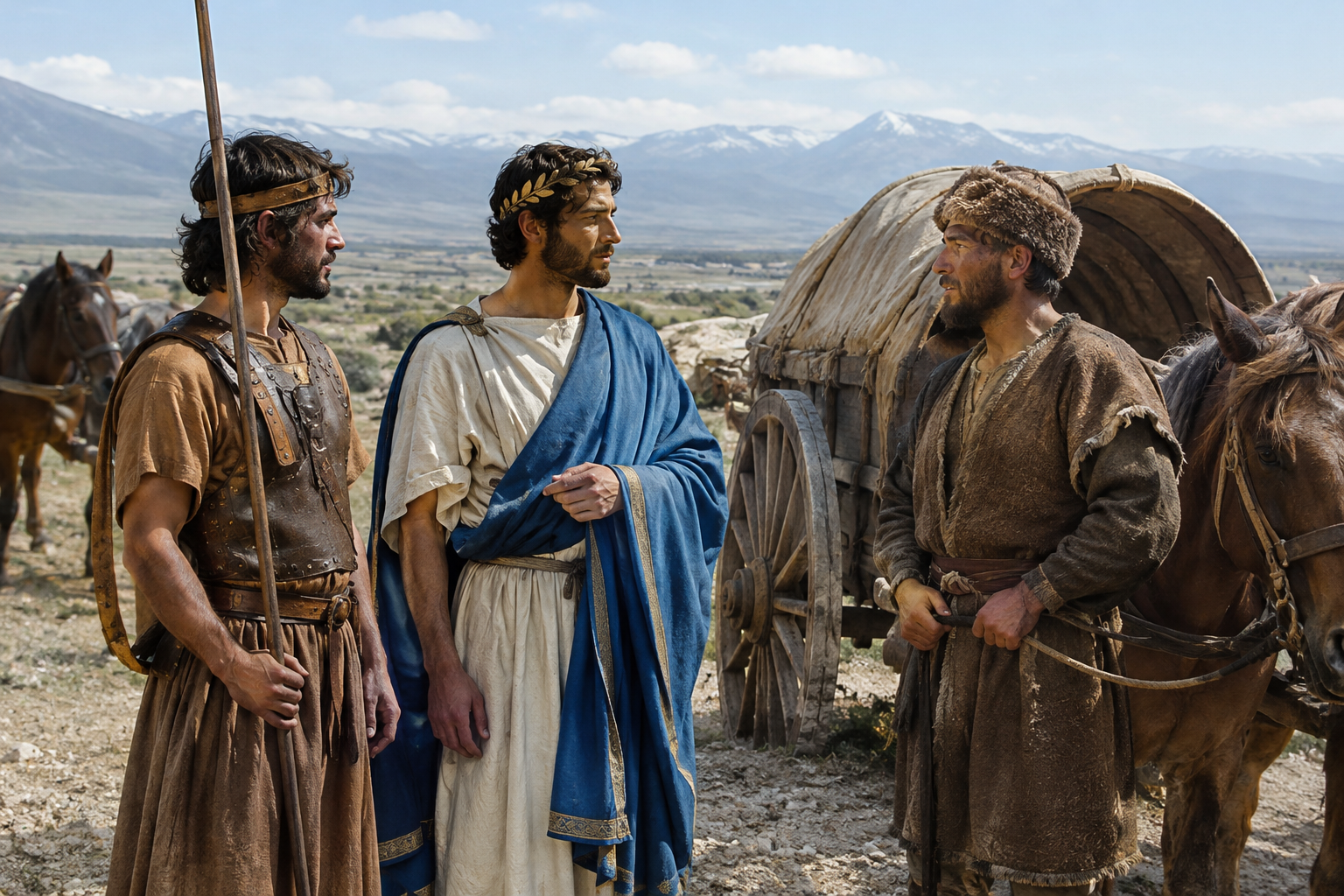
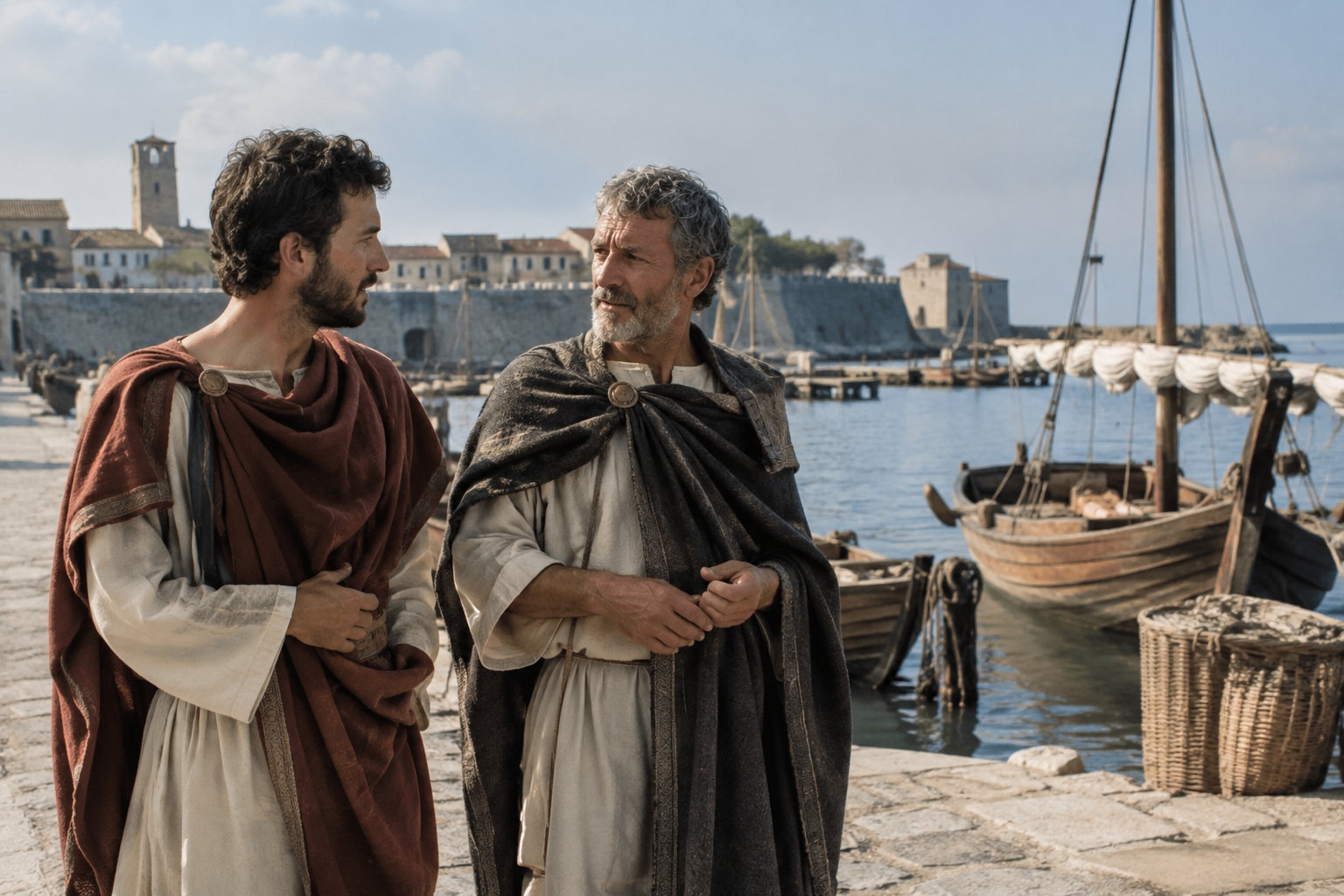
The most arresting clue for haplogroup Q1b2b1b2 in this small ancient record set comes from the Levant, not the far north or the deep steppe. Sample SFI-5, dated to around 160 BC at Saifi in Lebanon, places this paternal line in a Hellenistic eastern Mediterranean setting: a world of ports, armies, merchants, old Phoenician cities, and new Greek-speaking political orders layered on top of them.
That matters because Q lineages are often discussed in very broad terms, as though one sweep of prehistory could explain them all. But a branch as specific as Q1b2b1b2 has to be handled much more carefully. Y-DNA tracks one direct paternal line only, and the three ancient men associated here do not give us a neat ethnic label or a single migration story. What they do offer is something more interesting: a glimpse of a paternal line moving across very different archaeological worlds, from the Bronze Age steppe to the Late Bronze Age interior of Asia and into Hellenistic Lebanon.
SFI-5 is the latest of the three ancient individuals linked here, and in some ways the most historically evocative. By the second century BC, the Lebanese coast sat inside a densely connected zone shaped by the aftermath of Alexander's conquests, the Seleucid sphere, older Levantine urban traditions, and seaborne links running in several directions at once. A man carrying a Q-derived paternal lineage in this context is a useful reminder that Hellenistic populations were not genetically simple, and certainly not uniform.
What we should not do is overread the evidence. One Y-chromosome result does not make SFI-5 "a steppe man," "an Iranian," or "a foreign mercenary" by itself. It tells us only that his direct paternal ancestry belonged to a branch associated here with Q1b2b1b2, while his full ancestry, language, social identity, and family history would have depended on a much wider web of ancestors than one paternal line can show.
Still, the setting is revealing. Lebanon in the Hellenistic period was not peripheral; it was a crossroads. That is exactly the kind of place where an unusual paternal lineage can appear without needing a dramatic conquest narrative to explain it.
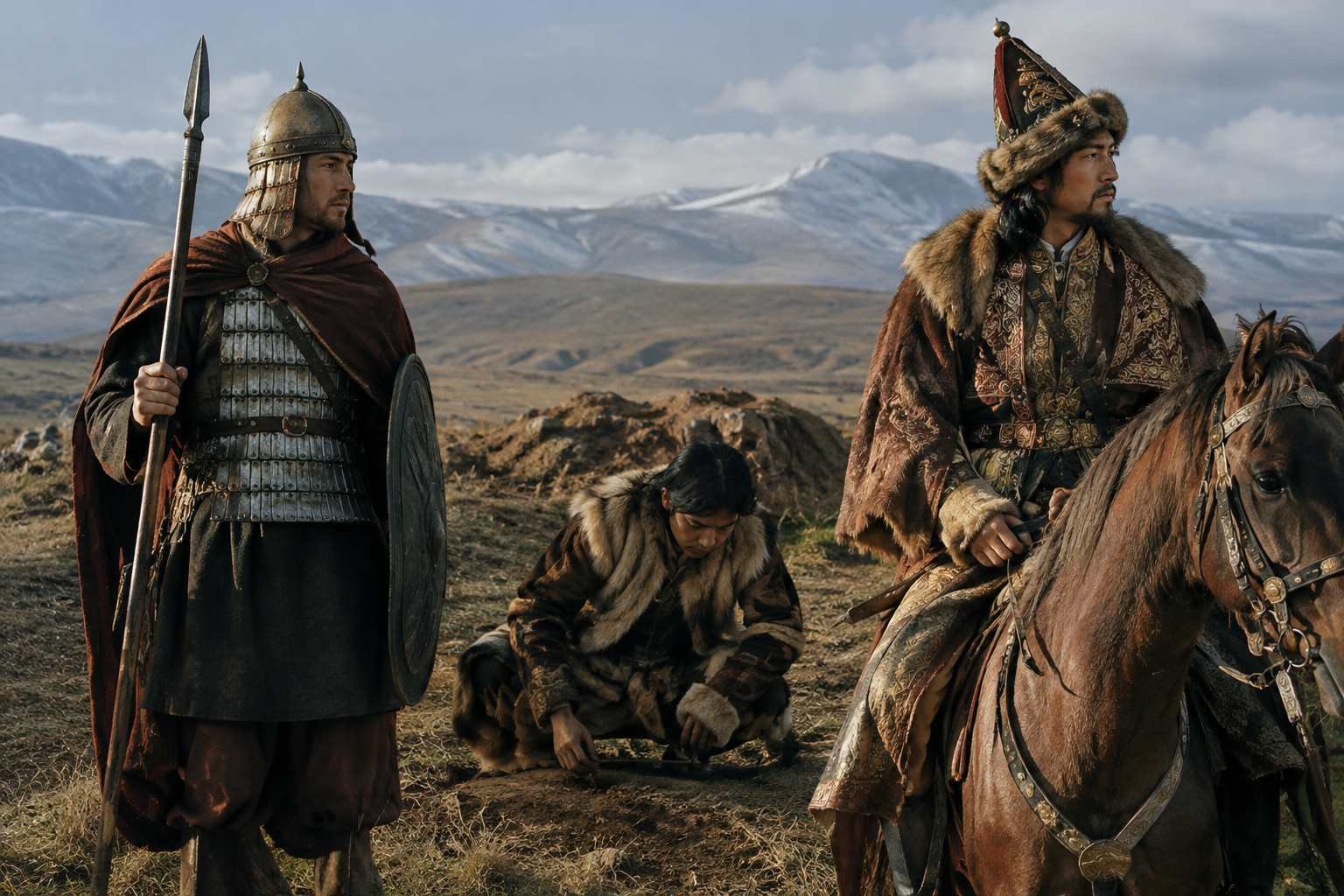
The earlier sample I6717, identified as Late Bronze Age Karasuk and dated here to about 1650 BC, takes us far from the Levant into the interior of Eurasia. The Karasuk cultural horizon is generally associated with southern Siberia and adjacent steppe-forest regions, an area crucial to understanding long-distance contacts across Bronze Age Asia. Even when the archaeological labels are broad, the significance is clear enough: this is a setting of mobility, metalworking traditions, and cultural exchange on a large scale.
For Q1b2b1b2, I6717 matters because it places the branch, or a lineage reported in association with it, within an inland Bronze Age zone that has often produced evidence of mixed populations and overlapping networks rather than isolated tribes. That does not mean every later carrier of this haplogroup descends from Karasuk groups in any simple way. It does mean that one of the securely ancient contexts for this paternal line lies in a region central to Bronze Age Eurasian interaction.
A genetic study of ancient populations across Inner Asia, published in Science, helped show just how dynamic these Bronze and Iron Age worlds were. Even without forcing sample I6717 into a grand migration slogan, the broader lesson stands: inland Asia was a patchwork of contact zones, and paternal lineages could persist, diversify, and travel through them over very long spans of time.
The oldest sample in this group is SA6004, described as the Steppes Maykop Wagon Driver and dated here to around 3400 BC. That phrase alone is enough to catch the imagination, but the important point is archaeological, not romantic. The Steppe Maykop horizon belongs to the early Bronze Age societies north of the Caucasus, a region famous for early mobility, exchange, and technological experimentation.
If the reported association with Q1b2b1b2 is sound at this level, SA6004 would push this paternal signal into a very early context indeed. But caution is especially important here. Ancient Y-DNA assignments can vary in resolution, and a very specific modern-style subclade label is sometimes firmer in one sample than another. It is safest to say that SA6004 connects the wider paternal story behind this branch to the north Caucasus-steppe world of the fourth millennium BC, rather than pretending we can reconstruct a continuous family line from that wagon driver to later men in Siberia or Lebanon.
Even so, the combination is striking. Steppe Maykop is not the same world as Karasuk, and neither is the same as Hellenistic Saifi. Yet all three settings involve movement, exchange, and frontier-making in one form or another. That pattern is historically plausible and archaeologically meaningful.
With only three ancient points, this is not a lineage that can yet be narrated as a tidy map arrow. But the spread of contexts is informative. One appearance lies in an early Bronze Age steppe-Caucasus setting, another in the Late Bronze Age interior of Asia, and a third in the Hellenistic Levant. That is not proof of one straight migration route. It is evidence that the paternal background of Q1b2b1b2 belonged to the broad northern and inner Asian worlds often implicated in long-range prehistoric mobility, while later turning up in a Mediterranean coastal population where many ancestries met.
That last point is worth lingering over. Ancient DNA keeps complicating older ideas that ancient populations were bounded, local, and easily named. A Lebanese burial of the Hellenistic period can carry a paternal lineage with deeper connections to Eurasian inland history without becoming any less Lebanese in archaeological context. The same principle appears again and again in ancient genomics: local societies were often made up of lineages with surprisingly wide backgrounds.
Research on Near Eastern and eastern Mediterranean ancient populations, including work published in the American Journal of Human Genetics, has helped sharpen that wider picture of mixture and continuity in the region. For a lineage like Q1b2b1b2, that broader scientific backdrop is useful because it discourages simplistic one-origin storytelling.
Archaeologically, the jump from SA6004 to SFI-5 is almost dizzying. One belongs to a prehistoric steppe milieu associated with early wagons and north Caucasus interaction spheres; the other to a literate Hellenistic society on the Mediterranean coast. Yet that is precisely why rare or less frequently discussed paternal lines matter. They show that human history was not assembled from sealed populations passing tidy labels from age to age.
It is also a reminder that Y-DNA branches do not respect the neat borders drawn by later historians. Men carrying related paternal lines could be absorbed into new languages, kingdoms, and social systems many times over. By the time we reach Saifi in Lebanon, any very ancient steppe connection would have been buried beneath countless generations of marriages, migrations, and cultural change.
For someone exploring haplogroup Q1b2b1b2 today, the most defensible takeaway is not a single tribe or dynasty, but a pattern of deep Eurasian reach. The ancient men associated with this branch appear in very different settings, from the Steppe Maykop horizon to the Karasuk world and then the Hellenistic Levant. That makes Q1b2b1b2 a good example of how one paternal line can pass through multiple archaeological landscapes over millennia, leaving a trail that is fragmentary, wide-ranging, and far more cosmopolitan than older histories once allowed.
Comments