Haplogroup Q1b1a1a1h1a

– 5 min read


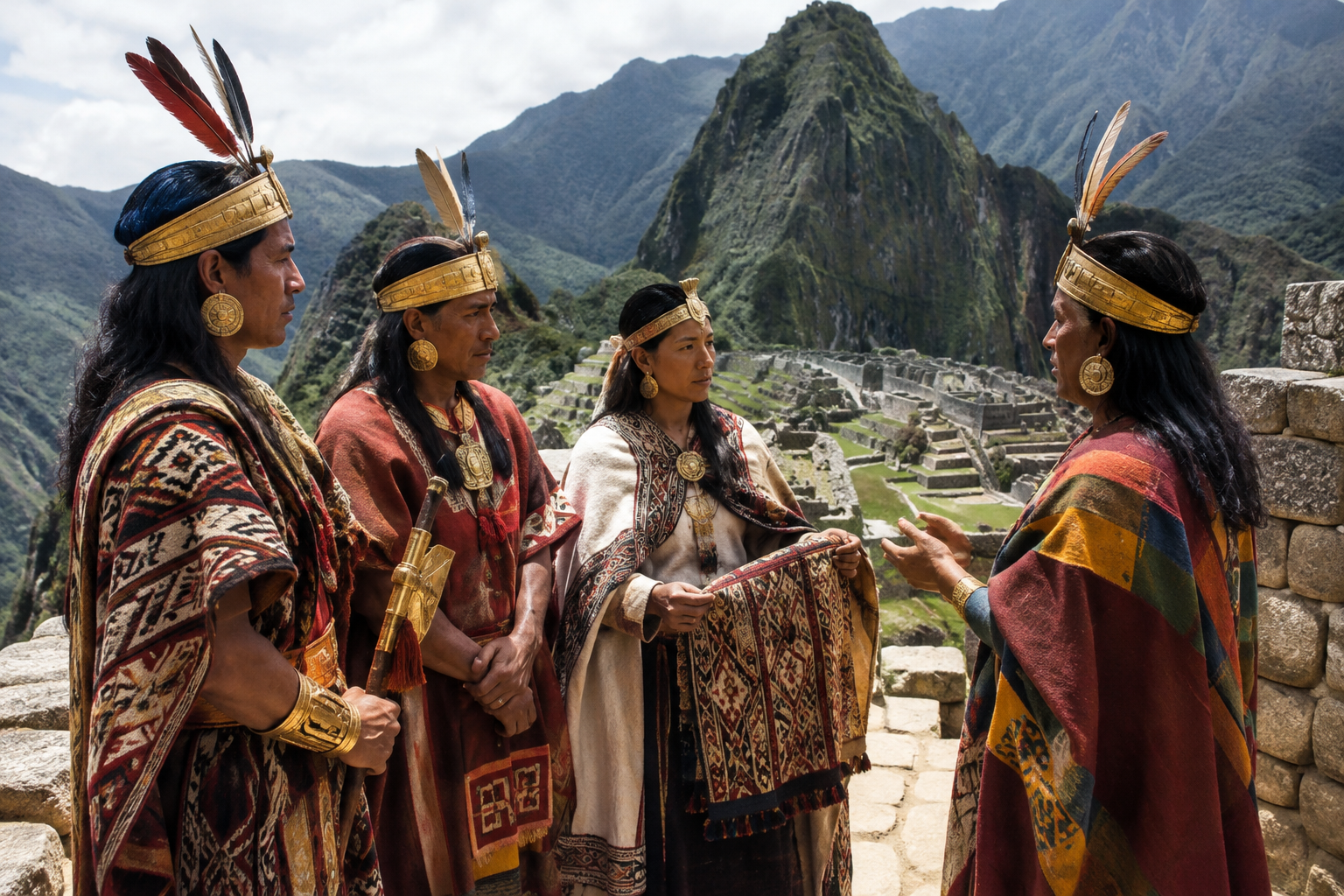
At Ollantaytambo in the Cusco region of Peru, three men dated to around AD 1500 - OTT-1187, OTT-1160, and OTT-1144 - carry an unusually tight piece of paternal evidence. All are associated here with the Y-DNA haplogroup Q1b1a1a1h1a, and all come from one of the best known places in the Inca heartland: a royal estate, fortress, and living town folded into the Sacred Valley. That makes this lineage interesting at once, because it is not turning up in some vague "ancient Americas" setting, but in a sharply historical Inca landscape on the eve of Spanish invasion.
A fourth sample, MP45a from Machu Picchu, also dated to around AD 1500, points in the same direction. These are late, highland Andean men from major Inca-period sites, not remote Ice Age pioneers. For anyone exploring Q1b1a1a1h1a today, that is the key starting point: this branch belongs within the wider Native American Y-DNA world of haplogroup Q, but the evidence here places the specific story we can actually tell in the late pre-Columbian Andes.
Ollantaytambo is one of those sites that can be flattened by tourism into a postcard, when in fact it was a serious political place. In the Inca period it stood in a strategic valley corridor northwest of Cusco, combining agricultural terraces, ceremonial spaces, elite architecture, and military significance. To find three men from around the same period and place associated with Q1b1a1a1h1a does not prove a dynasty, a clan, or close kinship by itself - but it does suggest that this paternal line was part of the male population moving through, living in, or serving within the imperial core.
The three sample IDs matter because repetition matters. One isolated Y-chromosome result can be a curiosity. Three from the same major center begin to look like a local pattern, or at least a recurring paternal presence. In practical terms, Y-DNA tracks one direct male line only, not a person's whole ancestry, but repeated finds still help anchor that line in a real historical community.
The broader archaeological significance is that Ollantaytambo belongs to the mature Inca world, not to a shadowy prehistory beyond names and institutions. By AD 1500, this was a state with roads, storehouses, labor obligations, resettlement policies, and strong regional administration. A Y-lineage found there may reflect ordinary local descent, movement within the empire, or both.
Ancient DNA from Chincha, Peru
The Machu Picchu sample MP45a adds a different sort of weight. Machu Picchu was not simply an isolated mountaintop monument; it was an Inca royal and ceremonial settlement connected to wider imperial networks. A man from that site, again around AD 1500 and again associated here with Q1b1a1a1h1a, shows the branch appearing at another emblematic center of Inca power and ritual geography.
That is important because Machu Picchu and Ollantaytambo were linked within the same wider political landscape but were not identical places. One was a major valley settlement and stronghold; the other a more secluded high-status complex in the mountains. When the same haplogroup appears in both settings, it becomes easier to place Q1b1a1a1h1a inside the social world of the late Inca rather than treating it as a purely local oddity.
Research on ancient individuals from Machu Picchu and the Inca sphere has helped underline how much mobility could exist within imperial Peru, even when communities remained strongly rooted in place. A genetic study of these populations, published in Science Advances, is the key scientific context behind the site-based picture here, even if any single Y-line must still be interpreted carefully.
It is tempting to treat a long haplogroup label as if it came with a ready-made migration map. Better to resist that. The secure point is that Q1b1a1a1h1a sits within haplogroup Q, the dominant paternal macro-lineage across much of the Indigenous Americas. The narrower branch name, however, should not automatically be loaded with every story ever told about haplogroup Q as a whole.
In other words, the famous deep-time history of the peopling of the Americas belongs to very broad ancestral layers. These Inca-period samples are telling us something more specific and more modest: one downstream paternal branch was present among men in the Cusco region at major Inca sites around AD 1500. That is a useful finding precisely because it is concrete.
For descendants and testers, this distinction matters. A match to Q1b1a1a1h1a does not make someone "Inca" in a simple ethnic or political sense. What it does do is place one direct paternal line within a branch that is documented in the late Andean imperial world, among ancient men connected with two of its most famous places.
Indigenous Andeans and adaptation
There is something especially valuable about dates around AD 1500. They bring us right up to the threshold of colonial transformation. So often ancient DNA in the Americas gives us deep prehistory, which is enormously important but can be difficult to connect to named societies. Here, by contrast, the context is unmistakably historical. These men lived in the final generations of an empire described in chronicles, mapped in roads, and still visible in stone.
That timing also makes these samples useful for thinking about continuity. They show that Q1b1a1a1h1a was present in the Andes before the demographic upheavals triggered by conquest, epidemic disease, forced resettlement, and colonial labor systems. So this is not merely a post-contact survival story. It is a pre-contact paternal line already established in one of the great state societies of the Americas.
There is also a methodological point here. Because the four samples are all late and all from high-profile Inca locations, they do not yet let us trace the branch back through every earlier Andean culture. They illuminate a particular historical horizon very well, while leaving earlier stages of the lineage's regional history open for further discovery.
One of the pleasures of archaeogenetics is that it can rescue famous places from becoming too monumental. Machu Picchu and Ollantaytambo are often discussed through architecture, kingship, engineering, and conquest. But lineages like Q1b1a1a1h1a remind us that these sites were full of actual people: men with fathers, grandfathers, and longer paternal histories carried through communities over generations.
The cluster is small, of course, and small clusters should be handled with care. Still, there is a difference between abstract imperial history and the stubborn detail of sample IDs - OTT-1187, OTT-1160, OTT-1144, and MP45a. They give the branch a foothold in the ground, at two places where Inca authority, landscape planning, and social organization are unusually visible.
Pre-Columbian Bolivia and ancient DNA
The most distinctive thing we can say about Q1b1a1a1h1a from the evidence here is not that it ruled an empire or names a royal house, but that it appears repeatedly among men from the late Inca heartland, including Ollantaytambo and Machu Picchu around AD 1500. That places this direct paternal line inside a historically recognizable Andean world at exactly the moment before that world was violently remade. For someone researching this haplogroup today, that is a meaningful clue: one branch of your paternal story may connect, not vaguely to the Americas in general, but quite specifically to the high Andes and the human landscape of the Inca age.
Comments