Haplogroup O2a2

– 5 min read


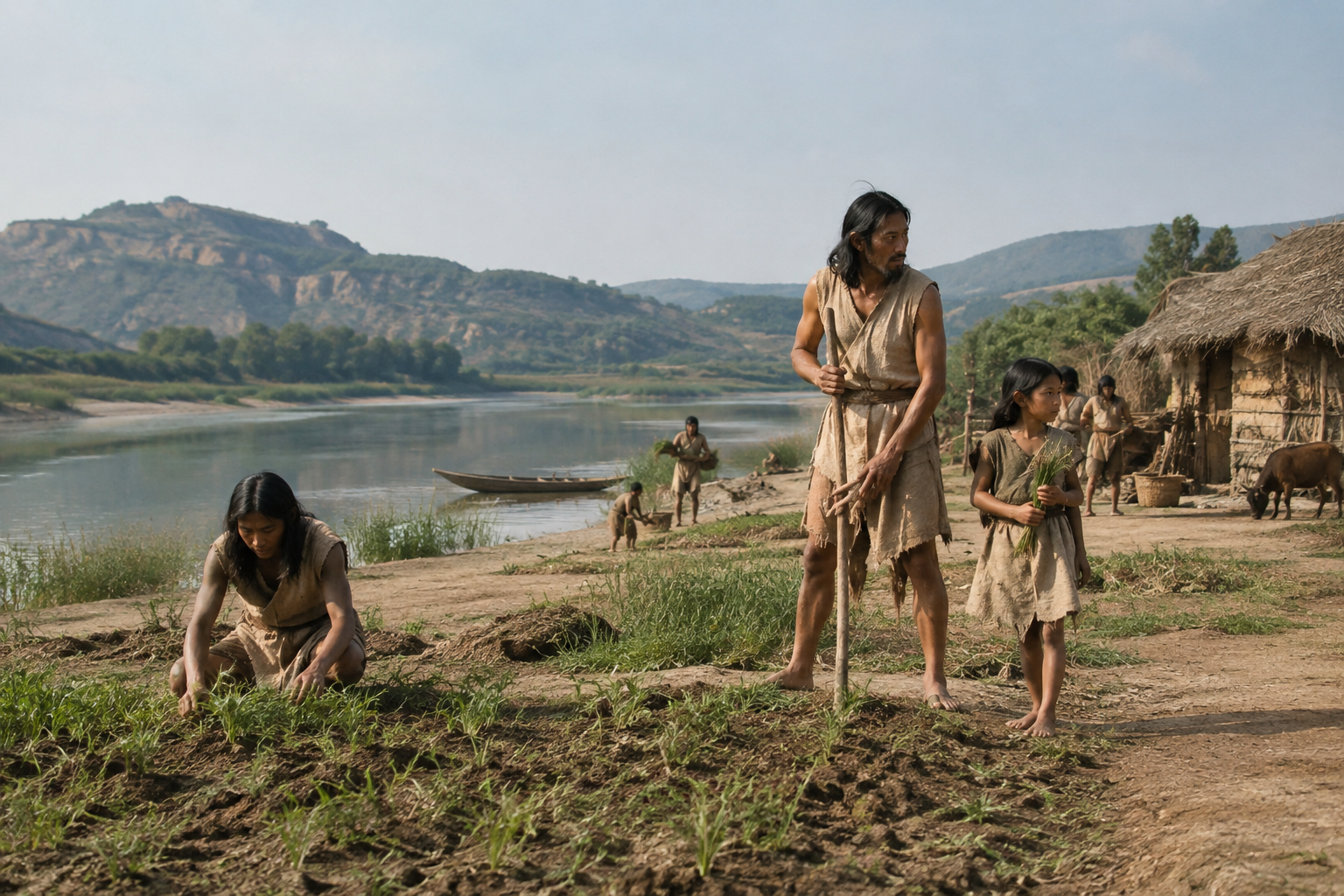
At Baligang, near the Tuan River in Henan, one Late Neolithic man has become unexpectedly important for the history of East Asian paternal lines. Sample BLG_M13-87, dated to around 3000 BC, is reported in connection with Y-DNA haplogroup O2a2. That is a small piece of evidence, to be sure, but it is a very revealing one: it places this paternal branch in the Middle Yellow River world at a time when farming villages, regional traditions, and population networks were helping shape the long prehistory of northern China.
The interest of O2a2 here is not that one burial can stand for an entire civilization. It plainly cannot. The interest is that Baligang sits in one of the great corridors of early Chinese prehistory, where archaeologists and ancient-DNA researchers can begin to compare paternal lineages with settlement history, farming expansion, and long-term regional continuity. Y-DNA tracks only one direct male line, not a person's whole ancestry, but even that narrow line can be historically useful when it appears in the right place at the right time.
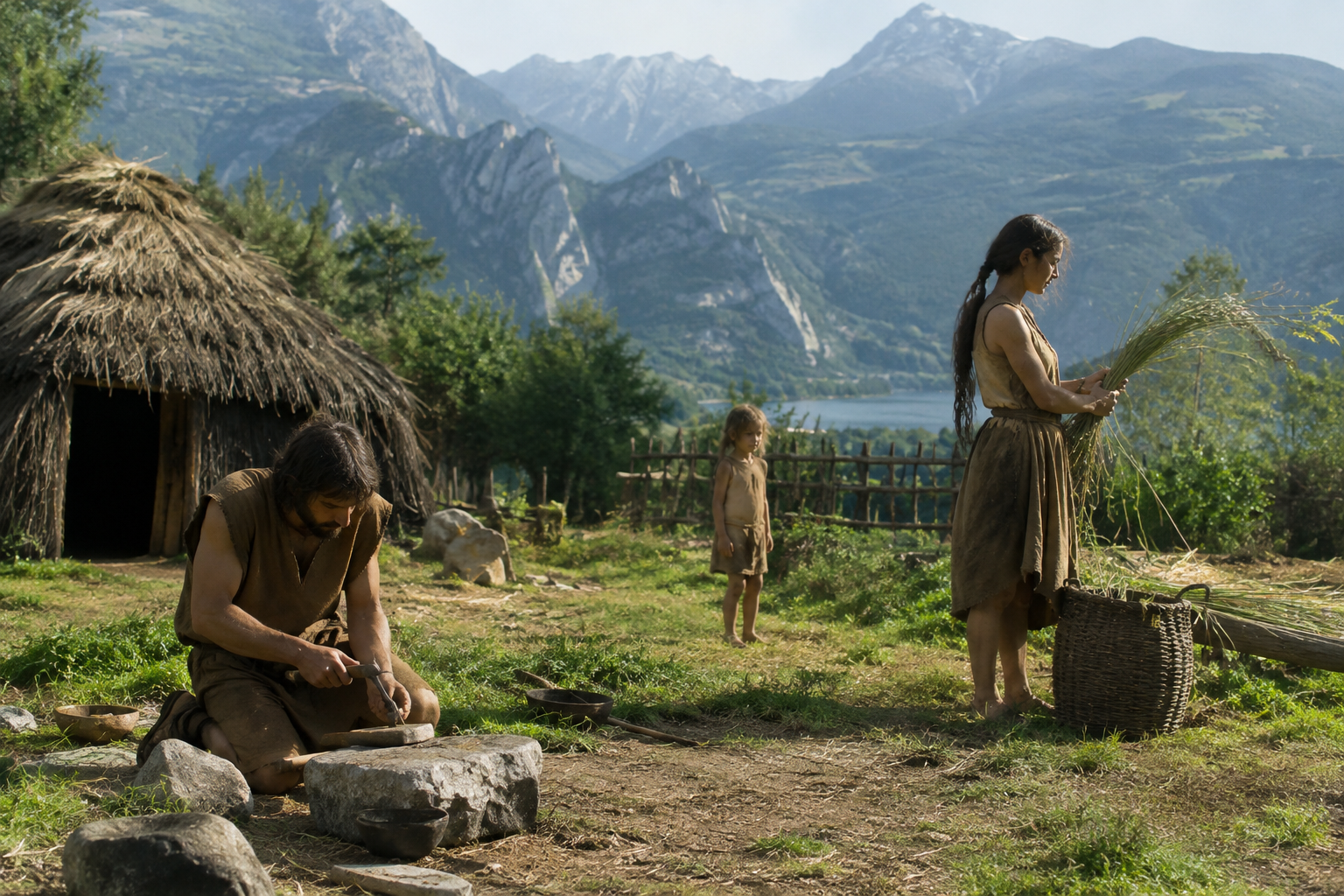
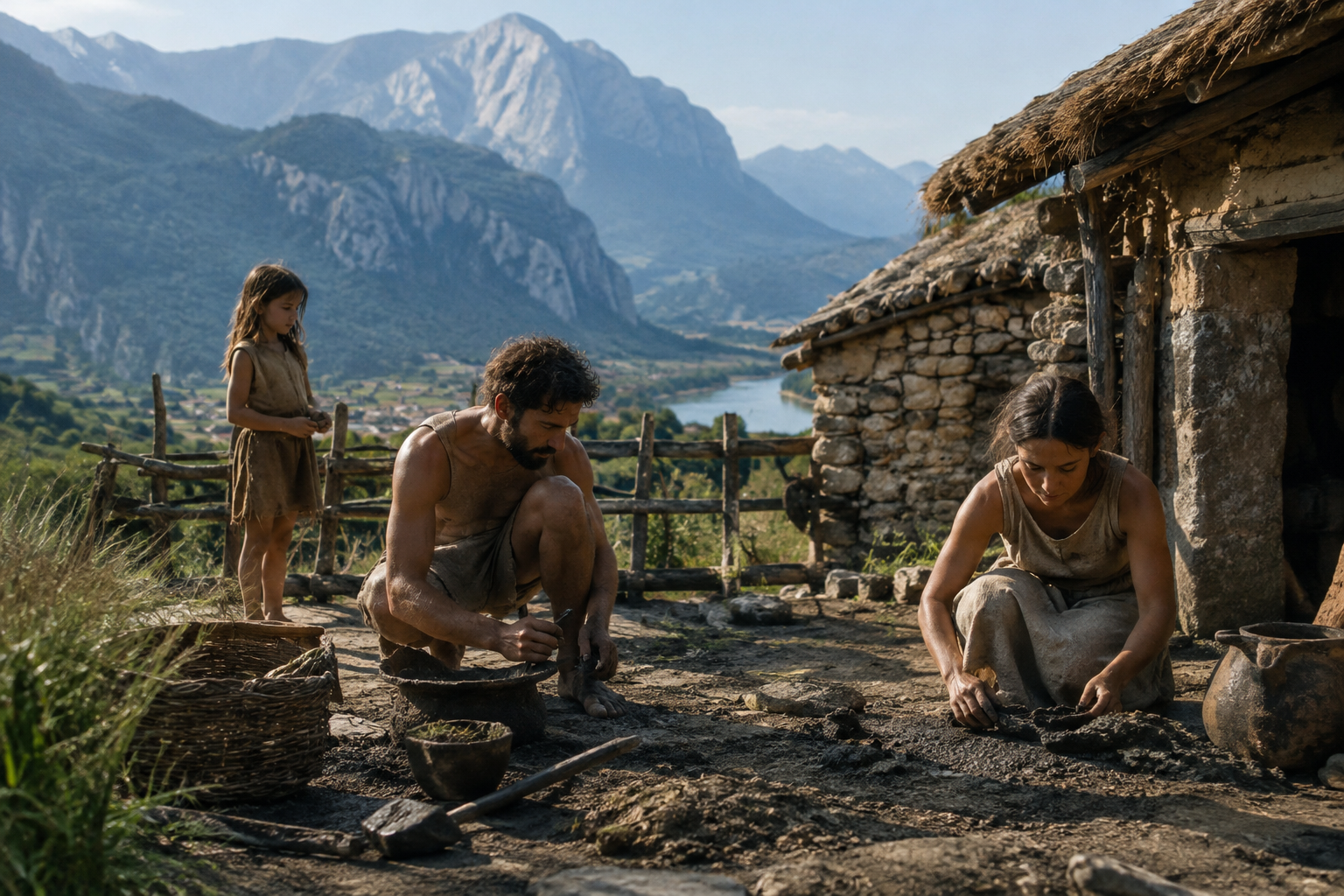
Henan was no backwater in the Late Neolithic. This was part of the broad Middle Yellow River zone, a region deeply bound up with the development of millet agriculture, dense village life, and the cultural experiments that preceded the Bronze Age states of later Chinese history. A man like BLG_M13-87 belonged to that earlier world, centuries before dynastic chronicles, but in a landscape already full of human movement, exchange, and local identity.
What makes Baligang especially valuable is that it gives us a point on the map rather than a grand myth. Instead of guessing where a lineage "must" have been, we can say that a male line associated with O2a2 is present in Late Neolithic Henan around 3000 BC. That matters because the Central Plains are often discussed as a demographic heartland, yet such claims only become convincing when they are anchored in excavated individuals.
A broader ancient DNA study of the region has helped frame this long history in the Middle Yellow River and nearby areas, showing how continuity and change can coexist over thousands of years. For readers who want the wider context, MyTrueAncestry has also explored this in its post on the Central Plains and surrounding regions.
It is worth being careful with the label. O2a2 is the haplogroup identifier provided for this article, and that is the level at which the story should be told. One common mistake in popular genetics is to slide too easily between a broad branch, a narrower sub-branch, and modern populations, as if they were all the same thing. They are not.
So the responsible claim is modest but still interesting. By the Late Neolithic, a paternal line associated with O2a2 was present at Baligang in Henan. That does not make BLG_M13-87 the ancestor of everyone carrying related lineages today, nor does it let us assign him a later ethnic, linguistic, or political identity. What it does offer is a secure archaeological setting for one occurrence of this branch in prehistoric North China.
This is precisely why ancient DNA has changed the conversation. Older arguments about population history often relied on much later texts or on very broad ideas about "northern" and "southern" peoples. Ancient genomes give us dated individuals instead. Sometimes the result is dramatic. More often, and more usefully, it is cumulative.
To understand why Baligang matters, one has to imagine Henan before the Shang capitals and before written records. The Central Plains were already thick with communities that farmed, built settlements, buried their dead, and participated in overlapping cultural worlds. Archaeology has long shown this, but genetics now lets us ask whether some of those communities also preserved elements of long-running local ancestry while still absorbing newcomers and contacts from elsewhere.
BLG_M13-87 belongs to that pre-state horizon. He is not a king, not a named founder, not a hero preserved in later tradition. In a way, that makes him better evidence. He reminds us that the formation of later historical populations depended on ordinary villagers as much as on elites, and that paternal lines now found across East Asia were already embedded in settled farming communities thousands of years before imperial history begins.
That larger northern Chinese background also helps explain why later ancient-DNA work has become so interested in the Central Plains and its frontiers. The question is not simply where one haplogroup "came from," but how different paternal lines were distributed across connected farming societies and how they changed over time.
A single sample can never carry the whole argument. But a single sample can sharpen it. In the case of O2a2, BLG_M13-87 gives the lineage an archaeological foothold in a region that became central to later Chinese history. That makes the haplogroup part of a story about enduring river valleys, early agriculture, and the building of long demographic traditions.
This also fits a broader pattern emerging from East Asian Y-chromosome research. Ancient paternal data are beginning to show that the history of East Asian male lines was shaped not by one simple expansion, but by multiple inland and coastal movements, local continuities, and later reshuffling. That is far more historically interesting than any tidy one-route model. MyTrueAncestry recently examined that bigger picture in an article on ancient Y chromosomes across East Asia.
For O2a2 in particular, the lesson is one of context. The Baligang individual does not stand alone in a vacuum; he belongs to a growing body of evidence that prehistoric North China was already genetically structured, regionally connected, and historically dynamic long before the Bronze Age courts that dominate textbooks.
The frustrating thing, if you like grand conclusions, is that one well-placed sample still leaves many questions open. We would want more individuals from Baligang itself, more nearby Neolithic cemeteries, and clearer sub-branch resolution across time to say how stable or widespread this exact paternal line was in Henan and beyond. That is the ordinary discipline of archaeogenetics: each answer produces a better question.
Still, even this limited evidence has value. It ties O2a2 to a concrete human being from Late Neolithic Henan, and it puts that lineage inside one of the great agricultural and demographic theatres of East Asian prehistory. Researchers investigating this material have made the underlying data available through genetic research on ancient individuals from this region, which is part of the reason such connections can now be made with more confidence than before.
Readers interested in later Chinese kinship and lineage structure may also find it useful to compare this much earlier Neolithic evidence with MyTrueAncestry's coverage of historical-period burials, where ancient DNA begins to illuminate family organization in more explicit ways.
The most distinctive thing we can say about O2a2 from the evidence here is simple and solid: this paternal branch is present in the archaeological record of Late Neolithic Henan, in the person of BLG_M13-87 from Baligang around 3000 BC. For someone researching this haplogroup today, that is a meaningful clue. It places one direct paternal line in the settled, farming societies of the Middle Yellow River world, among communities that helped form the human landscape of later northern China.
Comments