Haplogroup O2a

– 5 min read


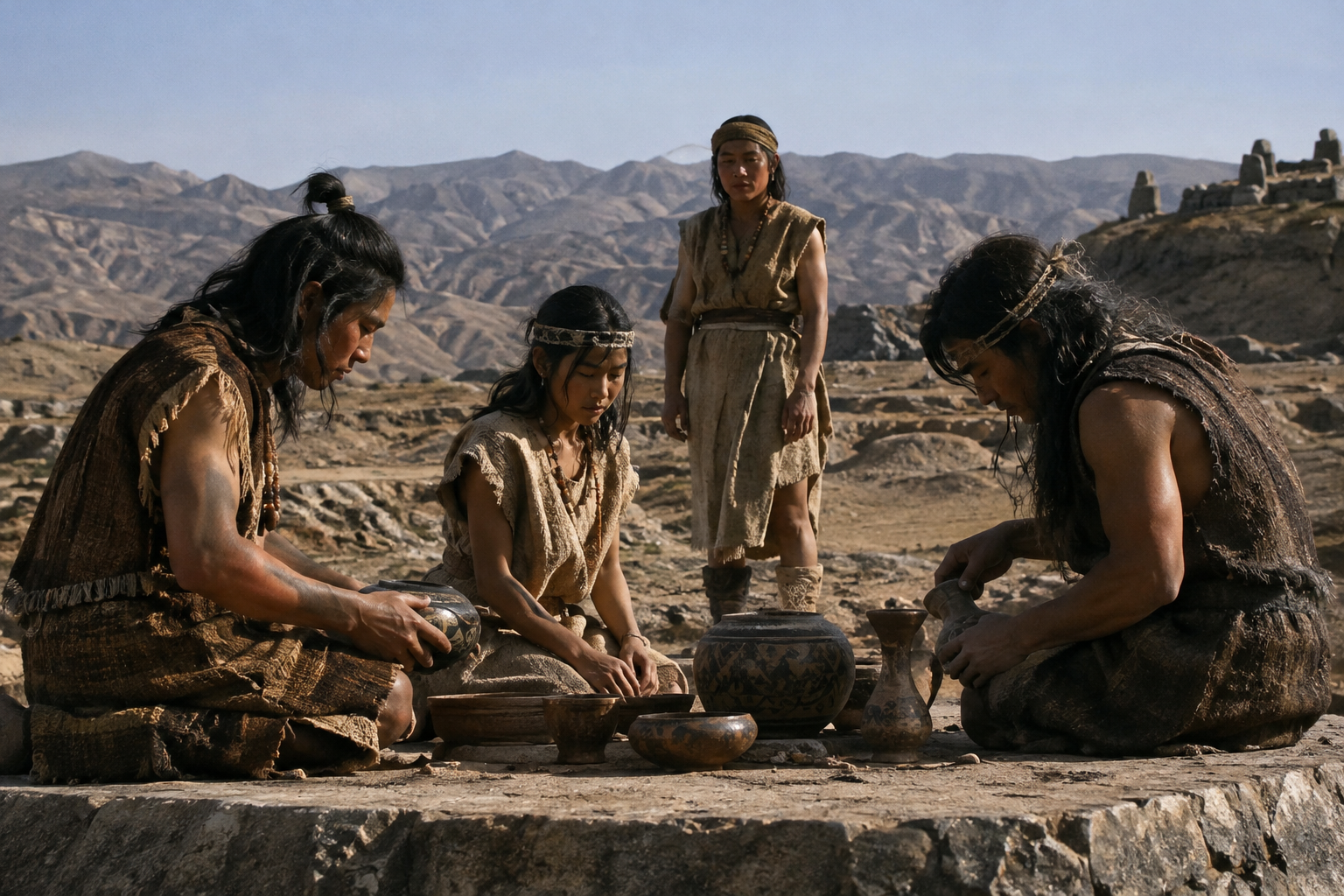
At Mogou cemetery in Lintan, Gansu, two men buried around 1450 BC have become unusually useful signposts for the history of Y-DNA haplogroup O2a. Their sample IDs, MogouM380_R7 and MogouM307_2, come from the Bronze Age Qijia cultural sphere in northwestern China, a region that sat between the farming worlds of the Yellow River and the wider corridors leading toward the Inner Asian steppe. That makes them more than isolated laboratory results. They place O2a directly into an archaeological landscape shaped by contact, mobility, and changing lifeways.
For anyone researching O2a today, that is the first important point: this is a Y-chromosome lineage, so it traces one direct paternal line rather than a person's entire ancestry. But when that paternal line turns up in ancient burials from places like Mogou, it becomes historically vivid. We are no longer speaking in abstractions. We are looking at men who lived in a real Bronze Age community on China's northwestern frontier.
Mogou is one of those archaeological sites that matters because it captures a borderland in motion. Gansu was never simply "peripheral" to early Chinese history; it was a contact zone where farming, herding, local traditions, and long-distance exchange overlapped. The presence of O2a in MogouM380_R7 and MogouM307_2 suggests that this paternal branch was part of that social world by the mid-second millennium BC.
An ancient DNA study of Bronze Age Gansu burials helped bring this cemetery into wider discussion by examining population history and burial communities in the region, and Mogou has featured prominently in that conversation through published research on ancient DNA from Bronze Age Gansu. What makes the site so compelling is not any fantasy of a single "tribe gene," but the opposite: Mogou shows how paternal lineages can persist within communities that were themselves connected to broader regional transformations.
The Qijia horizon, broadly speaking, belongs to a period when metal use, millet farming, and exchange networks were reshaping life across northwestern China. To find O2a there is historically useful because modern O2 branches are strongly associated with East and Southeast Asia, yet ancient evidence is what lets us pin that broad picture to particular places and dates. Mogou provides exactly that sort of anchor.
O2a is a major branch within haplogroup O, one of the dominant Y-DNA groupings across East Asia today. That broad fact, however, should not tempt us into overstatement. The ancient samples listed here are assigned to O2a at the level provided, and there is no need to invent a narrower terminal subclade when the evidence in hand does not require one.
That may sound cautious, but it is actually how good archaeogenetics works. A broad assignment can still be historically significant. In this case, it tells us that O2a was present in northern China not only in later historical populations, but also in prehistoric and Bronze Age settings tied to important cultural developments. In other words, O2a was already part of the paternal landscape long before imperial histories began writing the story in texts.
The oldest sample in this small group pushes the story back much further. BLSM41, from Banlashan in the Hongshan cultural sphere of China and dated to around 3300 BC, places O2a in a Neolithic setting of northeastern China. That is a very different archaeological world from Bronze Age Mogou.
Hongshan is famous for elaborate ritual traditions and major late Neolithic communities in the northeast, but the key point here is genetic time depth. If the reported association of BLSM41 with O2a is accepted at the stated level, then O2a was present in northern China well over a millennium before the Mogou burials. That does not mean a straight, simple line from one excavated man to another. It does mean that O2a belongs to a deep northern East Asian prehistoric record, rather than appearing suddenly in the Bronze Age.
That longer backdrop has been strengthened by recent work on ancient East Asian paternal history, including studies that track changing Y-chromosome patterns across coastal and inland zones. One useful example is this MyTrueAncestry discussion of ancient Y chromosomes and East Asian paternal migrations, which helps frame why even a few securely placed ancient males can matter so much.
It would be easy to treat Gansu as just a waypoint between the Central Plains and the steppe, but archaeology has shown that it was a region with its own durable communities and local histories. The Mogou men matter because they show O2a in a place where different forms of ancestry and culture met without collapsing into a single identity.
That matters especially for readers tempted to equate a haplogroup with one people, one language, or one migration event. The Bronze Age northwest was complicated. Communities could share technologies or burial customs without sharing identical paternal histories; equally, a paternal branch like O2a could remain present across cultural changes that archaeologists name as separate horizons. The graves at Mogou therefore add texture, not a slogan.
There is also a broader regional lesson. Northwestern China repeatedly appears in archaeogenetic research as a zone of mixture, continuity, and selective movement rather than simple replacement. Seen in that context, O2a at Mogou looks less like an anomaly and more like part of a durable East Asian paternal background that participated in frontier societies as they changed.
Three ancient men are not an empire, a nation, or a dynasty. But they are enough to sketch a pattern. We have one Neolithic example, BLSM41, from the Hongshan sphere around 3300 BC, and two Bronze Age examples, MogouM380_R7 and MogouM307_2, from Qijia-associated Mogou around 1450 BC. Taken together, they place O2a in northern Chinese archaeological contexts separated by both time and region.
That small pattern is valuable precisely because it is concrete. It hints that O2a was not confined to one late population pulse, but formed part of a broader prehistoric paternal landscape in northern China. Readers interested in wider genomic background for northern Chinese populations may also want this piece on 6,000 years of genomic history in the Middle Yellow River, which helps situate lineages like O2a in the long development of northern East Asian populations.
For the underlying data context of these ancient individuals, the associated research archive can be found here: https://ngdc.cncb.ac.cn/gsa-human/browse/HRA014036. Its value for this discussion is not that it magically answers every historical question, but that it connects named ancient individuals to the growing body of scientific work on prehistoric East Asia.
If your paternal line belongs to O2a, these ancient finds do not tell you that you descend from Mogou cemetery or from one specific Neolithic community. What they do suggest, responsibly and usefully, is that your direct male line belongs to a branch with a deep and documented presence in prehistoric northern China, including both the Hongshan world of the late Neolithic and the frontier communities of Bronze Age Gansu.
That is the distinctive insight here. O2a is not just a modern distribution on a map. In the ancient record, it appears in real men buried in very different northern Chinese settings, and that gives the lineage historical depth as well as geographic breadth.


Comments