Haplogroup R1a1a1b1a2b3a1a1

– 4 min read


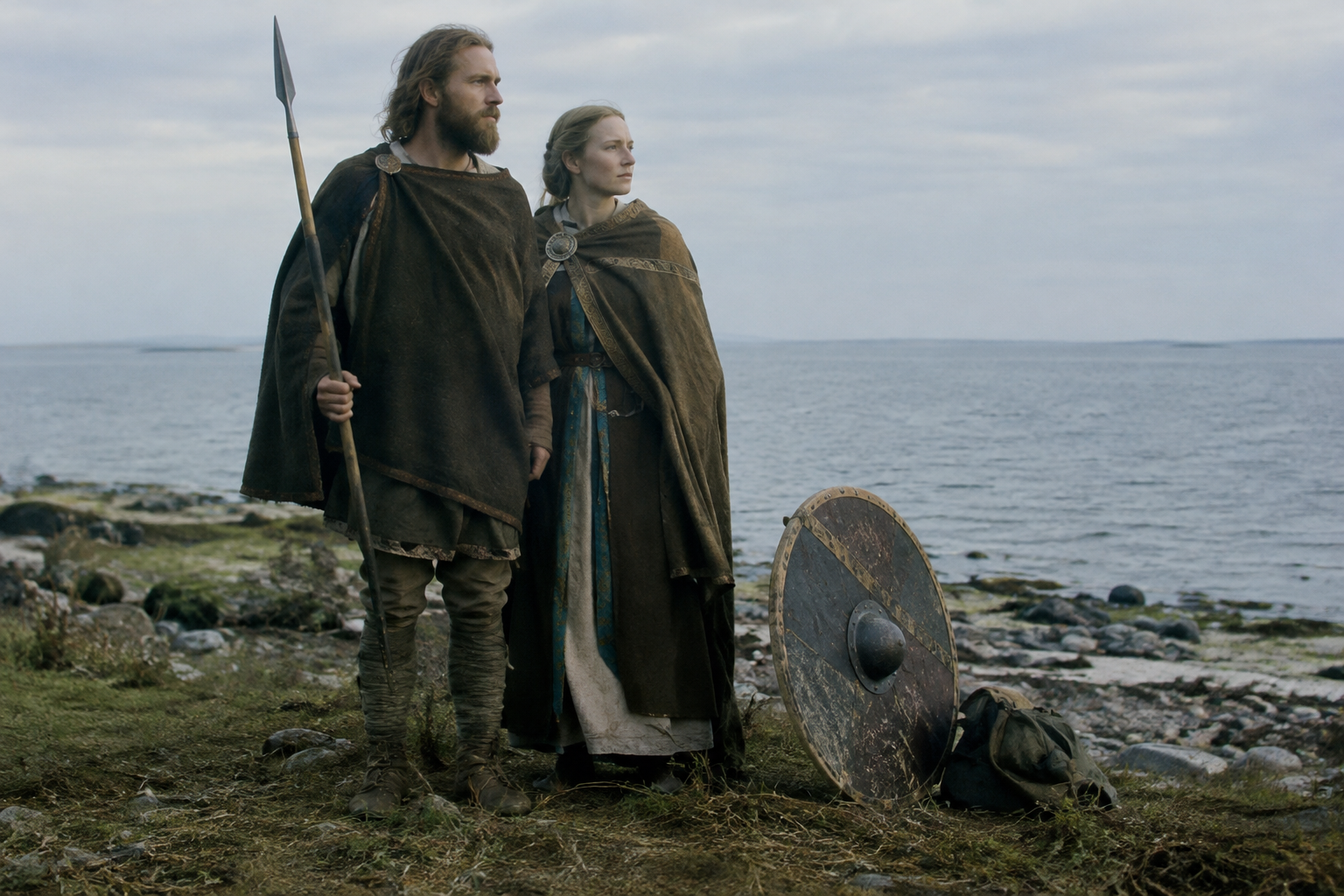
On the island of Saaremaa in Estonia, two men buried around AD 725 at Salme II carry an unusually evocative kind of evidence. Their sample IDs, VK484 and VK486, come from one of the best-known boat-burial discoveries in the eastern Baltic, a site that has become central to discussions of early Scandinavian expansion and mobility across the sea. In this case, the reported Y-DNA assignment is the very specific paternal line R1a1a1b1a2b3a1a1.
That long string of letters and numbers matters because it narrows the focus from the vast and widespread parent haplogroup R1a to one particular paternal branch found in these early medieval men. Y-DNA traces one direct male line only, so it does not describe everything about a person's ancestry. But when a rare or tightly defined branch appears in an archaeological setting as distinctive as Salme, it becomes a useful clue about male-line continuity, movement, and the kinds of communities active in the Baltic world during the Vendel Age.
The Salme burials are famous because they belong to a moment just before the classic Viking Age raiding horizons become unmistakable in written history. Found on Saaremaa, the large Estonian island that sits squarely in the maritime crossroads of the eastern Baltic, the site preserves a group of men associated with Scandinavian material culture and seaborne activity. Even without inventing details beyond the record given here, that alone makes the context remarkable: these were not isolated inland burials but part of a coastal world tied together by ships, violence, alliance, and travel.
VK484 and VK486 are both listed as Vendel Age individuals from Salme II, dated to around AD 725. The shared site, shared period, and matching reported Y-DNA branch make them important for anyone interested in how paternal lines moved through Baltic networks before the better documented Viking centuries. Their presence suggests that this branch of R1a1a1b1a2b3a1a1 was not some abstract genetic label floating above history, but part of the lived male population of a Scandinavian-linked group operating in the eastern Baltic.
An ancient DNA study examining these burials and related material helped establish the importance of Salme for understanding population links around the Baltic Sea, and the research trail begins here: https://www.biorxiv.org/content/10.1101/703405v1.
Baltic connections in early medieval Finland
The parent haplogroup R1a has a deep and complicated history across Eurasia, appearing in many different regions and periods. That is precisely why the full branch name matters here. It is safer and more useful to speak about R1a1a1b1a2b3a1a1 as a documented paternal signature in specific early medieval men from Salme than to make sweeping claims about all R1a lineages, or to assign these individuals a simple ethnic label from genetics alone.
Still, the archaeological setting sharpens the picture. Salme is not just any cemetery. It belongs to a maritime zone where eastern Scandinavia, the eastern Baltic, and the Gulf of Finland were linked by travel and conflict. If this haplogroup appears in more than one man at the same site and period, that raises sensible historical questions about whether such paternal lines were circulating among mobile warrior bands, kin-linked retinues, or other male-centered groups active in the region.
It is tempting to let the word "Viking" swallow everything, but Salme sits slightly earlier, in what archaeologists call the Vendel Age. That distinction matters. The seventh and early eighth centuries were already a time of elite connectivity, warfare, and ship-borne movement across the Baltic, even before the famous attacks on monasteries entered western chronicles.
So the men of Salme II offer a glimpse of the world that produced the Viking Age rather than simply belonging to its most famous phase. A paternal line like R1a1a1b1a2b3a1a1, found here, belongs to that formative setting: a seaborne northern world in which men, families, and armed followings could move across islands and coasts long before later kingdoms fixed tighter political borders.
Single ancient samples can be intriguing but frustrating. They show that a lineage existed somewhere, once. Two individuals from the same site and date range are more informative, even if caution is still needed. VK484 and VK486 do not prove a dynasty, and they do not automatically prove close kinship. But they do show that this branch was present in at least more than one male at Salme II.
That repetition matters in archaeological reasoning. It suggests that the branch was not a stray outlier in the burial population. In a maritime burial context associated with a small, historically charged moment of cross-Baltic contact, repeated male-line evidence becomes one more sign that we are looking at a structured social group rather than a random collection of unrelated passers-by.
This is also where genetics and archaeology work best together. The graves alone tell us that these men belonged to an extraordinary coastal event or community. The Y-DNA does not replace that story; it adds another layer, showing that one narrow paternal line can be tracked inside that broader historical setting.
Saaremaa was no remote backwater. In the early medieval Baltic it lay on routes linking present-day Estonia, Sweden, Finland, and the wider eastern seaways. That makes Salme especially useful for interpreting paternal lineages. A branch found there may speak not to isolation, but to the traffic of men and lineages through a connected sea zone.
This wider context matters for readers whose own Y-DNA results fall into fine-grained R1a branches. Ancient matches at Salme do not mean a direct genealogical line to a named warrior or burial. What they do suggest, more responsibly, is that this paternal lineage belonged to the kind of northern and eastern Baltic male networks that were active in the centuries around AD 725.
Viking Age kinship in Skanninge
The strongest thing that can be said about R1a1a1b1a2b3a1a1 here is also the most interesting: this exact branch is reported in at least two Vendel Age men from Salme II on Saaremaa, around AD 725, in a burial context tied to Scandinavian-linked maritime activity in the eastern Baltic. That places the lineage in a historically vivid world of ships, island crossings, and armed northern mobility at the threshold of the Viking Age.
For someone researching a paternal line today, that is valuable not because it promises royal descent or a neat ethnic label, but because it anchors one branch of the Y-chromosome in a real archaeological setting. Salme gives this haplogroup a place, a period, and a human context: not an abstract map point, but men buried on a Baltic island in a world already being reshaped by seaborne power.
Comments