Haplogroup N1a1a1a1a1a1a4

– 5 min read


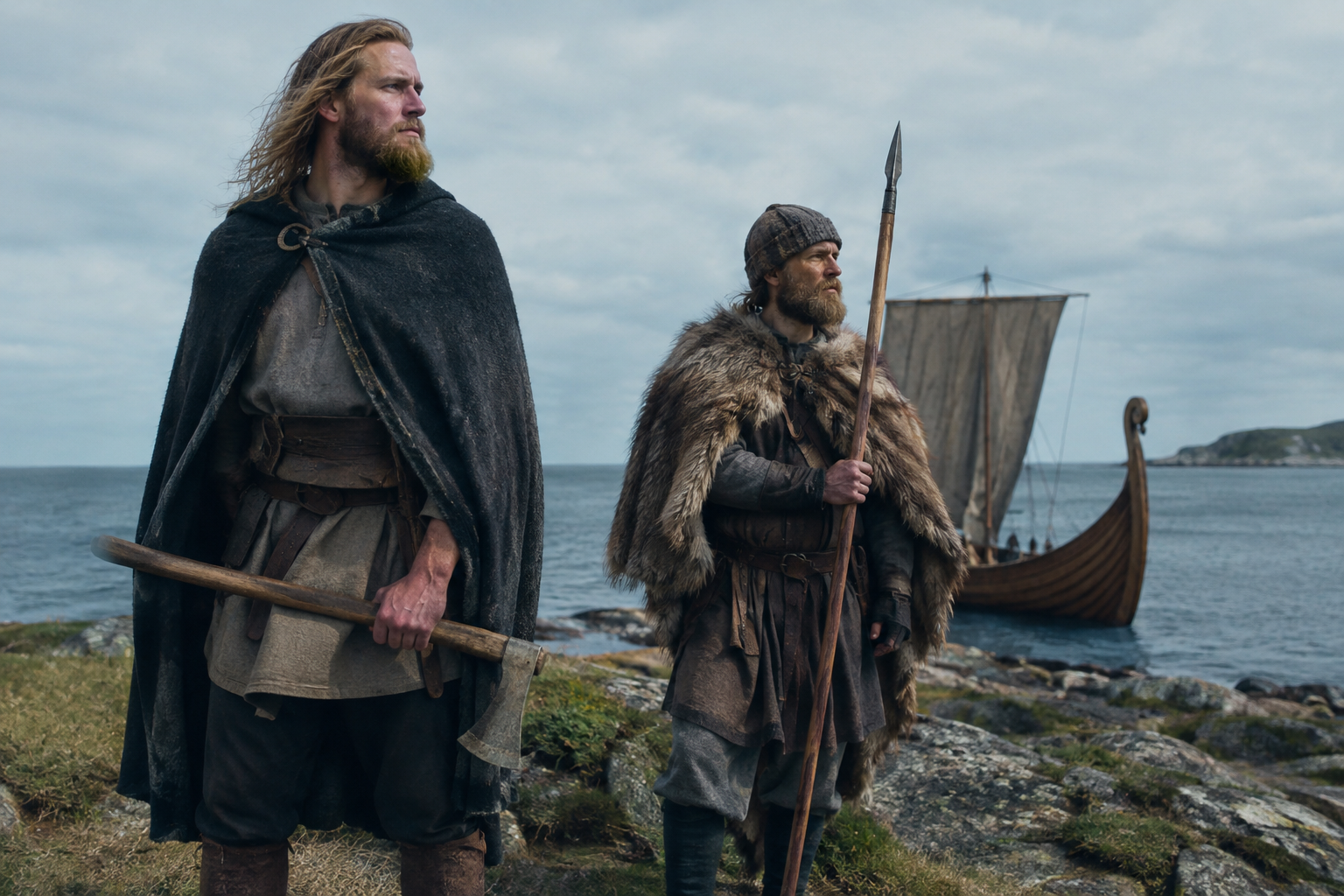
At Fröjel on the island of Gotland, a Viking Age man identified as VK430 has been linked with the Y-DNA haplogroup N1a1a1a1a1a1a4. He lived around AD 975, in one of the Baltic's most connected places: a trading and maritime landscape where ships, goods, ideas, and people moved constantly between Scandinavia, the eastern Baltic, and beyond. That matters, because this particular paternal line is not one of the classic headline Viking branches more often discussed in western Europe. Its appearance on Gotland points instead toward the eastern-facing side of the Viking world.
A second ancient individual, VK419, dated to around AD 750 from Nordland in Norway, has also been associated here with the same branch. With only two samples, caution is essential. Y-DNA tracks one direct paternal line only, not a person's whole ancestry or identity. Even so, the pairing is intriguing: one man from the Norwegian north, another from Viking Age Gotland, both placed within a lineage that sits inside the wider haplogroup N family, a group with a long and important history across northern Eurasia.
Fröjel is not interesting merely because it is on Gotland. It is interesting because Gotland was a major hinge in Viking Age exchange. The island sat between mainland Scandinavia and the eastern Baltic sea-routes that connected Sweden with Finland, the Gulf of Bothnia, the eastern Baltic coast, and the river systems leading deep into eastern Europe. A paternal lineage such as N1a1a1a1a1a1a4 appearing there is therefore historically plausible in a world shaped by movement rather than isolation.
We should be careful not to load too much onto VK430 alone. The sample does not, by itself, prove ethnicity, language, or a neat migration story. But it does fit a broader archaeological picture in which Viking Age Gotland was not a sealed Scandinavian island but a place of repeated contact. In that setting, an eastern-associated paternal branch appearing in a man from around AD 975 is exactly the sort of detail ancient DNA can illuminate.
Gotland has already featured prominently in ancient DNA discussions because the island preserves long sequences of human history, from the Neolithic into the medieval period. That longer backdrop makes Viking Age evidence especially valuable: it lets us ask not only who lived there, but how later maritime networks changed the island's paternal landscape.
The earlier of the two men, VK419 from Nordland, is dated to about AD 750, near the beginning of the Viking Age. Nordland, stretching along the Norwegian coast, belonged to a northern world of seafaring, fishing, exchange, and seasonal mobility. This is a very different setting from Gotland's Baltic emporium, yet the same paternal branch appearing there hints that the lineage was not confined to one local pocket.
That does not mean VK419 and VK430 were close relatives, nor that N1a1a1a1a1a1a4 was common across all of Scandinavia. Two men cannot stand in for an entire region. But the spread from northern Norway to Gotland suggests that this branch could travel within distinctly Scandinavian settings, not just at the far eastern edge of contact zones.
In historical terms, this is a useful reminder. The Viking world was not simply "westward raiders from Norway and Denmark." It also included northern coastal communities, Baltic traders, Swedish links to the east, and overlapping routes that tied these regions together. A lineage turning up in Nordland and Gotland belongs neatly within that more complicated map.
The exact branch in this article, N1a1a1a1a1a1a4, is a very narrow twig on the wider Y-DNA haplogroup N tree. That distinction matters. The big story of haplogroup N concerns a broad paternal lineage found across parts of northern Eurasia, especially among several Uralic-speaking and north Eurasian populations. But one should not automatically project the full deep history of haplogroup N onto this single subclade. The narrower branch may have had a much more specific and later history.
What the two Viking Age samples do suggest is that this branch had a place within northern Europe by the early medieval period. In public discussions of Viking genetics, there is often too much temptation to imagine a single "Viking type." Ancient DNA keeps ruining that idea, which is one of its greatest virtues. Scandinavian populations in the Viking Age were varied, and their paternal lines could reflect older regional structure as well as more recent mobility.
A genetic study of Viking Age populations, available as research on ancient Scandinavian and Viking-associated genomes, helped bring that complexity into sharper focus. Without forcing our two samples into claims the evidence cannot bear, the broader lesson is clear enough: Viking Age communities included lineages with different geographic histories, and some of those histories point strongly east and north rather than only toward the North Sea.
If this branch sits within the wider N family, readers will naturally wonder about Finland, the eastern Baltic, and Uralic-speaking regions. That is a sensible question. Across northern Europe, haplogroup N has often been discussed in connection with populations to the east and northeast of core Scandinavian regions. But good history begins by resisting the urge to turn a reasonable possibility into a dramatic certainty.
For VK430 on Gotland, the island's eastward orientation makes eastern connections historically credible. For VK419 in Nordland, the picture is broader: northern Scandinavia was never cut off from the rest of the north. Coastal travel, exchange, and contact with Finno-Ugric and circumpolar populations all formed part of the long northern story. Yet these are frameworks, not genealogies. We cannot say that either man "was Finnish," "was Sami," or came from a single named people on the strength of one Y-chromosome result.
What we can say is more interesting than a crude label anyway. The Viking Age north was a contact zone in which paternal lines now associated with different parts of northern Eurasia could be present inside Scandinavian archaeological contexts. That is a better, and more historically realistic, picture than any tidy ethnic map.
Ancient DNA articles sometimes fall into a trap: either they overstate tiny numbers, or they dismiss them completely. In fact, two samples can be genuinely informative when they come from meaningful places and periods. Here, one sample comes from Gotland at the height of Baltic-connected Viking activity, and the other from northern Norway near the opening of the Viking Age. Those are not random dots on a map. They are two strategically important Scandinavian settings.
Together, VK419 and VK430 show that N1a1a1a1a1a1a4 was present in Viking Age Scandinavia in at least two distinct regions. That does not tell us its overall frequency, nor whether it arrived recently or had been established longer. But it does place the branch securely in a historically vivid world of ships, coastal travel, and east-west interaction.
For readers interested in the wider northern background to such lineages, population work on Finnic and northern Eurasian groups has also been important in framing how haplogroup N spread and diversified across the north, even if that larger scholarship does not by itself identify these exact Viking Age men.
The distinctive point about haplogroup N1a1a1a1a1a1a4 is not that it unlocks some glamorous royal pedigree. It is that, in the present evidence, it appears in two real Viking Age Scandinavian men from two very different maritime regions: Nordland and Gotland. That is a compact but revealing pattern. It suggests a paternal line embedded in the northern and eastern-facing worlds of early medieval Scandinavia, where regional diversity mattered as much as any grand Viking stereotype.
For someone researching this haplogroup today, the responsible takeaway is not a promise of descent from a particular tribe or dynasty. It is something better grounded: your direct paternal line belongs to a branch that has already appeared in documented Viking Age Scandinavians, in contexts that reflect the broad, mobile, and interconnected world of the North.


Comments