Haplogroup O2

– 4 min read


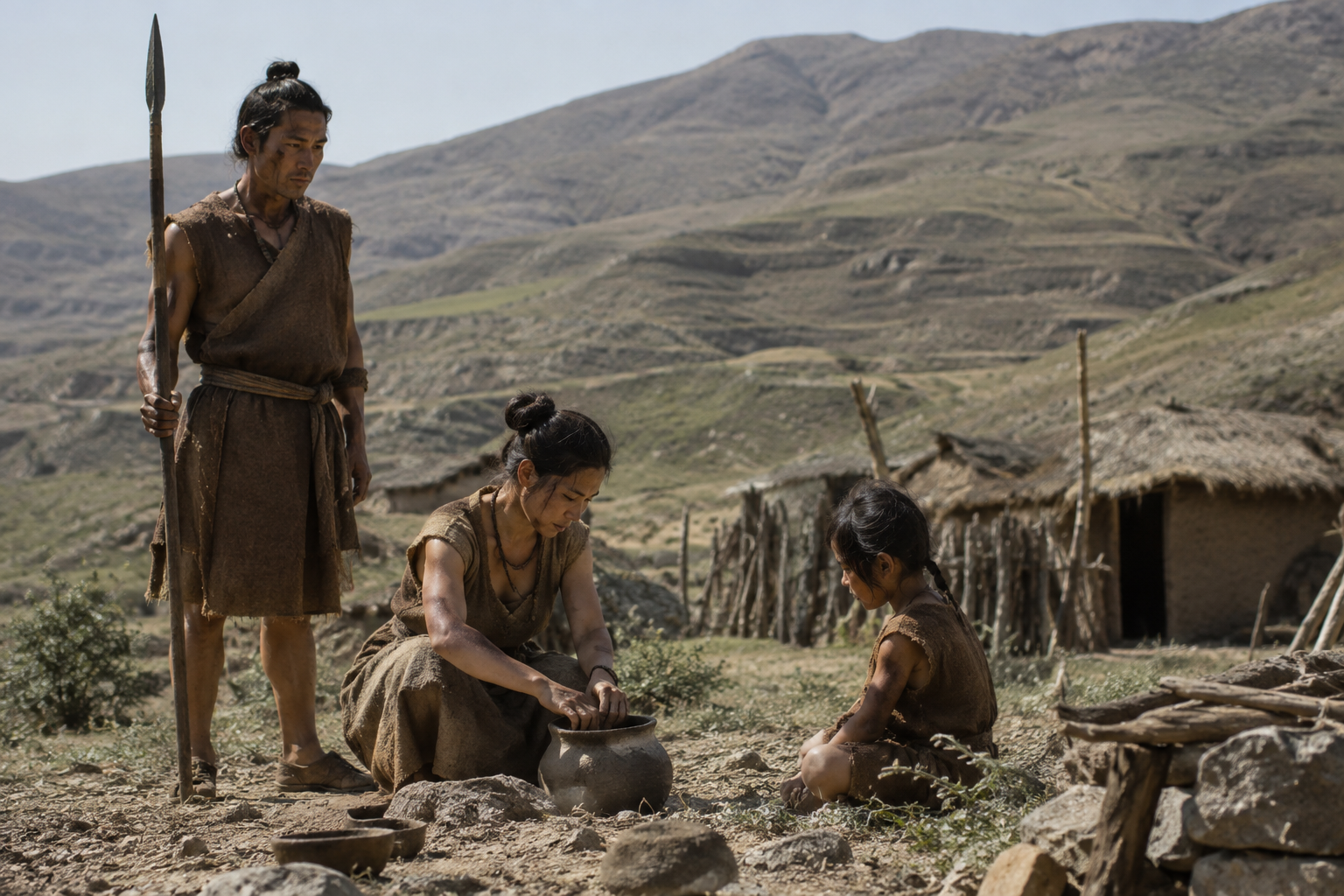
At Qijiaping in Guanghe County, Gansu, one Bronze Age male - sample QijiapingM110_1_4, dated to around 1550 BC - offers a neat, grounded starting point for thinking about Y-DNA haplogroup O2. He belonged to the Qijia cultural world, a society of northwestern China that stood at an important meeting place between the Yellow River farming zone and the wider Inner Asian frontier. When a paternal lineage like O2 appears in that setting, the interesting question is not simply where the lineage exists today, but what it was doing in this particular landscape and period.
That matters because Y-DNA follows one direct male line only. It does not define a person's whole ancestry, language, or identity. But in archaeology, even one well-placed paternal signal can help us see how male lineages were present within communities that were already shaped by farming, exchange, mobility, and regional interaction.
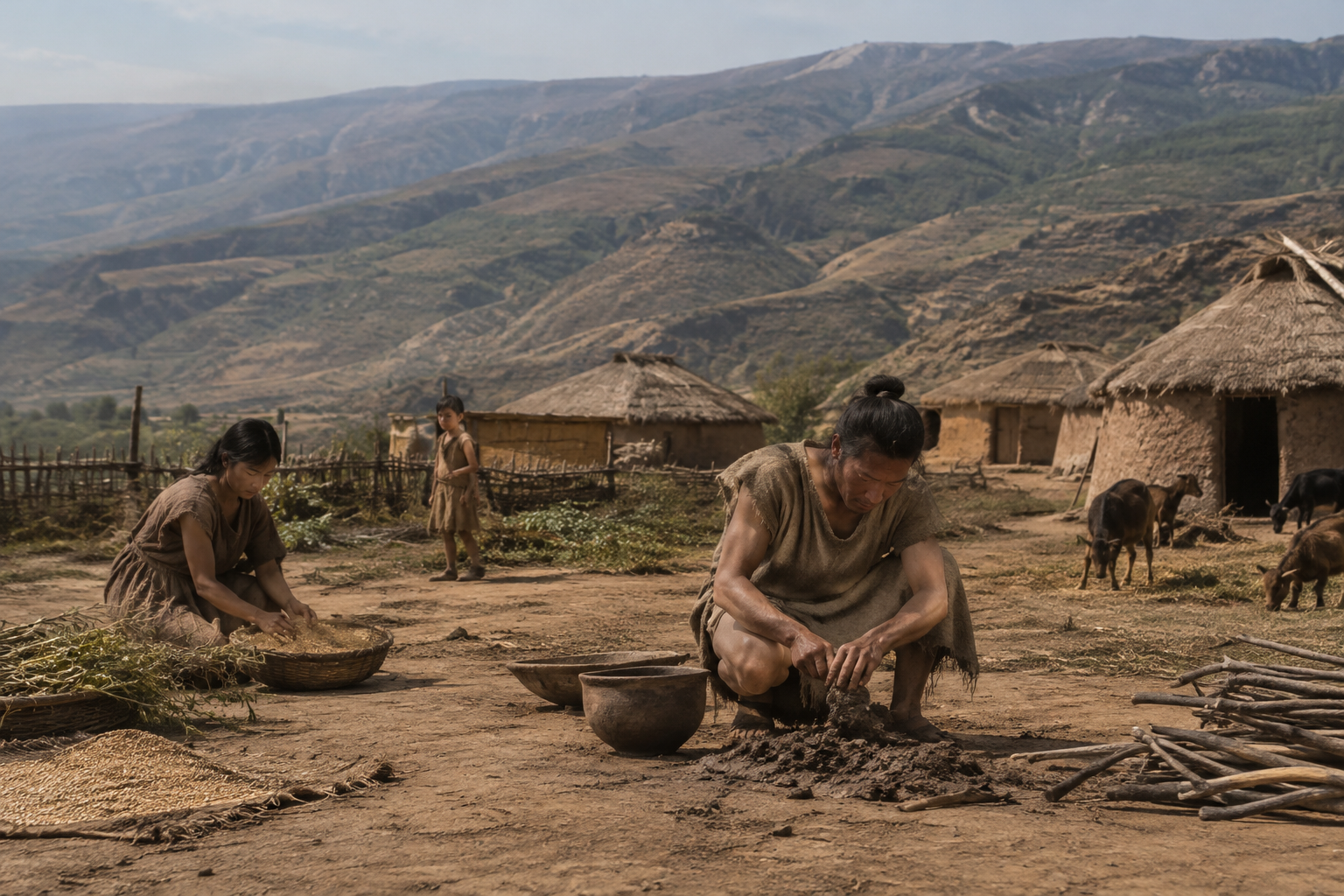
The Qijia Culture flourished roughly in the late 3rd and early 2nd millennia BC across parts of Gansu and Qinghai. Archaeologists have long been interested in it because this was not an isolated backwater. Qijia communities sat in a corridor where millet-farming traditions, highland pastoral contacts, and new metallurgical practices all met. In other words, it is exactly the kind of place where population history becomes complicated in a hurry.
Sample QijiapingM110_1_4 comes from the Qijiaping site in this wider cultural sphere. Reported under the broad Y-chromosome assignment O2, he shows that this paternal branch was already present among Bronze Age people in northwestern China. That is a useful reminder that lineages now widespread in East and Southeast Asia were not only a story of later dynasties or modern populations; they were already embedded in regional societies during the Bronze Age.
A MyTrueAncestry article on this same regional evidence looks more broadly at the archaeological and genetic background of these burials in Gansu.
O2 is a major East Asian Y-DNA branch with deep importance in the paternal history of many populations in China and beyond. But one must be careful. A report of O2 at this level is broader than a named terminal subclade, so it should not be inflated into a precise family-tree claim about one later people, one dynasty, or one migration route.
Still, broad assignments have value. In an ancient setting, they tell us that part of the male population belonged to a lineage that would become highly significant across later East Asian history. The point is not that the man from Qijiaping can be turned into a mascot for all later O2 carriers, but that he anchors the branch in a real archaeological community at a real Bronze Age site.
Northwestern China often gets described as a margin of the ancient Chinese world, but that can be misleading. Gansu was a corridor. People, crops, technologies, and ideas moved through it. The region linked the Central Plains with higher-altitude and steppe-adjacent zones, and that helps explain why its ancient DNA record is so valuable. It captures communities living amid contact rather than isolation.
In that setting, an O2 paternal lineage is historically plausible in a population connected to northern Chinese agricultural traditions, yet living at the edge of several worlds at once. The significance lies less in any dramatic one-off migration tale than in long-term settlement and interaction. Bronze Age men carrying O2 were part of the human fabric of these frontier-farming societies.
Research associated with ancient remains from this region is available through the published study materials linked here: https://ngdc.cncb.ac.cn/gsa-human/browse/HRA014036. Even without overclaiming details beyond the reported sample information, the broader regional work helps place Qijiaping within a serious archaeogenetic effort to understand population history in Gansu.
It is tempting to dismiss a single ancient Y-DNA result as too small to matter. In fact, archaeology often advances through exactly such small but well-contextualized observations. QijiapingM110_1_4 is useful because he is not floating free in abstraction. He belongs to a dated Bronze Age site, a named archaeological culture, and a region whose role in East Asian prehistory is increasingly clear.
One sample cannot stand for all Qijia men, and it cannot by itself map the internal branching of O2. But it does establish presence. For people exploring paternal ancestry today, ancient samples like this one are valuable because they turn a modern haplogroup label into something tangible: a man living in Bronze Age Gansu, in a community balancing local continuity with wider connections.
For a longer view of how ancient paternal branches helped shape East Asian population history over time, this overview is especially relevant.
East Asian Y-Chromosome Migrations
The importance of O2 becomes even clearer when placed against later Chinese history. Many later populations across China show strong representation of branches within this wider haplogroup, but ancient DNA is what stops that modern pattern from becoming a flat, present-day statistic. Finds like QijiapingM110_1_4 show that the roots of that paternal history were already established in northern and northwestern settings long before imperial unification.
That is also why comparisons with later periods are useful, so long as they are done carefully. A Bronze Age Qijia male is not a Han dynasty official, a Tang clan founder, or a Song ancestor simply by virtue of sharing a broad paternal branch. Yet the recurrence of O2 in later East Asian contexts makes this Bronze Age appearance feel less like an isolated curiosity and more like an early chapter in a very long regional story.
Readers interested in how ancient DNA illuminates later Chinese kinship and community structure may also want to compare this with evidence from much later burials.
If your paternal line belongs to haplogroup O2, the most responsible lesson from Qijiaping is not a grand claim of direct descent from one excavated man. It is something quieter and, in its way, more interesting: O2 was already present in the male population of Bronze Age northwestern China, in a region where farming societies met wider Eurasian networks. That gives the haplogroup archaeological depth, and it places at least part of its history in communities that were both settled and connected.
So the man called QijiapingM110_1_4 matters because he fixes O2 in time and place. He reminds us that paternal lineages are most illuminating when they are tied to real sites, real periods, and the messy, human geography of the ancient world.
Comments