Haplogroup O1b2a2a1a

– 5 min read


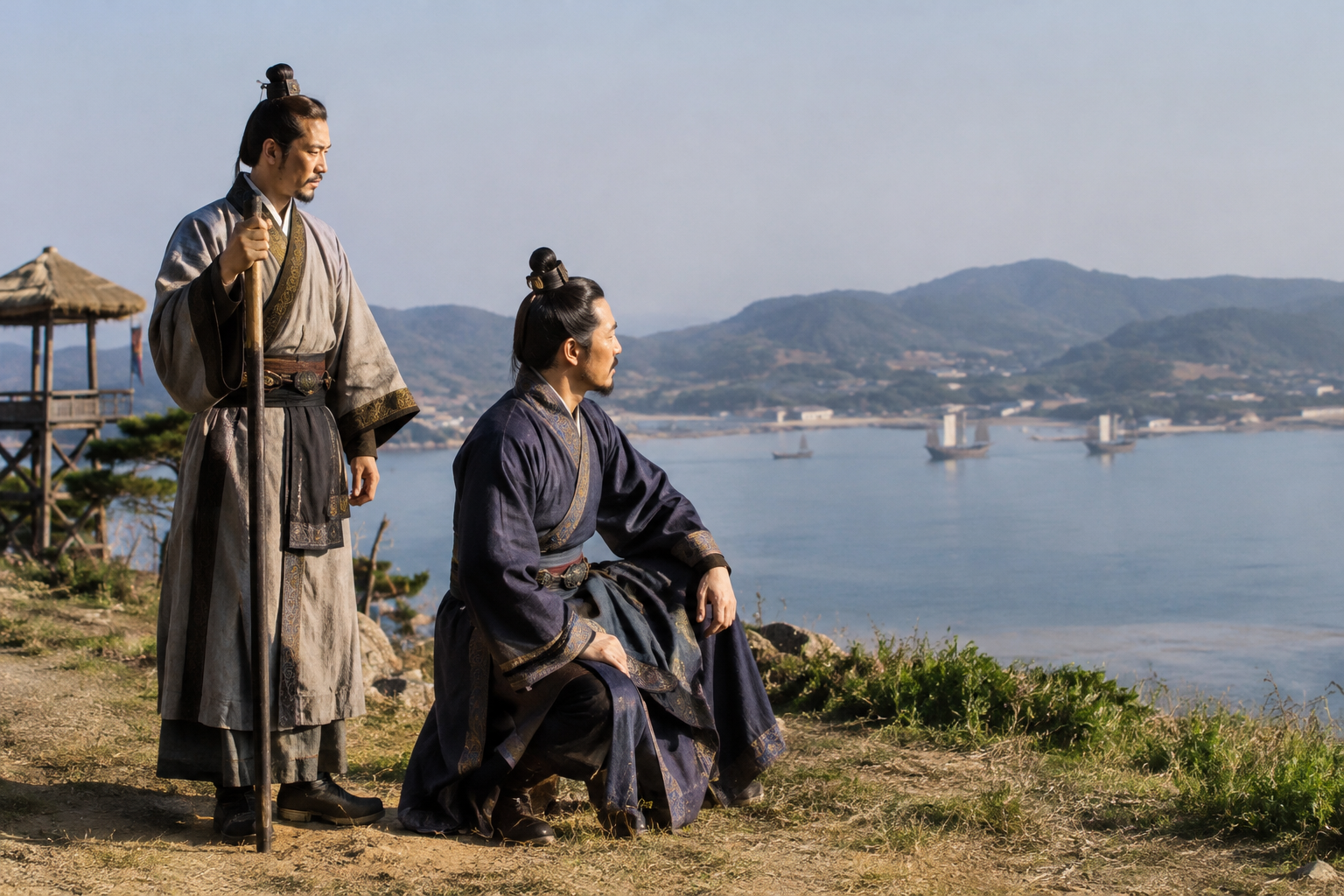
At Dangbuk-ri in Gunsan, on Korea's west coast, two men buried in the Baekje kingdom around AD 550 were reported with the Y-DNA haplogroup O1b2a2a1a. Their sample IDs, GUC005a and GUC005b, are modest labels for what is actually quite a valuable find: a glimpse of a paternal line present in one of the Three Kingdoms of Korea during a period of state formation, diplomacy, and intense contact across the Yellow Sea.
That matters because ancient Y-DNA is at its best when it is tied to a real place and period. O1b2a2a1a is a direct paternal lineage, passed from father to son, so it does not describe the whole ancestry of these men or of Baekje society. But when the same branch appears in securely dated archaeological individuals, it helps place a paternal line within a historical landscape rather than leaving it floating in the abstract.
Baekje was one of the Three Kingdoms that dominated much of the Korean peninsula in the first millennium AD, alongside Goguryeo and Silla. By the sixth century, it was a sophisticated polity with its own court culture, regional administration, and maritime links to both China and the Japanese archipelago. Gunsan, where Dangbuk-ri is located, sat within that wider western coastal sphere.
The two Dangbuk-ri individuals are useful not because they can be made to stand for all Baekje people, but because they anchor O1b2a2a1a in a historically legible setting. Instead of speaking vaguely about "East Asian lineages," we can point to an actual kingdom, an actual site, and a date around AD 550. That is a far better starting point for public history.
An ancient DNA study examining early Korean populations, including Three Kingdoms-era material, has helped bring these kinds of burials into sharper focus, even when the surviving public summary is cautious and technical: research on ancient genomes from Korea and neighboring regions. The important point here is not to overstate one preprint, but to note that these results belong to a wider effort to connect archaeology, chronology, and kinship in early Korea.
The label O1b2a2a1a is precise, but precision can be misleading if readers are not careful. A Y-DNA branch this specific is only one twig on a much larger paternal tree. Its presence in sixth-century Baekje does not mean the branch originated there, nor does it mean every man in Baekje belonged to it, nor that modern carriers descend from these two particular individuals.
Still, a securely placed ancient branch tells us something important. It shows that this paternal line was part of the male population of southwestern Korea during the Three Kingdoms period. That gives the haplogroup a documented historical foothold in a society known from archaeology, inscriptions, and state-level politics, rather than only from present-day frequency maps.
It also reminds us how state history and family history intersect unevenly. Kingdoms rise and fall; paternal lines continue through ordinary men whose names are lost. Ancient DNA restores a little of that missing human texture. GUC005a and GUC005b were not kings in our evidence, but they were part of the same living Baekje world that produced fortresses, elite tombs, Buddhist patronage, and diplomatic missions abroad.
Two samples from a single cemetery or burial context might sound slight, but archaeology rarely deals in perfect abundance. Even a pair of individuals can be revealing when they come from a well-defined historical moment. Here, the value lies in repetition at one place and time: O1b2a2a1a was not a one-off curiosity attached to a solitary burial label, but present in at least two reported Baekje-period males from Dangbuk-ri.
That does not automatically make them close paternal relatives. Without explicit kinship analysis or a published cemetery reconstruction, it would be wrong to turn them into a family saga. Yet the duplicated presence of the lineage does suggest that this branch belonged to the local or regional male population represented at the site, which is exactly the sort of grounded evidence that ancient Y-chromosome work needs.
Archaeology in early Korea increasingly shows how much can be learned from combining burial evidence with genetics. The richest results often come not from a single spectacular tomb, but from patiently comparing multiple individuals across one community. That is why even sparse Y-DNA data from Dangbuk-ri deserve attention.
Baekje's history makes these samples especially interesting because the kingdom was never isolated. It was a political power on the peninsula, but also a maritime actor. Contacts with southern China and with the Japanese archipelago are central to its story, whether one is looking at material culture, literacy, Buddhism, or elite exchange.
That wider setting matters when thinking about paternal lineages such as O1b2a2a1a. The existence of this branch in Baekje around AD 550 places it within a zone of movement and interaction, not within a sealed ethnic box. Ancient DNA does not collapse archaeology into genetics, but it does let us ask sharper questions about continuity, mobility, and local population structure inside a kingdom famous for its external connections.
For readers with East Asian matches on MyTrueAncestry, this is often the most useful historical lesson. A paternal line can be deeply rooted in Korea while also belonging to populations engaged in exchange across coasts and courts. Ancient kingdoms were political organisms, not genetic containers.
The great attraction of Three Kingdoms archaeology is that it lets us watch early states taking shape in real landscapes. Fortified centers, regional cemeteries, craft production, and imported ideas all belong to that picture. Ancient DNA adds another layer: who was actually buried in these communities, and how much biological continuity existed within them?
In that respect, the Dangbuk-ri men sit within a growing body of work on Korean burial populations. The point is not that every site will show the same paternal composition. Quite the reverse. One of the most interesting possibilities is that different cemeteries, regions, and status groups may reveal different mixtures of paternal lines, kin structures, and marriage patterns over time.
That broader comparative frame is already visible in other Korean studies. Silla-period work, for example, has raised questions about endogamy and community structure that would have been impossible to address from grave forms alone. Baekje data such as GUC005a and GUC005b begin to furnish a comparable baseline for the west and southwest of the peninsula.
If your paternal line falls under O1b2a2a1a, the most solid takeaway from the present ancient evidence is not a grand migration legend. It is something both smaller and better: this branch is documented in men living in Baekje-period Korea around AD 550, at Dangbuk-ri in Gunsan. That places the lineage within the historical population of an early Korean kingdom during a formative age of regional politics and maritime exchange.
For family historians, that is a useful kind of anchor. It does not hand you a named ancestor, but it does connect your direct paternal line to a real archaeological horizon and a recognizable historical world. In ancient DNA, that sort of firm foothold is worth far more than a dramatic story built on guesswork.
Comments