Haplogroup O1b2a1a2

– 4 min read


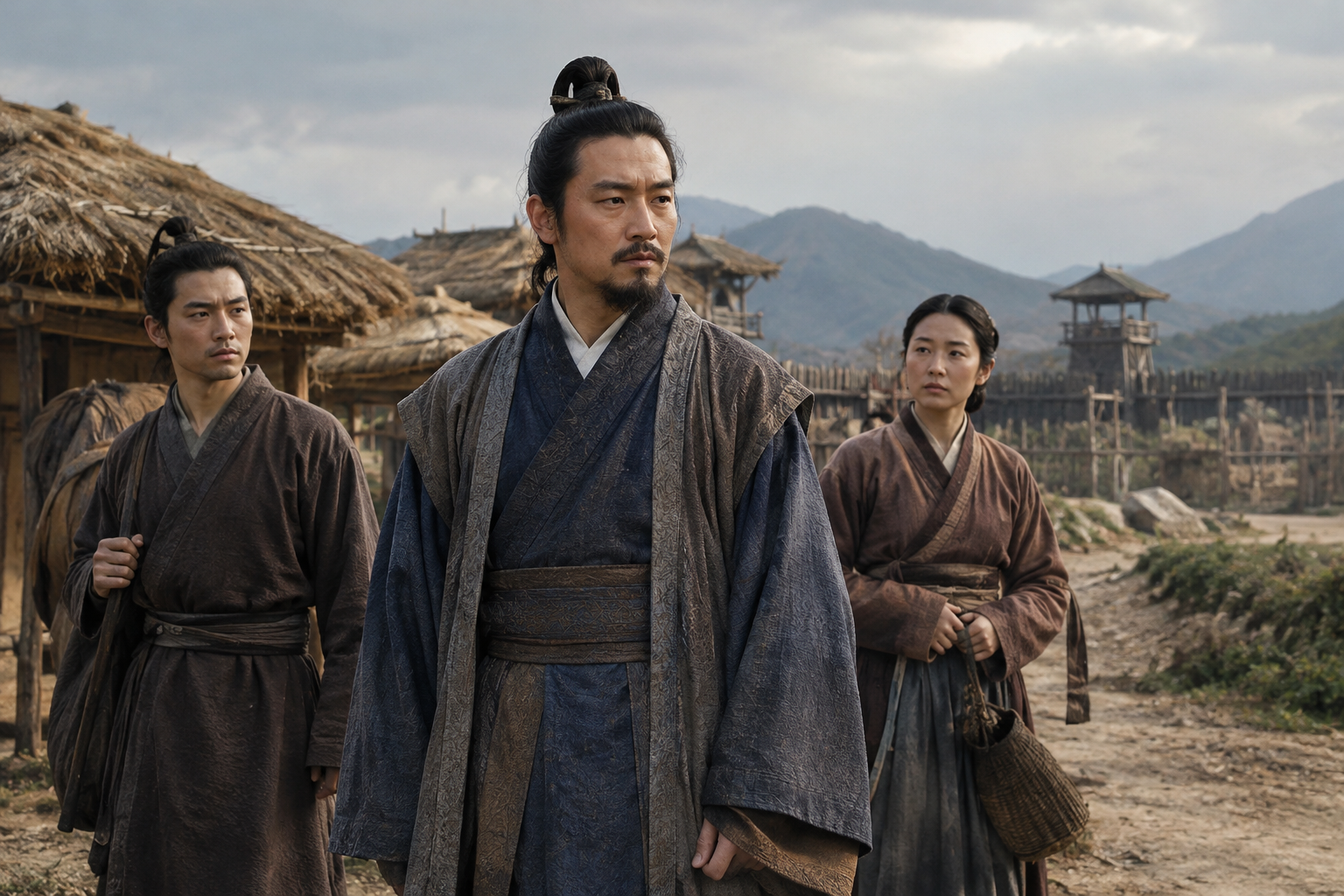
At Imdang-dong in Gyeongsan, archaeologists uncovered burials from Korea's Three Kingdoms period, a world of small polities, regional elites, and tightening political networks on the peninsula. One of the ancient men from this cemetery, sample IMD005, dated to around AD 500, has been associated with the Y-DNA haplogroup O1b2a1a2. That matters because it anchors this paternal line in a very specific historical landscape: not an abstract "East Asia," but a lived setting in southeastern Korea during a formative age of state expansion.
There is a temptation, with any Y-chromosome label, to turn it into a complete identity card. It is not that. Y-DNA follows one direct paternal line only. But when a branch like O1b2a1a2 appears in an excavated and dated individual such as IMD005, it becomes part of a properly archaeological story: a lineage carried by a real man living in the orbit of the Silla world and buried in a cemetery that helps us glimpse how communities in early Korea were structured.
Imdang-dong is important because the site sits in the southeastern peninsula, the very region where power was consolidating during the late Three Kingdoms period. By around AD 500, Silla was no mere local chiefdom. It was expanding its institutions, its elite networks, and its reach across neighboring communities. A cemetery from this setting is not just a collection of graves; it is evidence for how people were embedded in emerging political structures.
Sample IMD005 does not need invented drama to be interesting. The simple fact is enough: a man from this cemetery, buried in this period, carried a paternal lineage assigned to O1b2a1a2. That places the haplogroup within a documented historical population of ancient Korea and gives modern testers a concrete archaeological reference point rather than a vague map pin.
O1b2a1a2 is a narrow branch within the wider O-lineages of East Asia. That distinction matters. The broader parent clades have deep and varied histories across a huge region, but one cannot simply pour all of that history into this smaller subclade and call it done. For this article, the strongest evidence is not a grand migration tale. It is the appearance of this branch, or a reported association with it, in a securely ancient Korean context.
In practical terms, that makes O1b2a1a2 especially relevant for people whose paternal ancestry points toward Korea or nearby parts of Northeast Asia. What ancient DNA can show is continuity of presence: by the Three Kingdoms period, a lineage connected with this branch was already present among men living in southeastern Korea. What it cannot do from one sample alone is identify a tribe, a language, a social rank, or a modern surname.
Ancient DNA studies are often most useful when they start small. IMD005 is only one individual, but he belongs to a cemetery from a period when kinship, marriage, and local political alliances mattered enormously. In that sense, even a single Y-line result becomes part of a wider historical question: how stable were paternal lines within early Korean communities, and how did those communities relate to the rise of larger kingdoms?
A genetic study connected to these burials is linked through this research archive, which is associated with the ancient population under discussion. Even without overstating any one result, the broader value is clear. Ancient Korean cemeteries are beginning to show that lineage, kinship, and community structure can be studied directly rather than guessed from later chronicles alone.
The phrase "Three Kingdoms Korea" can sound tidy, as if political labels map neatly onto biological populations. Archaeology and genetics both warn against that. Kingdoms were political formations, not sealed breeding units. Their people married, moved, traded, fought, and absorbed outsiders. So when we place O1b2a1a2 at Imdang-dong, we are locating one paternal branch inside that political world, not claiming that it defined the whole of Silla or all of ancient Korea.
That is also why cemeteries matter so much. A kingdom's capital inscriptions tell one story; its burials tell another. They show who was actually living in local communities, who was being buried together, and sometimes how lineages endured or shifted over time. The value of IMD005 is that he belongs to this ground-level history.
O1b2 and its downstream branches are often discussed in connection with populations of Korea and Japan, but the historical relationship between those regions is complicated and should not be flattened into a single directional tale. The Korean peninsula and the Japanese archipelago were linked by repeated movements of people, technologies, and ideas across many centuries. A paternal lineage found in ancient Korea may be relevant to that larger story, but one burial cannot by itself map the whole exchange.
Still, ancient evidence from Korea is particularly valuable because it offers a fixed point. Rather than working backward from modern distributions alone, we can say that by around AD 500 a man associated with O1b2a1a2 was present at Imdang-dong. That helps frame later questions about continuity and regional spread with actual ancient data.
There is something pleasingly stubborn about ancient DNA when it is tied to a place and a period. IMD005 will not tell us everything about O1b2a1a2, but he does tell us something solid: this paternal line was part of the human landscape of southeastern Korea in the age of the Three Kingdoms. For anyone exploring this haplogroup today, that is the distinctive insight. Your Y-line is not just a modern test result; it is a branch with at least one documented foothold in a real cemetery, in a real Korean community, at a moment when early states were taking shape.

Comments