Haplogroup O1b

– 4 min read


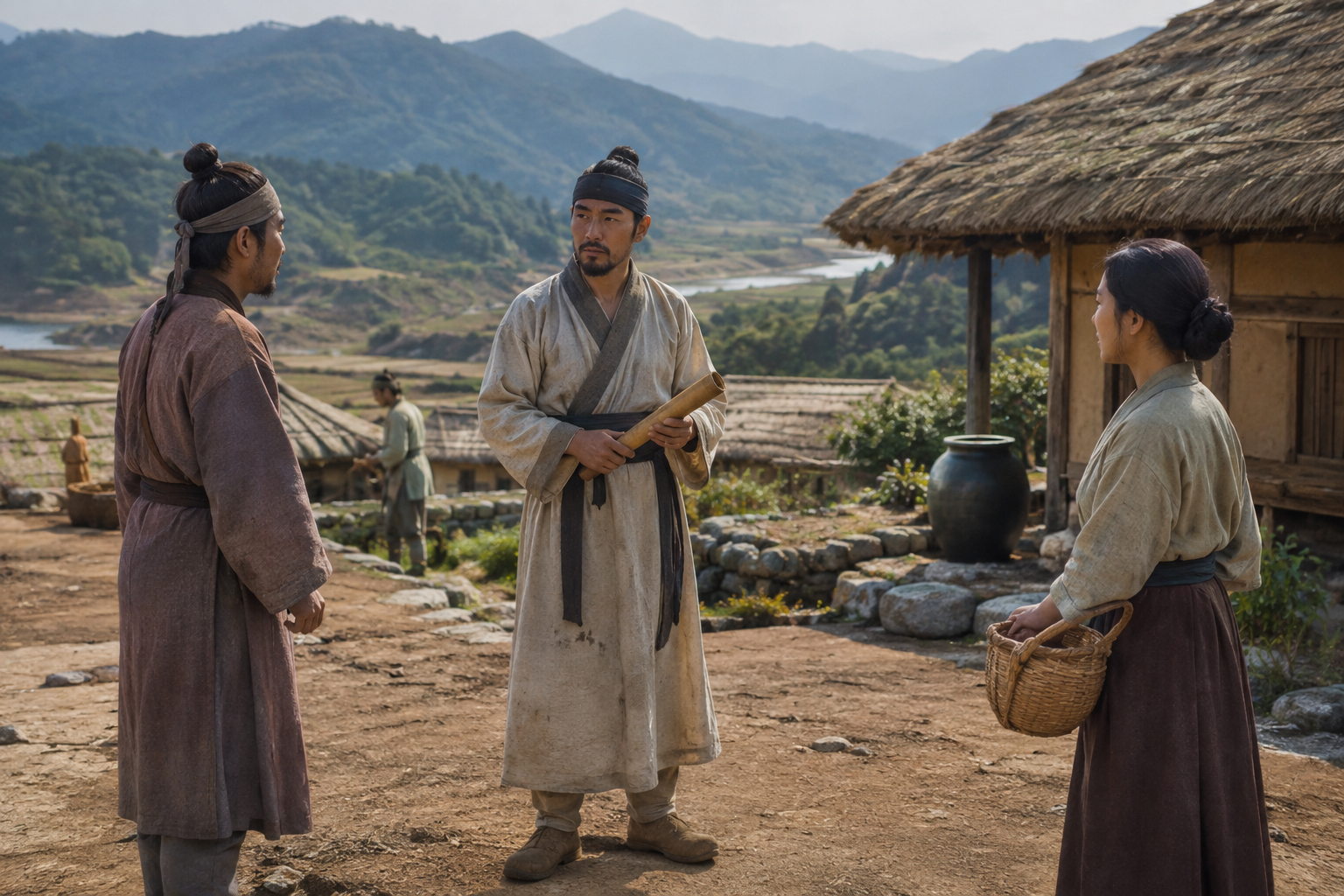
At Imdang-dong in Gyeongsan, in southeastern Korea, one ancient male sample stands out for anyone interested in Y-DNA haplogroup O1b: IMD009, dated to around AD 500. That is the Three Kingdoms period, when the Korean peninsula was divided among rival states and local elites were burying their dead in cemeteries that now give archaeologists a rare chance to compare material culture, social structure, and DNA.
The attraction of IMD009 is not that one skeleton can somehow explain an entire people. It cannot. But it does place haplogroup O1b firmly in a documented early-historic Korean context. In other words, this is not only a modern lineage seen in living men today; it also appears in a real excavated individual from a society we can place historically, geographically, and archaeologically.
Imdang-dong is associated with the Silla cultural sphere in the southeast of the peninsula, though local power and identity in this period were often more complicated than neat textbook maps suggest. By around AD 500, this was a landscape of fortified centers, competing polities, expanding aristocracies, and increasingly formal burial customs. Cemeteries such as Imdang-dong matter because they preserve not just bones, but a social snapshot of a stratified society in transition.
For O1b, IMD009 gives us a useful anchor: a paternal line found in a man living during the centuries when Silla was consolidating power. Y-DNA, of course, traces only one narrow line of descent from father to son. Even so, when a haplogroup appears in an excavated historical population, it helps move discussion away from vague modern frequency maps and toward actual human communities.
An ancient DNA study examining these burials has helped illuminate kinship and population structure in this Silla-period setting, and the associated research materials are linked here: https://datadryad.org/dataset/doi:10.5061/dryad.fj6q57489.
It is worth being careful with the label. O1b is a broad Y-chromosome branch, not a single family and not a synonym for one ethnicity, kingdom, or language. In East Asia, branches under haplogroup O are deeply important to the paternal history of many present-day populations, but the history of each branch is its own matter. One must not lazily pour the entire story of haplogroup O into O1b, still less into one ancient man from one cemetery.
What IMD009 tells us, responsibly stated, is narrower and more valuable: a male line associated with O1b was present in an excavated population from southeastern Korea around AD 500. That matters because the Three Kingdoms period sits at the meeting point of archaeology and written history. We are no longer in a shadowy prehistoric zone where labels are entirely modern scholarly constructs. We are in a world of named polities, developing aristocracies, and historically visible regional identities.
Ancient cemeteries are awkward, stubborn pieces of evidence. They do not speak for whole nations, and they rarely line up tidily with later political myths. But they are wonderfully concrete. Imdang-dong lets us ask whether paternal lines persisted locally, whether burial groups included close biological relatives, and how tightly knit these communities may have been.
That is one reason Korean ancient DNA has drawn such interest in recent years. The most revealing results often come not from grand migration claims, but from close analysis of burial populations: who was related to whom, whether marriage patterns were local or wide-ranging, and whether status distinctions matched biological kinship. Those are the sorts of questions that make a haplogroup like O1b historically interesting, because they place a lineage inside a lived social framework rather than treating it as an abstract code.
If you carry O1b today, the larger backdrop is East Asia rather than a single peninsula or dynasty. Modern distributions and deeper branching patterns suggest that O1b belongs to a long and complicated paternal history spanning parts of Korea, Japan, and mainland East and Southeast Asia. But ancient DNA keeps reminding us that broad maps are only the start. The same haplogroup label can appear in quite different historical settings, and local histories matter.
That is especially true in Korea, where the peninsula has often been imagined as more genetically uniform and historically sealed than it really was. Archaeology tells a subtler story: regional competition, elite formation, exchange networks, and shifting political alliances. Genetics generally supports continuity in many respects, but continuity is not the same thing as immobility or sameness. A lineage like O1b could persist through centuries while the social and political worlds around its carriers changed dramatically.
For readers interested in the bigger picture of East Asian paternal history, MyTrueAncestry has also explored how ancient Y chromosomes can sharpen these regional stories beyond simple modern ancestry summaries.
East Asian Y-chromosome history
By the time IMD009 was buried, southeastern Korea was part of a competitive political landscape in which local communities were being drawn into larger state systems. That does not mean we can identify this individual as a prince, warrior, founder, or dynastic ancestor; there is no warrant for such embroidery. It does mean that his paternal line belonged to the human fabric from which early Korean states were built.
That point is easy to miss when people approach haplogroups looking only for sweeping origin stories. The more revealing question is often not "where did this haplogroup come from in some remote prehistory?" but "where do we actually find it in dated archaeological people?" In the case of O1b, IMD009 answers that question in a very grounded way: in a man from Three Kingdoms Korea, in a cemetery tied to the Silla-period world, around AD 500.
This also makes O1b a good example of why ancient DNA has changed public history. It forces us to connect lineages to excavated communities rather than to romantic national legends. The result is usually messier, but also far more interesting.
How archaeogenetics changed history
The strongest thing we can say about haplogroup O1b here is also the most useful: it is documented in an ancient male individual, IMD009, from Imdang-dong in Gyeongsan during the Three Kingdoms era of Korea. That places the lineage within a real historical community, not merely a modern test result. For someone researching O1b today, that is the value of ancient DNA: it does not hand you a royal pedigree or a simple ethnic label, but it does place your direct paternal line within the archaeology of early East Asia.
Comments