Haplogroup N1a1a1a1a2a1a1a1b1b1b1a

– 5 min read


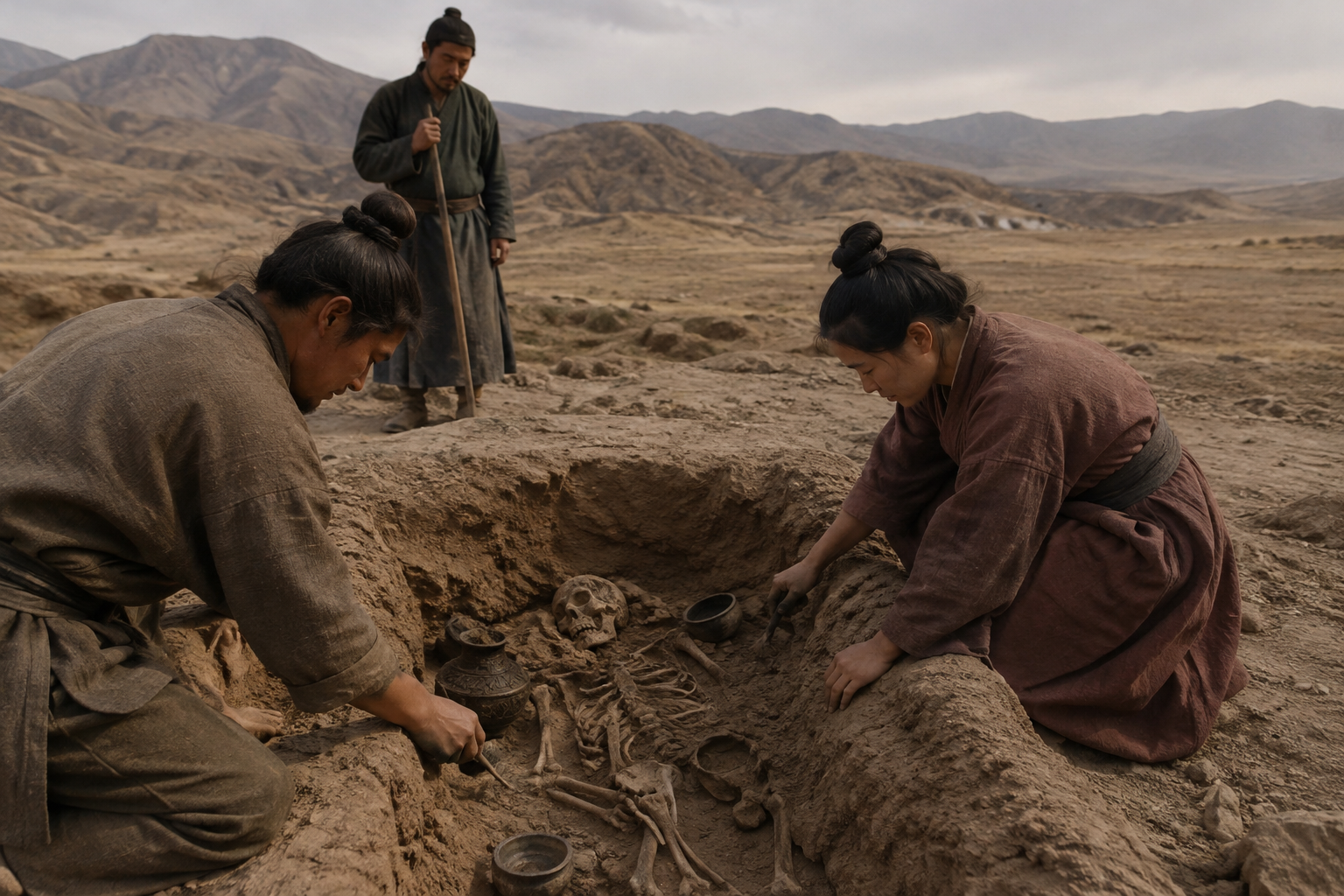
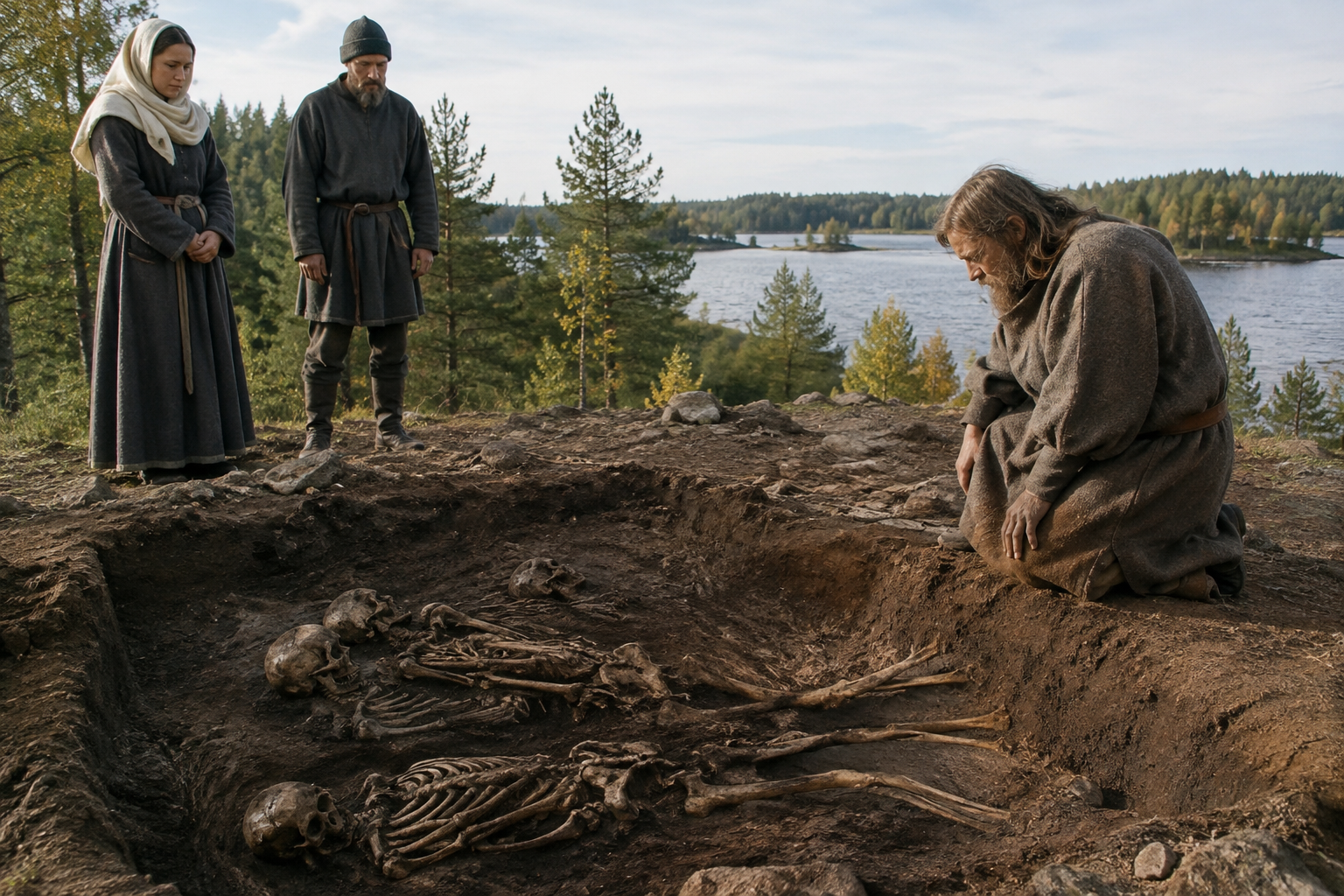
At Mogou cemetery in Lintan, Gansu, one Bronze Age burial has become especially interesting for anyone following the deep history of Y-chromosome lineages in northern China. The individual known as MogouM379_R2_2, dated to around 1450 BC and associated with the Qijia cultural horizon of Bronze Age Gansu, has been linked here with the very specific paternal branch N1a1a1a1a2a1a1a1b1b1b1a.
That mouthful of letters and numbers needs a little unpacking. It is a very narrow branch within the wider Y-DNA haplogroup N, a paternal lineage family with a long history across northern Eurasia. Y-DNA traces one direct male line only - father to father to father - so it does not describe a person's whole ancestry. But when a branch like this turns up in an excavated Bronze Age individual from Gansu, it gives us a properly anchored historical point: a real man, in a real cemetery, in a region that sat between the Yellow River farming world and the steppe-facing northwest.
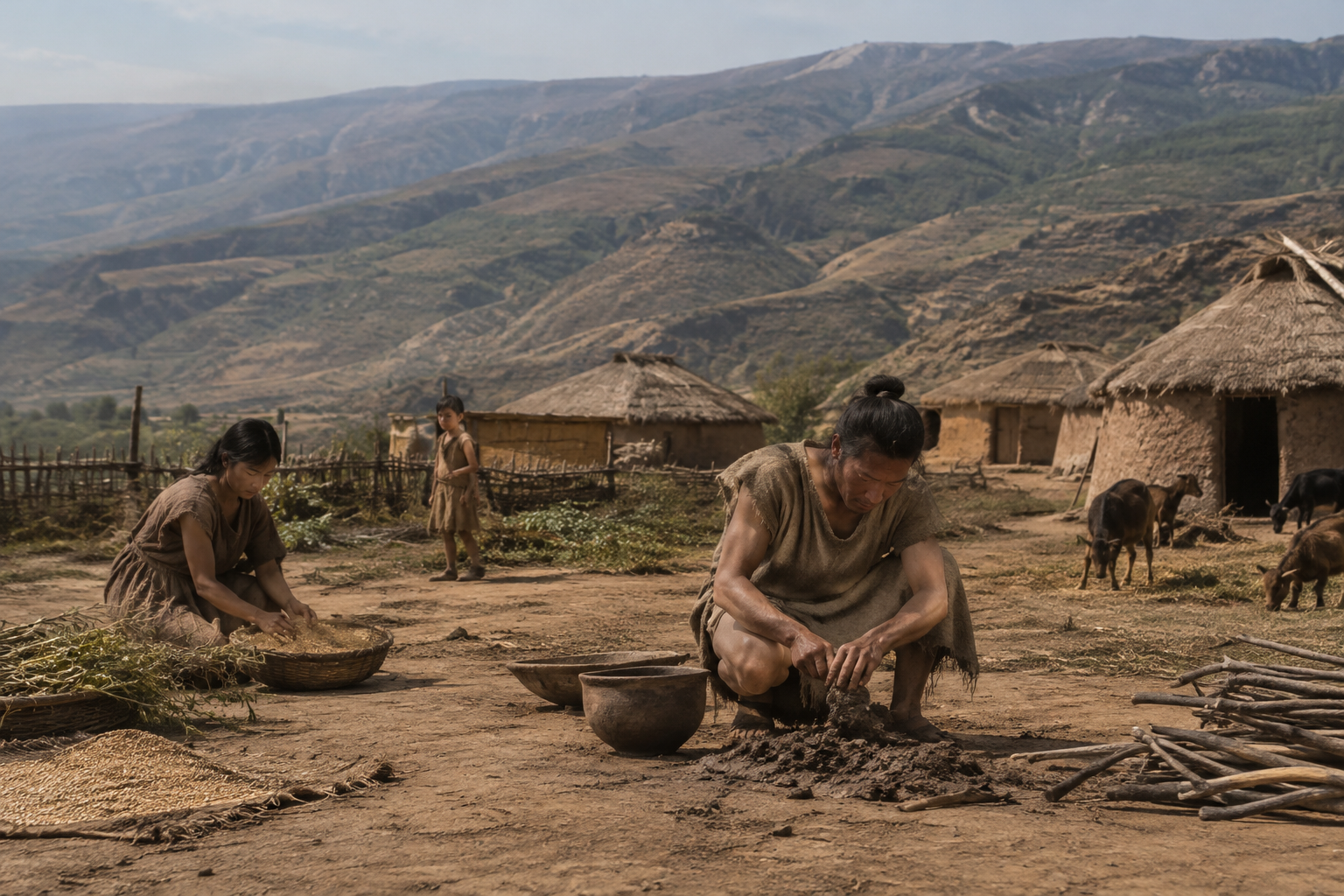
Mogou is one of those sites that matters precisely because it is not a legendary capital or an imperial mausoleum. It is a cemetery used by communities living in the borderlands of Bronze Age northwestern China, where movements of people, technologies, and lifeways could meet and mix. Gansu in the second millennium BC was not a sealed cultural box. It was a contact zone.
The sample MogouM379_R2_2 belongs to that setting. The Qijia world is usually discussed in terms of early metallurgy, mixed subsistence, and its position between the Central Plains and Inner Asian networks. A paternal lineage from this cemetery therefore matters not because one man can stand for an entire culture, but because he helps show what kinds of male lines were present in that frontier landscape.
An ancient DNA study focused on Bronze Age Gansu has helped bring these burials into sharper view, linking cemetery evidence to broader questions of population history in the region. For readers wanting the wider archaeological-genetic context around Mogou, MyTrueAncestry has also covered it here:
The exact branch name N1a1a1a1a2a1a1a1b1b1b1a is far narrower than the broad label "haplogroup N." That distinction is important. The wider N family appears in many populations across northern Eurasia and over long stretches of time. But a precise downstream branch cannot simply be given the whole parent haplogroup's story as if nothing changed along the way.
So the safest historical reading is also the most useful one. This Mogou individual shows that a lineage placed within this very specific paternal line - or reported as associated with it in the present classification - was present in Bronze Age Gansu by around 1450 BC. That is already significant. It places this branch, or a closely related paternal line, in a region often discussed as a corridor of exchange rather than a remote edge.
That matters because the archaeology of Gansu repeatedly shows contact: farming traditions from the east, pastoral influences from the north and west, and the local development of Bronze Age communities in between. A Y-line found here does not by itself reveal language or identity, but it does belong to a human landscape shaped by movement and interaction.
When people look at a haplogroup match, there is always a temptation to draw a neat arrow across the map. Archaeology is usually less tidy, and more interesting. Gansu was part of a chain of valleys and routes that connected the upper Yellow River, the northeastern Tibetan Plateau margins, and the steppe-facing northwest. Communities here could receive influences from several directions without becoming a mere copy of anywhere else.
That is why a sample like MogouM379_R2_2 deserves attention beyond its label. It is not just "an ancient Chinese sample." It comes from a region where Bronze Age societies were negotiating ecology, exchange, and local tradition all at once. In that sense, the haplogroup's presence is historically valuable because it is tied to a place where boundaries were porous and identities were being made on the ground.
The wider context of prehistoric interaction between central China and the steppe is a recurring theme in archaeogenetics. Readers interested in that larger background may want this related piece:
One reason this lineage attracts attention is that haplogroup N, in its broader form, is deeply associated with the northern part of Eurasia in both ancient and modern population studies. But ancient DNA keeps teaching the same useful lesson: broad patterns are real, yet local histories matter. A branch found in one Bronze Age cemetery may represent continuity, recent arrival, or the survival of a line among many others. Without a larger cluster of closely dated males from the same branch, we should not pretend to know which of those applies.
Still, one anchored find is better than a thousand vague assumptions. Mogou gives us a datable Bronze Age foothold. It shows that paternal lines of this wider northern Eurasian family were part of the human mix in Gansu during a period when the region was helping shape the cultural traffic of inland East Asia.
For those following the broader development of East Asian paternal history, another relevant MyTrueAncestry article explores how ancient Y-chromosome evidence has been used to track major coastal and inland patterns:
There is a tendency, especially online, to treat haplogroups as tribal badges. The Mogou evidence points in a better direction. Here we have a specific excavated context from Bronze Age China, not a legend attached to a surname. The value lies in the combination of archaeology and genetics: a burial ground, a period, a region, and a paternal lineage placed within that framework.
Research connected with these Gansu remains is catalogued through the Chinese National Genomics Data Center at https://ngdc.cncb.ac.cn/gsa-human/browse/HRA014036. Even without overclaiming details beyond the sample information at hand, that research setting is enough to place MogouM379_R2_2 in the growing body of ancient DNA work transforming our view of Bronze Age northwestern China.
This is also why single ancient matches can be meaningful for family historians. Not because they prove descent from one excavated man, of course, but because they pin a paternal branch to a historical environment. In this case, the environment is not courtly or imperial, but frontier Bronze Age Gansu: a place of cemeteries, contact zones, and communities living at a crossroads.
For a broader look at long-term genomic history in northern China, this related article gives another useful regional backdrop:
The most distinctive thing about N1a1a1a1a2a1a1a1b1b1b1a in this article is not a sweeping migration tale, but a firm archaeological foothold. A branch within this paternal line appears in MogouM379_R2_2, a Bronze Age individual from Qijia Culture-era Gansu around 1450 BC. For someone researching this haplogroup today, that suggests a paternal history with roots in the northern Eurasian world that had already reached, or was already established in, one of ancient China's key frontier regions by the mid-second millennium BC.
Comments