Haplogroup N1a1a1a1a2a

– 5 min read


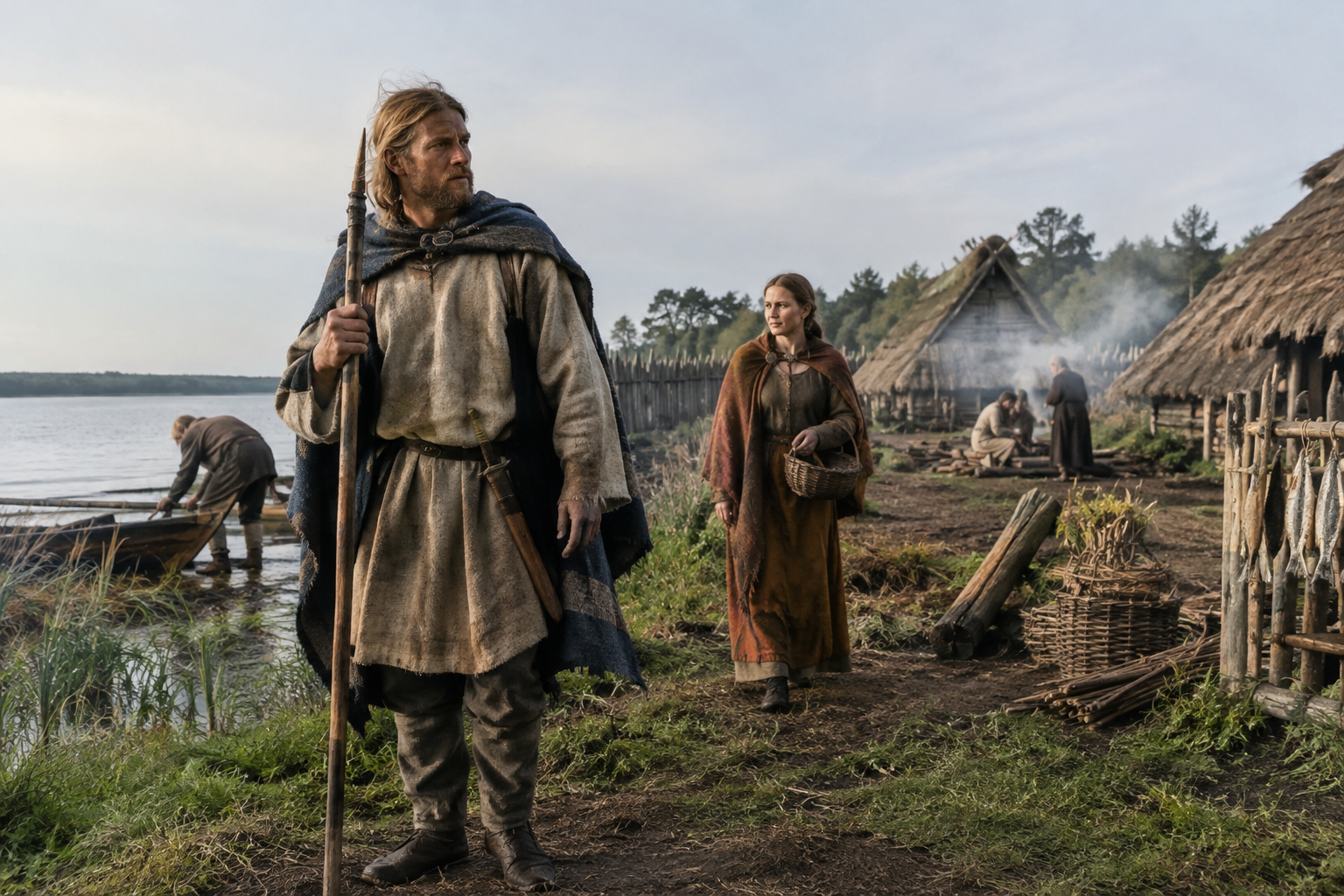
One of the clearest ancient signposts for Y-DNA haplogroup N1a1a1a1a2a comes from Latvia in the Late Iron Age: sample VL2, dated to around AD 900. That is a fascinating moment to catch a paternal lineage in the record. The eastern Baltic at this time was neither isolated nor neatly boxed into one culture. It sat in a busy world of river routes, coastal exchange, raiding, tribute, and local continuity.
So VL2 matters not because one grave can stand for a whole people - it cannot - but because it places this branch in a real historical landscape. Here, in early medieval Latvia, a direct paternal line associated with the wider N haplogroup family appears in the kind of setting where Baltic, Finnic, and Scandinavian worlds overlapped.
The sample identifier VL2 is recorded from Latvia and dated to about AD 900, within the Late Iron Age. That date lands in what is often called the Viking Age in Baltic history, though the phrase can be misleading if it makes us imagine only Scandinavians. In Latvia and its neighboring regions, this was also the age of strong local societies, fortified places, trading links, and shifting contacts across the eastern Baltic sea and inland waterways.
For a man carrying haplogroup N1a1a1a1a2a, that setting is historically significant. Y-DNA tracks one direct paternal line only - father to son across generations - so it tells us something specific but narrow. It does not define the whole ancestry, language, or identity of VL2. Still, a paternal lineage in this branch appearing in Latvia around AD 900 fits a wider pattern in which branches of haplogroup N are especially relevant to the population history of northeastern Europe.
A regional research project on the Viking Age in Latvia provides the archaeological context for these investigations at the University of Latvia's interdisciplinary study of the Viking Age in Latvia. Even when a short sample listing gives only a date, place, and identifier, that context matters: ancient DNA is most useful when it is anchored to excavated cemeteries and historically legible landscapes.
The long string of letters and numbers can look forbidding, but it tells a simple story: N1a1a1a1a2a is a narrow sub-branch within the broader Y-DNA haplogroup N tree. That distinction is crucial. The ancient history of haplogroup N as a whole stretches across northern Eurasia and includes many different branches with different regional histories. You cannot simply take the map of all N lineages and paste it onto this one subclade.
What VL2 gives us is not the full origin story of N1a1a1a1a2a, but a firm data point showing that this paternal branch, or an assignment closely associated with it, was present in Latvia by the Late Iron Age. For members of MyTrueAncestry carrying this haplogroup today, that is the useful historical scale: not an invented saga of one tribe marching intact across continents, but evidence that this line belonged to the northern and northeastern European world that connected the Baltic coast to deeper inland networks.
The temptation with ancient Y-DNA is always to oversimplify. A branch appears in Latvia, and immediately people want it to be "Baltic," "Finnic," "Viking," or something equally tidy. But the eastern Baltic around AD 900 was exactly the sort of place that resists tidy labels. Communities in present-day Latvia interacted with peoples speaking different languages, belonging to different local traditions, and participating in trade systems that reached both westward across the sea and eastward along river corridors.
That makes VL2 especially interesting. A paternal line like N1a1a1a1a2a in this setting may reflect local continuity, older regional structure, or movement across nearby Baltic and Finnic zones. What it does not do, by itself, is prove that the individual was a migrant from one precise homeland, or that he belonged to a named ethnic group known from later chronicles. Ancient DNA is strongest when it helps us see complexity rather than flatten it.
This is one reason the eastern Baltic has become so important in archaeogenetics. The region preserves evidence for interaction without erasing local distinctiveness. In other words, it is exactly the place where a paternal lineage can be both regionally rooted and historically mobile.
Early medieval Baltic connections
Although this article is about the specific branch N1a1a1a1a2a, its broader family matters because haplogroup N has long been one of the major paternal lineages discussed in the peopling of northern Eurasia and parts of northeastern Europe. Different sub-branches appear in different populations and periods, often in ways that intersect with the history of Uralic-speaking groups, forest-zone mobility, and the complicated demographic formation of the Baltic-Finnic north.
That does not mean every carrier of N1a1a1a1a2a should be assigned a language or ethnicity from a textbook. Languages spread in messy ways; genes do too. But the broader backdrop helps explain why a sample like VL2 deserves attention. It sits within a paternal lineage family that has real depth in the north, yet appears here in an early medieval Baltic context where cultural boundaries were permeable and alliances practical.
Readers interested in the wider northern setting may want to compare this with MyTrueAncestry's discussion of Finnic peoples of Russia and their Y-chromosomal history. That broader perspective helps place a Latvian Late Iron Age sample in the larger map of northern Eurasian paternal variation, while still keeping clear that one branch is not the whole tree.
With only one directly supplied ancient sample, the responsible approach is modest but not timid. VL2 shows that N1a1a1a1a2a was present in Latvia around AD 900. That alone is already useful. It ties the haplogroup to a documented early medieval context in the eastern Baltic, where interaction between Baltic and Finnic populations formed part of everyday history rather than some rare exception.
It also nudges us away from a very old habit in popular history: imagining Europe as if every region were genetically static until invaders arrived. The archaeology of the Baltic, and increasingly the DNA as well, points instead to long-lived local populations linked by movement, exchange, and layered identities. A Y-line such as N1a1a1a1a2a fits comfortably into that world.
If your Y-DNA falls under N1a1a1a1a2a, the most defensible historical takeaway from the evidence here is not a grand claim of royal descent or a single named tribe. It is something better grounded: this paternal line is documented in the eastern Baltic by the Late Iron Age, in a region deeply involved in the making of northeastern Europe's early medieval population history. Sample VL2 gives that statement an archaeological foothold.
That is often how the best ancient DNA works. It does not hand you a legend; it gives you a place, a period, and a human reality. In this case, the reality is a man in early medieval Latvia whose paternal line now helps illuminate the history of N1a1a1a1a2a.





Comments