Haplogroup N1a1a1a1a2

– 5 min read


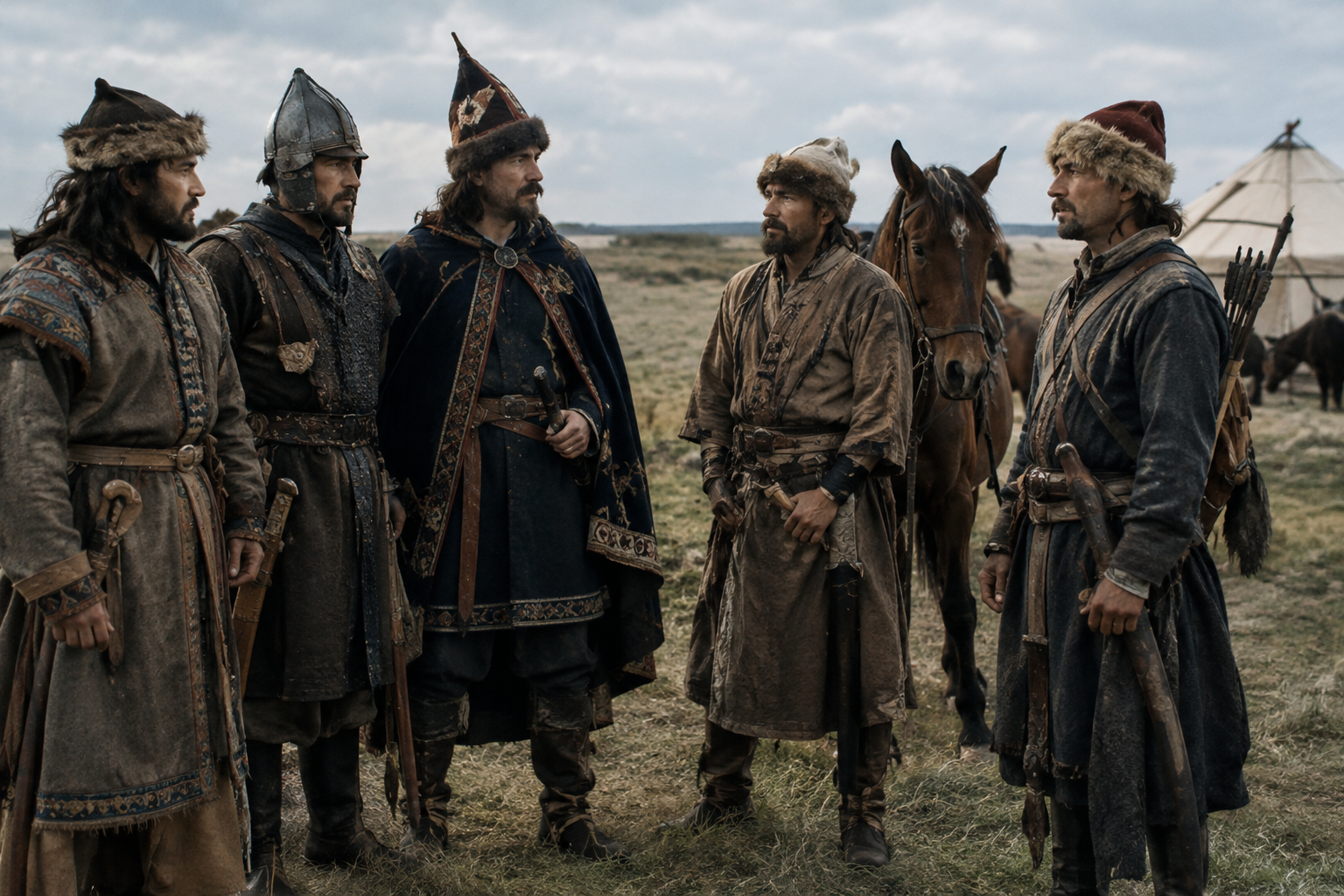
At Szakony-Kavicsbanya in western Hungary, one of the best known graves of the 10th-century conquering elite yielded an individual labelled SZAK-1, dated to about AD 950. He matters here not because one grave can explain a people, but because his paternal line is reported within the branch N1a1a1a1a2 - a lineage that appears again in several other conquest-period Hungarian burials and, further back in time, far to the east in Siberia and the forest-steppe fringe of Russia.
That is already enough to make this haplogroup interesting. Y-DNA traces one direct male line rather than a person's whole ancestry, yet even that narrow thread can be historically revealing when it turns up in different archaeological worlds: a Bronze Age site on the western Siberian plain, an Iron Age burial in the Volga-Kama zone, and elite cemeteries of the Hungarian conquest period in the Carpathian Basin.
The strongest concentration in the material here comes from the 10th century AD. Alongside SZAK-1 from Szakony-Kavicsbanya, the branch is also represented by K2per29_GE from Karos II and by two individuals from Kenezlo-Fazekaszug, KeF2per1027_GE and KeF2per1045_GE, all dated around AD 900-950. These are classic sites for the archaeology of the Hungarian conquest period, associated with the incoming Magyar elite and their early generations in the Carpathian Basin.
What makes the pattern useful is repetition across multiple cemeteries rather than any single glamorous burial. When the same paternal branch appears in more than one conquest-period context, it suggests that N1a1a1a1a2 was part of the male-line diversity present among at least some groups involved in the formation of early Hungarian elite society. It does not mean every conquering Hungarian male belonged to this line, nor that one haplogroup defines Magyar identity. But it does support the long-standing observation that eastern and northeastern Eurasian paternal components were present among sections of the conquering population.
A frequently cited genetic study of Hun, Avar, and conquering Hungarian period males helped bring attention to exactly this kind of eastern-linked Y-chromosome signal in the Carpathian Basin, including lineages within haplogroup N found among conquest-period individuals: research on Hun, Avar, and conquering Hungarian period nomadic populations.
Haplogroup N, in its broader sense, is one of the major paternal lineages associated with northern Eurasia, especially across parts of Siberia, the forest zone, and among several Uralic-speaking populations. But the article's branch is not haplogroup N in general: it is the much narrower subclade N1a1a1a1a2. That distinction matters. The broad history of haplogroup N cannot simply be pasted onto every smaller branch beneath it.
What the ancient evidence here does allow us to say is more specific and more interesting. This branch appears in settings linked to the eastward horizons often discussed in relation to early Hungarian ethnogenesis and to the wider northern Eurasian world. In other words, the line does not first appear in the Carpathian Basin out of nowhere. Its older appearances lie well beyond it.
The earliest sample in this small dossier is I32545 from Rostovka, dated to about 1863 BC and associated with the Seima-Turbino horizon on the western Siberian plain. That date is important because it places an ancestral-looking occurrence of this paternal line deep in Bronze Age northern Eurasia, long before the emergence of medieval Hungarians.
Seima-Turbino is one of those archaeological phenomena that historians love and students dread: it is spread across a vast area, marked by striking metalworking traditions, mobility, and long-distance connections, but it is not a simple ethnic label. So one must be careful. Still, a line found at Rostovka fits well with the wider impression that branches under haplogroup N were established in northern Eurasian populations over a very long timespan, and that some of these male lines later moved through very different cultural worlds.
Recent large-scale ancient DNA work on Eurasia has increasingly sharpened this long view of movement, mixture, and regional continuity across the steppe and forest-steppe, including areas relevant to the deeper background of such lineages: a major ancient DNA study in Nature.
Another useful marker comes from CGG021462, dated around AD 424 and described as an Iron Age individual from Dubrovsky in Russia, classified here within the Mazunino sphere. Geographically, this is a world between eastern Europe and the western Ural region, exactly the sort of contact zone where forest, steppe, and riverine routes overlapped.
This matters because it gives N1a1a1a1a2 a middle chapter between Bronze Age Siberia and the 10th-century Carpathian Basin. We are no longer looking only at a far eastern origin point and a much later Hungarian appearance; we can also glimpse the lineage in the Volga-Kama zone during late antiquity. That does not prove an unbroken documented genealogy from Rostovka to Dubrovsky to Karos. Archaeology almost never gives us that luxury. But it does show that the branch belonged to the human landscape of northern Eurasia across very different periods.
The historical importance of that landscape is considerable. The Volga-Kama and adjacent Ural regions were crossroads for Uralic-speaking groups, steppe polities, traders, and mobile communities long before medieval states fixed modern borders. For anyone studying the paternal history of the conquering Hungarians, these are not marginal territories; they are part of the central background.
The conquest-period Hungarian samples are particularly intriguing because they come from cemeteries often associated with higher-status groups. SZAK-1, K2per29_GE, KeF2per1027_GE, and KeF2per1045_GE show that this branch was not merely present somewhere on the fringes; it appears in burials central to debates about the composition of the conquering elite.
Even so, the responsible reading is a measured one. A Y-line can persist through social change, language shift, political alliance, and intermarriage. Men carrying N1a1a1a1a2 could have belonged to communities speaking different languages at different times, and their descendants in Hungary were part of mixed populations rather than a sealed biological bloc. The value of the evidence lies in connection, not purity.
For that reason, this haplogroup is best understood as one paternal strand within the eastern and northeastern elements visible in conquest-period Hungary. It fits a historical picture in which the early Magyar confederation drew on populations shaped in the broad zone stretching from the Urals and western Siberia into the Pontic and Carpathian worlds.
So what is distinctive about N1a1a1a1a2? Not that it belongs to one tribe, one kingdom, or one modern nation, but that its ancient appearances form a plausible arc across northern Eurasia: Bronze Age western Siberia, late antique Russia's Volga-Kama region, and the elite cemeteries of conquering Hungarians in the Carpathian Basin. For someone researching this paternal line today, that is the real historical signal - an ancestry thread tied to the deep eastern background of medieval Hungary, and to older populations far beyond it.
Comments