Haplogroup N1a1a1a1a1a1a7a2

– 5 min read


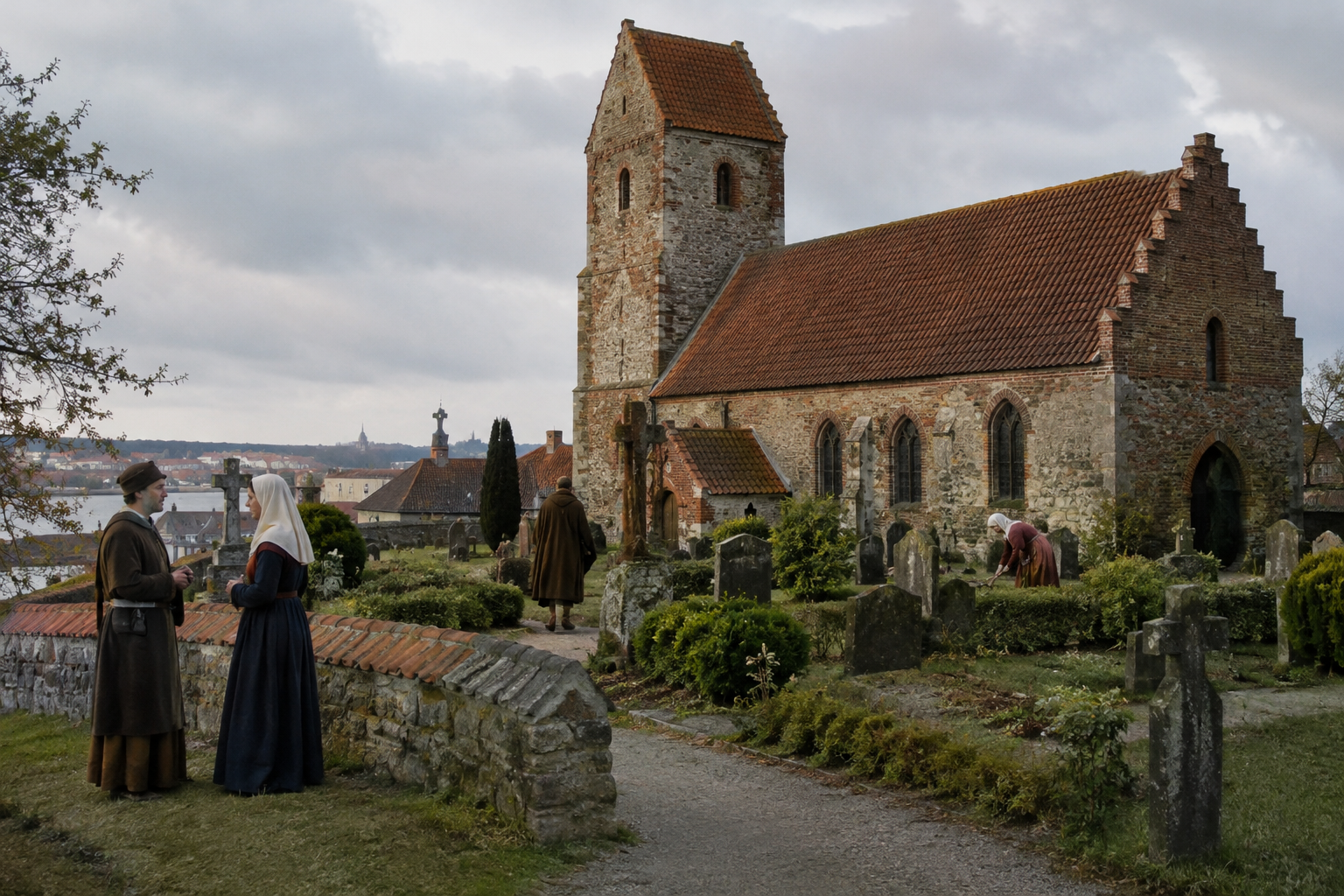
In medieval Aalborg, at Vor Frue Kirkegard in Jutland, one man buried around AD 1425 has become an unexpectedly useful witness to the history of a rare paternal line. He is recorded simply as sample CGG100415, but his Y-DNA assignment to N1a1a1a1a1a1a7a2 makes him stand out in a region more often discussed through Viking, Germanic, and later medieval political history than through eastern-leaning paternal lineages.
That is what makes this find interesting. Not because one burial can rewrite the history of Denmark, and certainly not because a Y chromosome defines the whole ancestry of a person, but because it shows that by the late Middle Ages a branch within haplogroup N had reached, and was living within, an urban Christian community in northern Denmark. The sample is a reminder that medieval Scandinavia was not genetically monotonous. It was a world of ports, clergy, merchants, migrants, and families whose deeper paternal roots could come from surprisingly distant historical processes.
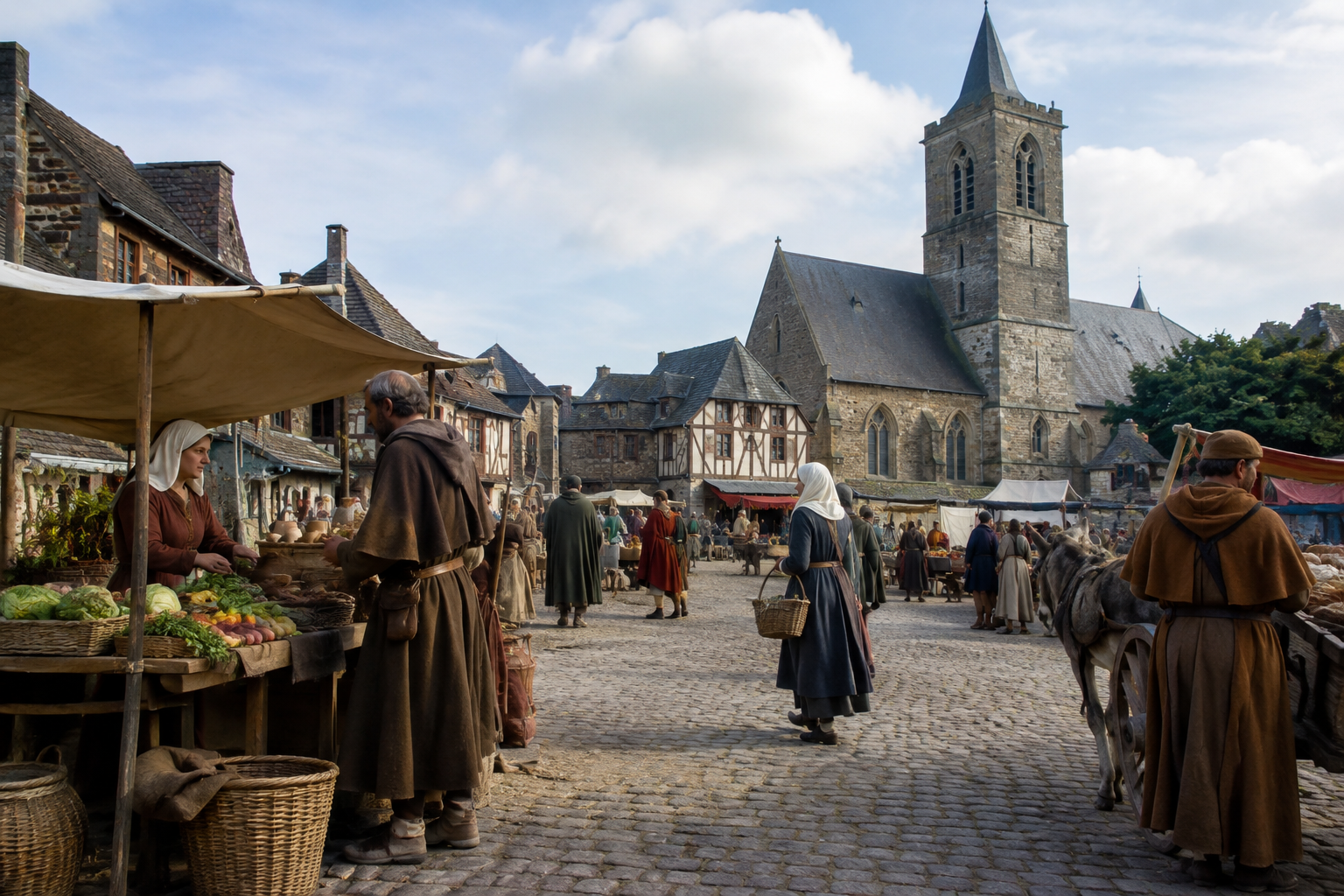
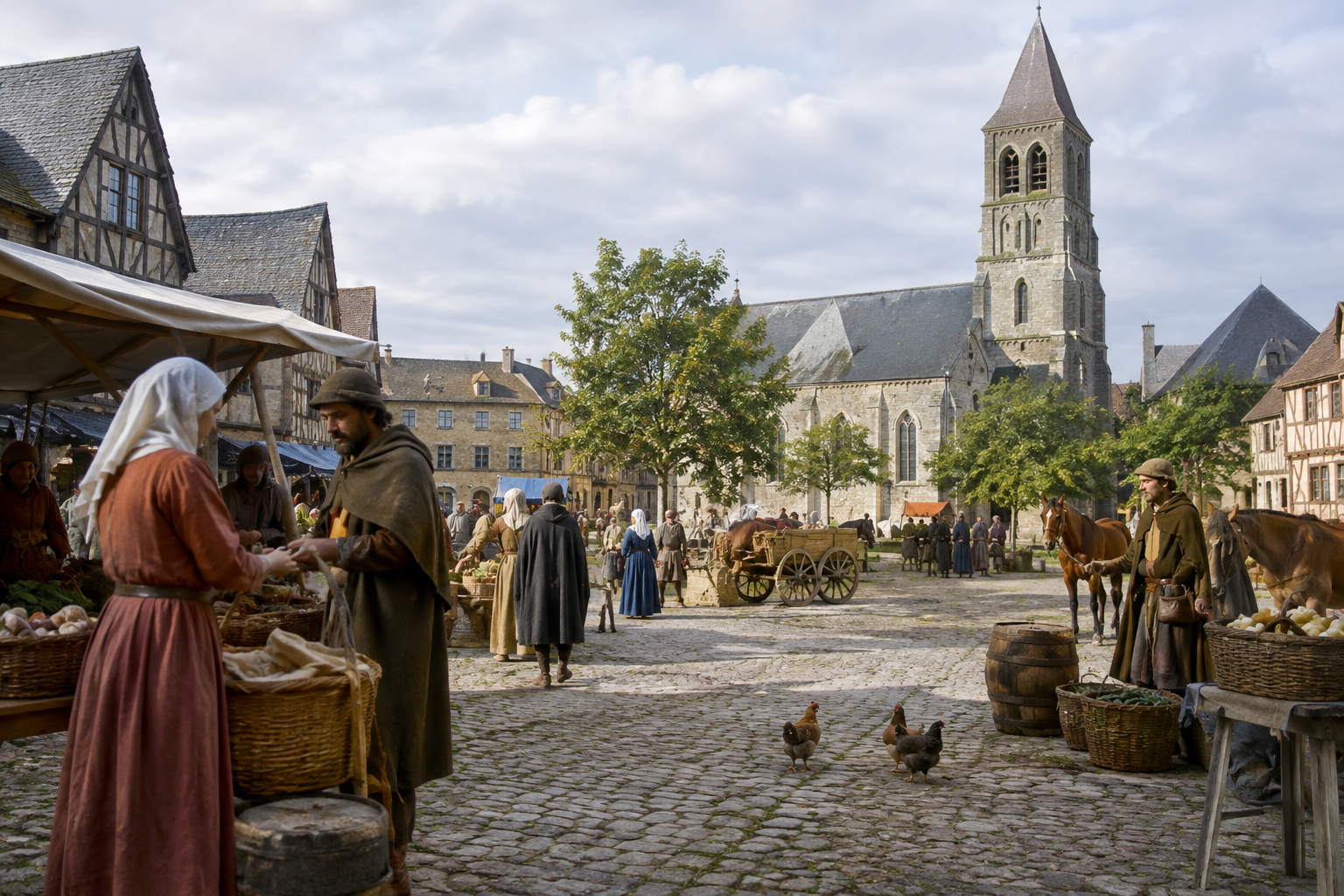
Aalborg was no isolated village. In the later Middle Ages it was one of the important towns of northern Jutland, tied into traffic across the Limfjord and the wider North Sea and Baltic worlds. A burial from Vor Frue Kirkegard therefore belongs to a landscape shaped by trade, ecclesiastical institutions, and repeated movement of people, whether over short local distances or much longer ones.
That context matters when thinking about CGG100415. A Y-DNA lineage such as N1a1a1a1a1a1a7a2 does not tell us his profession, social rank, or language, and it certainly does not let us pin a single migration story onto his life. But it does place his direct paternal line inside a branch of N that has broader associations across northern Eurasia and among several Uralic- and northeastern European-linked populations, even though this exact subclade is much narrower than the parent haplogroup.
A research preprint examining ancient individuals from the region is available at https://www.biorxiv.org/content/10.1101/2025.02.28.640770v1. Without forcing the evidence beyond what is currently stated, the Aalborg burial fits the larger lesson of medieval northern Europe: local cemeteries could contain lineages whose deeper histories stretched well beyond the tidy ethnic labels of schoolbook history.
Early Christian DNA in Scandinavia
The alphabet soup is daunting, but the principle is simple enough. N1a1a1a1a1a1a7a2 is a very specific twig on a much larger paternal tree. Y-DNA follows one direct male line only: father to son to grandson and so on. That means it can illuminate one narrow thread of ancestry, but never the whole cloth.
The wider haplogroup N is best known today across parts of northern Eurasia, especially among Finnic, Baltic-adjacent, Siberian, and some northeastern European populations. Yet it would be careless to transfer that broad map directly onto this exact medieval Danish branch. A subclade can have a much more restricted and more recent history than its parent lineage. The important point here is not that medieval Aalborg was somehow "Finnic" or "eastern," but that a paternal line nested within haplogroup N had become part of a Danish burial community by the fifteenth century.
This is precisely the sort of finding that complicates neat national stories. Medieval populations were built not only from great invasions remembered in chronicles, but from quieter movements: marriage, military service, commerce, clerical careers, apprenticeship, and coastal mobility. One Y chromosome cannot tell us which of those routes brought this lineage into Jutland, but it shows that such routes existed.
Jutland is sometimes imagined as a solid northern block at the edge of Europe. Archaeology tells a different story. For millennia it has been a hinge region, facing the North Sea, the Baltic, and the continental mainland. By the Middle Ages, that made towns such as Aalborg participants in a world of Hanseatic exchange, Danish royal administration, church networks, and maritime travel.
Seen against that background, the presence of N1a1a1a1a1a1a7a2 in a medieval cemetery becomes less bizarre and more historically plausible. Northern Europe had long been criss-crossed by people from Scandinavia, the eastern Baltic, the Gulf of Finland, and farther inland. Some arrived dramatically and left traces in texts; many others arrived unannounced and are visible only when archaeology and DNA happen to catch them.
That is also why caution matters. The burial does not prove that CGG100415 was an immigrant, nor that his paternal ancestors had arrived only recently. A lineage can be present in a region for generations before the one person we happen to sample. The value of this find lies in anchoring the branch in a specific place and period: medieval Aalborg, around AD 1425.
Germanic Languages and Genomics
Ancient DNA has steadily chipped away at the old notion that Scandinavian history can be read as a single uninterrupted biological line from prehistory to the present. The region has seen repeated shifts: Mesolithic foragers, Neolithic farmers, Steppe-related Bronze Age ancestry, Iron Age regional variation, Viking Age mobility, and medieval urban mixing. Denmark in particular sits at the meeting point of continental and Scandinavian developments.
That broad background helps frame why a lineage like N1a1a1a1a1a1a7a2 should not be dismissed as an anomaly with no historical meaning. Haplogroup N is not the dominant story in Denmark, but minority lineages are often the most revealing when we are trying to understand how real communities were formed. They can preserve signals of contact that written sources barely register.
For readers interested in the longer genetic background of Denmark itself, the Mesolithic and Neolithic transitions are especially important, because they show how radically populations could change long before the medieval period. Later lineages in Danish towns belong on top of that already complicated foundation.
Denmark's Deep Population History
It is easy to underrate a single sample when there is no king attached to it, no saga hero, and no glittering grave goods. But ordinary burials are often better historians than famous names. They show who was actually present in a community, not just who was celebrated in texts.
CGG100415 matters because he gives this rare branch a secure medieval foothold in Denmark. In practical terms, that means men who belong to N1a1a1a1a1a1a7a2 today are not looking at an abstract phylogenetic label alone; they are looking at a paternal line that is now archaeologically attested in late medieval Jutland. That is modest evidence, but solid evidence often is modest.
The find also fits a wider northern pattern in which the Baltic and Scandinavian worlds were deeply entangled. Medieval cemeteries, especially in towns and churchyards, are exactly where we should expect to see that complexity emerge. Not as a grand ethnic revelation, but as a patient accumulation of individual lives.
Finland and Baltic Connections
For this haplogroup, the clearest historical signal currently comes from one real person in one real cemetery: CGG100415 from Vor Frue Kirkegard, Aalborg, around AD 1425. That does not turn N1a1a1a1a1a1a7a2 into a specifically "Danish" lineage, nor does it identify a single route by which the branch reached Jutland. What it does show is that this direct paternal line belonged to the lived population of medieval Scandinavia, in a town connected to the wider northern world by sea, trade, and faith.
Comments