Haplogroup M

– 5 min read


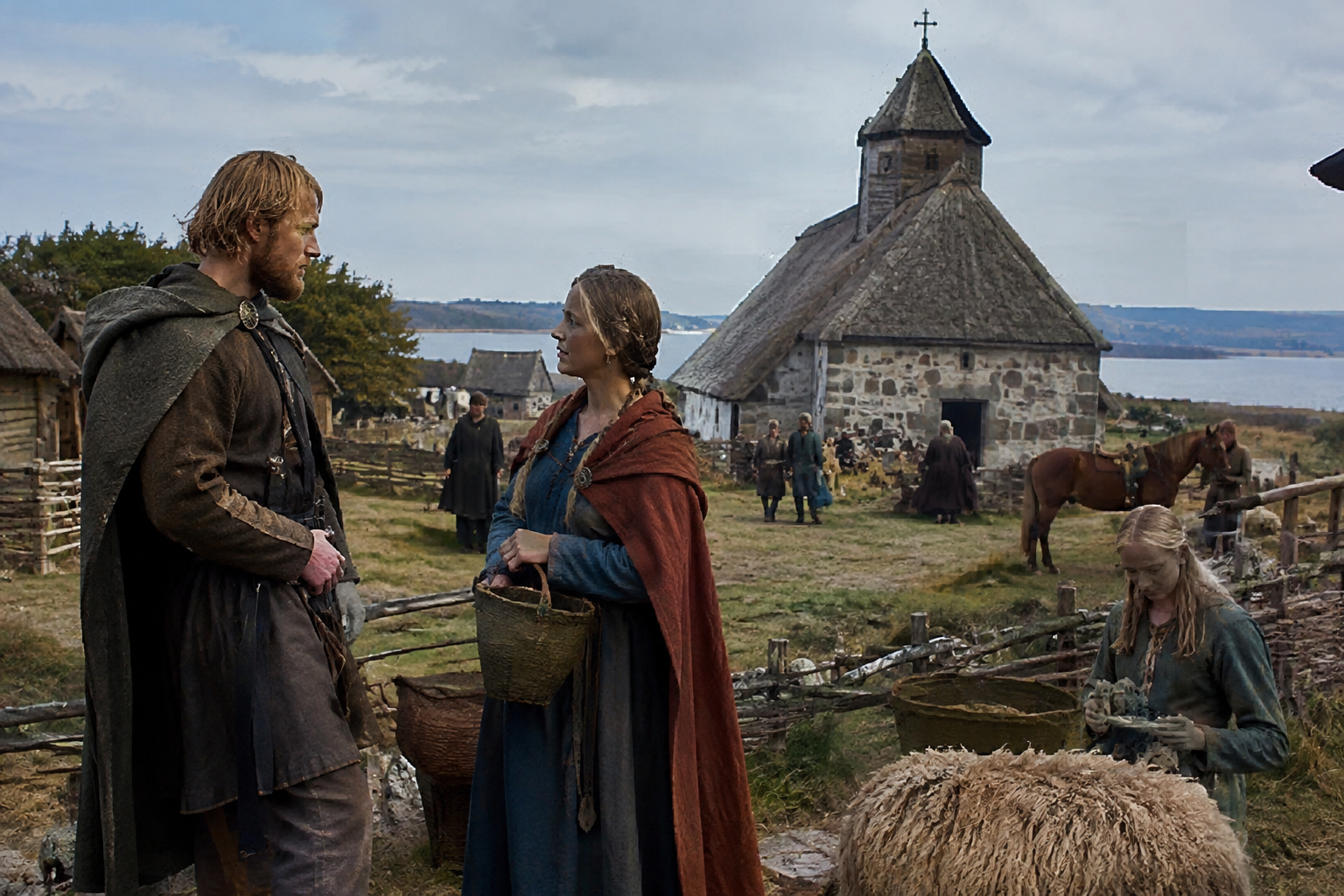
At Viborg's Sct. Drotten cemetery in Denmark, one man buried around AD 1050 has left a rather unexpected paternal clue. The ancient individual identified as KH181711_KH181712, from the Late Viking Age, has been associated with Y-DNA haplogroup M - a striking result in a Scandinavian medieval context, precisely because haplogroup M is a very broad and comparatively uncommon paternal lineage in Europe.
That is the first thing worth saying clearly. A Y-chromosome haplogroup tracks one direct male line only: father to father to father. It does not sum up a person's whole ancestry, language, identity, or social role. But when a lineage that is better known on a wider Eurasian map turns up in a Viking Age or immediately post-Viking Age burial in Denmark, it sharpens an old historical point: early medieval Scandinavia was connected to a far larger world than the tidy modern national map suggests.
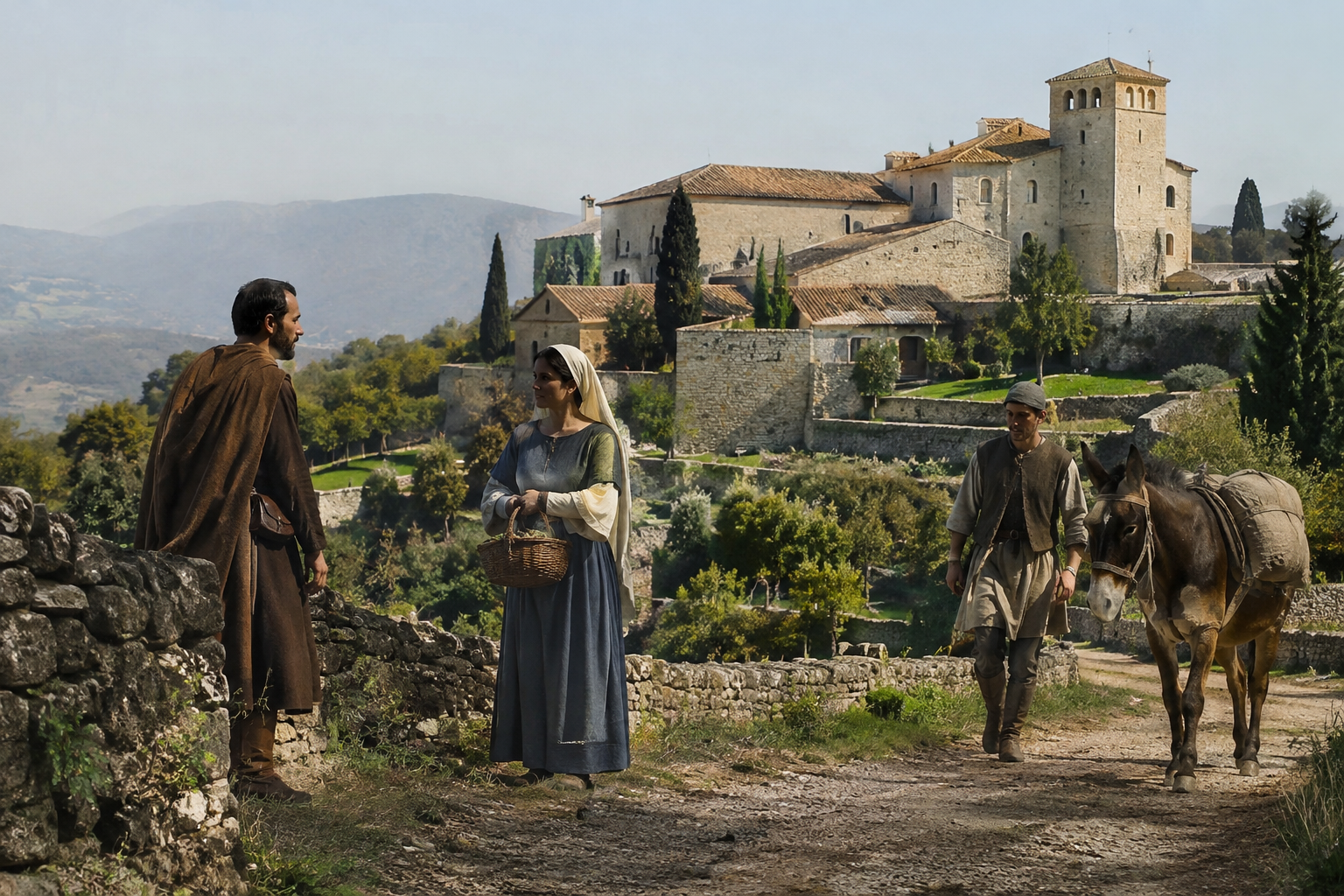
Viborg was not a marginal place. In the Viking Age and early medieval centuries it sat within the political and ecclesiastical life of Jutland, and cemeteries associated with churches such as Sct. Drotten belong to the period when older Scandinavian worlds were being reshaped by Christianity, kingship, and growing regional networks. A burial dated to around AD 1050 stands right on that hinge between the late Viking Age and the firmly Christian Middle Ages.
That makes KH181711_KH181712 interesting beyond the bare haplogroup label. Haplogroup M here is not evidence for some simple, single migration story, nor does it turn this man into an exotic outsider by default. What it does show is that the paternal landscape of medieval Denmark could include lineages not usually treated as characteristically Scandinavian in popular accounts.
Haplogroup M is a deep parent branch, not a neat medieval ethnic badge. In modern population genetics, lineages under M are better known from parts of Asia, Oceania, and some surrounding regions than from northern Europe. That is exactly why this Danish case catches the eye. But one ancient assignment at the level of a broad parent haplogroup should be handled with care.
In practice, that means two things. First, we should not invent a more precise subclade than the evidence provided here supports. Second, we should not pretend that one paternal line can tell us the full life story of the man buried at Viborg. He may have had recent male-line forebears from afar, or he may represent an older and rarer strand already circulating within wider European populations. The lineage alone cannot choose between those possibilities.
Still, in archaeological terms, rarity matters. Unusual Y-DNA findings can reveal that medieval towns and churchyards were not genetically sealed communities. They were places where long-distance contacts, mobility, marriage, slavery, trade, warfare, pilgrimage, and service all had the potential to leave descendants.
By the 10th and 11th centuries, Scandinavia was entangled in routes stretching across the North Atlantic, the British Isles, the Baltic, the Frankish world, and river systems reaching deep into eastern Europe. Viking mobility was not just raiding. It also meant mercenary service, commerce, settlement, religious travel, and the movement of craftspeople and dependants. A burial in Denmark from around AD 1050 sits inside that great churn of people.
That broader setting is what makes haplogroup M at Viborg historically plausible without requiring any melodrama. Medieval populations were often more mixed than later origin stories allowed. Research on early medieval mobility across northern Europe has repeatedly shown that local cemeteries could include individuals with ancestry profiles or disease histories pointing to movement over considerable distances, as seen in related work on medieval Germany and the Rhineland.
That does not mean every unusual haplogroup marks a first-generation arrival from the other end of Eurasia. But it does mean we should stop imagining Viking and post-Viking communities as biologically uniform. The archaeology of northern Europe keeps pushing in the opposite direction: these were connected societies, open to arrivals and shaped by movement.
Sct. Drotten was a Christian burial setting, and that matters. Churchyard cemeteries of the 11th century are evidence for communities being reorganised around new institutions, new forms of memory, and new ideas of belonging. A man carrying haplogroup M buried in such a place was not left on the margins of society's dead; he was part of the community represented in that cemetery.
That point is easy to miss if one looks only at the genetic label. The archaeology reminds us that a paternal lineage, however unusual in regional terms, existed within a shared local framework of burial and social recognition. This is one of the useful correctives provided by ancient DNA: it can reveal striking biological variety inside settings that archaeology already shows were socially integrated.
An ancient DNA study connected with medieval health and susceptibility in Europe has included material from this general historical landscape, and it helps frame the value of such burials as sources for both biological and social history: https://www.researchgate.net/publication/377645781_Ancient_DNA_study_provides_clues_to_leprosy_susceptibility_in_medieval_Europe. Even where one paper does not answer every question about one man, it shows how medieval cemeteries can be read as archives of movement, kinship, disease, and population structure all at once.
Readers sometimes expect a haplogroup article to deliver a tidy homeland and a single arrow across the map. Haplogroup M resists that sort of storytelling, especially in a medieval Danish case. The better historical approach is to ask what sort of society could contain such a lineage. Late Viking Age Denmark is, in fact, an excellent answer: commercially active, politically consolidating, increasingly Christian, and linked by sea and river to multiple worlds.
Seen like that, KH181711_KH181712 is not a curiosity detached from history. He belongs to a moment when Danish communities were both local and international. The presence of haplogroup M does not rewrite all Scandinavian history, but it does underline that even apparently familiar medieval populations could contain paternal lines from unexpectedly wide horizons.
If your direct paternal line falls under haplogroup M, this Viborg individual offers something valuable even in its sparseness: proof that such a lineage could be present in medieval northern Europe, inside a documented Danish burial context around AD 1050. That is not the same as proving descent from this man or from Viking Age Denmark in general. But it does place haplogroup M within a real and rather memorable archaeological setting.
For family historians, that is often how ancient DNA is most useful. Not by granting a costume and a saga at once, but by showing that a paternal line was already moving through complicated, connected historical worlds. In this case, haplogroup M appears not on the edge of civilisation, but in a churchyard at Viborg, in the closing centuries of the Viking Age, where local burial practice and long-distance human history met in one grave.
Comments