Haplogroup J2a1a1a2b2a2b1

– 5 min read


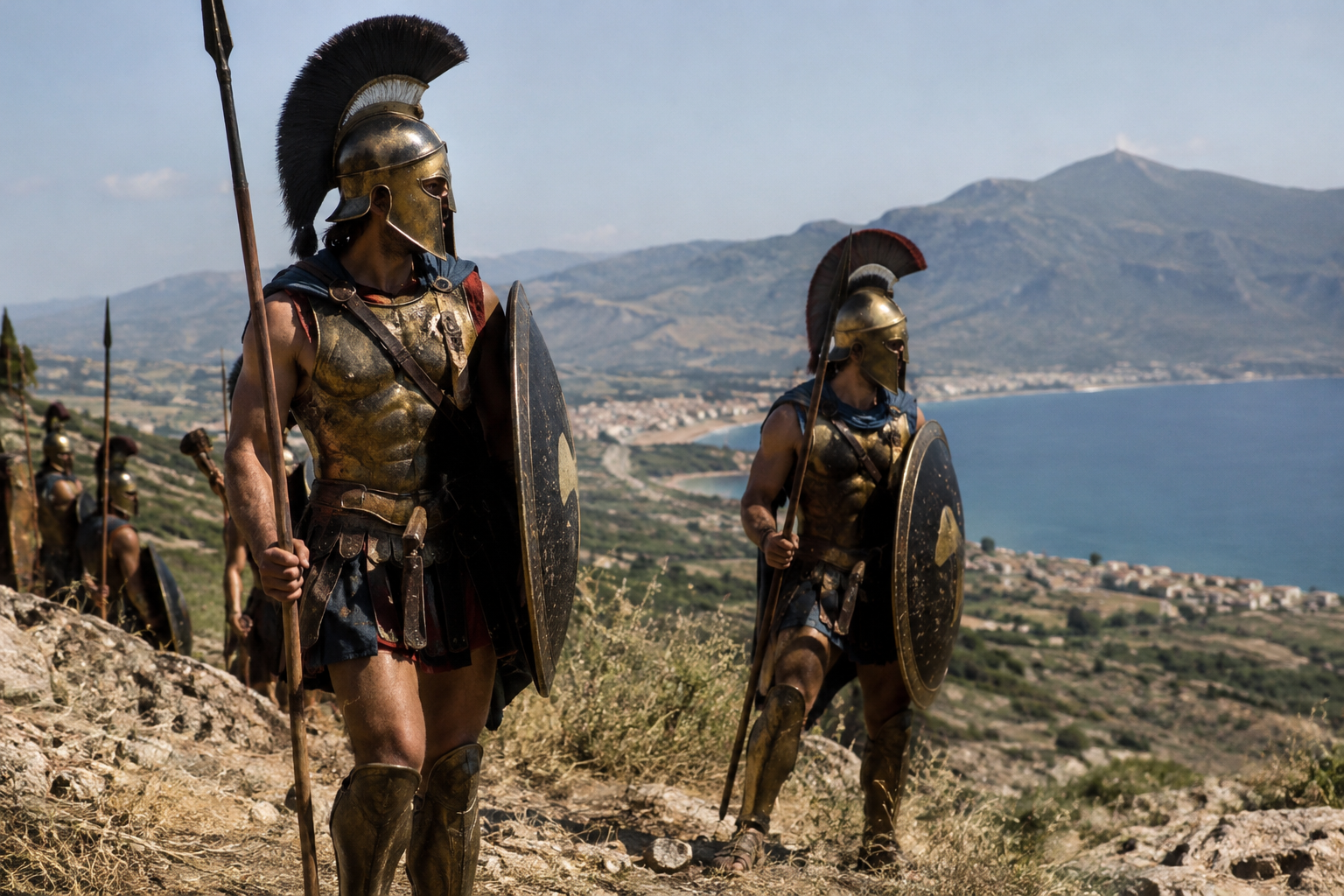
At Himera on the north coast of Sicily, the dead of the Second Sicilian War have become unexpectedly eloquent. Among the ancient individuals recovered from the battlefield context is I7223, dated around 409 BC, and a related record I7223x, both identified as ancient Greek warriors from the destruction of the city. For anyone exploring the Y-DNA haplogroup J2a1a1a2b2a2b1, that is a striking place to begin: not with an abstract origin story, but with a man caught up in one of the best-known collisions of the classical Mediterranean.
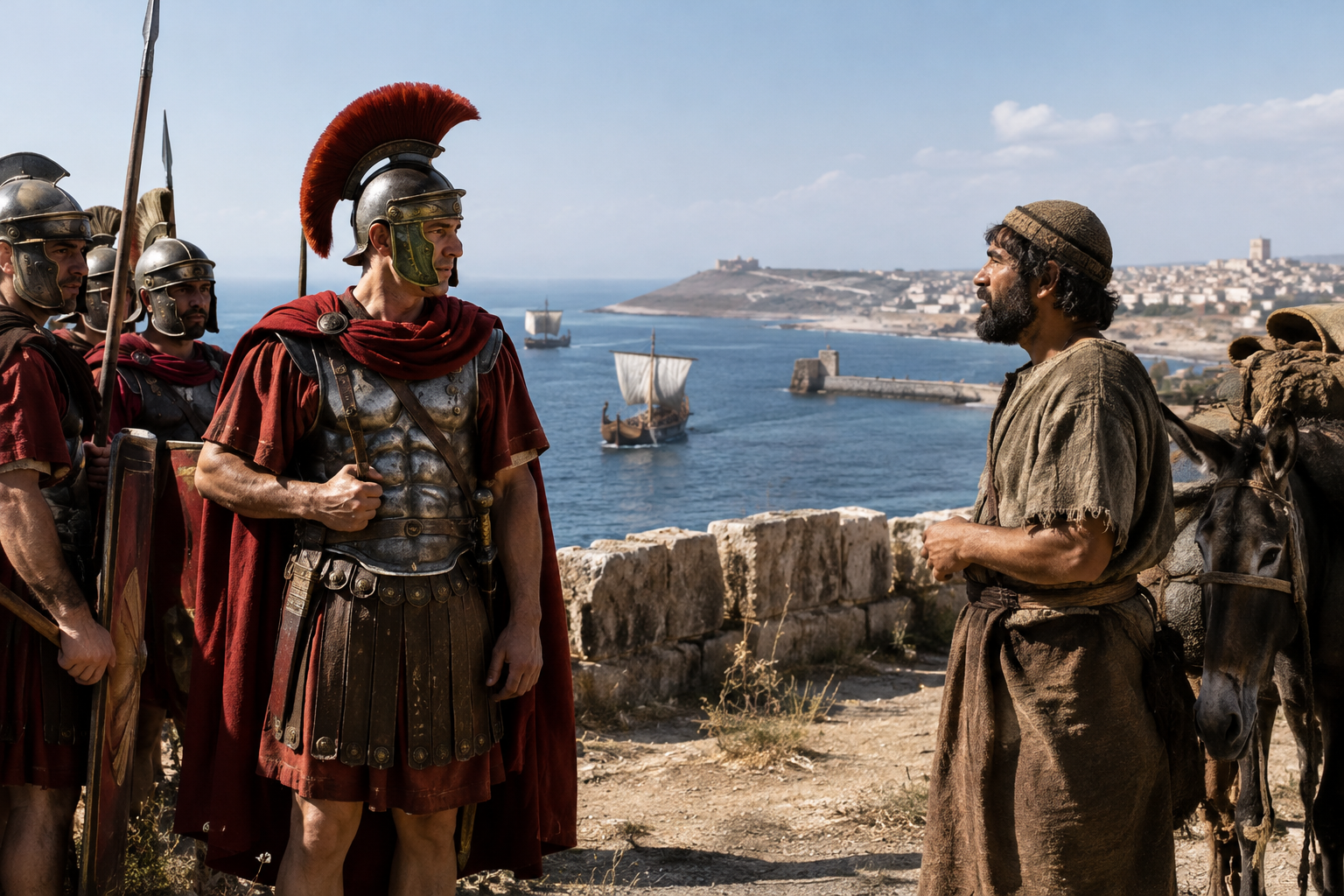
Himera matters because it stood at a frontier of worlds. Greek settlers, indigenous Sicilian communities, and Punic power all met there, sometimes in trade, sometimes in war, and in 409 BC with devastating violence. A paternal lineage such as J2a1a1a2b2a2b1 traces only one direct male line out of thousands of ancestors, but in this case it places that line in a vividly documented historical setting: a Greek military community in Sicily at the moment the city fell.
The ancient DNA evidence tied to I7223 and I7223x is compelling precisely because the archaeological context is so specific. Himera was a Greek colony founded on Sicily's northern shore, and by the late 5th century BC it had become entangled in the wider struggle between Greek poleis and Carthaginian expansion in the western Mediterranean. When the city was destroyed in 409 BC, it left behind a grim archive of conflict that archaeology can still recover.
That makes this lineage more than a point on a phylogenetic tree. Here, J2a1a1a2b2a2b1 is associated with an individual identified as part of a Greek wartime context in Sicily. We should be careful not to load too much onto that fact: one warrior is not "the Greek haplogroup," nor does a Y-chromosome alone define language, culture, or citizenship. But it does show that this branch, or a very close paternal line assigned to it, was present among classical-era Greek men in the central Mediterranean.
A major ancient DNA study of Iron Age Mediterranean populations, including Punic and Greek-connected contexts in Sicily, offers the broad research setting for understanding finds like these at Himera: research on the ancient western and central Mediterranean world. The larger lesson from that kind of work is not ethnic purity, but movement, mixture, and the very human untidiness of ancient port societies and war zones.
The broader haplogroup J2 has long been associated with populations of the eastern Mediterranean, the Aegean, Anatolia, and parts of the Near East. It appears in many later and earlier contexts, from Bronze Age societies to historical Greek, Anatolian, Levantine, and Italian populations. But that broad background should not be confused with the exact history of the much narrower lineage named here: J2a1a1a2b2a2b1.
That long string of letters and numbers marks a very specific twig on a much larger paternal tree. Without a wider set of securely published ancient examples for exactly the same terminal branch, it would be rash to claim a single homeland, a single migration route, or a neat ethnic label for it. What the Himera evidence allows us to say, responsibly, is that this paternal line was present in a Greek military setting in Sicily in the late Classical period.
That is already historically meaningful. Greek settlement in Sicily was not a simple transplantation of one homogeneous people from one homeland. Colonists came from different cities, later migrants kept arriving, local populations were incorporated in many ways, and warfare brought in mercenaries and allies as well. A J2-derived lineage in such a setting fits the Mediterranean's long history of seaborne connections far better than any tidy one-origin myth.
It is easy to talk about "the Greeks in Sicily" as though they formed a sealed community. They did not. Sicily in the first millennium BC was crowded with Greeks, Elymians, Sicels, Sikans, Phoenician and Punic communities, and all the shifting political arrangements that followed from living on a rich and contested island. A warrior from Himera belonged to that world of contact.
This matters for interpreting J2a1a1a2b2a2b1. The branch may have reached Sicily through colonization from the Greek world, through older eastern Mediterranean mobility, or through more local mixing within the island's already complex population. The ancient sample gives us a fixed point in time and place; it does not license us to pretend we can reconstruct every stop along the paternal line's journey.
Still, Himera offers an unusually vivid fixed point. It is one thing to know that a lineage existed somewhere in the Mediterranean. It is another to see it attached to a named wartime event, at a city destroyed by Carthaginian assault, in a period when the island was one of the Mediterranean's great fault lines.
The paired entries I7223 and I7223x are a useful reminder that ancient DNA reporting can preserve aliases, duplicate handling labels, or parallel references tied to the same archaeological person or lab history. That is not unusual in archaeogenetics, especially when material moves between excavation notes, laboratory datasets, and later synthesis. The important thing for readers is not to count them as two independent warriors unless a publication clearly treats them as separate individuals.
In practical terms, the two identifiers reinforce the same historical association: a male from the Himera war horizon around 409 BC linked with the article's Y-lineage. The caution here is methodological rather than dramatic. Ancient DNA is powerful, but it has to be read with the same source criticism historians apply to chronicles, inscriptions, or coin finds.
This is also where family-history expectations need a little discipline. If your paternal line falls within J2a1a1a2b2a2b1, that does not mean you descend from this specific man at Himera in any genealogically meaningful recent sense. What it suggests is that your direct male line belongs to the same extremely narrow paternal branch as one found in a classical Sicilian Greek war context.
Himera sits within a much larger Sicilian story. Ancient and medieval DNA studies from the island repeatedly show that Sicily was shaped by continuity and arrival at the same time: local persistence on the one hand, and recurrent influence from the Aegean, mainland Italy, North Africa, and the eastern Mediterranean on the other. That is exactly the kind of setting where a J2-derived branch can appear without surprise, yet still carry real historical interest when tied to a specific person.
For readers interested in how layered Sicilian history became in later periods, the island's medieval evidence is particularly revealing. Different faith communities, ruling powers, and migrant streams all left their mark, and that later complexity helps us resist simplistic readings of the earlier Greek period too.
There is also a specifically Greek-Sicilian angle worth keeping in mind. Colonies were not mere outposts; they developed their own identities, alliances, and local entanglements. A lineage found at Himera belongs as much to Sicilian history as to any distant point of origin across the sea.
The strongest thing about J2a1a1a2b2a2b1 in this case is not breadth but sharpness. Instead of drifting in generalities about the Mediterranean, we can anchor the lineage to a documented historical crisis at Himera around 409 BC, through the warrior sample I7223. That gives this haplogroup a memorable archaeological face: a man from a Greek city on Sicily's northern coast, caught in one of the island's decisive wars.
For someone researching this paternal branch today, that does not prove nationality, ethnicity, or a single ancient homeland. It does something more useful. It shows that this direct male line was present in the hard, mobile, interconnected world of Classical Sicily, where Greek communities were part of a much wider Mediterranean network of settlement, conflict, and exchange.
Comments