Haplogroup J2a1a1a2b2a

– 5 min read



The earliest anchor here is not a king or a conqueror, but a man from Arslantepe in Anatolia, dated to around 4568 BC and recorded as ART011. That matters because the Y-DNA haplogroup J2a1a1a2b2a sits within a wider paternal family, J2, long associated in broad terms with the ancient Near East and eastern Mediterranean. A very early Anatolian appearance does not by itself tell us where this exact sub-branch began, but it does place this paternal line in one of the great formative landscapes of early farming societies.
What makes this article especially interesting is the spread of the evidence. Alongside ART011, the same reported branch appears in a Roman-period individual from Granada in Spain, in a medieval burial from the Lublin-Zamosc region of Poland, and in the Late Medieval Ashkenazi cemetery at Erfurt in Germany. That is quite a range. It suggests that this lineage, or at least lineages associated with it in current reporting, belonged not to one single people or one single migration, but to several different historical worlds over many millennia. Y-DNA traces one direct paternal line only, yet that narrow thread can still lead through some very large rooms of history.
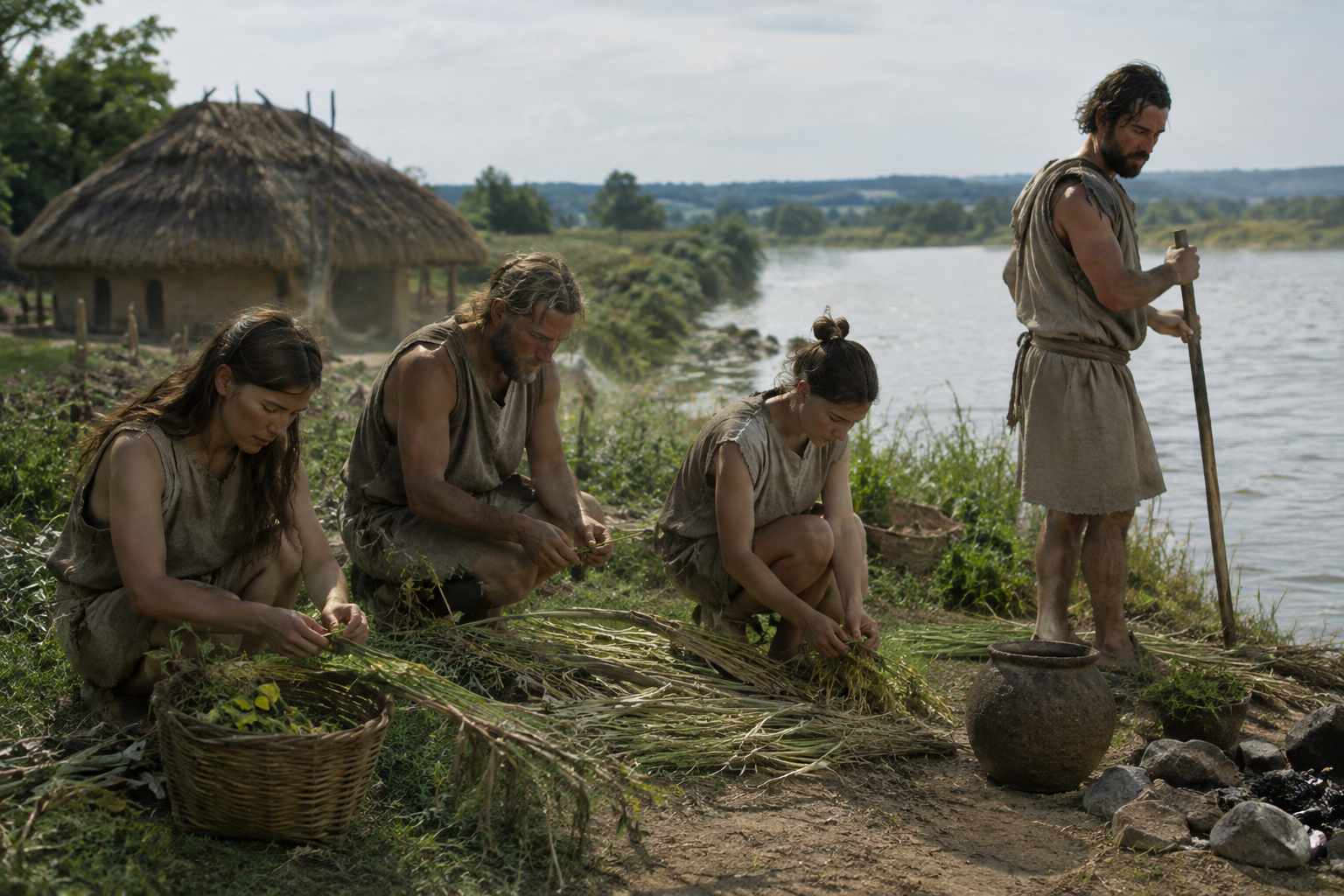
Arslantepe, in eastern Anatolia, is one of those sites that repeatedly turns up when archaeologists talk about the long transition from village life to more complex societies. By the 5th and 4th millennia BC, this was already a place of substantial settlement, administration, and social change. To find a reported J2a1a1a2b2a-associated male there in the Neolithic horizon is therefore not a trivial datapoint. It places this paternal line in a region that was central to the spread of farming, exchange, and later urban developments.
We should be careful, though, not to load too much onto one sample. ART011 is evidence for one paternal line at one site and one period, not proof that all early Anatolians carried it, nor that every later bearer in Europe descends directly from this man. Still, an ancient DNA study on populations connected with the eastern Mediterranean and adjacent regions has helped underline just how important Anatolia was in the human movements that shaped later Europe and the Near East; for context on that broader world, see this research paper.
If you carry J2a1a1a2b2a today, Arslantepe is not your personal family tree in miniature. But it is a reminder that your paternal branch belongs to a very old landscape: one tied to early agriculture, expanding settlement systems, and the dense human contacts of southwest Asia.
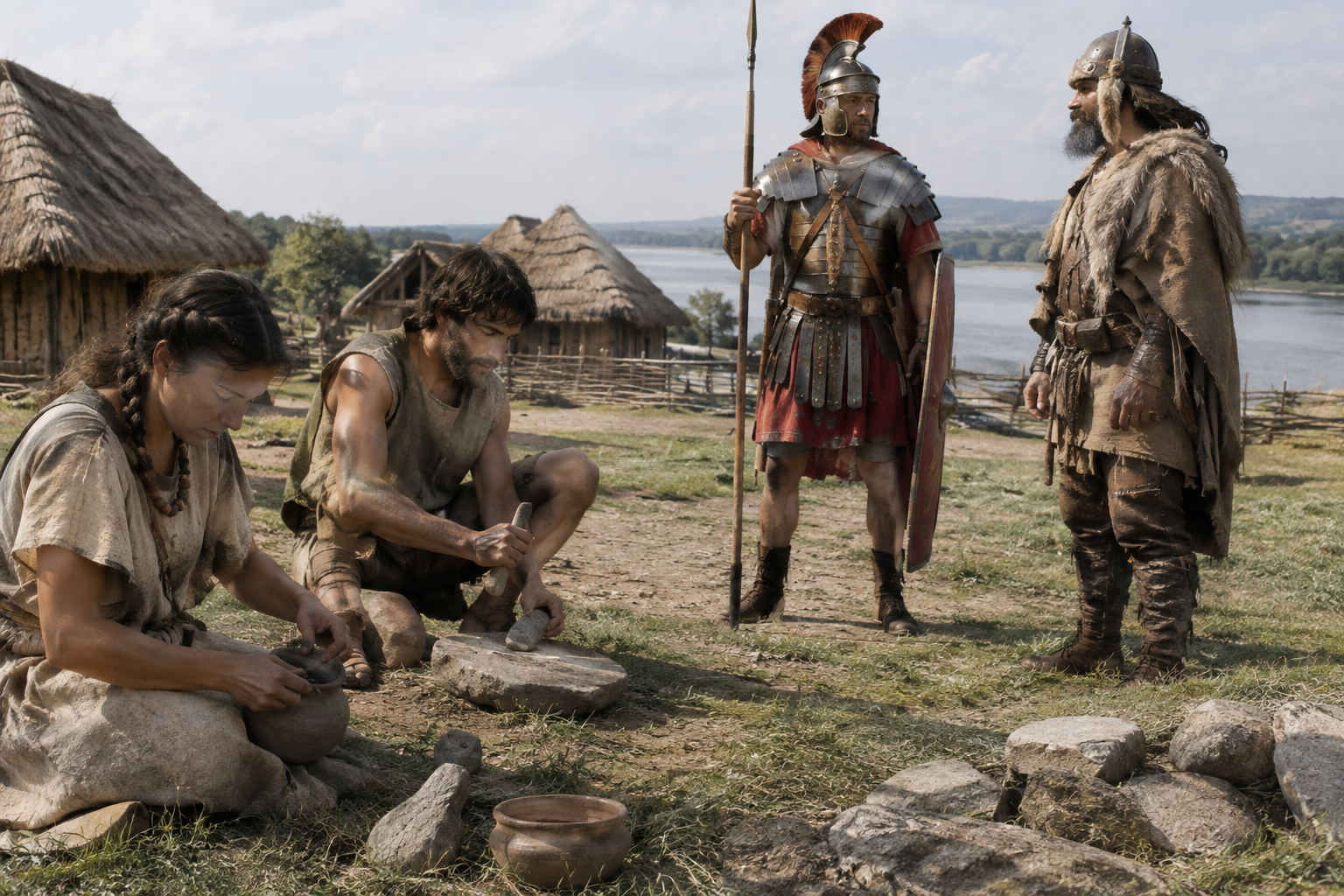
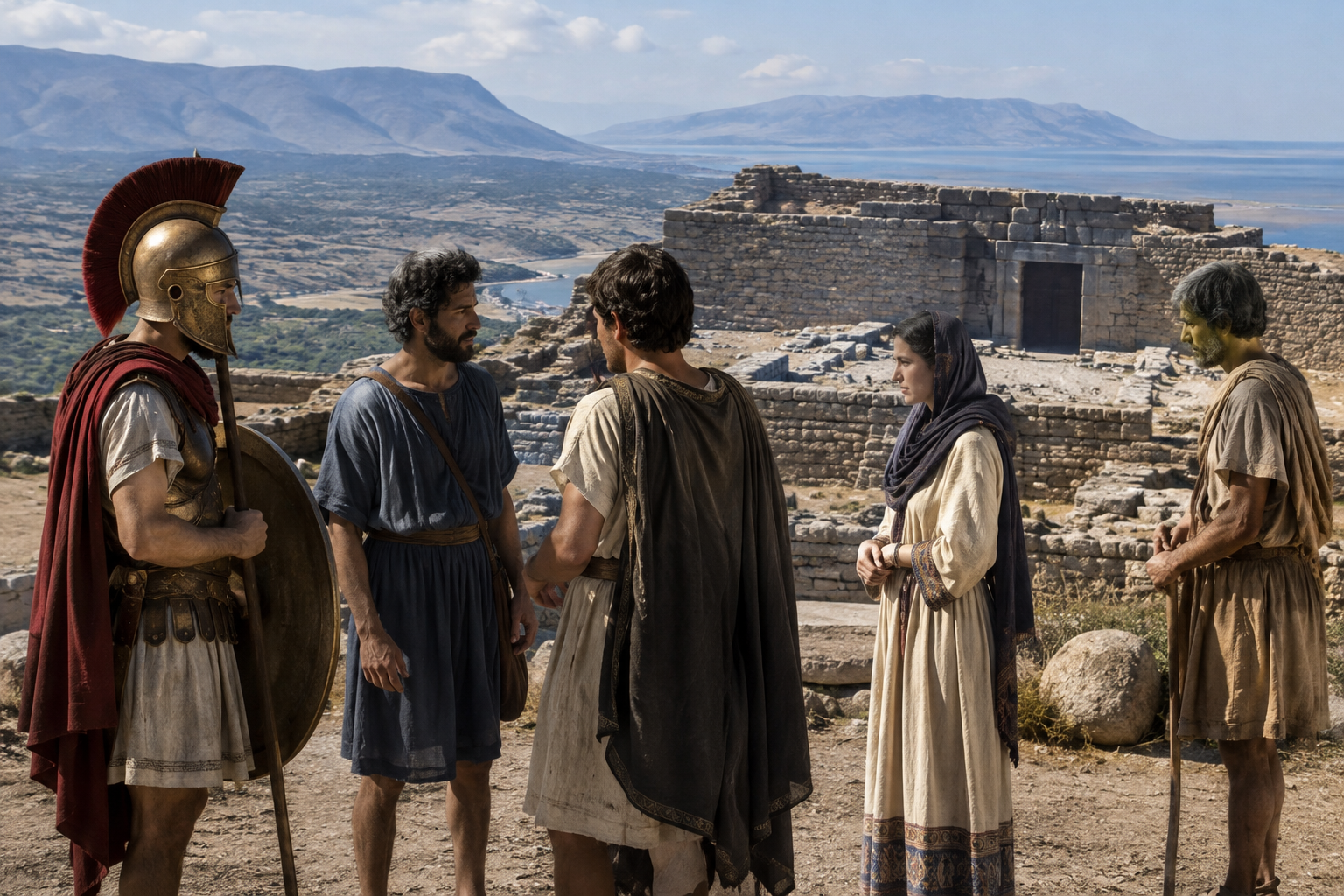
The sample I4054, dated to around AD 300 from a Roman villa in Granada, brings the story west into Roman Hispania. This is exactly the sort of context where a haplogroup like J2 can appear without any need for melodrama. Roman Spain was not a sealed box. It was a province in a vast imperial system that moved soldiers, merchants, administrators, craftspeople, enslaved people, and families across the Mediterranean.
So when a branch like J2a1a1a2b2a turns up in southern Spain under Roman rule, the sensible historical response is not surprise but curiosity about scale and setting. Was this paternal line already present in Iberia before the Roman period? Did it arrive through imperial mobility from the eastern Mediterranean, Italy, or elsewhere? One individual cannot decide between those possibilities. But the find does fit the wider picture of Roman-period genetic diversity in the peninsula.
That broader pattern has been explored in MyTrueAncestry's discussion of Roman Hispania's Lasting Genetic Legacy, where the peninsula appears not as a genetic isolate but as part of a connected imperial world.
The Granada sample is useful for another reason. It warns against turning haplogroups into ethnic labels. A Roman villa burial in Spain is a social and archaeological setting; J2a1a1a2b2a is a paternal marker. The two interact, but they are not the same thing.
The sample I13870, from the Late Medieval Ashkenazi cemetery at Erfurt in Germany and dated around AD 1350, places this haplogroup in a very different historical setting: one of Europe's best known medieval Jewish burial grounds. Erfurt's Jewish community belonged to the urban and commercial networks of the Ashkenazi world, and ancient DNA from such cemeteries has become crucial for understanding the demographic history of medieval Jewish populations.
Here the importance of J2a1a1a2b2a is not that it represents all Ashkenazi paternal ancestry; it plainly does not. Rather, it shows that this branch formed part of a community whose ancestry was already complex by the later Middle Ages. Some paternal lines in Ashkenazi groups link to the Mediterranean and Near Eastern sphere, others to European backgrounds, and the proportions and pathways are still being refined by research. Erfurt is valuable precisely because it provides excavated, dated evidence rather than retrospective legend.
A preprint study associated with the Erfurt material helped bring this cemetery into the genetic discussion of medieval Ashkenazi origins and diversity; that research can be found here. Even without pushing beyond what one sample can say, I13870 shows this haplogroup participating in a learned, urban, and often precarious medieval Jewish world.
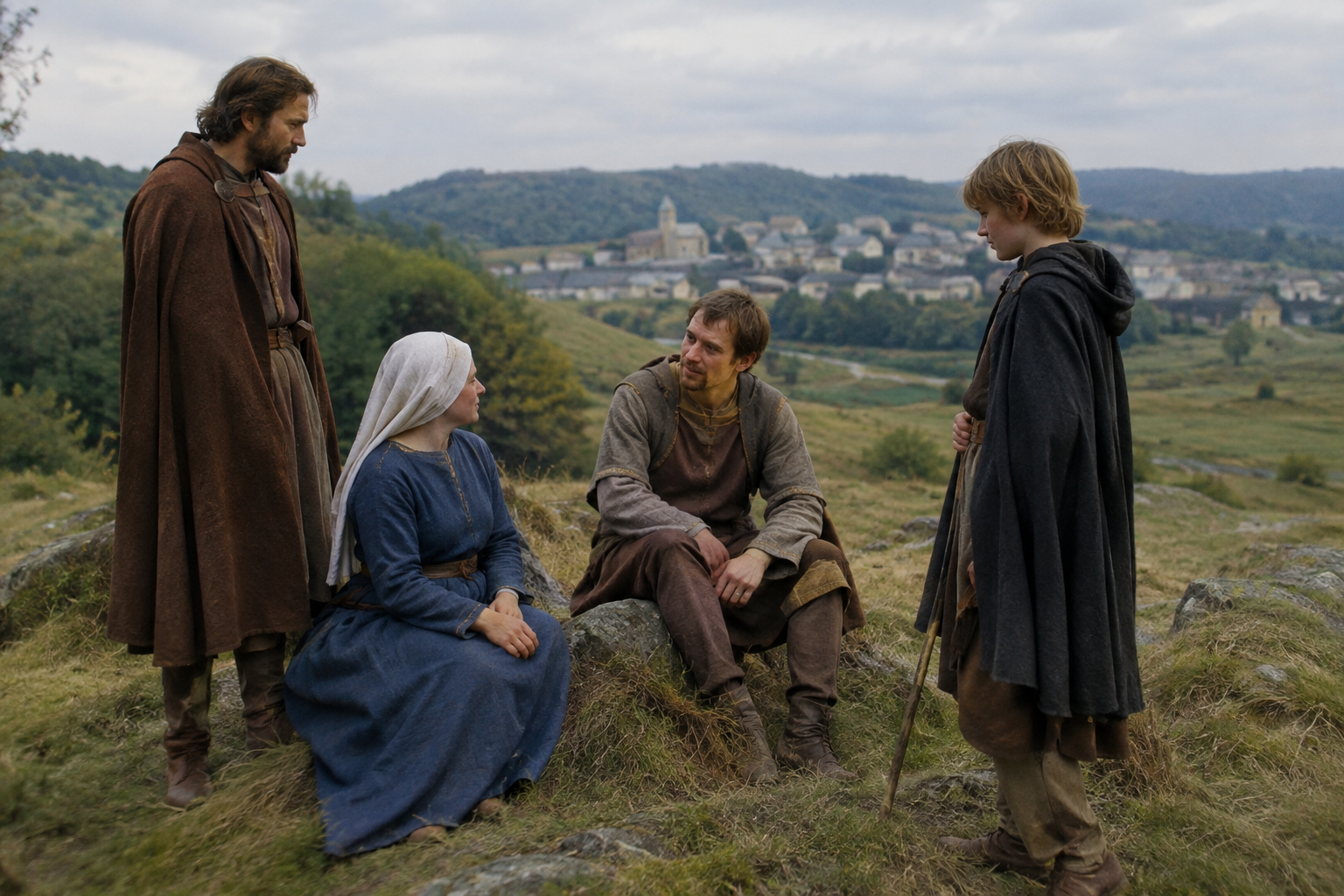
The sample PDH003, dated around AD 1150 from the Kingdom of Poland in the Lublin Zamosc region, adds another useful piece. Medieval Poland is not usually the first place people imagine when they think of J2-related paternal lines, yet that is precisely why the sample is worth attention. It shows that by the high medieval period, this branch was present well to the north of the Mediterranean basin.
That should not be exoticised. Medieval central and eastern Europe were criss-crossed by trade, clerical links, settlement movements, dynastic politics, and frontier interactions. A paternal lineage with deeper roots in southwest Asia or the Mediterranean could arrive in many ways, and in some cases may have been established locally for centuries before any surviving burial gives us a genetic snapshot.
The Polish find is therefore best read as evidence of distribution, not as proof of one neat migration story. It also sits comfortably beside the growing body of work on medieval Polish genetics, including recent discussions around dynastic and regional history in the kingdom's formative centuries.
Put these samples together and a pattern emerges, though not a simplistic one. The reported presence of J2a1a1a2b2a runs from Neolithic Anatolia to Roman Spain, and from medieval Poland to a Late Medieval Ashkenazi cemetery in Germany. That is not the history of one tribe marching across a map. It is the history of a paternal line repeatedly turning up in connected but very different societies shaped by farming expansions, Mediterranean exchange, empire, urban life, and medieval mobility.
For someone researching J2a1a1a2b2a today, the most responsible takeaway is this: your paternal line fits comfortably within a long arc of western Eurasian history in which Anatolia and the broader Mediterranean mattered greatly, but its later story is one of dispersion and local integration rather than one frozen identity. Ancient DNA does not hand you a coat of arms or a single homeland. What it can do, rather wonderfully, is place your direct male line among real people in real places, from Arslantepe to Erfurt.

Comments