Haplogroup I3a1

– 4 min read


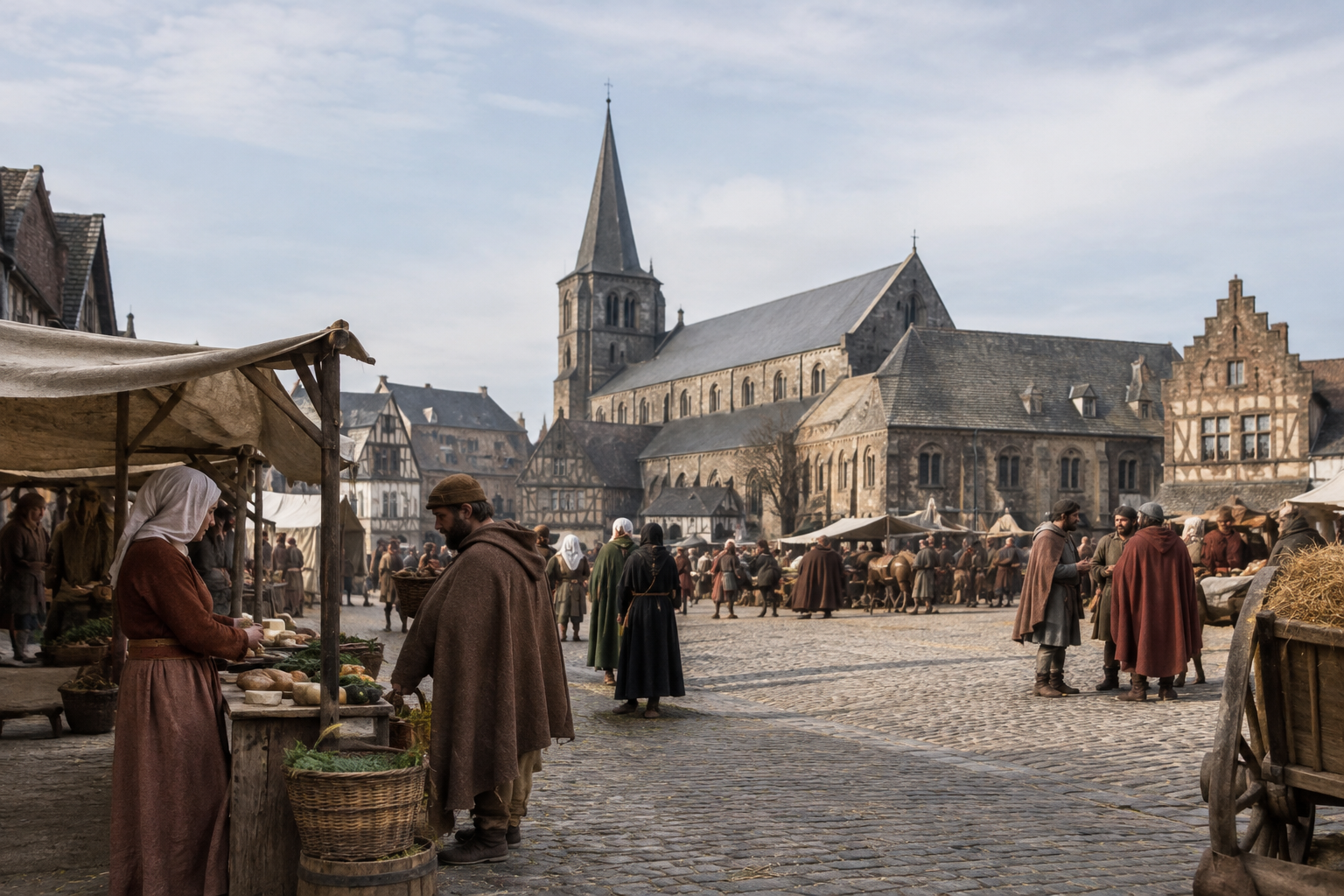
At Sint-Truiden in present-day Belgium, one medieval burial has become a neat reminder that Y-DNA history is often found in places that look, at first glance, entirely ordinary. The individual labelled ST2170, dated to around 1050 AD from Sint-Truiden Groenmarkt, is associated here with the Y-DNA haplogroup I3a1. That is not the sort of label that tells us a man's language, occupation, or legal status. But it does anchor one direct paternal line in a very specific urban community of the High Middle Ages.
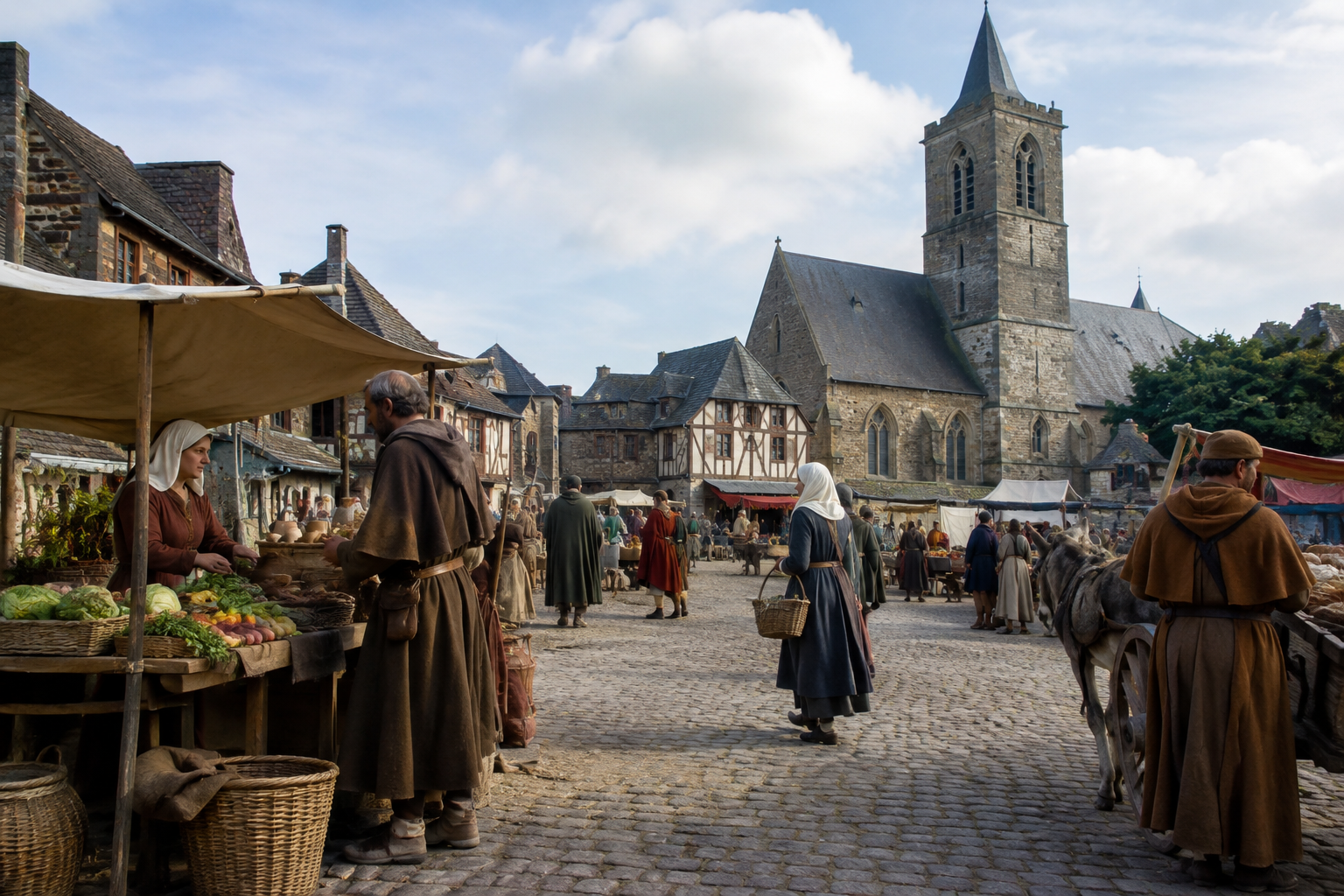
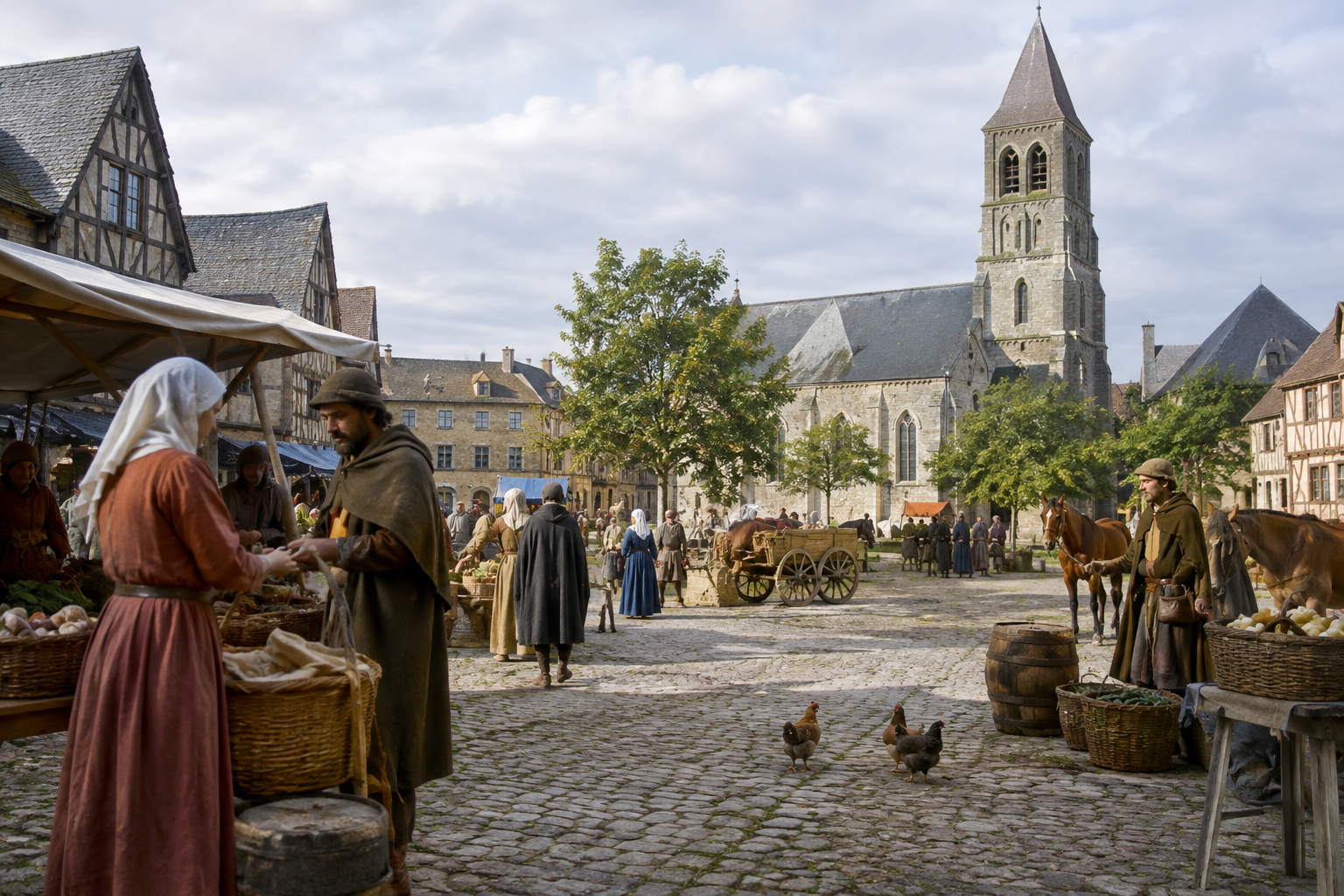
And that setting matters. Sint-Truiden was not a lonely farmstead or a saga-world battlefield. It was a growing town in the Low Countries, shaped by churches, markets, craft activity, and movement of people through a region long connected to the Rhineland and the North Sea world. In that context, I3a1 appears not as a romantic tribal relic, but as part of the lived population of medieval northwestern Europe.
Sint-Truiden, in the county of Loon within the orbit of the Prince-Bishopric of Liege, developed around an important abbey and became a notable regional centre. By the 11th century, this was a settled Christian landscape with urban institutions, trade, and a social mix far broader than any simple label such as "Frankish" or "Germanic" can capture. The burial of ST2170 belongs to that world.
An ancient DNA study examining the medieval population of Sint-Truiden has helped place such individuals into a wider picture of urbanisation and local continuity in the Low Countries. The relevant research can be found here: https://genomebiology.biomedcentral.com/articles/10.1186/s13059-025-03580-z. For our purposes, the important point is not a dramatic origin story for one man, but the fact that a paternal line associated with I3a1 was present in a documented medieval town community.
That is often how archaeogenetics is most useful: it restores texture to populations that older history-writing tended to flatten. Medieval towns were not abstract dots on a map. They were crowded human places, full of families with deep local roots alongside newcomers, marriage connections, apprentices, clergy, merchants, and labourers.
The haplogroup in this article is I3a1, a paternal-line designation carried on the Y chromosome and passed mainly from father to son. That means it tracks one narrow line of descent only. It does not equal a whole ancestry, a medieval ethnicity, or a national identity. ST2170 would have had thousands of ancestors even a few centuries back; I3a1 marks just one of those lines.
Even so, paternal markers can be historically useful. They help show which male lines were present in a community, whether multiple paternal backgrounds coexisted at one site, and how lineages associated with older European population histories persisted into documented medieval society. In the case of ST2170, I3a1 appears in a firmly medieval, Christian, urban burial context, which is exactly the sort of evidence that stops us from imagining haplogroups only in prehistoric or migration-period terms.
That wider historical caution is particularly important in northwestern Europe, where language shifts, political change, and local continuity overlapped for centuries. The spread of Germanic languages, for example, was not a single-moment replacement event. It involved movement, elite power, regional variation, and long interaction with existing populations.
If there is a particularly useful backdrop for thinking about I3a1 in Sint-Truiden, it is the long history of the Low Countries themselves. This was a corridor rather than a cul-de-sac: Roman frontiers nearby, river traffic, post-Roman political restructuring, expanding ecclesiastical networks, and the steady pull of markets and towns. A medieval paternal lineage here may reflect deep regional continuity, movement from neighbouring regions, or both.
That is why one sample can still be interesting even when it does not come with a glittering grave inventory or a named dynasty. ST2170 sits in a landscape shaped by centuries of demographic layering. Roman military and civilian mobility had already left their mark on the broader Rhine frontier. Post-Roman transformations then rearranged power and settlement without wiping the slate clean. By 1050 AD, towns like Sint-Truiden gathered together the descendants of many such older processes.
For readers interested in the frontier world just to the east and north, recent work on communities along the Rhine has shown how mixed and mobile these populations could be, especially between late antiquity and the early medieval period.
There is also a methodological lesson here. People understandably want a haplogroup article to point straight from a lineage to a people: Celt, Frank, Saxon, Viking, noble house, and so on. But ST2170 from Sint-Truiden resists that kind of lazy sorting. He is a medieval individual from a real town, not a mascot for a single migration narrative.
In fact, that makes him more valuable, not less. Ancient DNA from urban cemeteries lets us ask better questions about continuity and diversity inside settled communities. Was a town drawing mostly from its surrounding countryside? Was it already genetically mixed? Did particular paternal lines appear repeatedly, or was there a wide spread? With only one I3a1-linked burial listed here, we should not turn that single result into a sweeping map. But we can say that I3a1 had a place within the paternal diversity of medieval Belgium.
That fits a broader pattern seen again and again in European archaeogenetics: old lineages do not vanish neatly when historians change period labels. The move from Roman to medieval, or from rural to urban, does not mean entirely new people in every case. Quite often it means existing populations being reshaped by institutions, mobility, and marriage across generations.
For someone exploring haplogroup I3a1 today, ST2170 offers a grounded historical reference point. Not a legend, not a court pedigree, not a speculative tribal badge, but an excavated medieval person from Sint-Truiden around 1050 AD. That places the lineage in the social fabric of the medieval Low Countries, where towns, churches, and regional exchange were reorganising life on a large scale.
The real interest of I3a1 here is precisely that it appears in an everyday historical setting. It suggests that this paternal branch formed part of the durable background of northwestern European populations that carried on through political change and urban growth. If your own paternal line falls within I3a1, the most responsible takeaway is not a claim to one famous house or one conquering people, but a connection to the ordinary and complicated human history of medieval Europe.
Comments