Haplogroup I2a1b1b1a1~

– 5 min read


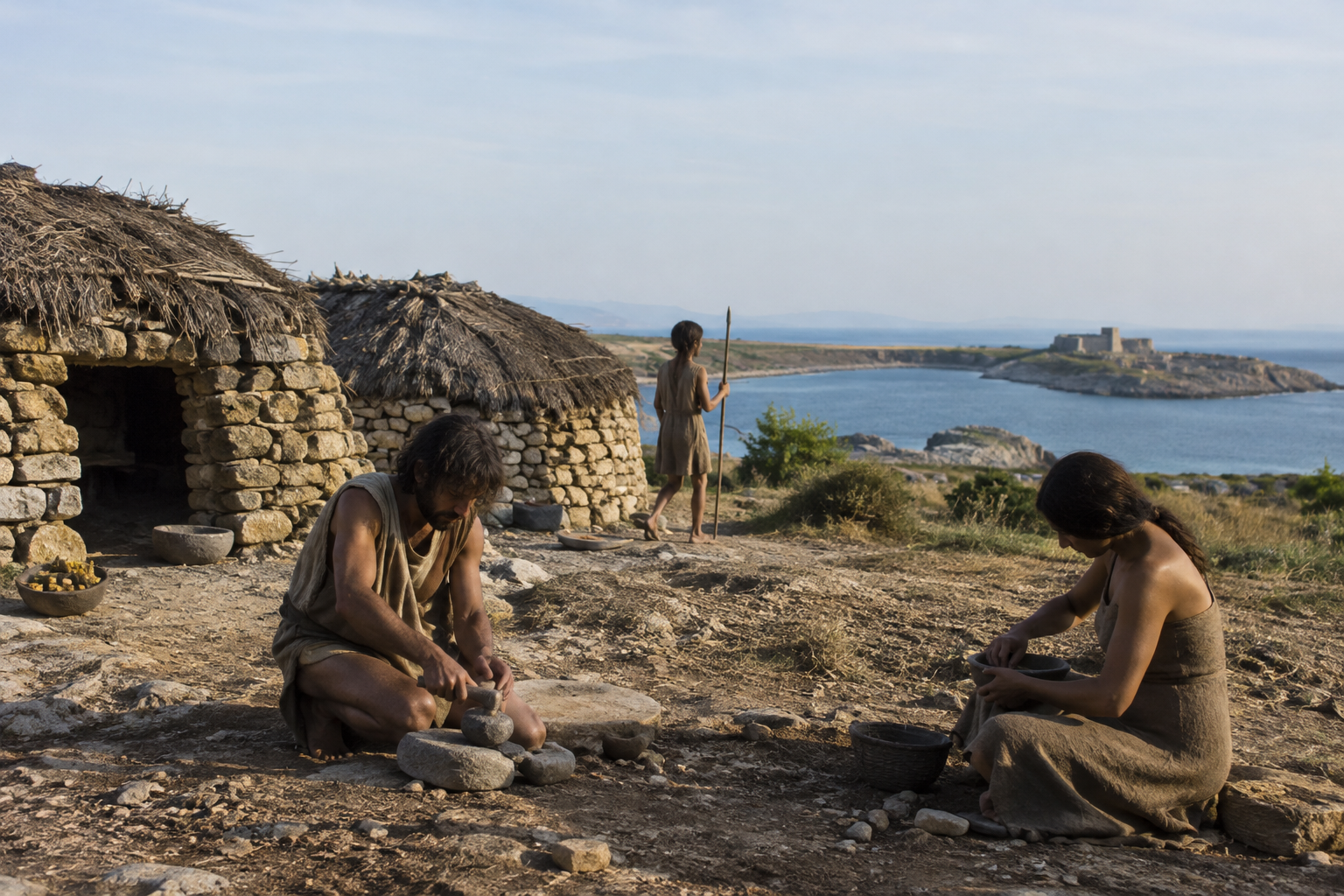
At Cova de la Guineu in Spain, one ancient male sample - I10287, dated to around 2950 BC - offers a small but telling glimpse into the paternal history carried today under I2a1b1b1a1~. It is not the sort of evidence that arrives with a trumpet blast. There is no king here, no named warrior, no inscription. But that is precisely why it matters: this lineage appears in the archaeological record in the western Mediterranean during the late Neolithic and Copper Age, in ordinary human contexts that help us think about how male lines endured through enormous cultural change.
A second ancient individual, SUC007 from Early Copper Age Porto Torres, Sardinia, dated here to about 2100 BC, extends that western Mediterranean picture onto an island long central to debates about prehistoric mobility and continuity. Taken together, these two samples do not map the whole history of the haplogroup, and they certainly do not define everyone who carried it. But they do show that a paternal line associated with I2a1b1b1a1~ was present in two different settings - northeastern Iberia and northern Sardinia - before the classical world, before Rome, and before the historical identities later attached to these landscapes.
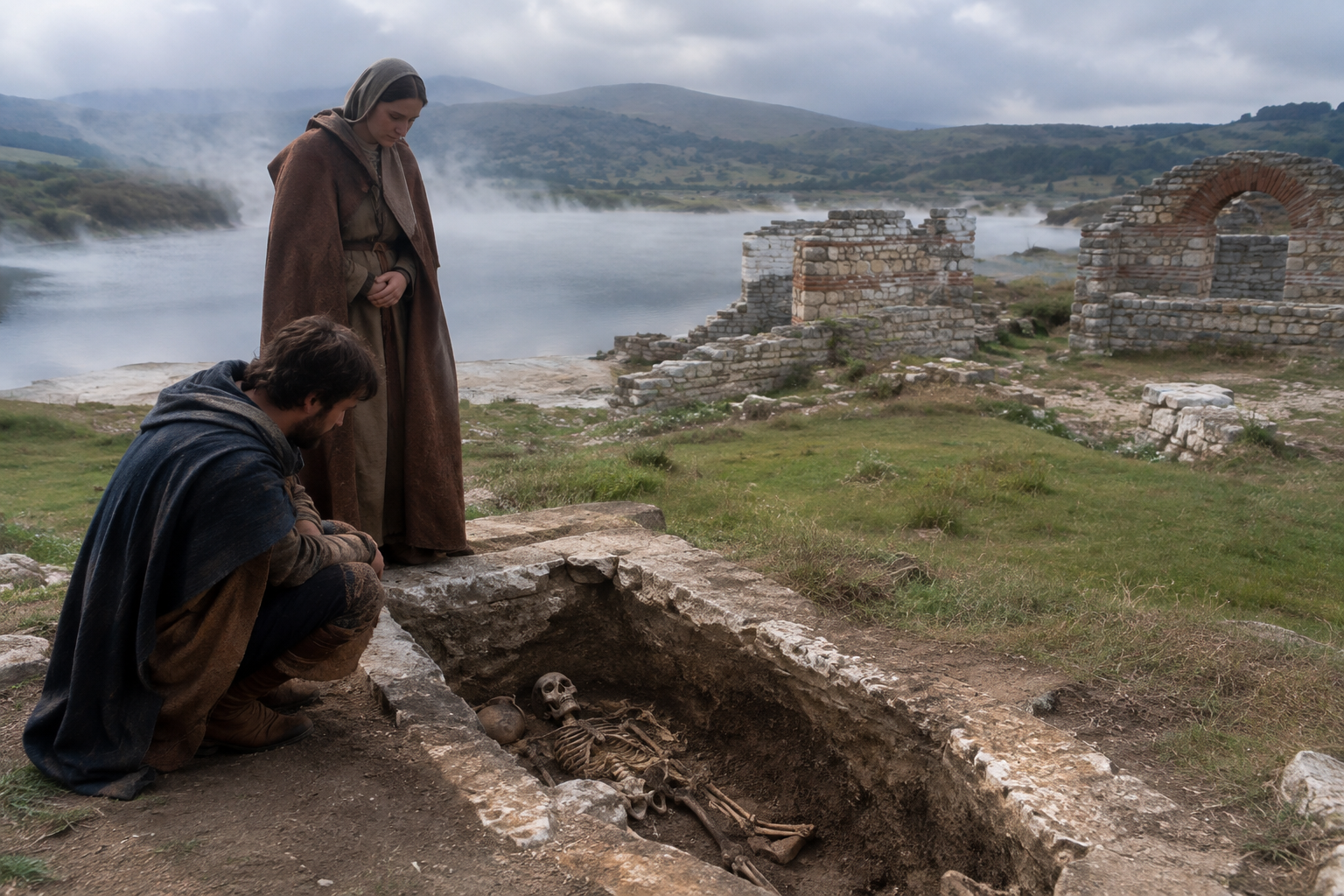
Cova de la Guineu is the kind of site archaeologists love because caves preserve long and layered histories. In Iberia, caves were used in different ways across the Neolithic and Copper Age: as places of burial, deposition, shelter, and memory. Sample I10287, dated to around 2950 BC, belongs in that broad late prehistoric horizon when farming societies were already well established, but local traditions remained strong and regional differences mattered.
For a Y-DNA article, the important point is not to overstate what one man can tell us. Y-DNA traces a direct paternal line only, not a person's whole ancestry. Still, a sample like I10287 is valuable because it places a branch linked here to I2a1b1b1a1~ inside a real archaeological landscape of Copper Age Iberia, where communities were mixing inherited forager ancestry with long-established farming populations and developing distinctive local cultures.
That western Iberian and northeastern Iberian prehistoric background has been transformed by ancient DNA over the last decade. For readers following how genetics illuminates the peninsula after prehistory as well as before it, the later story of continuity and change in Spain is explored in Roman contexts too.
The tilde in I2a1b1b1a1~ is a useful warning sign against overconfidence. It suggests an approximate or near placement within that branch rather than a fully nailed-down terminal subclade in the way modern high-coverage testing sometimes allows. In other words, we are dealing with a lineage associated with this part of the I2 tree, not with a license to invent a sharp genealogical precision that the evidence may not support.
That matters because haplogroup I, and especially its I2 branches, has deep roots in European prehistory. But one must be careful. The long history of the broader parent haplogroup is not identical to the history of this narrower branch. What these two samples show, specifically, is that a lineage linked to I2a1b1b1a1~ appears in western Mediterranean prehistoric populations. That is a real finding. It is already interesting enough without turning it into a grand universal migration slogan.
In practice, lineages like this often survive through demographic upheavals by being local, ordinary, and persistent. Archaeology is full of such survivals. New pottery styles appear, new trading links open, new ancestry components arrive, yet some paternal lines remain in place across centuries because populations are never wholly replaced. They are reorganized, connected, and reshaped.
The second key sample, SUC007, comes from Porto Torres in Sardinia and is dated here to about 2100 BC, in the Early Copper Age framework given with the record. Sardinia occupies a special place in European archaeogenetics because islands can preserve older population signals unusually well, even while participating in maritime exchange. That makes any securely placed paternal lineage from the island especially worth noticing.
Porto Torres lies in northern Sardinia, a region that later became deeply entangled with Phoenician, Roman, and medieval Mediterranean history, but SUC007 belongs to a much earlier world. The significance here is not that Sardinia was isolated in some romantic sense - it was not cut off from the sea that surrounded it - but that ancient DNA from the island often helps researchers track which lineages were already present before later historical transformations.
For that reason, Sardinian prehistoric genomes have become central to wider discussions of Mediterranean population history. A research preprint on ancient Italian island populations is one of the relevant scientific leads for this setting, though it should be used carefully and only for the broader regional context rather than exaggerated claims about a single paternal line: https://www.biorxiv.org/content/10.1101/583104v1.full.
It is tempting to imagine a neat arrow on a map - from mainland Iberia to Sardinia, or the other way round - but the evidence here is too slight for that. What can responsibly be said is that both samples place this paternal branch in the western Mediterranean during later prehistory. That alone is historically meaningful, because the sea between Iberia and Sardinia was not a barrier at all in human terms. It was a corridor.
By the third millennium BC, western Mediterranean communities were part of a world of coastal movement, island contact, local adaptation, and uneven exchange. Some places absorbed newcomers quickly; others preserved older lineages while adopting new material habits. The presence of a related Y-line in both Spain and Sardinia fits that broader archaeological picture of connection without requiring us to claim a direct father-to-son route between the two excavated men.
An ancient DNA study associated with prehistoric Iberia helps frame the kind of world in which sample I10287 lived, especially the long transition from early farming into later Copper Age societies: https://www.biorxiv.org/content/10.1101/136176v1.full. Again, the point is not to pretend that one paper settles every subclade question, but to place the sample within the real demographic discussions surrounding prehistoric Spain.
One of the most useful things about these two samples is that they sit before the ethnic and political names that later dominate Mediterranean history. They are older than Romans, Visigoths, Catalans, Sardinian giudicati, and the medieval noble houses that fill documentary history. That is often the great strength of ancient DNA: it lets us see that a paternal line can be present in a region long before the labels later attached to that region even exist.
For people researching their own Y-line, that can be both clarifying and humbling. A lineage associated with I2a1b1b1a1~ may have deep roots in prehistoric Europe, but its story is not the story of one tribe, one nation, or one language family. It is a line that passed through many social worlds. In this case, the ancient evidence points to western Mediterranean men living in the later Neolithic and Copper Age, not to a single famous dynasty.
The distinctive lesson of I2a1b1b1a1~ in the present evidence is one of deep western Mediterranean antiquity. With I10287 at Cova de la Guineu around 2950 BC and SUC007 at Porto Torres around 2100 BC, the line appears in two prehistoric settings tied to long-settled farming societies and maritime regional networks. For a modern tester, that does not promise a straight road to one named people. What it offers instead is something archaeologically more solid: a paternal connection to the human background of Iberia and Sardinia before history narrowed those places into later identities.
Comments