Haplogroup I2a1b1a2b1a2a1a1a1a

– 5 min read


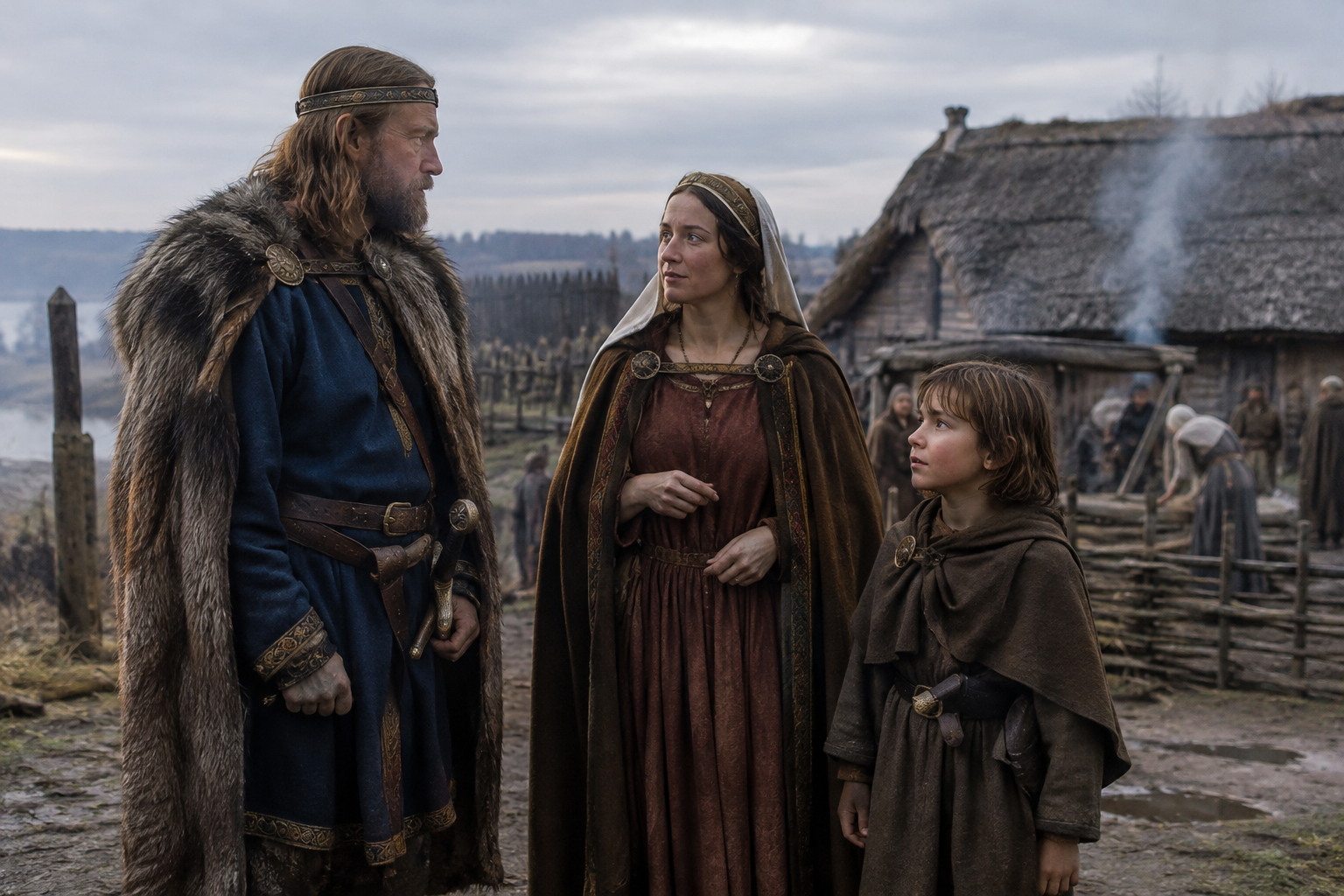
In about AD 650, a man now labelled Mln13 was buried at Mömlingen in Germany, in a world that was neither fully Roman nor fully what later historians would call medieval. He belongs to the Merovingian period, the age of Frankish kingdoms, local elites, village cemeteries, and a patchwork of identities that do not fit neatly into modern national boxes. For anyone carrying the Y-DNA haplogroup I2a1b1a2b1a2a1a1a1a, that single burial is a useful starting point, because it places this paternal line in a documented early medieval setting rather than in vague legend.
That matters because Y-DNA traces one direct male line only: father to father to father. It does not define a person's whole ancestry, language, or status. But when a lineage appears in an excavated and dated individual like Mln13, it gives us something much firmer than family folklore. In this case, the evidence points toward a paternal line present among people living in Frankish-period southern Germany, in the generations after the western Roman Empire had gone and new political worlds were being built.
Mömlingen lies in a region that sat within the orbit of the Merovingian Franks, a kingdom that expanded across much of what is now France and western Germany. By the seventh century, this was not a land of simple ethnic blocs. It was a landscape of churches and farmsteads, older Roman roads still shaping movement, and communities whose ancestry could be local, mobile, or mixed over several previous centuries.
So Mln13 is interesting not because he can be turned into a mascot for "the Franks" in some crude sense, but because his paternal lineage survived in precisely this complicated environment. The long subclade name, I2a1b1a2b1a2a1a1a1a, sits deep within haplogroup I, one of Europe's old paternal macro-lineages. Yet one must be careful: a deep parent haplogroup can be ancient and widespread, while a narrow terminal branch may reflect a much more local and much later story. The secure point here is the early medieval burial at Mömlingen, not a grand claim about all of prehistoric Europe.
A broad ancient DNA study of early medieval communities in Europe and the wider Roman-to-post-Roman transition has helped show just how much local continuity and incoming mobility could coexist in the same cemeteries and regions. That is the useful historical backdrop for a man like Mln13, even if a single sample cannot stand for an entire people or kingdom. Research in this area has steadily replaced older all-or-nothing migration stories with something more human and messier: families moved, some male lines endured, and communities were continually remade.
Germanic languages and genomics
The awkwardly long label I2a1b1a2b1a2a1a1a1a tells us we are dealing with a very specific twig on a much larger paternal tree. That is often where family history becomes both more exciting and more difficult. A narrow branch may connect living testers with a relatively small cluster of men in the past, but the historical interpretation depends entirely on where and when ancient examples have actually been found.
With the evidence here, the safest claim is modest and valuable: this branch, or a directly associated reporting of it, is present in a Merovingian-period Frankish individual from Mömlingen. That anchors the lineage in the early medieval Upper Rhine-Main world. It does not by itself prove that every modern carrier descends from Franks in the political sense, still less that the branch originated in that cemetery, that village, or that century.
That distinction is especially important in regions like southern and western Germany. These were contact zones for centuries. Roman provincial populations, communities beyond the Roman frontier, soldiers, settlers, and later post-Roman groups all contributed to the genetic landscape. By the time Mln13 lived, paternal lines could already carry a deep and mixed history invisible in a single grave label.
The phrase "Merovingian Frankish" sounds tidy, but the archaeology of the period rarely is. What we call Frankish material culture spread across territories with very different local histories. Cemeteries of the sixth and seventh centuries often reflect Christianization, changing burial customs, and social ranking, but they also reveal continuity with earlier regional populations.
That is where lineages like I2a1b1a2b1a2a1a1a1a become historically useful. They remind us that the rise of the Frankish kingdoms was not simply the arrival of a single conquering people who replaced everyone else. Rather, kingdoms were built from coalitions: old provincial communities, military followings, rural families, migrants from neighboring regions, and local elites adapting to new rulers. A Y-chromosome lineage surviving in a seventh-century burial is one thread inside that larger fabric of continuity and change.
A recent ancient DNA study of early medieval populations adds weight to this bigger picture by showing how burial communities across post-Roman Europe often contained varied ancestries and family histories. For Mömlingen, the important point is not to squeeze Mln13 into a heroic national origin tale, but to place him among ordinary and extraordinary men whose descendants helped populate medieval Europe.
Roman-Barbarian frontier mixing
There is a temptation, when only one ancient sample is available for a branch, to shrug and move on. That would be a mistake. One securely placed individual can do a great deal. He fixes the lineage in a real landscape, real chronology, and real archaeological culture. For I2a1b1a2b1a2a1a1a1a, Mömlingen is not a vague statistical cloud; it is a burial in Merovingian Germany, around AD 650.
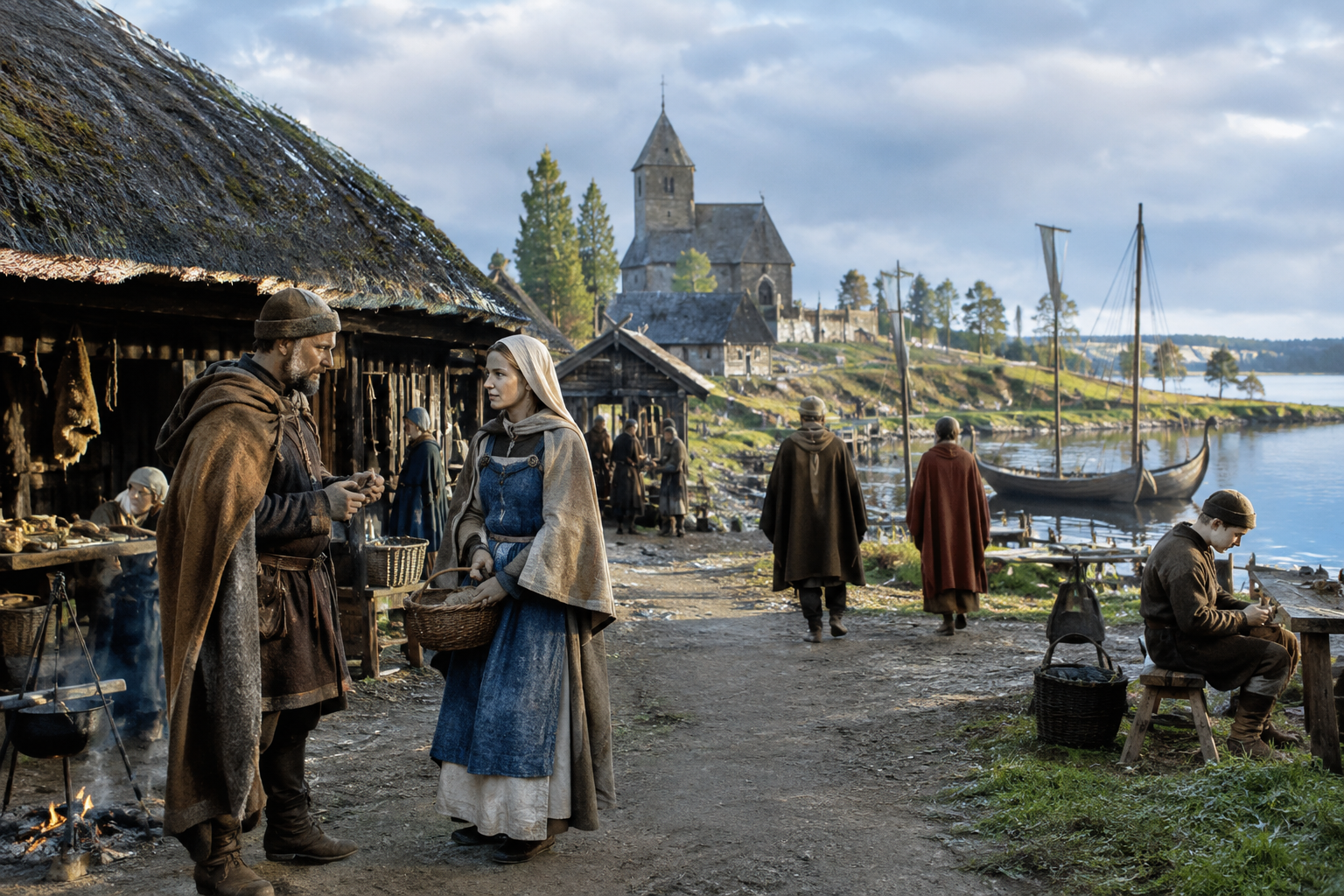
It also gives a social setting. This was the period when village communities, emerging parish structures, and regional lordship were becoming more entrenched across Frankish Europe. Paternal lines that appear here may later surface, through descendants, in many parts of central and western Europe. That does not mean an unbroken elite pedigree. More often, it means something more interesting: survival through ordinary generations.
In that sense, Mln13 is a very good archaeological ancestor-type for this lineage. Not a king, not a saga hero, and not a cartoon "tribesman", but a man living in the thick of the post-Roman transformation of Europe.
Ancient DNA and archaeogenetics
People understandably want a haplogroup article to answer the largest questions at once: Where did my line come from? Were my ancestors Celts, Germans, Romans, or Slavs? The trouble is that archaeology almost never works in such clean categories. A seventh-century Frankish-period man in Germany may descend through his paternal line from men who had been in nearby regions for a very long time, or from families that had moved within Europe generations earlier, or from both through the wider family tree.
That is why the combination of genetics and archaeology is so powerful when used carefully. Genetics can identify the paternal branch. Archaeology can identify the date, place, and cultural setting. History can explain the political world around the burial. But none of those alone can turn a Y-line into a complete identity badge.
For a lineage as specific as I2a1b1a2b1a2a1a1a1a, the present evidence speaks most clearly to early medieval central Europe. As more burials are sequenced, that picture may widen backward into late antiquity or forward into later medieval populations. For now, Mömlingen remains the clearest signpost.
The most responsible insight from this haplogroup is also the most compelling: at least one bearer of this paternal line was living in Merovingian-period Frankish Germany around AD 650, in the unsettled but creative centuries when Roman structures had faded and medieval Europe was taking shape. If this is your Y-DNA branch, your direct paternal story may well belong to that broad early medieval world of local continuity, regional mobility, and long-lived family lines rather than to a single dramatic migration tale.
Comments