Haplogroup I2a1b1a2b

– 6 min read


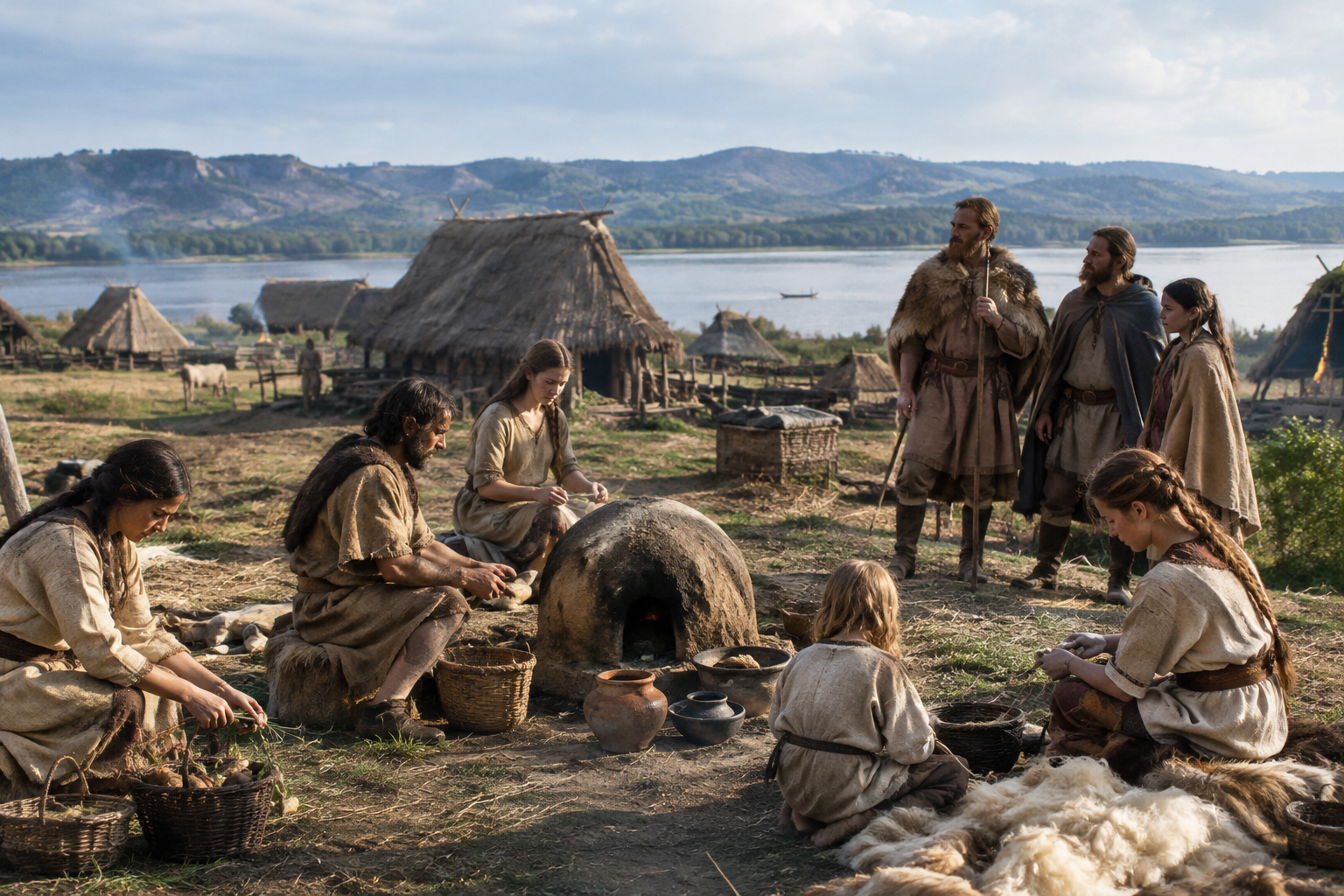
Some Y-DNA haplogroups arrive in history with trumpets and banners. Others appear more quietly, in river gorges, early farming cemeteries, island tombs, and frontier burials where the Roman world was fraying at the edges. Haplogroup I2a1b1a2b belongs to that second category. It is interesting not because it can be tied neatly to one famous people or one kingdom, but because it keeps turning up in places that matter for understanding how Europe's paternal history was built: the Balkans, the Carpathian Basin, and the North Atlantic fringe.
Like all Y-DNA haplogroups, I2a1b1a2b traces one narrow line only: the direct paternal line, from father to son across generations. That makes it powerful, but also limited. It does not describe a person's whole ancestry, language, culture, or identity. Still, when ancient DNA places related paternal lines in Mesolithic Serbia, Chalcolithic Romania, Neolithic Scotland, Orkney, and post-Roman Pannonia, we begin to glimpse a remarkable long-term pattern: not a single march of one "tribe," but repeated survival, movement, and reshaping of old European male lineages through very different worlds.
The broader haplogroup I is one of Europe's old paternal lineages, with deep prehistoric roots on the continent. Within that wider family, branches of I2 are especially important in discussions of European hunter-gatherers and their later interactions with incoming farming populations. For a specific branch such as I2a1b1a2b, caution matters. We should not simply pour the entire history of haplogroup I or even all of I2 into this one narrow subclade. But the ancient samples supplied here strongly suggest that this lineage belongs in the long story of southeastern Europe's foragers, early farmers, and the later societies that emerged where those populations met.
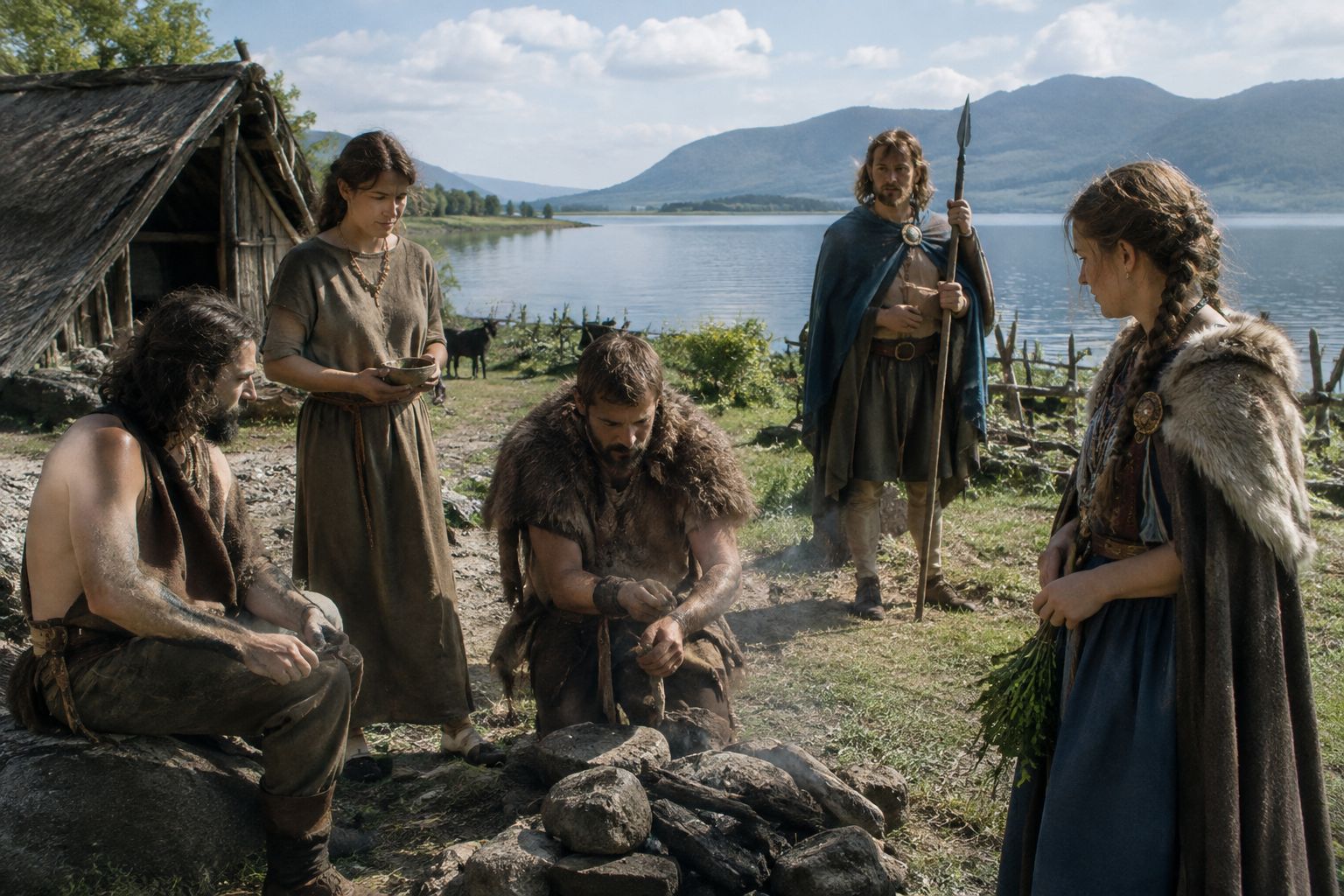
The earliest striking evidence comes from the Iron Gates region of the Danube. At Vlasac in Serbia, the Mesolithic individuals I4881 (6413 BC), I4882 (5875 BC), and I4880 (5863 BC) place this paternal signature in one of the great landscapes of European prehistory. The Iron Gates was no backwater. It was a corridor, a boundary, and a meeting place, where forager communities lived along the Danube long before the spread of agriculture transformed the continent.
That matters because southeastern Europe was one of the first regions where local hunter-gatherer ancestry and incoming farming ancestry came into close contact. A lineage seen at Vlasac and then later in Romania is exactly the sort of evidence that helps archaeogeneticists ask whether certain paternal lines persisted locally, were absorbed into new communities, or spread through wider networks of kinship and exchange.
Explore Balkan Hunter-Gatherer DNA
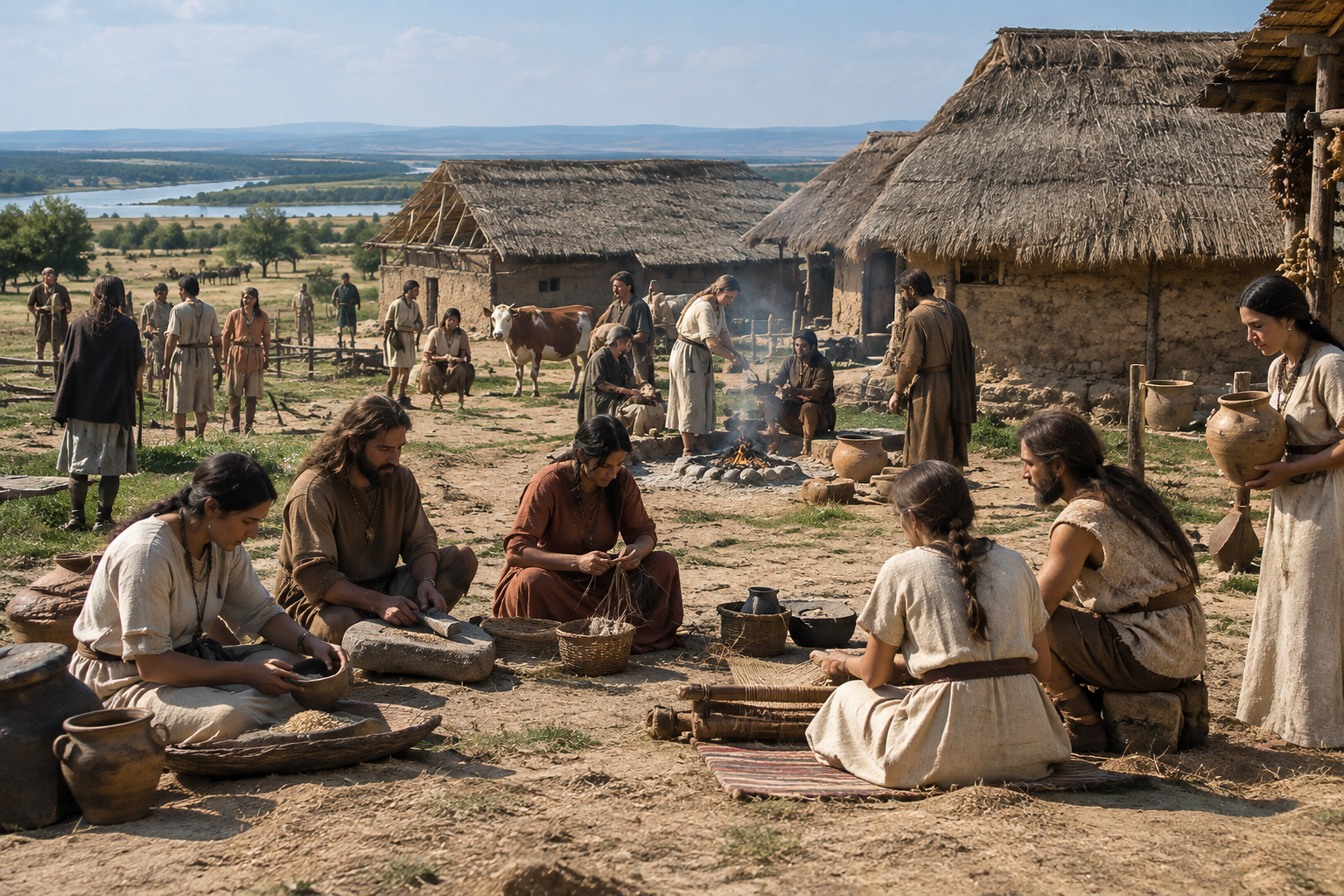
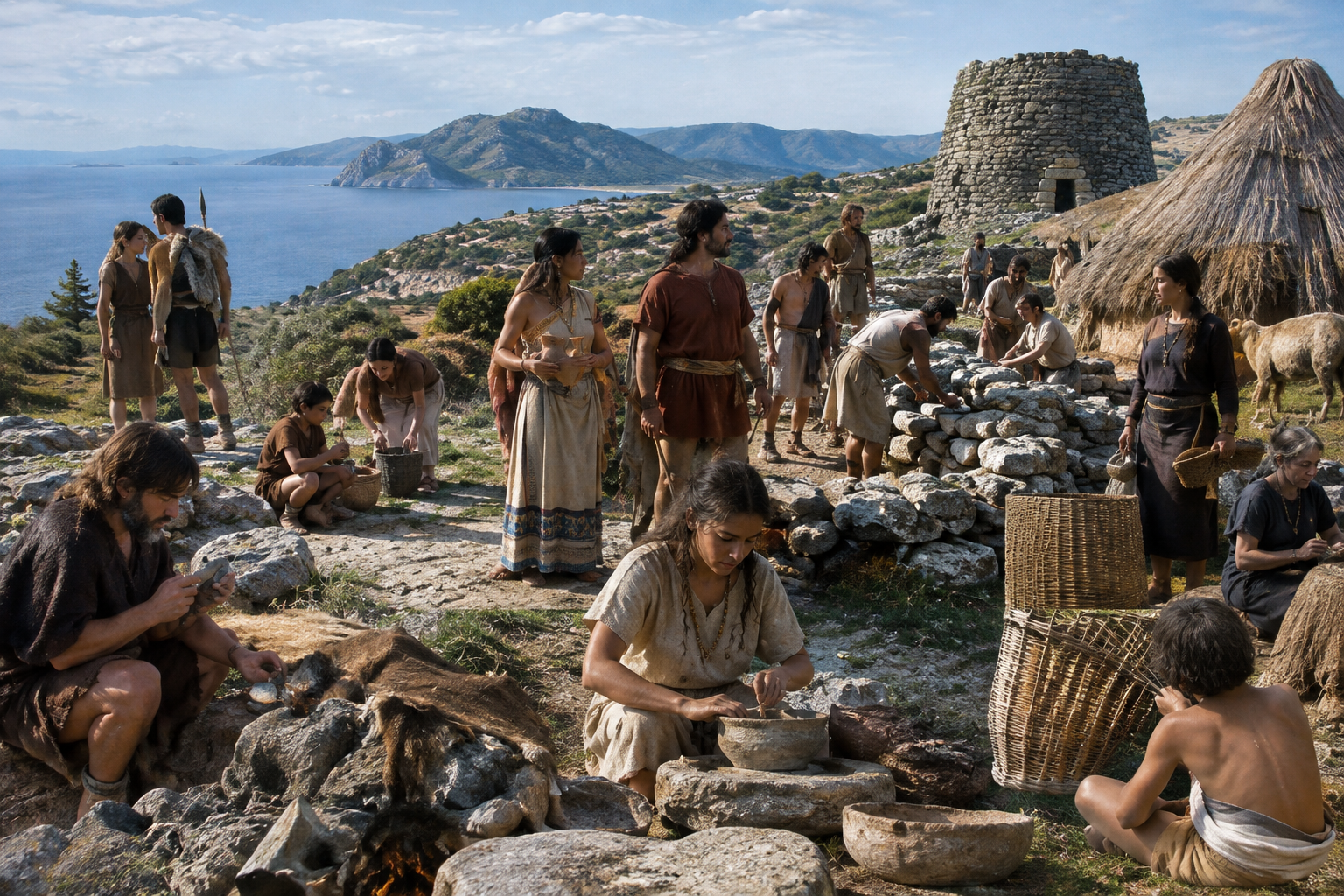
By the 5th and 4th millennia BC, we find this haplogroup in a rather different setting. At Urziceni in Romania, several individuals anchor the lineage in Chalcolithic and late Neolithic communities: Urzi10 (4000 BC), I7135 (3985 BC), I15617 (4000 BC), and I18114 (3700 BC). These are not isolated finds but a small cluster, which is often more informative than a single dramatic sample. It suggests that a paternal line related to I2a1b1a2b was not just briefly passing through, but present within settled communities in the Carpathian region over centuries.
That alone is historically suggestive. Urziceni sits in a zone where early farming traditions, local ancestries, and later Copper Age developments overlapped. Ancient DNA from such sites shows us that Europe's prehistoric transformation was not a clean replacement of one people by another. It was a patchwork of continuity and change. A paternal line can remain while languages, material culture, burial customs, and wider ancestry profiles shift around it.
Then there is the western edge of the story. In Britain, I36019 from Neolithic Rattar, East Scotland (3446 BC), and I2650x from the Neolithic Orkney Islands (3200 BC) show the lineage, or a very close paternal relationship to it, reaching the far North Atlantic zone. One should not leap from this to any simple tale of one migration directly from the Balkans to Orkney. But it does show that paternal lines within this branch were part of the male landscape of Neolithic Europe from the Danube basin to northern Britain. That is precisely the sort of broad but meaningful pattern ancient DNA is so good at recovering.
Discover Neolithic Northern Scotland
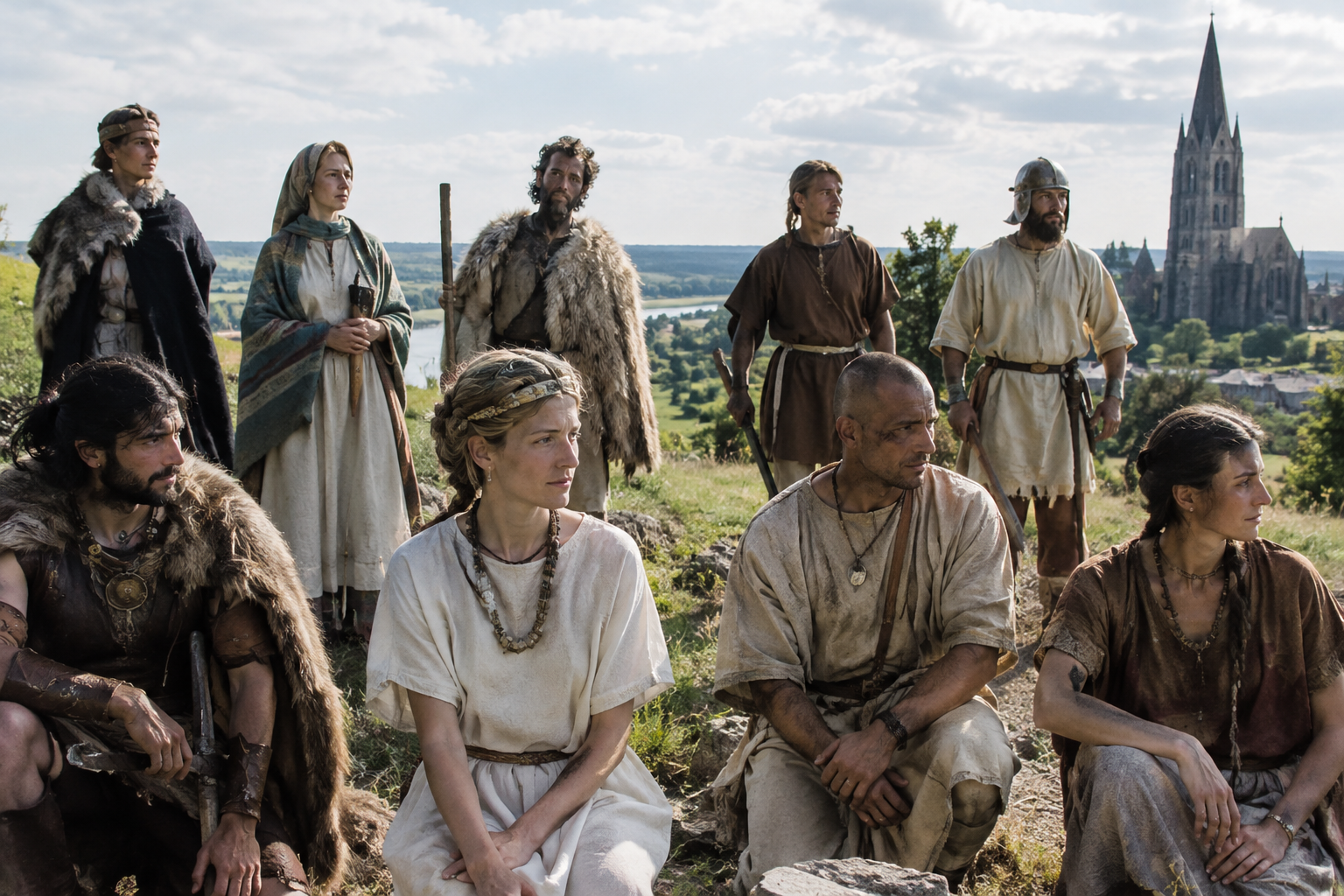
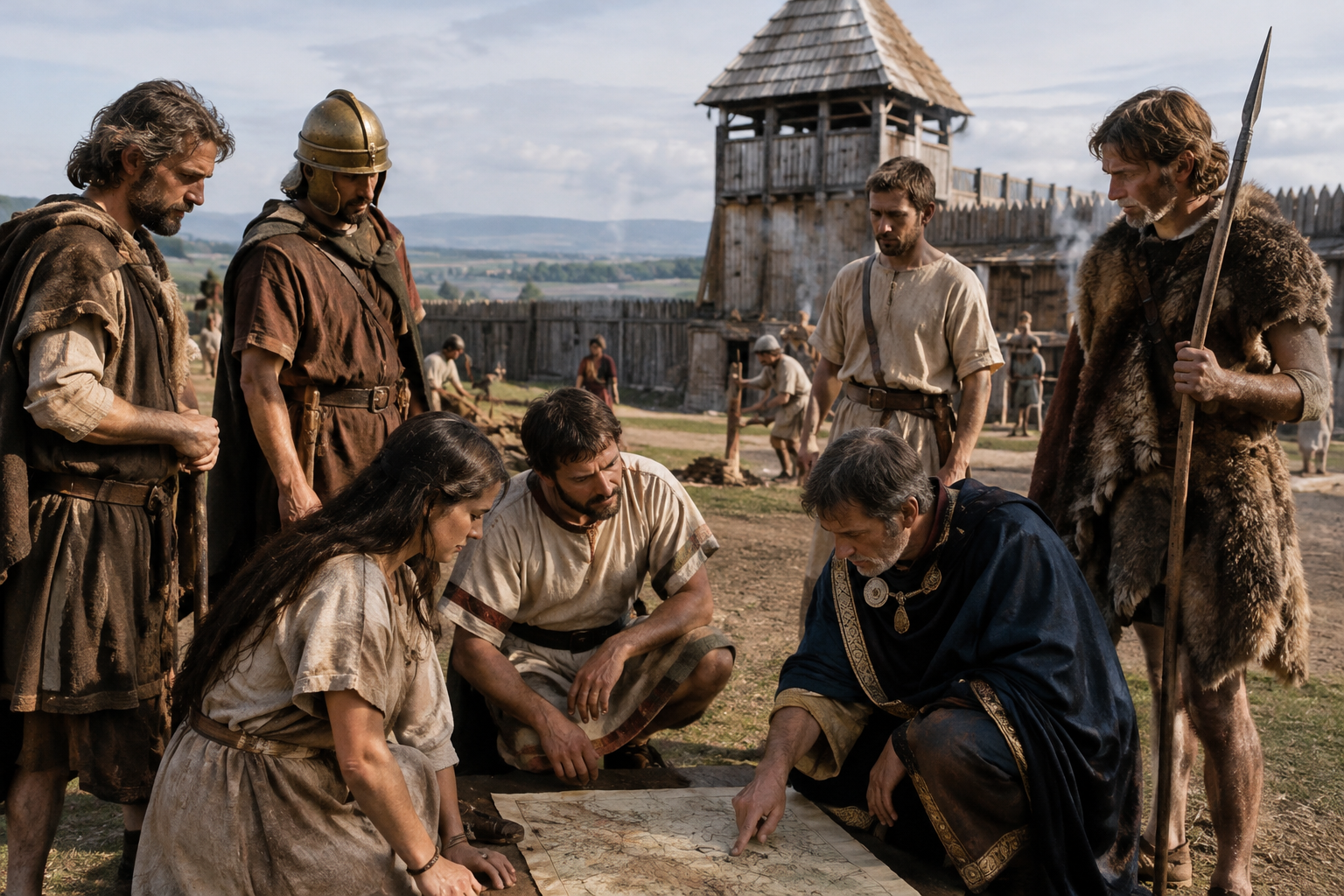
If the prehistoric evidence gives us depth, the post-Roman material gives us drama. In 6th-century Pannonia, this paternal lineage appears in a turbulent frontier world shaped by the collapse of Roman administration, the movement of Gothic and Longobard groups, and the mixing of local and incoming populations.
The key samples are spread across western Hungary: HMU044 from Post Roman Period Pannonia Scarbantia Hegyko Barbaricum Hungary (525 AD), HMU072 from Gothic Period Pannonia Scarbantia Hegyko Barbaricum Hungary (525 AD), SZL045 from Post Roman Period Pannonia Savaria Szeleste Barbaricum Hungary (525 AD), HMU037 from Longobard Period Pannonia Scarbantia Hegyko Barbaricum Hungary (525 AD), SZL027 from Longobard Period Pannonia Savaria Szeleste Barbaricum Hungary (525 AD), and MFC007 from Post Gothic Period Pannonia Arrabona Menfocsanak Barbaricum Hungary (550 AD).
What is striking here is not that one haplogroup "belongs" to Goths or Longobards. It does not work like that. A Y-line can be carried by men inside communities with mixed origins, shifting alliances, and fluid identities. What these burials do show is that paternal lines linked to I2a1b1a2b were present in the Little Hungarian Plain during exactly the centuries when old Roman provinces were becoming something new. Archaeology and ancient DNA together reveal that these societies were not biologically uniform and not culturally simple.
In other words, the men buried at Hegyko, Szeleste, and Menfocsanak were living in a world where "Roman," "Gothic," "Longobard," and "barbaricum" were categories used by historians, rulers, and chroniclers, but real communities on the ground were often more entangled than the labels suggest.
Read About Post-Roman Pannonia
Here the evidence supplied is revealing in an unexpected way: the field for associated noble families and castles is effectively empty. That absence is worth stating plainly. It means we should not pretend to know which medieval dynasty, clan, or castle can be responsibly attached to haplogroup I2a1b1a2b from the material provided here.
And that, in fact, is a useful lesson in historical genetics. Ancient DNA often gives us a richer picture of populations long before written genealogy begins. Noble pedigrees, castles, and heraldry belong to a much later historical layer. Sometimes those layers can be connected; often they cannot, at least not yet. The temptation is always to run from a prehistoric burial straight to a coat of arms. But good history resists that urge.
What we can say is that some of the same regions matter in both stories. The Carpathian Basin, Romania, and the Danubian frontier all later became landscapes of medieval lordship, fortification, and dynastic politics. Ancient paternal continuity in a region does not prove descent from any named noble house, but it does remind us that beneath the later castles and chronicles lay populations with much older roots.
For readers interested in how genetics and dynastic history can sometimes meet more directly, medieval Hungary offers particularly rich material when elite burials are available for analysis.
The value of haplogroup I2a1b1a2b lies in its span. It appears in Mesolithic Serbia, in Chalcolithic Romania, in Neolithic Scotland and Orkney, and again in post-Roman Hungary. That is not a tidy story of one unbroken people. It is something better: evidence that paternal lineages can persist through enormous cultural change while being carried by very different communities across time.
For family historians, that is both exciting and humbling. A shared Y-DNA haplogroup can place your direct paternal line within a very old European framework. It may connect your line, broadly speaking, to some of the same ancient paternal landscapes seen at Vlasac, Urziceni, or Pannonia. But it does not prove descent from any one ancient individual, and it certainly does not prove membership in a specific ethnic group or noble family.
What it does offer is context. It lets you see your paternal ancestry not just as a surname puzzle or a modern nationality, but as part of a much longer human history: foragers on the Danube, farmers in the Carpathian Basin, island communities in Neolithic Britain, and men living on the fault line between Rome and the so-called barbarian world.
If you want to see whether your own DNA shows links to ancient individuals like I4881, Urzi10, I36019, or HMU044, MyTrueAncestry can help place your results beside the archaeological record. Those comparisons can open fascinating windows onto your past, even when they do not prove direct genealogical descent from any one ancient person or later noble house.
Comments