Haplogroup I2a1b1a2a2a1

– 5 min read


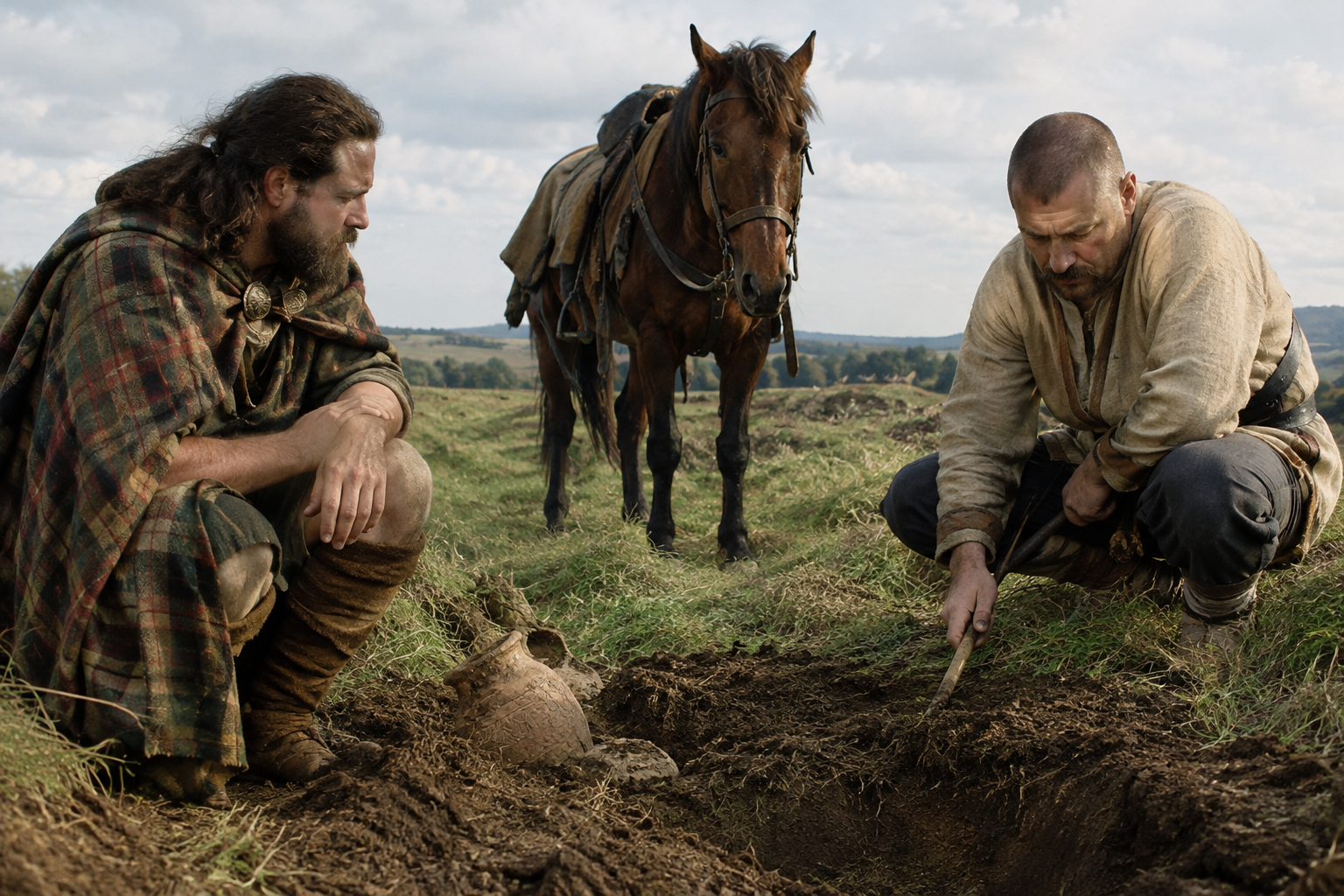
At Wetwang Slack in East Yorkshire, one Iron Age burial has become a useful anchor for thinking about the Y-DNA haplogroup I2a1b1a2a2a1. The individual labelled I37160, dated to around 225 BC and identified with the Celtic Parisi milieu of Iron Age England, places this paternal line in one of the best known prehistoric landscapes of eastern Britain. That matters because Wetwang is not just any cemetery site: it belongs to a region long discussed for its square barrows, chariot burials, and distinctive local expressions of Iron Age life.
This is also a helpful reminder of what Y-DNA can and cannot do. A haplogroup traces one direct paternal line only, not a person's whole ancestry, culture, or language. Even so, when a lineage like I2a1b1a2a2a1 appears in ancient remains from sharply different times and places, it gives us a glimpse of how old European male lines could persist, reappear, and move through very different archaeological worlds.
The Wetwang Slack sample I37160 sits in a part of Britain that archaeologists have returned to again and again because East Yorkshire preserves an unusually rich Iron Age mortuary record. The so-called Arras culture burials of the region, often connected in scholarship with the ancient Parisi named by Classical authors, show a local society that was clearly tied into wider continental currents while remaining distinctly rooted in Yorkshire.
That makes I37160 especially interesting. Here we are not dealing with an abstract map point, but with a man buried in a recognisably Iron Age British setting centuries before the Roman conquest. If the reported association with I2a1b1a2a2a1 is correct, the lineage was present in eastern England within a community often discussed in relation to mobility, elite display, and regional identity.
An ancient DNA study examining Iron Age Britain has increasingly shown that social worlds were more complicated than old textbook labels allowed. Some communities show continuity, some mobility, some close local ties, and some surprising diversity. For a wider look at how genetic evidence is reshaping the picture of British Iron Age communities, see this related discussion:
Wetwang Slack therefore gives this haplogroup a firmly archaeological foothold in later prehistoric Britain. It does not prove that the lineage was specifically "Celtic" in any simple sense, but it does show it embedded in an Iron Age population living in a cultural landscape usually treated as one of the most distinctive in southern Britain.
The second ancient individual linked here is strikingly earlier: I24091, from Krivyansky in Rostov, Russia, dated to around 2941 BC and described as Early Bronze Age Yamnaya. That places the lineage, or at least a reported association with this branch, in the world of the Pontic-Caspian steppe nearly three millennia before the Wetwang Slack burial.
This is where caution becomes essential. The archaeological label Yamnaya refers to a major Early Bronze Age horizon on the steppe, famous for mobile pastoralism and its large role in debates about prehistoric population expansion. But a sample's cultural designation does not mean every paternal line within that horizon had the same history, nor does it automatically explain how a later Iron Age Briton and an Early Bronze Age steppe individual are related within the family tree of haplogroup I.
Still, the Krivyansky sample matters because it shows that the story behind I2a1b1a2a2a1 is not confined to Britain or the northwest edge of Europe. It opens onto the wider northern Black Sea zone, one of the great crossroads of Eurasian prehistory. Research on ancient populations of that region has made clear how deeply layered these landscapes were, with hunter-gatherer, farmer, and steppe ancestries mixing in different ways over time. One of the scientific resources associated with this material is this ancient DNA data release, which reflects the increasingly large comparative frameworks used to place such individuals in context.
For readers interested in the broader genetic and archaeological background of this frontier between Europe and the steppe, this related post offers a useful companion:
The immediate temptation with a long Y-DNA label is to treat it as though every part of its history were already obvious. It is not. The broader haplogroup I is one of Europe's old paternal lineages, and branches of I2 in particular have deep roots in European prehistory. But that broad fact should not be carelessly collapsed into a precise claim about the narrower branch I2a1b1a2a2a1.
What the two ancient cases do suggest is persistence across very different contexts: one in an Early Bronze Age steppe-associated burial, another in Iron Age Yorkshire. That is a large geographic spread and an even larger chronological one. It hints that the paternal ancestry behind this branch was capable of surviving through major cultural transformations rather than being tied to a single people, language, or migration event.
That point is worth stressing because ancient DNA has complicated older stories of neat replacement. In many regions, new cultural horizons arrived through mixtures of incoming groups and established local populations. A paternal branch may appear in one horizon, disappear from the small number of sampled burials we currently have, and then show up again much later in a different society. That is not unusual; it is exactly what patchy survival and patchy sampling should make us expect.
Seen together, I24091 and I37160 are not evidence for a simple line of march from Rostov to Yorkshire. That would be far too tidy. What they do offer is a glimpse of the scale on which prehistoric male lines could travel through time: from the grasslands north of the Black Sea in the third millennium BC to a settled Iron Age community in Britain more than 2,700 years later.
This is one reason archaeogenetics has become so useful. It allows us to set named archaeological cultures beside biological lineages without pretending they are the same thing. Yamnaya is an archaeological and genomic horizon. The Parisi belong to a historically described Iron Age group in eastern Yorkshire. I2a1b1a2a2a1 is a paternal lineage. The interest lies in the overlap, not in confusing one category for another.
A recent study on ancient Celtic-related populations and language spread has pushed this whole discussion forward by asking how central European and western European population shifts connected with the emergence and spread of Celtic-speaking worlds. Readers who want the broader frame around later prehistoric western Europe may find this useful:
Celtic language spread and DNA
And because Britain did not stand still after the Iron Age, another good comparison is the longer-term genomic story of the island across Roman and early medieval centuries:
Roman and early medieval Britain
There are only two ancient individuals listed here, but they are well chosen for storytelling because they are so different. I24091 places the branch in the orbit of the Early Bronze Age steppe, while I37160 places it in the very local, very archaeological world of Iron Age East Yorkshire. One speaks to broad prehistoric horizons; the other to a specific regional society with a distinctive burial tradition.
That combination makes I2a1b1a2a2a1 a good example of how paternal ancestry can outlast the labels historians and archaeologists use for periods and peoples. If this is your haplogroup, the ancient evidence does not pin your paternal line to one tribe or one heroic migration. What it does suggest, more interestingly, is a lineage with roots in the deep and complicated male history of Europe, turning up both in steppe-era contexts and in Iron Age Britain.
Even a small ancient record can do something important. It can shift a haplogroup from the realm of bare genetic code into the worlds of real places: Krivyansky on the steppe, and Wetwang Slack in Yorkshire. That is where the past becomes most tangible.
Comments