Haplogroup I2a1a2b1a1a1c

– 5 min read


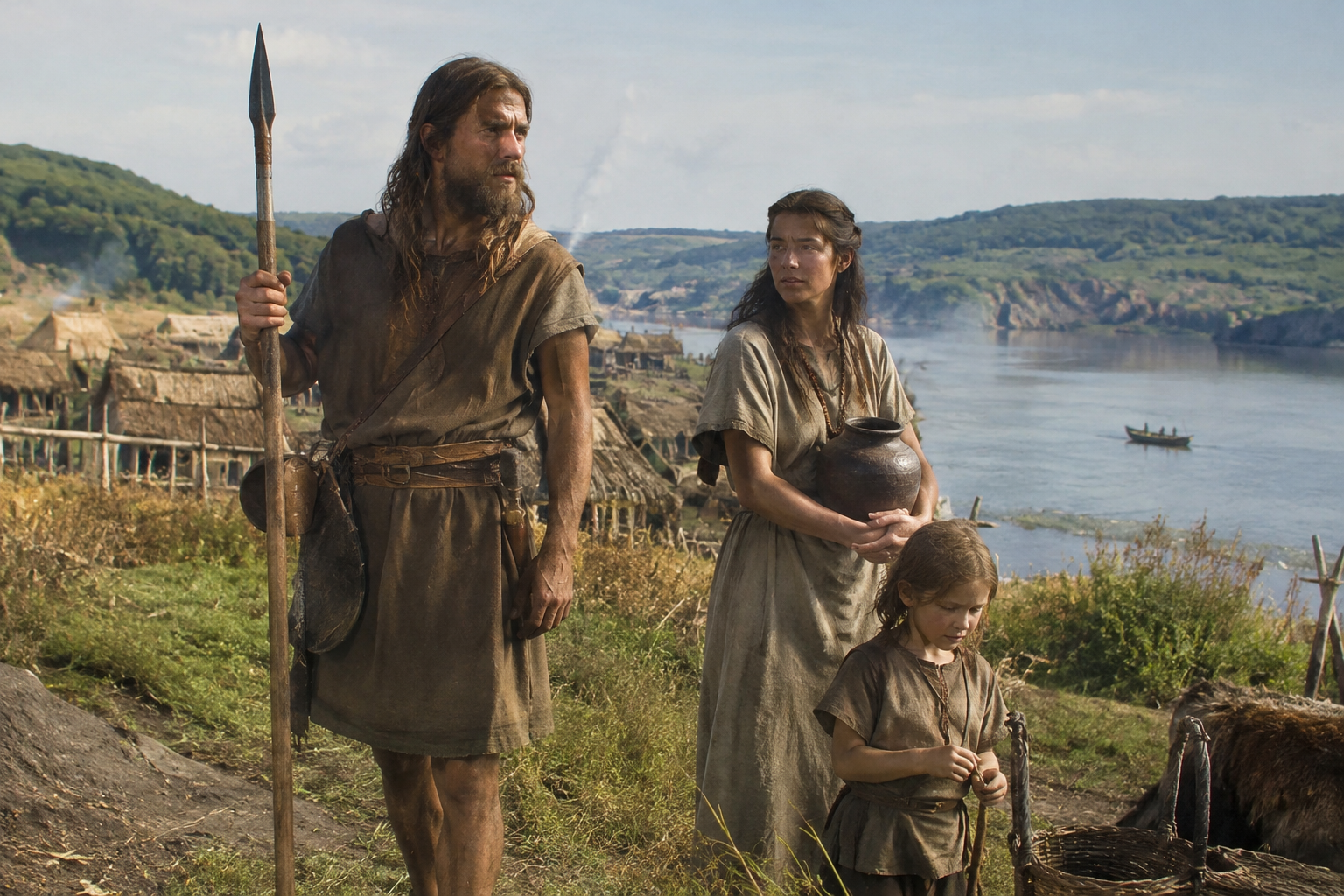
One of the clearest ancient anchors for the Y-DNA haplogroup I2a1a2b1a1a1c comes from Iron Age Prague. The individual identified as 2910X, dated to around 100 BC, places this paternal line in central Europe at a moment when Bohemia sat between worlds: Celtic traditions still mattered, but the political map was already shifting toward the societies Roman writers would soon describe further north and east.
That is why this sample is interesting. It is not because a single man can stand in for an entire people; he cannot. It is because a direct paternal lineage found in an Iron Age burial from Prague lets us pin one branch of the broad and ancient I2 family to a specific place and period. Y-DNA follows one father-to-son line only, but that narrow thread can still tell us something valuable about where particular male lines were living when central Europe was being remade.
By about 100 BC, the Prague region belonged to a wider central European zone shaped by long interaction, trade, migration, and cultural overlap. Archaeology in Bohemia for this period often sits in the shadow of the better-known La Tene world to the west and the later Germanic and Roman frontier stories to the north and south. Yet Prague's importance lies precisely in that in-between position.
Sample 2910X shows that the branch reported here as I2a1a2b1a1a1c was present in that setting. That matters because haplogroup I2, in its wider sense, is one of Europe's deep paternal families, with roots that stretch far back into prehistoric population history. But broad ancestry is not the same thing as a precise sub-branch. This article's lineage is a much narrower twig on that older tree, and the Prague sample gives it a firmly archaeological setting rather than leaving it as a purely modern testing result.
Bohemia in the late Iron Age was not a sealed ethnic box. Communities there participated in regional networks linking the Danube, the Elbe, and the uplands of central Europe. So the presence of this lineage in Prague should be read as evidence of local male-line continuity within that connected world, not as proof of a single tribe, language, or identity.
Central Europe and Celtic origins
The first thing to say is that I2a1a2b1a1a1c is not a shorthand for an entire population. It is a very specific paternal line nested inside the larger haplogroup I2, which has a long European history and appears in many different periods and regions. The narrower the branch, the more careful we have to be. A modern tester with this haplogroup is not automatically "Celtic", "Slavic", or "Germanic" simply because an Iron Age individual in Prague carried a reported related branch.
What the Prague evidence does suggest is that this paternal line, or a very close ancestral form of it, was already established in central Europe before the Roman imperial period fully transformed the region. That is useful because the late Iron Age is exactly when later historical identities were beginning to emerge from older local populations and regional networks.
There is also a technical caution here. Ancient Y-DNA assignments depend on preservation, coverage, and the quality of recovery from skeletal material. The fact that this sample is reported with a detailed classification is promising, but ancient DNA resolution can vary from case to case. A methodological paper linked to this record, on improving ancient DNA recovery from petrous bone, helps explain why some burials yield clearer paternal signals than others: research on optimized ancient DNA yields from petrous bone. That does not by itself prove the historical interpretation, but it reminds us that every tidy haplogroup label sits on top of difficult laboratory work.
If you are trying to place this haplogroup historically, the most sensible approach is to think regionally. Late Iron Age Bohemia was a contact zone. Material culture, exchange routes, and settlement patterns show that central Europe was full of movement without necessarily being full of mass replacement every generation.
That makes a lineage like I2a1a2b1a1a1c especially interesting. Rather than pointing to a dramatic one-off migration, the sample from Prague may fit a pattern of long-standing male lines persisting through cultural change. In archaeology, that is often the real story: pots, styles, and political labels change faster than every paternal lineage does.
This point sits well beside broader central European findings showing continuity amid transformation. Several recent MyTrueAncestry discussions have explored how genetics complicates older tidy stories of sharp ethnic turnovers. The Iron Age and later periods often look more mixed, more local, and more stubbornly continuous than nineteenth-century historical maps would have liked.
Central Europe continuity and change
One late Iron Age sample cannot sketch the full later career of this branch, but it does help frame the bigger historical question. Central Europe after 100 BC saw Roman expansion to the south, shifting power beyond the imperial frontier, and then, centuries later, the movements and re-formations usually bundled together as the Migration Period. Through all that, some paternal lines survived locally, some spread, and others disappeared from the record.
For descendants researching this haplogroup today, the Prague individual matters because he shows that one bearer of this paternal line lived in Bohemia before those later upheavals. That does not create an unbroken documented pedigree, of course. But it does place the lineage in a real human landscape: an Iron Age community in one of Europe's great crossroads.
There is a wider comparative point too. Across Europe, ancient DNA keeps showing that paternal histories can shift differently from maternal ancestry or overall genome-wide ancestry. A community may look locally continuous in many respects while its Y-chromosome picture changes, or the reverse. That is why a single Y-line is best read alongside archaeology and broader population history, not in isolation.
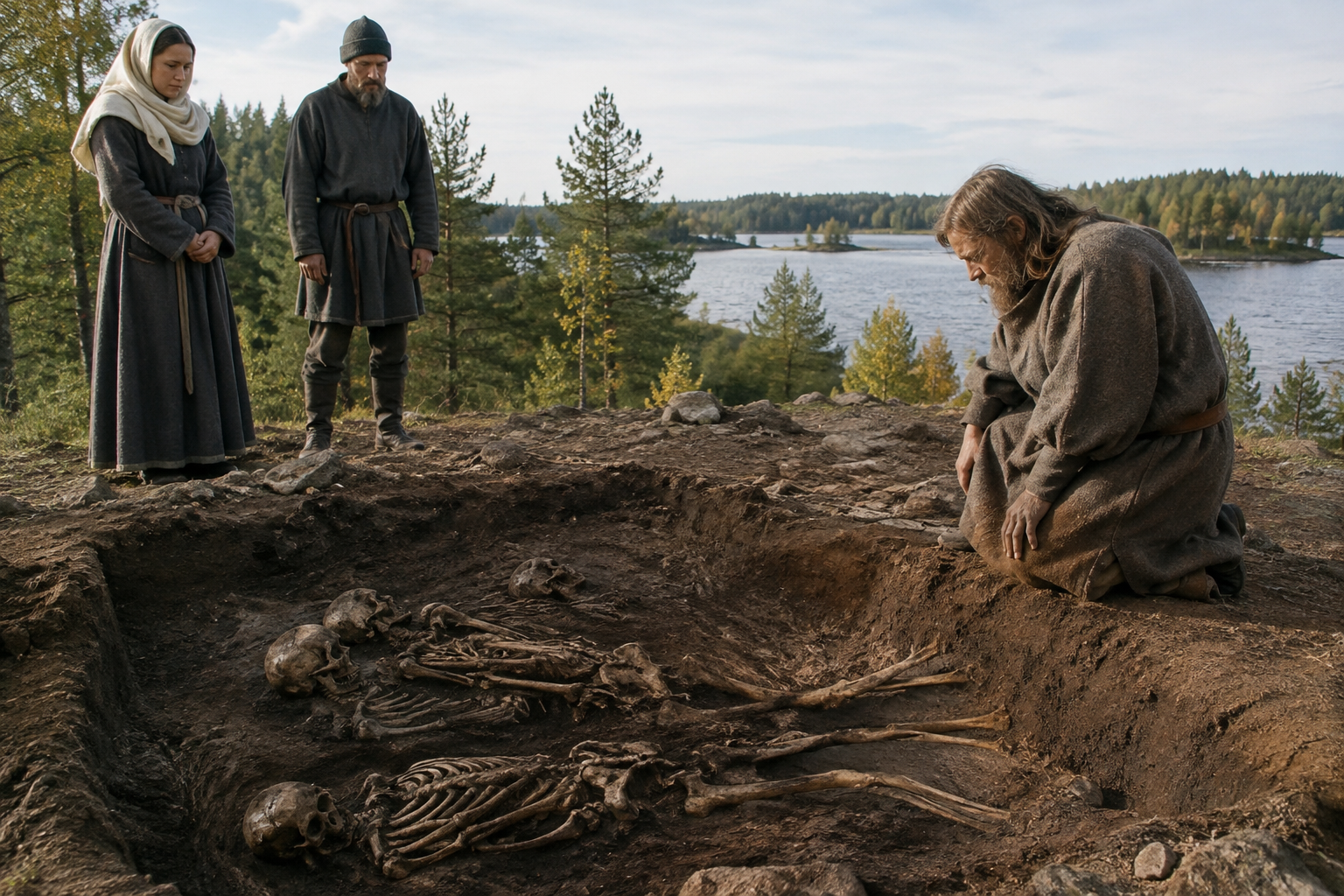
It is easy to underrate isolated ancient samples, especially when they do not come with lavish tombs or famous names. But archaeology is full of history written by ordinary burials. A man in Iron Age Prague, known to us only as 2910X, can still tell us that this paternal branch was part of the demographic fabric of central Europe before the Roman world reached its maximum influence.
That sort of evidence is often more useful than grand legends. It does not flatter; it locates. It tells us that the lineage behind I2a1a2b1a1a1c was not merely a modern abstraction reconstructed from family testers, but had a place in the lived landscape of late pre-Roman Bohemia.
Research on ancient populations of central and eastern Europe has increasingly made that landscape clearer, even when each study illuminates only one corner of it. If you want the broader regional backdrop, MyTrueAncestry's coverage of population shifts and continuity in neighboring areas helps show just how interconnected this zone was.
The strongest supported insight for I2a1a2b1a1a1c is simple and solid: this paternal line is represented in Iron Age Prague by sample 2910X, around 100 BC. That places the branch in central Europe during a formative historical period, in a region shaped by continuity as much as by change. If this is your haplogroup, the most responsible takeaway is not a claim to one named tribe or dynasty, but a tangible connection to the male-line population history of late Iron Age Bohemia and its wider central European world.
Comments