Haplogroup I2a1a2a1a2a

– 5 min read


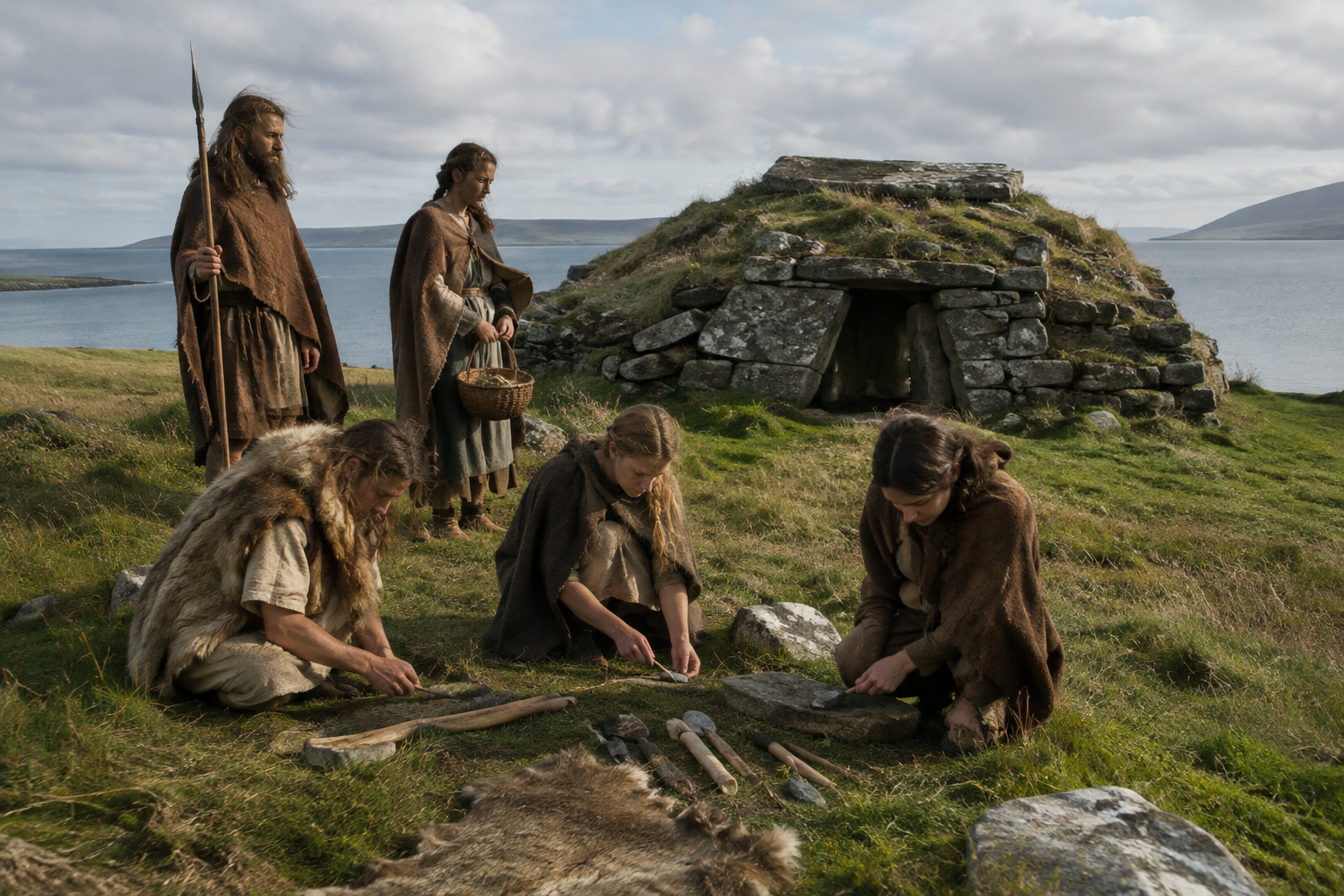
There is something wonderfully arresting about finding a very specific Y-DNA branch, I2a1a2a1a2a, in some of the most windswept and archaeologically famous islands in northern Britain. Not in the courts of kings, not in a medieval pedigree first written by a monk with a taste for grandeur, but in tombs, burial places, and settlement landscapes in Orkney and western Scotland. It is a reminder that paternal history often begins not with heraldry, but with bones in the ground.
Y-DNA haplogroups trace one narrow line of ancestry: the direct paternal line, passed from father to son. They do not describe a person's whole ancestry, culture, or identity. Still, they are extraordinarily useful. In the case of I2a1a2a1a2a, the evidence supplied here places this lineage within a deep northern British story, especially in Neolithic and Bronze Age Scotland. For anyone interested in how ancient paternal lines can persist, shift, and reappear across millennia, this is a striking case.
Haplogroup I belongs to one of the oldest major Y-chromosome lineages in Europe, with deep roots among prehistoric European populations. But caution matters here: the full sweep of haplogroup I is far broader than this very specific branch, I2a1a2a1a2a. We should not simply pour the entire history of ancient Europe into one subclade. What we can say, on the evidence given, is that this branch appears in a cluster of ancient individuals from Orkney, Argyll and Bute, and nearby parts of Atlantic Scotland.
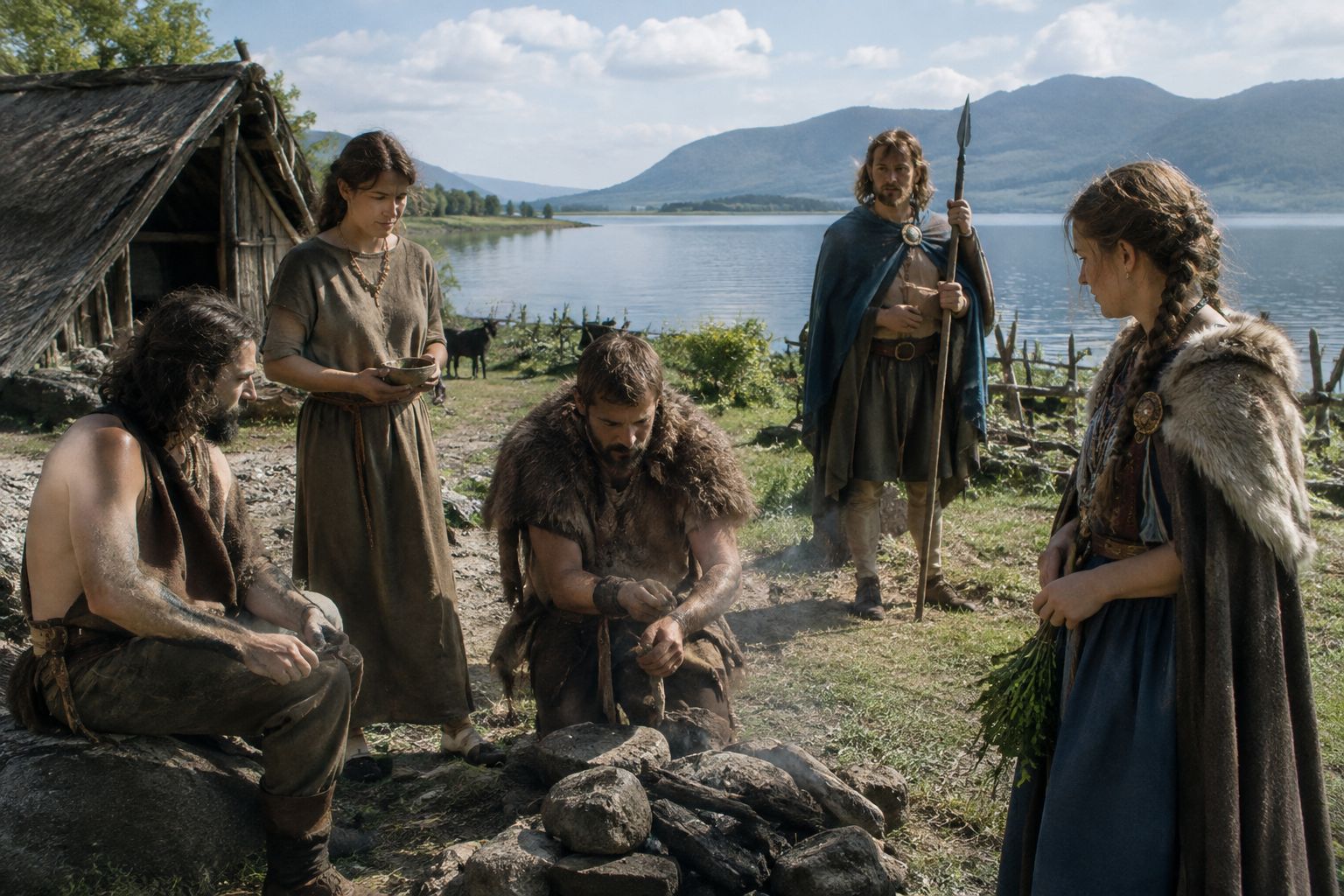
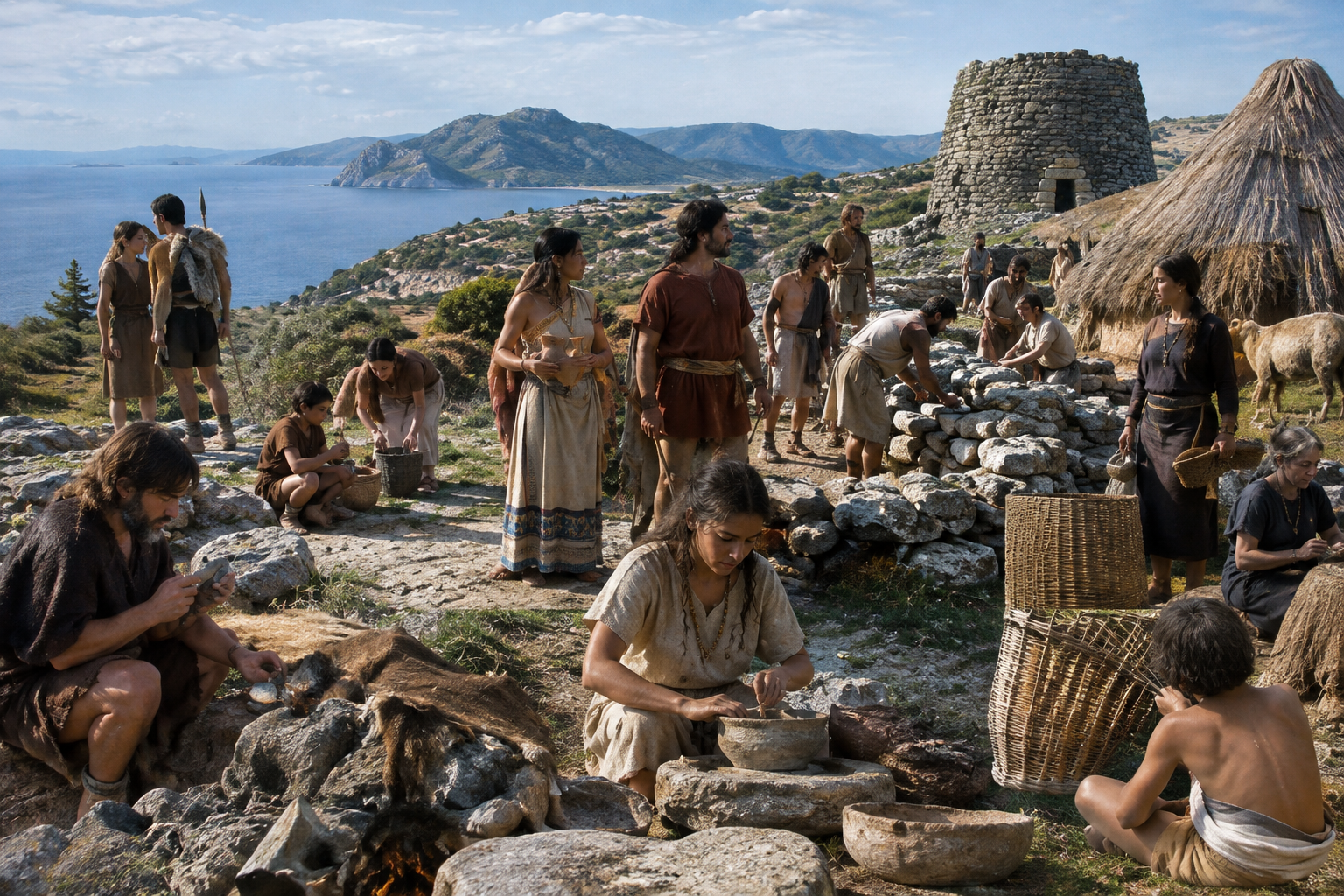
That matters because these regions were not remote backwaters in prehistory. Neolithic Orkney in particular was a major ceremonial and architectural center, famous for chambered tombs, stone-built settlements, and complex social life. By the Bronze Age, these same islands were still inhabited, still connected, and still participating in wider currents of change across Britain and beyond. A paternal lineage found repeatedly here suggests either local continuity, repeated regional presence, or both.
Explore Neolithic Northern Scotland
The most revealing evidence comes from a run of ancient individuals spread across nearly two millennia. The earliest in this group is I12317, from Late Neolithic Oban Argyll and Bute Scotland, dated to 3550 BC. Oban sits on Scotland's western seaboard, a maritime world of sea lanes, island crossings, and coastal communities. That is an important setting for thinking about paternal lineages: movement in prehistoric Britain often happened by water as much as by land.
Then come several Orkney individuals from the Neolithic. The sample I7554x, from the Neolithic Unstan Chamber Tomb Orkney Scotland, is dated to 3232 BC. Unstan is not just any burial site; it belongs to one of the best-known chambered tomb traditions in Orkney. Alongside it are I2978, I2637, and I2935, all listed simply as Neolithic Orkney Islands and dated to 3200 BC. Taken together, these are not isolated curiosities. They point to this paternal branch being present in the male population of Neolithic Orkney in a meaningful way.
Another intriguing case is I2932 from Neollithic Isbister Orkney Scotland, dated to 2463 BC. Even with the supplied spelling preserved exactly, the importance is clear enough: the lineage still appears in Orkney after the earlier great age of chambered tomb construction. That suggests the story did not end with the first monument builders.
And then, rather wonderfully, we can follow it into the Bronze Age at Westray. The site of Links of Noltland has produced several individuals: KD049 dated to 1498 BC, and KD064, KD064_3, and KD064_4, each dated to 1400 BC. Whatever the exact kin relationships among these samples may have been, and we must not invent them, the pattern is hard to ignore. A paternal lineage seen in Neolithic Orkney is also visible in Bronze Age Orkney more than a thousand years later.
This is precisely where ancient DNA becomes so useful. Written history cannot help us in 3200 BC Orkney. Genetics can. Not by naming tribes or declaring modern identities, but by showing that certain paternal lines were part of enduring local populations.
Read About Tomb Kinship in Northern Scotland
What, then, does I2a1a2a1a2a suggest historically? The careful answer is that it seems strongly associated, in the supplied evidence, with prehistoric communities of Atlantic Scotland, especially Orkney. That does not prove uninterrupted descent from one named man or one single family across the centuries. But it does support the idea that some paternal lines remained established in the north through major cultural changes.
Those changes were considerable. The Neolithic world of chambered tombs, ceremonial landscapes, and early farming gave way to Bronze Age societies with new technologies, new burial customs, and wider exchange networks. Yet paternal continuity can survive cultural change. People alter their pottery, architecture, and rituals more quickly than they replace every ancestral line.
This also helps correct an old habit of historical thinking. We are often tempted to imagine prehistory as a parade of total replacements: one people vanishes, another arrives. Ancient DNA has made that story far more interesting. Sometimes there is migration; sometimes there is mixture; sometimes, amid all the change, local lines persist stubbornly in place.
Explore Bronze Age Reuse of Neolithic Tombs
The supplied field for associated noble families and castles is empty here, and that absence is actually quite useful. It prevents the all-too-common leap from an ancient Y-DNA branch straight into the coat of arms of some later dynasty. No responsible historian or geneticist should claim that a Bronze Age man from Westray was the ancestor of a documented medieval noble house simply because both belong, broadly or reportedly, to a similar paternal haplogroup.
What we can say is that later Scottish clans, lordships, and castle-based lineages emerged in a landscape already ancient with settlement and ancestry. Medieval elites in Scotland built their authority in places where human communities had lived for thousands of years. The castles came late; the paternal lines, in some cases, may have been there far earlier.
That is one of the most refreshing things about archaeogenetics. It shifts attention away from the illusion that history begins when documents begin. Long before charters, clans, and feudal towers, men carrying lineages such as I2a1a2a1a2a were living, dying, and being buried in the islands and coasts of northern Britain.
Discover Ancient DNA in Post-Roman Britain
I2a1a2a1a2a is a good example of how a narrow paternal branch can illuminate local history. Not the whole history of Europe, certainly not the whole ancestry of any modern person, but a very particular thread. In this case, the thread runs through Late Neolithic Oban, the chambered tomb world of Orkney, and the Bronze Age community at Links of Noltland on Westray.
That does not give us a neat tale of one tribe, one ethnicity, or one noble bloodline. Real history is less tidy and much more interesting. It gives us evidence for male-line presence in a region famous for monumental archaeology and long-lived communities. It shows how genetics and archaeology together can reveal patterns invisible in texts. And it reminds us that paternal ancestry can be both highly specific and historically illuminating when anchored to real ancient individuals like I12317, I7554x, I2978, I2637, I2935, I2932, KD049, KD064, KD064_3, and KD064_4.
If your own Y-DNA falls near branches like this, the lesson is not that you have discovered a guaranteed link to any one ancient person or later family. It is that your direct paternal line may belong to a story with remarkable depth, stretching back into the first farming communities and island societies of prehistoric Britain.
Upload your DNA to MyTrueAncestry to explore whether your results show connections to ancient individuals and historical populations like those from Orkney and western Scotland. These matches do not necessarily prove direct descent or noble ancestry, but they can offer a fascinating window into the deep past of your paternal line.
Comments